Award-Winning AP Chemistry Tutors
serving Little Rock, AR
AP Chemistry
Tutors in Little Rock
Private 1-on-1 tutoring, weekly live classes for academic support, test prep & enrichment, practice tests and diagnostics, and more to elevate grades and test scores.
Based on 3.4M Learner Ratings
UniversitiesSchools & Universities
DeliveredHours Delivered
ProficiencyGrowth in Proficiency
Who needs tutoring?
No obligation. Takes ~1 minute.
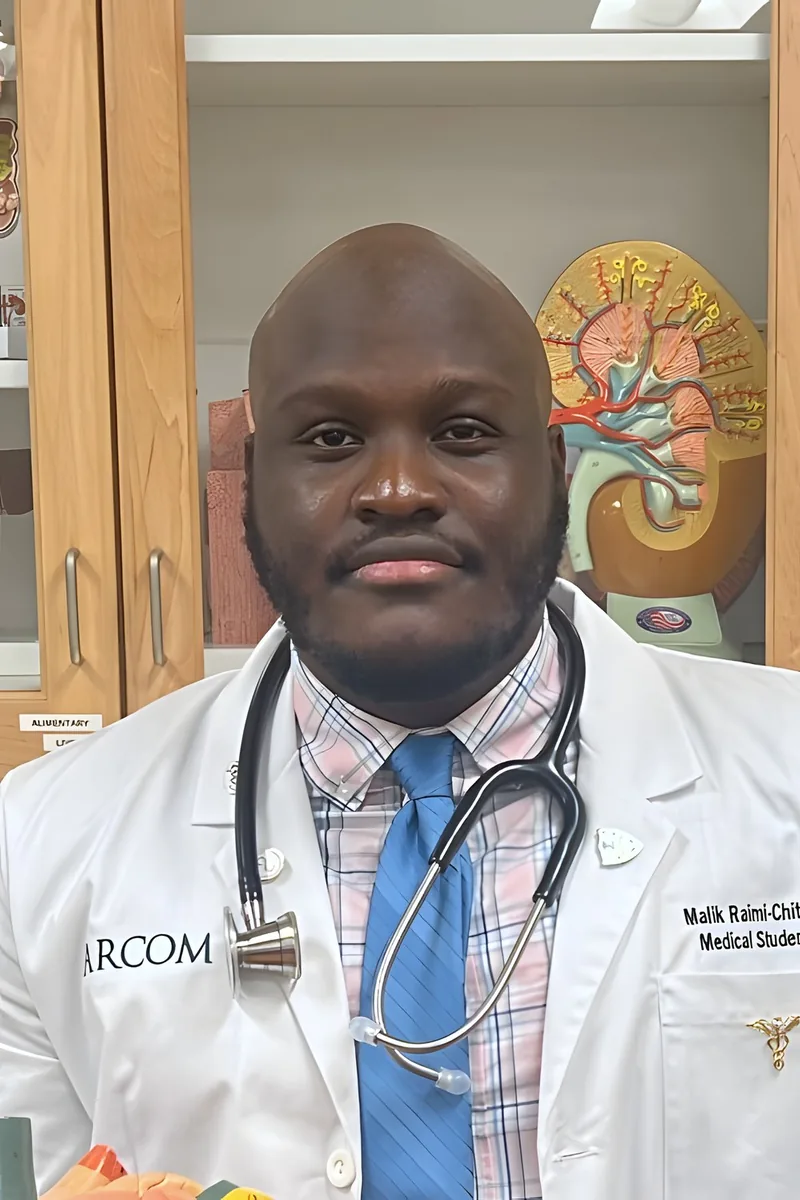
As a second-year medical student with a strong foundation in science and a passion for education, I specialize in making tough subjects easier to understand. I excel in math, biology, physics, and other challenging topics that often intimidate students and I genuinely enjoy helping others master them. My approach combines patience, clarity, and high-level understanding to break down complex ideas into manageable, confidence-boosting lessons. Whether it's reviewing homework or prepping for exams, I'm here to support and motivate students at any level below mine to reach their full academic potential. My interests include: Weightlifting and fitness training (especially strength and hypertrophy programs) Morning cardio and physical conditioning Studying medicine with a focus on anatomy, physiology, and clinical problem-solving Teaching and tutoring tough academic subjects like math, biology, and physics Watching anime as a way to relax and recharge (especially after a long day) Cooking (with a focus on high-protein, keto/carnivore meals)

As an Academic Fellow at Rice, Maddie tutors college-level chemistry and biochemistry, so she's deeply familiar with the rigor AP Chemistry demands — from equilibrium calculations to thermodynamics and electrochemistry. She tackles the toughest free-response questions by teaching students to connect conceptual reasoning with precise mathematical setups, the combination the exam rewards most.
As adjunct faculty teaching chemistry at VCU and a former bioinorganic researcher, Joel knows the AP Chemistry curriculum from both the teaching side and the lab bench. He digs into the toughest exam topics — equilibrium calculations, electrochemistry, and thermodynamic spontaneity — with the kind of conceptual depth that earns 5s, not just memorized formulas. Rated 5.0 by his students.
Three semesters as a college chemistry TA gave Joshua deep familiarity with the exact concepts that stump AP students: equilibrium calculations, thermodynamics, and electrochemistry. He knows how free-response questions are structured and teaches students to connect mathematical problem-solving with the conceptual reasoning the AP exam rewards.
Thermochemistry, equilibrium, and electrochemistry each demand a different kind of thinking, which is part of what makes AP Chem so challenging. Kate tackles each unit by connecting the math to the molecular-level story — explaining why Le Chatelier's principle works, not just how to apply it. Her engineering coursework in chemistry gives her a practical fluency that translates well to exam prep.
Five semesters as a chemistry teaching assistant — three in general chemistry and two in organic — gave Troy a front-row seat to exactly where AP Chemistry students get stuck: equilibrium calculations, thermodynamics sign conventions, and electron configuration exceptions. He tackles these pain points by tying abstract rules back to the periodic trends and mathematical logic that govern them.
The jump from regular chemistry to AP Chemistry usually hits hardest around equilibrium, thermodynamics, and electrochemistry, where problems demand both quantitative precision and conceptual reasoning. Rebecca pairs her biology degree's deep chemistry coursework with a knack for walking through multi-step free-response questions so students learn to show their thinking clearly under exam pressure.
Equilibrium, thermodynamics, and reaction kinetics aren't abstract concepts for Kristen — they were daily tools in her chemical-biological engineering coursework. She teaches AP Chemistry by connecting each unit back to underlying principles, so students can reason through unfamiliar free-response questions instead of relying on memorized shortcuts. Rated 4.9 by students.
Raj's biochemistry and molecular biology degree means he's lived through the college-level versions of every AP Chemistry topic — from reaction kinetics and acid-base equilibria to the thermodynamic principles that trip up most students on free-response questions. He teaches the quantitative side (stoichiometry, ICE tables, rate law setups) by anchoring each calculation in what's physically happening at the molecular level, so students build intuition alongside technique. His 36 ACT and 5.0 rating back up that approach.
Few AP Chemistry tutors have actually written and graded college chemistry exams for years. Jeremy, a Yale-trained Ph.D. who has taught General Chemistry at the college level many times, knows precisely how equilibrium, thermodynamics, and kinetics questions are designed to test conceptual understanding versus rote calculation. He breaks down free-response strategies and teaches students to connect the big ideas the exam rewards.
Stoichiometry, equilibrium, and thermodynamics each require a different kind of problem-solving, and AP Chemistry expects fluency in all of them by May. Kendall approaches each unit by anchoring the math in the underlying chemical logic — why a reaction favors products, what a mole ratio actually represents — so students can reason through unfamiliar problems on the exam. She also dedicates time to the lab-based questions that many students overlook in their prep.
Raveena's bioinformatics degree at VCU means she doesn't just know AP Chemistry's content — she applies it daily, using computational tools to analyze molecular structures and chemical data in ways that make topics like electron configuration and periodic trends feel concrete. Her 8-year direct med program has taken her well beyond the AP curriculum through organic chemistry and biochemistry, giving her a clear picture of which foundational concepts the free-response section rewards most. Rated 4.9 by students.
AP Chemistry's leap from stoichiometry to thermodynamics and equilibrium trips up students who were comfortable in general chem. Matthew, pursuing his biochemistry degree at Yale, unpacks these concepts by showing how energy, entropy, and reaction kinetics actually govern the molecular behavior students already learned about. His 5.0 rating speaks to how well that approach lands.
Testimonials
Because the right AP Chemistry tutor makes all the difference.
Average Session Rating – Based on 3.4M Learner Ratings
Practice AP Chemistry
Free practice tests, flashcards, and AI tutoring for AP Chemistry
Nearby AP Chemistry Tutors
Other Little Rock Tutors
Related Science Tutors in Little Rock
Frequently Asked Questions
Score improvement depends on your starting point and commitment level, but most students who work consistently with a tutor see meaningful gains. Many students jump from a 2 or 3 to a 4 or 5 by focusing on the specific problem areas—whether that's equilibrium calculations, thermodynamics, or free response strategies. A tutor helps you identify exactly where you're losing points and builds targeted practice around those weak spots.
Students typically struggle most with equilibrium (Le Chatelier's principle and calculations), thermodynamics and kinetics, and translating between molecular representations and mathematical equations. The free response section also trips up many students because it requires both conceptual understanding and clear communication of your reasoning. A tutor can break down these abstract concepts into concrete examples and help you practice explaining your thinking clearly.
Your first session focuses on understanding where you are right now. A tutor will review your recent tests or practice problems, ask about topics that feel fuzzy, and identify patterns in your mistakes—whether you're rushing through calculations, misunderstanding concepts, or struggling with test timing. From there, you'll build a personalized plan that targets your specific needs before the AP exam.
The AP Chemistry exam gives you 210 minutes for 60 multiple-choice questions and 3 free response questions—about 3.5 minutes per MC question and roughly 25 minutes per FRQ. Many students rush through calculations and make careless errors, or spend too long on one hard question. A tutor helps you develop a strategic approach: which questions to tackle first, when to skip and return, and how to allocate time across the free response section so you don't run out of time on the last question.
Taking 3-4 full-length practice tests under timed conditions is ideal—this gives you enough exposure to different question types and helps you identify patterns in your mistakes without burning out. More importantly, it's not just about the number of tests; it's about reviewing them thoroughly afterward. A tutor can help you analyze each practice test to spot whether you're missing questions due to calculation errors, conceptual gaps, or time management issues, then adjust your study plan accordingly.
Free response questions reward clear reasoning and proper setup as much as correct answers—you can earn partial credit even if your final number is wrong. The key is showing your work, labeling units, and explaining your thinking step-by-step. A tutor can teach you the format AP graders expect, have you practice writing out full solutions, and give you feedback on how to communicate your chemistry knowledge more effectively so you maximize points on every question.
Ideally, start reviewing 6-8 weeks before the exam if you're aiming for a 4 or 5, with sessions 1-2 times per week depending on your current level. Early weeks focus on filling conceptual gaps and building problem-solving skills; the final 2-3 weeks shift to full practice tests and exam strategy. A tutor helps you stay on pace, adjusts your schedule if you're falling behind, and ensures you're spending time on what actually moves your score rather than spinning your wheels on topics you already know.
Look for tutors who have strong chemistry backgrounds—ideally with college chemistry experience or AP Chemistry teaching experience—and who understand the specific format and expectations of the AP exam. Beyond credentials, you want someone who can explain complex concepts clearly, break down multi-step problems into manageable pieces, and help you build confidence alongside your skills. Varsity Tutors connects you with expert tutors in Little Rock who specialize in AP Chemistry and know how to get results.
Let’s find your perfect tutor
Answer a few quick questions. We’ll recommend the right plan and match you with a top 5% tutor.