Award-Winning Calculus Tutors
serving Little Rock, AR
Calculus
Tutors in Little Rock
Private 1-on-1 tutoring, weekly live classes for academic support, test prep & enrichment, practice tests and diagnostics, and more to elevate grades and test scores.
Based on 3.4M Learner Ratings
UniversitiesSchools & Universities
DeliveredHours Delivered
ProficiencyGrowth in Proficiency
Who needs tutoring?
No obligation. Takes ~1 minute.

Tackling derivatives and integrals for the first time can feel like learning a new language, but Matt just went through that process himself as a freshman engineering major. He unpacks concepts like the chain rule and Riemann sums using the real-world physics and design problems he encounters in his own coursework, which makes abstract ideas tangible.
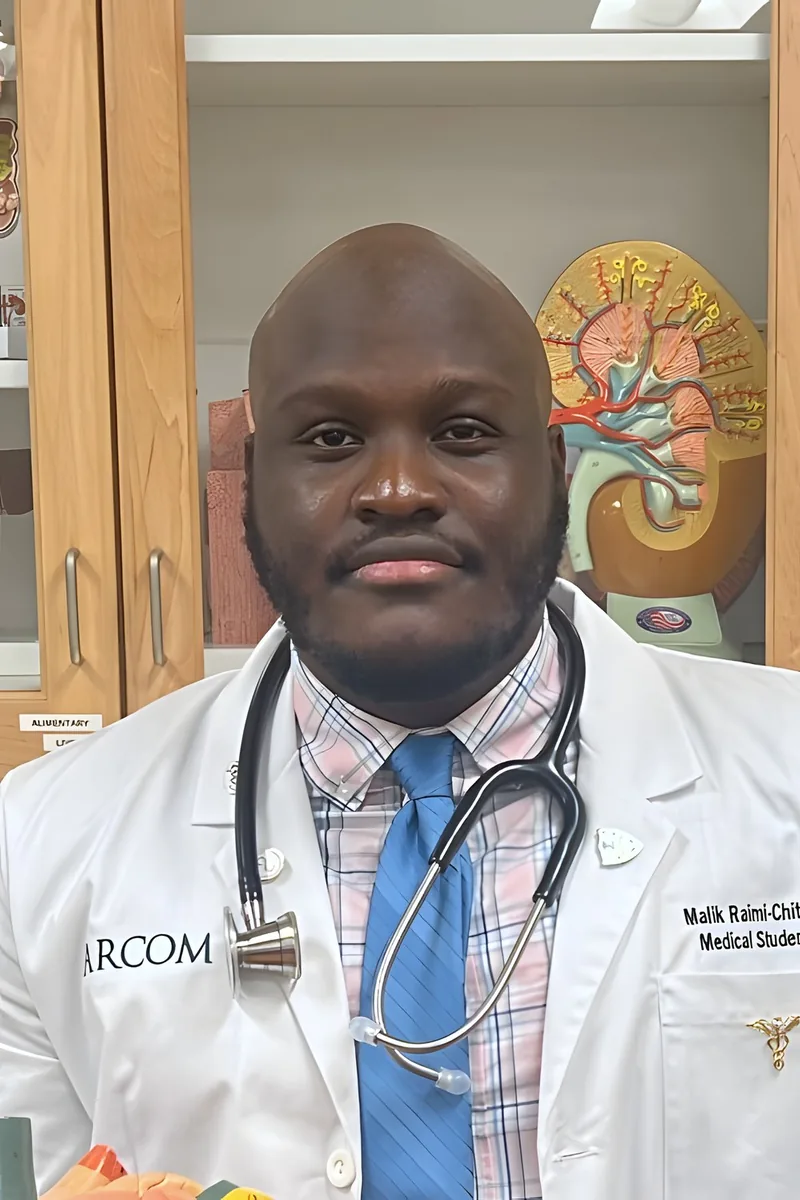
As a second-year medical student with a strong foundation in science and a passion for education, I specialize in making tough subjects easier to understand. I excel in math, biology, physics, and other challenging topics that often intimidate students and I genuinely enjoy helping others master them. My approach combines patience, clarity, and high-level understanding to break down complex ideas into manageable, confidence-boosting lessons. Whether it's reviewing homework or prepping for exams, I'm here to support and motivate students at any level below mine to reach their full academic potential. My interests include: Weightlifting and fitness training (especially strength and hypertrophy programs) Morning cardio and physical conditioning Studying medicine with a focus on anatomy, physiology, and clinical problem-solving Teaching and tutoring tough academic subjects like math, biology, and physics Watching anime as a way to relax and recharge (especially after a long day) Cooking (with a focus on high-protein, keto/carnivore meals)
Philosophy at Northwestern trained Emily to dissect complex arguments into their smallest logical steps — a skill that maps surprisingly well onto the sequential reasoning calculus demands, especially when unpacking what a limit definition actually says or why the chain rule works the way it does. Her legal career sharpened that precision further, since building a case and building a proof share the same demand: every step must follow inevitably from the last.
An NYU MAT program built around secondary education sharpened Jennifer's ability to break down complex material into manageable steps — a skill that applies even outside her English specialization. Her 1510 SAT confirms solid quantitative reasoning, and she approaches early calculus topics like limits and continuity the way she'd approach a difficult text: slowing down, identifying what each piece means, and building understanding before moving forward.
Having completed AP Calculus BC and continued into college-level coursework at Princeton, Julie tackles everything from limit definitions and derivative rules through integration techniques and series convergence. She's especially sharp at explaining the conceptual "why" behind procedures like the chain rule or u-substitution, drawing on the same logical rigor her philosophy training demands.
Psychology and linguistics both lean heavily on statistical modeling — analyzing language acquisition curves, interpreting behavioral data over time — which gave Sherry real exposure to the calculus concepts underlying those methods during her University of Chicago coursework. Her 1600 SAT confirms she can handle rigorous quantitative reasoning, and she brings that same precision to unpacking limits and derivatives for students who need the 'why' explained clearly before the mechanics make sense. Rated 5.0 by students.
Limits, derivatives, and integrals each demand a different kind of thinking, and students who try to memorize procedures without grasping the underlying logic tend to hit a wall at the chain rule or related rates. Asta unpacks each concept visually and algebraically so the reasoning behind techniques like u-substitution actually clicks. Her 35 ACT composite speaks to the quantitative rigor she brings.
Anthropology and human evolutionary studies might not scream calculus, but Victoria's coursework involved quantitative modeling of population dynamics and morphological change over time — territory where rates of change and accumulation aren't abstract concepts but tools for answering real questions. Her 1520 SAT confirms strong quantitative chops, and she brings that same analytical rigor to breaking down derivatives and integrals into steps that actually make sense.
Ben's math degree from Penn means he's gone well beyond the standard calculus sequence — through multivariable calculus, linear algebra, and the rigorous proofs that tie them together — so he teaches concepts like the chain rule or integration by parts with a clear sense of where they lead. That depth shows up in how he unpacks problems: connecting each technique back to the underlying logic instead of treating it as a standalone trick. Rated 5.0 by students.
Doctoral-level research in clinical psychology demands constant fluency with statistical modeling, derivatives, and rates of change — concepts that sit at the heart of calculus. Shelley breaks down problems like related rates and integration by connecting each step to a concrete, real-world scenario so the logic behind the math clicks. Rated 5.0 by students.
As a biochemistry major at Rice, Michelle used calculus constantly — modeling reaction rates, analyzing enzyme kinetics, interpreting area-under-the-curve problems with real lab data. She teaches derivatives and integrals by connecting the mechanics of each rule to the reasoning behind it, so students understand when and why to apply techniques like chain rule or u-substitution.
Elena's academic path runs through government, Spanish, and law — not mathematics — so calculus isn't her deepest subject. That said, a perfect 1600 SAT demonstrates serious quantitative ability, and her tutoring philosophy of listening to students work through problems and pinpointing exactly where their reasoning breaks down applies especially well to early calculus, where a single misunderstanding about limits or continuity can derail everything downstream.
Both of Matthew's parents are university math professors, so calculus was dinner-table conversation long before it was a college course. That upbringing gave him an intuitive way of explaining limits, derivatives, and integration techniques that connects the visual logic of a graph to the formal notation students struggle with. Rated 4.9 by students, he's especially sharp at walking through related rates and optimization problems step by step.
Philosophy at the University of Chicago is built on formal logic — the same structural reasoning that underpins proofs about limits, continuity, and the behavior of functions at boundary cases. Justin applies that logical rigor to calculus, breaking down each rule into a chain of reasoning rather than a formula to memorize, which is especially useful when students hit the conceptual wall around the chain rule or related rates. His 34 ACT and 5.0 tutoring rating back up the quantitative chops behind that approach.
Testimonials
Because the right Calculus tutor makes all the difference.
Average Session Rating – Based on 3.4M Learner Ratings
Nearby Calculus Tutors
Other Little Rock Tutors
Related Math Tutors in Little Rock
Frequently Asked Questions
Many students struggle with the transition from algebra and precalculus to the conceptual thinking that Calculus requires. Common pain points include understanding limits and continuity, mastering derivative and integral applications, tackling word problems that require translating real-world scenarios into mathematical models, and connecting visual representations (graphs) to symbolic notation. Additionally, students often feel anxious about the pace of the course—with an average student-teacher ratio of 14.9:1 in Little Rock schools, personalized attention to these specific gaps can make a significant difference in building confidence and mastery.
During an initial session, a tutor will assess your current understanding of foundational concepts like functions, limits, and rates of change, identify specific areas where you're struggling, and learn about your learning style and goals. This diagnostic approach helps the tutor create a personalized plan that addresses your unique needs—whether that's strengthening conceptual understanding, improving problem-solving strategies, or building test-taking confidence. Most students find that this first conversation clarifies where to focus effort for the biggest impact.
Tutors help you develop clear problem-solving strategies by walking through each step, asking you to explain your reasoning aloud, and teaching you how to organize multi-step solutions in a way that's easy to follow. This isn't just about getting the right answer—it's about building the mathematical communication skills that teachers and standardized tests expect. With personalized 1-on-1 instruction, you'll practice articulating why you chose each step, which deepens your understanding and helps you catch errors before they compound.
Word problems require you to translate English into mathematical language, identify which Calculus concepts apply, set up equations correctly, and then solve—that's multiple layers of complexity. Tutors break this process down by teaching you a systematic approach: identifying what you know, what you're solving for, which Calculus tools (derivatives, integrals, optimization) fit the situation, and how to check if your answer makes sense in context. With guided practice on various problem types, you'll start to recognize patterns and build confidence tackling unfamiliar scenarios.
Personalized 1-on-1 instruction allows tutors to slow down, ask probing questions, and help you see the connections between concepts—like how the derivative represents rate of change across multiple contexts, or why the fundamental theorem of calculus links differentiation and integration. Rather than rushing through procedures, tutors use graphs, real-world examples, and interactive problem-solving to build conceptual depth. This approach not only makes Calculus more meaningful but also makes it easier to apply your knowledge to new problems and exams.
Yes. Different schools and textbooks approach Calculus with varying emphasis—some focus heavily on limits and rigor, others emphasize applications and graphing—and tutors are experienced in adapting to your particular curriculum. Whether your class uses AP Calculus AB/BC, IB Higher Level, or a college-prep track, a tutor can align their instruction with your course materials, pacing, and assessment style. This alignment ensures that tutoring reinforces exactly what your teacher is emphasizing and prepares you effectively for your specific exams.
Math anxiety is common, especially in advanced courses, and tutors are skilled at creating a low-pressure environment where you can ask questions, make mistakes, and learn without judgment. By breaking complex topics into manageable steps, celebrating small wins, and helping you see that struggling with Calculus is normal and part of learning, tutors help rebuild your confidence. As you experience success solving problems you once found intimidating, your anxiety typically decreases and your engagement increases—creating a positive cycle of growth.
Varsity Tutors connects you with expert tutors who specialize in Calculus and understand the needs of students in Little Rock schools. You can share your specific challenges, goals, and schedule, and we'll match you with a tutor whose expertise and teaching style fit your needs. The process is straightforward, and most students get started with their first session within days.
Let’s find your perfect tutor
Answer a few quick questions. We’ll recommend the right plan and match you with a top 5% tutor.