Award-Winning Spanish Tutors
serving Seattle, WA
Spanish
Tutors in Seattle
Private 1-on-1 tutoring, weekly live classes for academic support, test prep & enrichment, practice tests and diagnostics, and more to elevate grades and test scores.
Based on 3.4M Learner Ratings
UniversitiesSchools & Universities
DeliveredHours Delivered
ProficiencyGrowth in Proficiency
Who needs tutoring?
No obligation. Takes ~1 minute.

Studying Spanish as a full university major rather than just a course sequence means Elizabeth engages with the language at every level — grammar, literature, cultural context, and formal writing. She explains tricky concepts like the subjunctive mood and ser-versus-estar distinctions by grounding them in real usage patterns rather than rote conjugation charts. Students at any level from Spanish 1 through advanced coursework can expect clear, structured explanations.
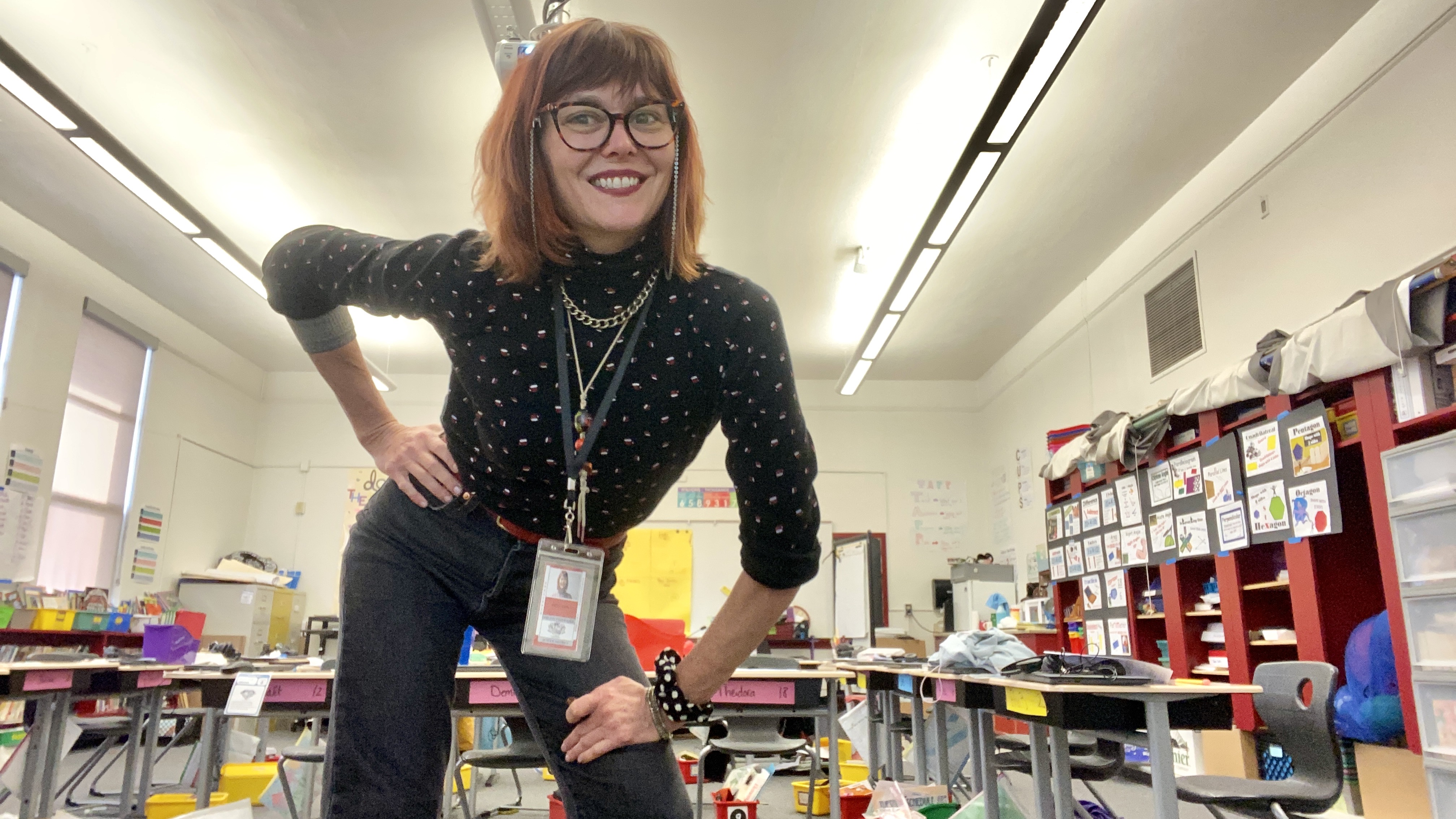
Update: I completed a two-month full-time guest teacher assignment teaching World Languages Spanish to high school students (9th-12th) Spanish 1/2/3. By utilizing a student-centered learning approach, cultural competence, and equitable teaching, I support students with pedagogy rooted in inquiry, hypothesis, information gathering, problem-solving, and action. I encourage all students to adopt an open-minded approach, and provide support to gifted students, students with disabilities, English Language Learners, and Multilanguage Learners with equity. "Not everything that is faced can be changed, but nothing can be changed until it is faced." James Baldwin I am in my second year of grad school, pursuing a dual master's degree in K-8 Elementary Education and K-12 Special Education (Mild to Moderate Disabilities). With my education grad studies and BFA from the Rhode Island School of Design (RISD), I synthesize creativity and best practices in education to find creative ways of supporting learners. My pursuit and purpose is to guide with compassion and enthusiasm. I encourage students to take ownership of their learning. By promoting student agency, students empower themselves to achieve in academic, social, emotional, and behavioral development. As an ADHD adult, I enjoy working with ADHD students and adults experiencing anxiety + depression. What is effortful for our neurodivergent brains is also our superpower! In my career, I have lived and worked in NYC as an editorial photographer, actor, and dancer. I lived in Berlin and pursued performance art + music while honing my communications skills in digital art + copywriting in Marketing. In Los Angeles, I succeeded as a commercial and theatrical actor. My skill set is suited for collaboration with all students to support and develop their passion for learning, exploration, and critical thinking. I live in southeastern Washington State and teach in northeastern Oregon and southeastern Washington State public school districts. I support students in the following subjects: Elementary School Reading Elementary School Math AP English High School English Middle School English Middle School Math Digital Media & Graphic Design Fine Arts & Filmmaking Creative Writing Study Skills & Organization German 1/2 Spanish 1/2/3 Spanish Language Arts English Language Learners English Language Development Algebra 1/2 Special Education (all subjects) High School Math "We all have ability. The difference is how we use it." Stevie Wonder Thank you for reading! Ms. Anna C.
Learning Spanish as a cognitive science student gave Adam an unusual advantage: he understands how the brain acquires a second language and uses that knowledge to make vocabulary and grammar stick faster. His Spanish minor at Rice covered everything from verb conjugation patterns to conversational fluency. Whether a student is wrestling with the subjunctive mood or building everyday speaking confidence, Adam tailors the approach to how they learn best.
Teaching Spanish through all four levels — from introductory grammar through advanced conversation — gives Charles a clear picture of where students typically get stuck, whether it's ser versus estar, subjunctive mood triggers, or building spoken fluency. He keeps lessons practical, connecting conjugation drills and vocabulary to real conversational scenarios so the language feels usable, not abstract.
Moriah teaches Spanish at the intermediate and advanced levels, tackling tricky areas like subjunctive mood, preterite-vs-imperfect distinctions, and complex sentence construction. Her analytical approach — developed through a Cornell education and years of teaching — translates well to breaking down grammar rules that often feel arbitrary to English speakers. She connects new structures to patterns students already recognize, making conjugation tables and vocabulary retention far less painful.
Mica teaches Spanish across four levels, from foundational conjugation and noun-adjective agreement through advanced grammar like the subjunctive mood and complex sentence structures. Her analytical background at Stanford carries over into how she breaks down tricky verb tenses — she treats grammar rules as logical systems rather than lists to memorize.
From Spanish 1 verb conjugations through Spanish 4 literary analysis, Pinelopi has tutored every level of the language and knows exactly where students tend to stall — usually around the subjunctive mood and indirect object pronouns. She breaks these tricky structures down into patterns that stick, building real fluency rather than rote translation skills.
Kate teaches Spanish at multiple levels, from verb conjugation fundamentals in Spanish 2 through the subjunctive mood and complex sentence structures in Spanish 4. Her engineering background gives her a systematic way of breaking down grammar rules that clicks for students who think analytically.
Conjugation tables are easy to memorize and easy to forget — Dalton instead teaches Spanish grammar through pattern recognition, showing students how verb tenses relate to each other so that irregular forms start making sense. He covers everything from foundational topics like ser vs. estar to more advanced concepts like the subjunctive mood. His approach builds reading and writing skills alongside speaking confidence.
Jane tutors Spanish 1 and 2 students on the grammar fundamentals that trip most English speakers up — ser versus estar, preterite versus imperfect, and pronoun placement in different sentence structures. Her analytical approach to language, sharpened by studying English at Princeton, gives her a knack for explaining why Spanish grammar rules work the way they do rather than just listing them.
Living and running a nonprofit in Ecuador has given Vanessa the kind of everyday Spanish fluency that classroom instruction alone can't replicate. She uses that immersion experience to teach grammar, vocabulary, and verb conjugations through real-world context — ordering food, reading local news, navigating conversations — so the language sticks instead of feeling like an abstract exercise.
Rather than drilling conjugation tables in isolation, Meghan teaches Spanish grammar in context — building sentences that students actually want to say. She minored in Spanish at Northwestern and then spent a semester at Madrid's top-ranked university taking upper-level courses entirely in Spanish alongside native speakers. That immersion experience means she understands the gap between textbook Spanish and how the language actually works.
Samuel holds a TEFL certificate and studies linguistics at Harvard, which means he understands how languages are structured at a foundational level — verb conjugation patterns, pronoun systems, sentence-building rules. He applies that systematic approach to Spanish grammar and vocabulary, making concepts like ser vs. estar or preterite vs. imperfect click rather than feel like arbitrary memorization.
Conjugation tables only get you so far — Ian builds Spanish skills by connecting grammar rules to actual usage patterns so students can construct sentences on the fly, not just recognize them on a worksheet. He's comfortable covering everything from foundational Spanish 1 vocabulary through the more complex subjunctive and preterite-vs-imperfect distinctions in Spanish 3. His structured, patient approach keeps the material from feeling overwhelming.
Testimonials
Because the right Spanish tutor makes all the difference.
Average Session Rating – Based on 3.4M Learner Ratings
Other Seattle Tutors
Related Languages Tutors in Seattle
Frequently Asked Questions
In a typical Seattle classroom with a 15:1 student-teacher ratio, students get limited opportunities to practice speaking Spanish. With personalized 1-on-1 instruction, you get consistent conversation practice tailored to your level—whether you're building confidence with basic phrases or refining fluency for advanced discussions. Tutors can provide immediate feedback on pronunciation and natural usage, helping you develop authentic speaking skills that classroom settings often can't offer.
Verb conjugation is one of the most common challenges for Spanish learners because it requires understanding patterns across multiple tenses and irregular verbs. Rather than memorizing conjugation tables, expert tutors help you recognize patterns and practice conjugations in real conversation contexts, which makes the rules stick. Spaced repetition and retrieval practice—reviewing conjugations over time in different scenarios—are proven techniques that accelerate mastery.
Vocabulary retention improves dramatically when words are learned in context and used actively in conversation rather than through isolated lists. Tutors connect new vocabulary to topics you care about and incorporate it into speaking practice, which strengthens memory through multiple retrieval pathways. Combining visual, auditory, and conversational exposure to new words helps them move from short-term to long-term memory.
Yes—one of the biggest advantages of personalized instruction is getting real-time feedback on your pronunciation from someone who can model correct sounds and explain the mechanics of Spanish phonetics. Many Seattle students benefit from understanding how Spanish vowels differ from English, how to roll your Rs, and regional pronunciation variations. Regular practice with a tutor builds muscle memory for sounds that don't exist in English, helping you sound more natural.
The most effective approach combines both: understanding grammar rules gives you a foundation, but natural usage—how native speakers actually communicate—is what makes you fluent. Expert tutors balance explicit grammar instruction with conversational practice, so you learn why rules exist and how they work in real dialogue. This hybrid approach helps you avoid sounding overly formal or textbook-like.
Language and culture are deeply connected—understanding cultural context helps you grasp idioms, humor, and communication styles that pure grammar can't teach. Tutors often incorporate cultural elements into lessons, whether that's discussing Spanish-speaking regions, current events, or media, which makes learning more engaging and meaningful. This immersion-style approach accelerates fluency because you're learning language as it's actually used in real-world contexts.
Your first session focuses on understanding your goals, current level, and learning style. Tutors assess your strengths in reading, writing, speaking, and listening to create a personalized plan—whether you're preparing for AP Spanish, building conversational confidence, or working toward fluency. This foundation ensures every lesson after that targets exactly what you need.
Varsity Tutors connects you with tutors who have deep expertise in Spanish language instruction—many are native speakers, have lived in Spanish-speaking countries, or hold advanced degrees in Spanish linguistics and education. All tutors are vetted for subject knowledge and teaching ability, ensuring you get instruction from someone who understands both the language and effective teaching methods.
Let’s find your perfect tutor
Answer a few quick questions. We’ll recommend the right plan and match you with a top 5% tutor.