Award-Winning Physical Chemistry Tutors
serving Ogden, UT
Physical Chemistry
Tutors in Ogden
Private 1-on-1 tutoring, weekly live classes for academic support, test prep & enrichment, practice tests and diagnostics, and more to elevate grades and test scores.
Based on 3.4M Learner Ratings
UniversitiesSchools & Universities
DeliveredHours Delivered
ProficiencyGrowth in Proficiency
Who needs tutoring?
No obligation. Takes ~1 minute.
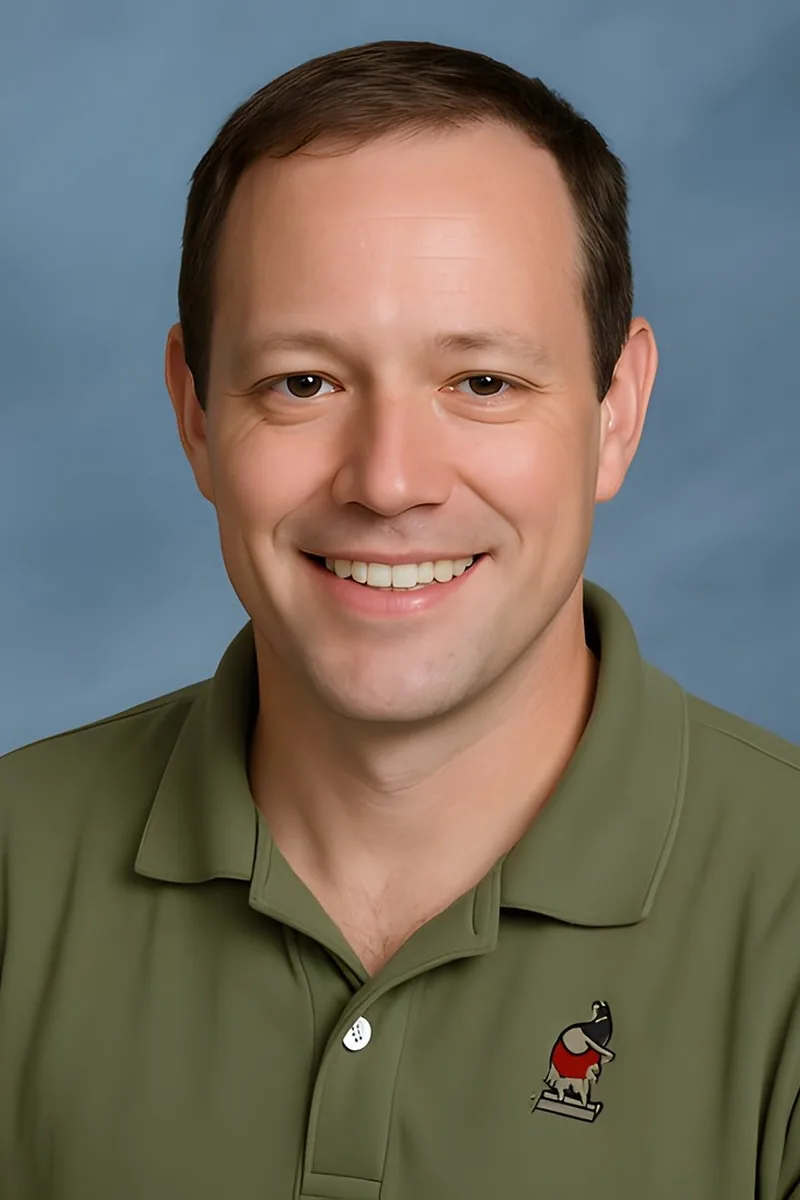

Differential equations, calculus, and organic chemistry all sit in Nate's regular teaching rotation, which means he's constantly moving between the math and the chemistry that p-chem smashes together — and he knows exactly where students lose the thread between the two. He zeroes in on building intuition around concepts like chemical potential and equilibrium thermodynamics by tying each derivation back to the reaction behavior students already recognize from general and organic chemistry. Rated 5.0 by students.
Teaching high school chemistry daily means Kathleen regularly translates thermodynamic concepts like enthalpy, entropy, and equilibrium into language that clicks — a skill that carries directly into the more calculus-heavy treatment those same ideas get in a p-chem course. Her M.S.Ed from Penn and chemistry degree give her both the content depth and the instinct for spotting exactly where a derivation stops making sense to a student. Rated 5.0 by students.
Pre-med coursework at Rutgers — graduating summa cum laude with a 4.0 — put Sam through the gauntlet of thermodynamics, kinetics, and quantum chemistry that p-chem demands, all while building the calculus fluency needed to survive dense derivations. He approaches topics like enthalpy, entropy, and rate laws by stripping each equation back to the physical scenario it models, making the leap from math to molecular meaning less painful.
Eight years as a chemistry professor at Trinity College meant Maria taught p-chem repeatedly — not just lecturing on thermodynamic state functions and quantum mechanical models, but sitting with students in office hours untangling the specific derivation step where they got lost. That Ph.D.-level command of the subject, combined with a 5.0 rating, reflects someone who knows exactly which Maxwell relation or partition function integral is about to cause trouble and can rework it on the spot.
Katherine's broad math and science background — spanning calculus, thermodynamics, and physics — means she's comfortable with the multivariable calculus and differential equations that make p-chem derivations so dense. She takes apart concepts like Maxwell relations and chemical potential by slowing down at the exact algebraic step where the physical intuition tends to disappear. Rated 5.0 by students.
A bio-organic chemistry degree means Alex spent serious time with thermodynamic cycles, kinetics derivations, and the quantum mechanical underpinnings of molecular behavior — the core of any p-chem course. He approaches the subject by tying each derivation back to the organic and biochemical systems students already recognize, so an intimidating equation like the Arrhenius expression becomes a story about why reactions speed up at the molecular level.
Thermodynamics, kinetics, and quantum mechanics all converge in physical chemistry — and that's exactly where Monika's biochemistry and molecular biology training intersects. She breaks down intimidating topics like Gibbs free energy calculations and reaction rate laws by tying them to real chemical systems she studied during her PhD research. Rated 4.8 by students.
Thermodynamics, quantum mechanics, kinetics — physical chemistry is where math and chemistry collide, and most students need a tutor comfortable in both languages. Natasha's chemical engineering degree gave her deep fluency with partition functions, phase diagrams, and rate laws, and her MIT graduate work keeps those concepts sharp. She approaches p-chem by deriving key equations alongside students so the physics behind each formula becomes visible.
Cornell's chemical engineering curriculum puts you through p-chem at an intense pace — Rahul graduated magna cum laude, which means he didn't just survive thermodynamics, quantum mechanics, and kinetics but internalized the reasoning behind each derivation. He pushes past rote symbol manipulation to make sure students can articulate why a particular state function applies or what a phase boundary physically represents. Rated 4.9 by students.
Environmental statistics at Rice required Alex to work extensively with the same calculus-heavy quantitative methods — differential equations, statistical modeling, multivariable analysis — that students encounter in thermodynamics and kinetics derivations throughout a p-chem sequence. His geography background adds a surprising edge: understanding energy balances and phase transitions in Earth systems translates directly to making sense of state functions and equilibrium in a chemistry context.
Cornell's biological sciences curriculum put Alec through rigorous quantitative coursework, but it was his TA experience in general chemistry — running problem-solving sessions where students had to wrestle with energy, equilibrium, and rate laws — that sharpened his instinct for where p-chem concepts start to blur. He teaches the subject by slowing down at the exact calculus step where the physical meaning tends to disappear, whether that's setting up a thermodynamic cycle or interpreting what a rate constant actually tells you about molecular collisions. Rated 4.8 by students.
Testimonials
Because the right Physical Chemistry tutor makes all the difference.
Average Session Rating – Based on 3.4M Learner Ratings
Nearby Physical Chemistry Tutors
Other Ogden Tutors
Related Science Tutors in Ogden
Frequently Asked Questions
Physical chemistry bridges chemistry and physics, focusing on the properties of molecules, energy changes, and reaction rates—concepts that require both mathematical reasoning and abstract thinking. Many students find it challenging because it demands strong foundational math skills (calculus, algebra) combined with the ability to visualize molecular-level phenomena you can't see with your eyes. Understanding the "why" behind equations is just as important as solving them, which sets physical chemistry apart from memorization-based chemistry courses.
Students typically struggle with thermodynamics concepts (entropy, enthalpy, free energy), kinetics and reaction mechanisms, and quantum mechanics fundamentals. Balancing mathematical problem-solving with conceptual understanding is a major hurdle—you might get the right answer but not truly grasp what's happening at the molecular level. Many also find unit conversions and dimensional analysis frustrating, especially when dealing with complex formulas like the Nernst equation or rate laws.
Expert tutors can break down abstract ideas like molecular orbitals, reaction coordinate diagrams, and thermodynamic cycles into concrete explanations and visual models. They work through practice problems step-by-step, showing you not just the math but the underlying chemistry—why we use certain equations and what they tell us about molecular behavior. This approach transforms confusing theory into intuitive understanding, making concepts like entropy or activation energy click.
Yes—tutors can help you design experiments, understand the scientific method applied to your lab, interpret data, and connect lab results to theoretical concepts covered in class. Whether you're measuring reaction rates, determining equilibrium constants, or analyzing calorimetry data, tutoring helps you understand what your experiments reveal about physical chemistry principles. This support strengthens both your lab skills and your grasp of the underlying chemistry.
Strong math skills definitely help, but tutoring can support you even if math isn't your strongest area. Tutors can review calculus and algebra concepts as needed, then show you how to apply them in physical chemistry contexts. The goal is to build confidence with the math tools you need while keeping the focus on understanding the chemistry—so you're not just plugging numbers into formulas, but understanding what they mean.
Your first session focuses on understanding where you stand—what topics feel solid, where you're struggling, and what your goals are (improving grades, preparing for an exam, or deepening understanding). The tutor will likely work through a problem or concept with you to get a sense of your learning style and gaps. From there, you'll develop a personalized plan that targets your specific challenges while building a strong foundation in the concepts you'll need going forward.
Varsity Tutors connects you with tutors who have strong backgrounds in physical chemistry and experience teaching it to high school and college students. When you reach out, you'll be matched with someone whose expertise and teaching style fit your needs. Tutors understand the Ogden area and can work with your schedule, whether you need help with a specific unit, exam prep, or ongoing support throughout the course.
Physical chemistry requires understanding the "why" behind concepts—memorizing the van't Hoff equation won't help if you don't know what colligative properties are or why they matter. Tutors guide you through problem-solving by asking questions that build your reasoning skills, helping you recognize patterns across different topics (like how entropy connects to spontaneity and free energy). This approach develops scientific thinking that transfers to new problems you haven't seen before, rather than just preparing you for specific exam questions.
Let’s find your perfect tutor
Answer a few quick questions. We’ll recommend the right plan and match you with a top 5% tutor.