Award-Winning Physical Chemistry Tutors
serving New Orleans, LA
Physical Chemistry
Tutors in New Orleans
Private 1-on-1 tutoring, weekly live classes for academic support, test prep & enrichment, practice tests and diagnostics, and more to elevate grades and test scores.
Based on 3.4M Learner Ratings
UniversitiesSchools & Universities
DeliveredHours Delivered
ProficiencyGrowth in Proficiency
Who needs tutoring?
No obligation. Takes ~1 minute.
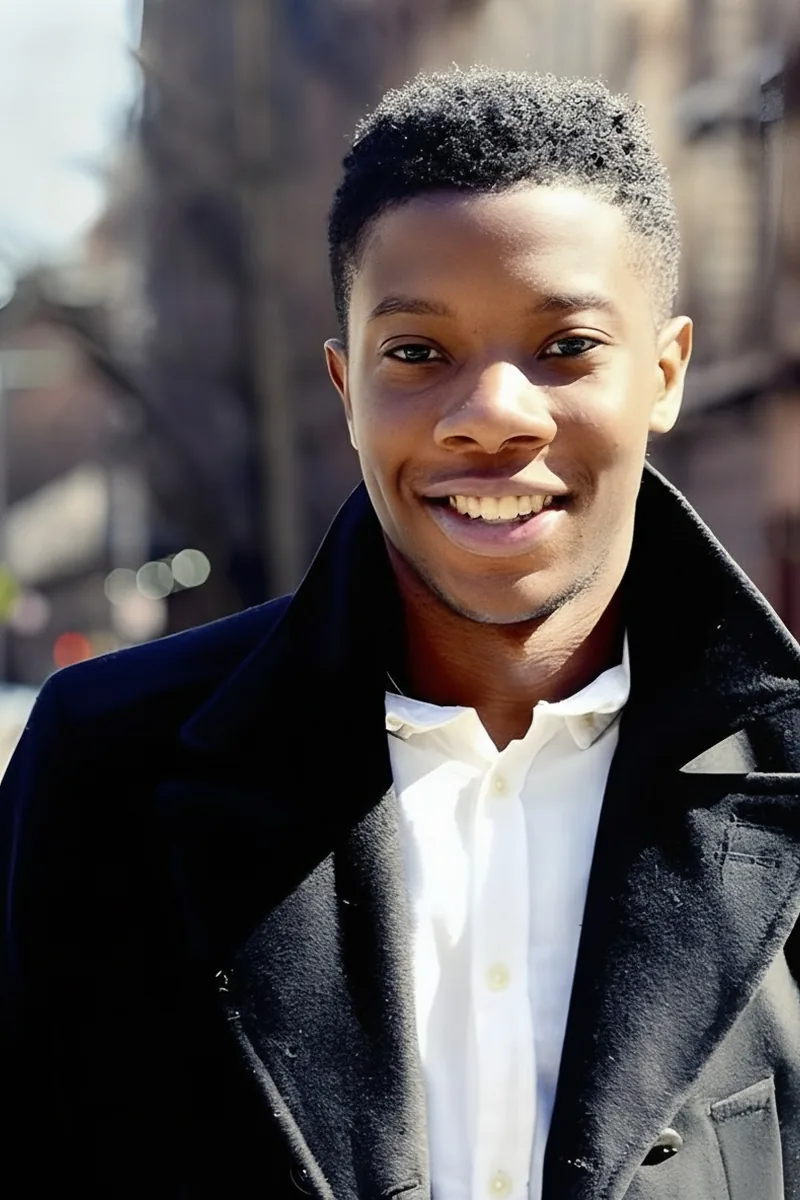
Before switching to economics at Columbia, Damani was on the pre-med track — which means he's recently sat through the same thermodynamics, kinetics, and calculus-intensive chemistry coursework that p-chem demands, and remembers exactly where the conceptual gaps tend to open up. He approaches topics like enthalpy, equilibrium constants, and rate laws by reconstructing the reasoning behind each equation rather than just presenting the final derivation. Rated 5.0 by students.

I am a public school teacher (Chemistry and Living Environment) but can tutor most sciences. I truly believe in differentiated learning and once I know the learning style of a student, I tailor my teaching style for optimum time usage. I love to utilize stories from my real life experiences in labs to help students understand the implications of their science education.
I am most passionate about biology and chemistry. I am a firm proponent of education, believing it to be absolutely necessary for an improved quality of life, and I try to impart this appreciation to all of my students.
A bio-organic chemistry degree means Alex spent serious time with thermodynamic cycles, kinetics derivations, and the quantum mechanical underpinnings of molecular behavior — the core of any p-chem course. He approaches the subject by tying each derivation back to the organic and biochemical systems students already recognize, so an intimidating equation like the Arrhenius expression becomes a story about why reactions speed up at the molecular level.
Pre-med coursework at Rutgers — graduating summa cum laude with a 4.0 — put Sam through the gauntlet of thermodynamics, kinetics, and quantum chemistry that p-chem demands, all while building the calculus fluency needed to survive dense derivations. He approaches topics like enthalpy, entropy, and rate laws by stripping each equation back to the physical scenario it models, making the leap from math to molecular meaning less painful.
I am currently a graduate student in Chemical Engineering at the University of Delaware. I am working on using magnetic and flow fields to create advanced materials by directing the self-assembly process of nanoparticles . I have tutored students in Chemistry, Physics and Math all throughout undergraduate and graduate work. I truly enjoy breaking material down into its core components that allows the students to understand complicated information.
Pre-med coursework at Rice plus dual degrees in environmental sciences and ecology meant Daniel was solving energy balance problems and applying thermodynamic reasoning to natural systems well before encountering p-chem's formal derivations. His lab technician work at Rice keeps the quantitative skills sharp — setting up calculations involving enthalpy, equilibrium, and kinetic models is part of the daily routine, not a distant textbook memory.
A physics degree means Eitan spent years inside the quantum mechanics, statistical mechanics, and thermodynamics that p-chem courses formalize on the chemistry side — Schrödinger's equation, Boltzmann statistics, and state functions are native territory rather than new abstractions. He teaches the derivations by clarifying the physical picture each equation encodes, so a student wrestling with a partition function or a Carnot cycle can see the molecular behavior driving every calculus step. Holds a 5.0 rating.
Cornell's biological sciences curriculum put Alec through rigorous quantitative coursework, but it was his TA experience in general chemistry — running problem-solving sessions where students had to wrestle with energy, equilibrium, and rate laws — that sharpened his instinct for where p-chem concepts start to blur. He teaches the subject by slowing down at the exact calculus step where the physical meaning tends to disappear, whether that's setting up a thermodynamic cycle or interpreting what a rate constant actually tells you about molecular collisions. Rated 4.8 by students.
Two years as an organic chemistry lab TA at the college level gave Maha hands-on experience with the reaction kinetics and thermodynamic reasoning that form the backbone of any p-chem sequence. Now pursuing graduate work in public health at Johns Hopkins, she approaches topics like equilibrium constants and energy diagrams through the lens of someone who's had to apply them in real experimental settings, not just derive them on paper. Rated 5.0 by students.
Neuroscience at the undergraduate level means Amy has already tangled with the thermodynamics and kinetics that p-chem formalizes — Nernst equation derivations, membrane energetics, and the statistical behavior of ion channels all demand that same calculus-heavy reasoning. She uses those biological touchpoints to make abstract topics like entropy and equilibrium constants feel grounded in systems students can actually picture. Rated 5.0 by students.
As an MD/PhD student at Northwestern with a chemistry PhD focus and a B.S. in Chemical Science from Michigan, Austin has gone deep on the thermodynamics and quantum mechanics that form p-chem's backbone — and he's still actively working through advanced coursework in these areas. He tackles derivations by building chemical intuition first, so when a student hits a wall at, say, a Legendre transform connecting internal energy to Gibbs free energy, the math follows naturally from understanding what each variable physically represents.
Testimonials
Because the right Physical Chemistry tutor makes all the difference.
Average Session Rating – Based on 3.4M Learner Ratings
Nearby Physical Chemistry Tutors
Other New Orleans Tutors
Related Science Tutors in New Orleans
Frequently Asked Questions
Physical chemistry bridges chemistry and physics by studying the physical properties of molecules and how chemical reactions occur at the atomic level. It's challenging because it requires understanding abstract concepts like thermodynamics, kinetics, and quantum mechanics—often simultaneously—while also applying mathematical problem-solving skills. Many students struggle because it demands both conceptual understanding and computational accuracy, making it one of the most demanding chemistry courses.
Students often struggle with visualizing molecular behavior and energy diagrams, balancing complex equations, and understanding how theoretical concepts connect to real lab work. Unit conversions and dimensional analysis trip up many learners, as does the heavy mathematics involved in thermodynamics and kinetics problems. Personalized tutoring helps break down these abstract concepts into manageable pieces and shows how they apply to actual chemical systems.
During an initial session, a tutor will assess your current understanding of foundational concepts, identify specific areas where you're struggling (whether it's thermodynamics, equilibrium, or kinetics), and discuss your learning goals. They'll then create a personalized plan that targets your weak spots while reinforcing your strengths, often starting with diagnostic problems to pinpoint exactly where misconceptions exist.
Physical chemistry is fundamentally about understanding—memorizing formulas without grasping the underlying principles will leave you stuck when problems deviate from textbook examples. Effective tutoring focuses on building conceptual understanding first, then showing how formulas emerge from those concepts. Once you truly understand why ΔG = ΔH - TΔS or how activation energy affects reaction rates, you can solve novel problems confidently without relying on memorization.
Expert tutors help you see how abstract concepts like entropy, enthalpy, and reaction mechanisms directly apply to experiments you conduct in the lab. They can explain why a reaction proceeds at a certain rate, how to interpret spectroscopy data, or what's happening at the molecular level during a calorimetry experiment. This connection transforms physical chemistry from purely theoretical to tangible, making both coursework and lab reports easier to master.
Strong math skills definitely help, but tutors can work with you on both the chemistry concepts and the mathematical tools you need. If calculus, logarithms, or unit conversions are holding you back, a tutor will address those gaps alongside physical chemistry content. Many students find that personalized instruction in both areas—refreshing math fundamentals while learning chemistry—accelerates their progress significantly.
Tutors help you move beyond memorizing solutions to understanding problem-solving strategies, recognizing which concepts apply to different question types, and practicing under exam conditions. They'll work through past exams with you, identify patterns in what's tested, and build your confidence in tackling unfamiliar problems. Regular practice combined with targeted feedback on your reasoning—not just your answers—is what drives exam success.
Look for tutors with strong backgrounds in chemistry or related sciences—ideally with experience teaching or tutoring physical chemistry specifically. They should be able to explain complex concepts clearly, show you how to approach problem-solving systematically, and adapt their teaching to your learning style. Varsity Tutors connects you with expert tutors who have proven expertise in physical chemistry and a track record of helping students master challenging material.
Let’s find your perfect tutor
Answer a few quick questions. We’ll recommend the right plan and match you with a top 5% tutor.