Award-Winning Middle School Math Tutors
serving New Orleans, LA
Middle School Math
Tutors in New Orleans
Private 1-on-1 tutoring, weekly live classes for academic support, test prep & enrichment, practice tests and diagnostics, and more to elevate grades and test scores.
Based on 3.4M Learner Ratings
UniversitiesSchools & Universities
DeliveredHours Delivered
ProficiencyGrowth in Proficiency
Who needs tutoring?
No obligation. Takes ~1 minute.
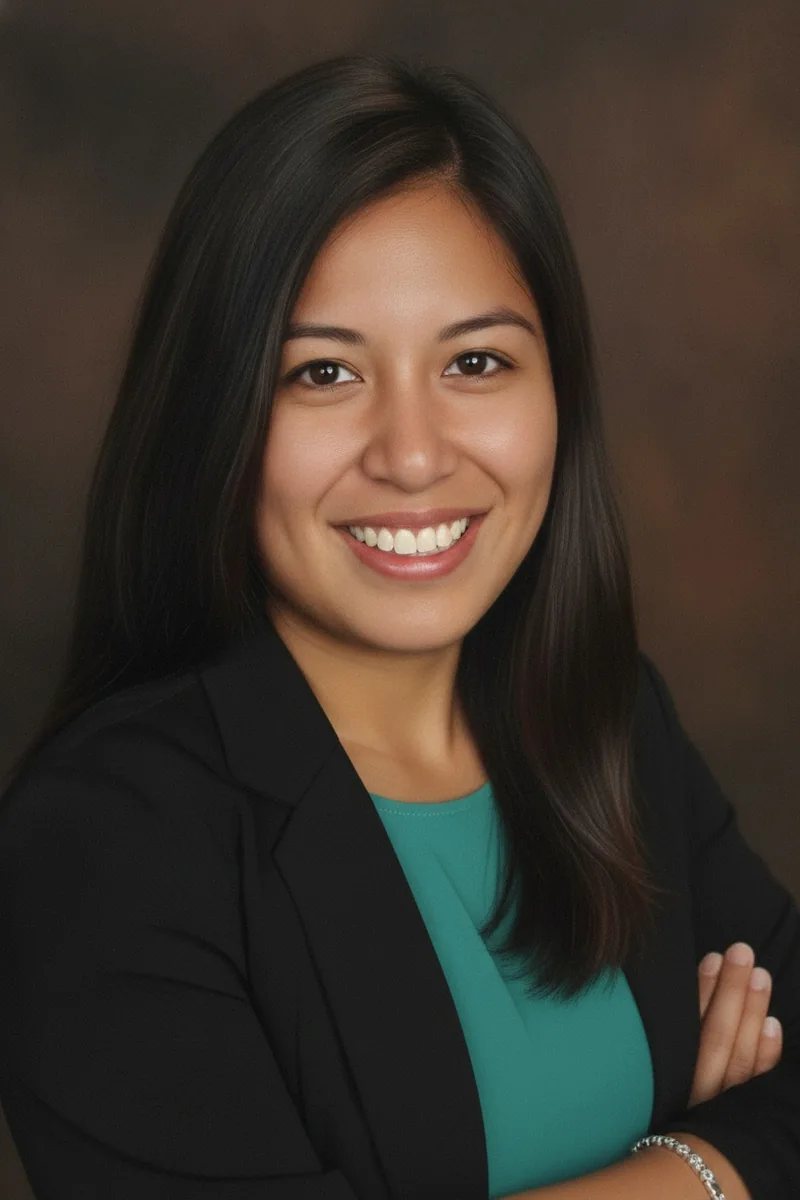
Robin's biology and medical training means she's spent years converting formulas, dosage calculations, and lab measurements into real answers — so when a middle schooler is stuck on ratios, decimals, or setting up a basic equation, she can pull from actual scenarios where getting the math right genuinely matters. Her 5.0 rating speaks to a teaching style that keeps students engaged rather than overwhelmed. She's particularly effective at bridging the gap between number-crunching and the more abstract variable work that's right around the corner in algebra.
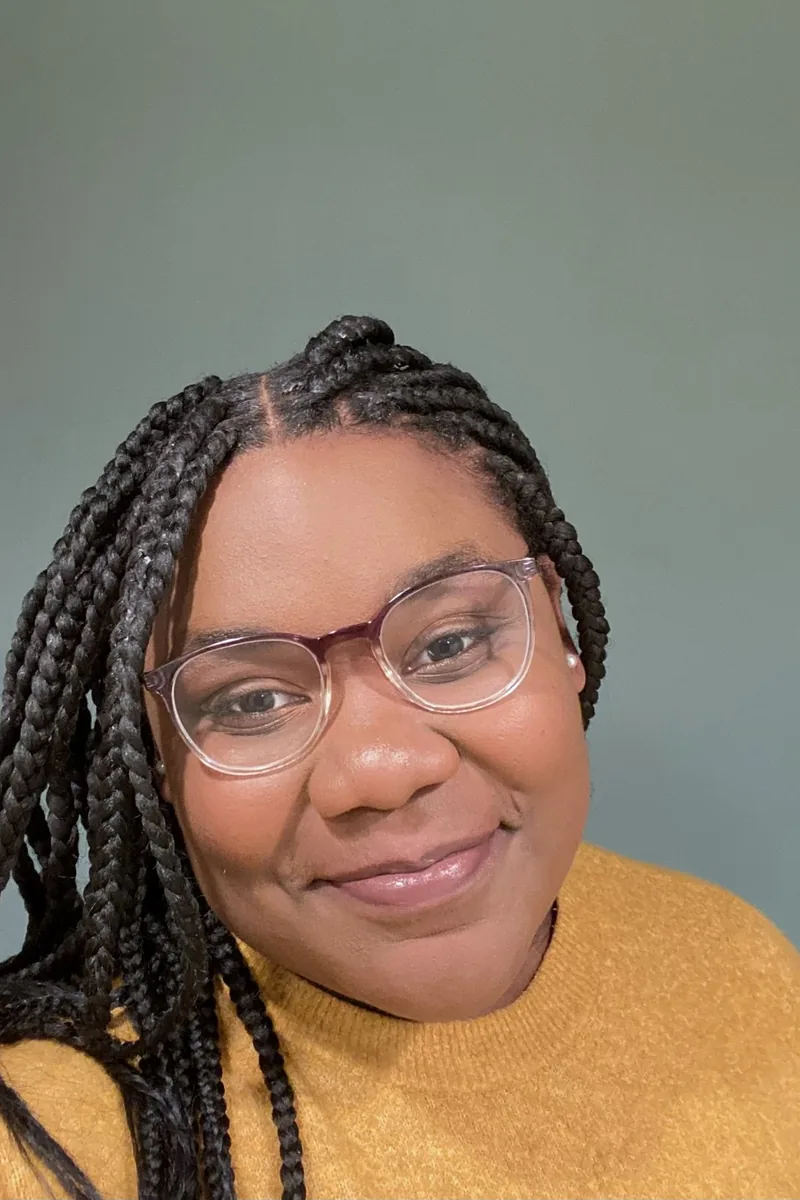
As a dedicated tutor with over 5 years of experience, I hold a Bachelor's degree in Psychology and Sociology from Tulane University, which informs my approach to understanding student needs. I specialize in subjects such as Algebra, Psychology, and American History, and I am passionate about fostering a supportive learning environment where students can thrive. My teaching philosophy centers on building strong relationships with my students, using tailored strategies that cater to their unique learning styles. I find great joy in helping students develop their executive functioning skills and confidence, enabling them to achieve academic success. Outside of tutoring, I enjoy reading and exploring new educational resources, which keeps my methods fresh and engaging.
I am an educator of the sciences. I have taught Life Science, Biology, Physical and Earth Sciences for fourteen years in grades 7-12. I trained with the Keystone Science School of Denver, Colorado, the LSU Coastal Roots Program and have earned over six hundred hours in science literacy training in many areas. Science has a very strong mathematical component and that is why I also specialize in Math tutoring.
The jump from arithmetic to middle school math trips students up when fractions, ratios, and negative numbers all arrive at once. Rachel breaks each concept into manageable steps and ties them to concrete examples, building the kind of number sense that makes pre-algebra and beyond feel approachable rather than overwhelming.
Three science degrees — including one in chemistry — mean Sung has spent years relying on algebra, ratios, and unit conversions in lab settings, so he can show middle schoolers exactly how the math they're learning powers real scientific work. He's particularly strong at breaking down fraction and decimal operations by tying them to measurement and mixing problems that make the steps feel logical rather than arbitrary. Rated 5.0 by students.
Fractions, ratios, and proportional reasoning trip up more middle schoolers than almost any other topic — and Diana tackles these by connecting them to real scenarios students actually encounter. Her linguistics background gives her a sharp ear for how kids describe their thinking, so she can pinpoint exactly where a concept breaks down. She's a certified teacher who knows how to bridge the gap between arithmetic and the abstract reasoning algebra will demand.
Economics majors spend their days building models out of exactly the kind of math middle schoolers are learning — graphing relationships, manipulating equations, interpreting data — so Mackenzie can show students where skills like proportional reasoning and solving for unknowns actually lead. Her 35 ACT score speaks to rock-solid fundamentals, and she's particularly effective at helping kids organize their scratch work so careless mistakes stop eating into their grades. Rated 4.8 by students.
Having completed the full IB diploma program and scored a 35 on the ACT, Dalton knows what it takes to build the kind of mathematical fluency that carries through high school and beyond — and he can trace that back to the fundamentals middle schoolers are working on now, like operations with integers and setting up simple equations. His Mass Communications degree sharpened his ability to explain ideas clearly and concisely, which turns out to be exactly what a confused seventh grader needs when a concept like negative number arithmetic suddenly stops making sense.
From ratios and proportions to coordinate graphing, middle school math covers a huge range of skills in a short time. Sydney breaks each topic into manageable steps, connecting new material back to arithmetic students already know so nothing feels like it came out of nowhere. She's currently at the University of Chicago and calls math her absolute favorite subject to tutor.
Running a tutoring program at a charter middle school in Boston gave Liz a front-row seat to every common math struggle sixth through eighth graders face — from proportional reasoning to coordinate graphing to early work with expressions and equations. She pairs that classroom experience with a Master's in Special Education, which means she's practiced at adapting explanations on the fly for different learning styles. Rated 4.7 by students and families.
Akarsh's cellular and molecular biology training — both undergrad and master's level — means he's been doing math in the service of science for years, from calculating dilution ratios to interpreting growth curves. That gives him a practical vocabulary for showing middle schoolers how decimals, fractions, and basic equations actually function outside a textbook. His 1560 SAT score speaks to the fundamentals being rock-solid underneath the advanced science.
Scoring a 35 on the ACT and a 1550 on the SAT means Vansh didn't just survive middle school math — he built the kind of fluency with fractions, decimals, and early algebraic reasoning that carries through standardized testing years later. His finance studies at WashU in St. Louis keep that quantitative thinking sharp, and he's particularly good at showing students how to organize their scratch work so careless mistakes stop eating into their grades. Rated 4.8 by students.
A year as a course assistant in Harvard's math department — teaching introductory calculus to undergraduates — gave Richard an unusual vantage point on middle school math: he knows exactly which arithmetic and pre-algebraic habits (especially around fractions, negative numbers, and variable expressions) need to be rock-solid before higher math stops making sense. He scored a 36 ACT and 1600 SAT, but more relevantly, he's spent time volunteering to teach a weekly course to middle schoolers through Harvard's Leadership Institute, so he's comfortable matching his explanations to how younger students actually think.
Every concept in middle school math — ratios, proportional reasoning, negative numbers, basic geometry — becomes a building block for high school. Tracy pinpoints exactly which block is wobbly before stacking more on top, whether that means revisiting fraction operations or pushing ahead into linear equations. She's been tutoring students at this level since she was in middle school herself, so she understands where confusion typically hides.
Scoring a 35 ACT and 1570 SAT means Amber has the quantitative chops to teach middle school math cold, but her theater background is what makes her especially effective — she knows how to read an audience, adjust on the fly, and make a concept land. She zeroes in on the specific spot where a student's understanding breaks down, whether that's negative number operations or setting up basic equations, and rebuilds from there. Rated 5.0 by students.
Testimonials
Because the right Middle School Math tutor makes all the difference.
Average Session Rating – Based on 3.4M Learner Ratings
Nearby Middle School Math Tutors
Other New Orleans Tutors
Related Math Tutors in New Orleans
Frequently Asked Questions
Middle school math moves from memorizing procedures to understanding why those procedures work. This conceptual jump can be challenging—students need to see the connections between topics like fractions, ratios, and proportional relationships. Personalized 1-on-1 instruction helps students build these deeper understandings by working through problems step-by-step, asking questions, and discovering patterns rather than just following formulas.
Word problems require students to translate real-world situations into mathematical language—a skill that takes practice. A tutor can work with your student to break problems into manageable steps: identifying what's given, what's being asked, and which operations or strategies apply. With personalized guidance, students develop a problem-solving approach they can apply to any word problem, rather than feeling stuck every time they encounter one.
Multi-step equations trip up many middle schoolers because they require understanding both the 'how' (following steps) and the 'why' (maintaining balance on both sides). Tutors help students visualize equations as balanced scales and practice solving problems with clear explanations at each step. This builds confidence and helps students catch their own mistakes rather than just memorizing a procedure.
Math anxiety is real, and personalized 1-on-1 instruction is one of the most effective ways to build confidence. Working with a tutor in a low-pressure environment lets students ask questions without worry, tackle problems at their own pace, and celebrate small wins. Over time, as they see themselves solving problems and understanding concepts, anxiety often decreases and confidence grows.
The first session is about getting to know your student and understanding where they're struggling. A tutor will ask about specific topics causing difficulty, review recent classwork or tests, and identify whether the challenge is conceptual understanding, problem-solving strategy, or something else. This assessment helps create a personalized plan focused on your student's exact needs.
Yes. Varsity Tutors connects you with tutors who are experienced in middle school math and familiar with different curriculum approaches used across New Orleans schools. Whether your student's class uses a traditional textbook, a standards-based curriculum, or a blended approach, tutors can align their instruction with what's being taught in the classroom and reinforce those concepts.
Absolutely—graphing requires spatial reasoning and understanding how equations translate to visual representations, which is challenging for many middle schoolers. Tutors help students practice plotting points, understanding slope and intercepts, and seeing how changes to an equation affect the graph. With hands-on practice and clear explanations, students move from confusion to confidence with graphing.
Progress shows up in multiple ways: improved test and quiz scores, homework completed with fewer errors, increased willingness to attempt challenging problems, and students explaining their reasoning clearly. Most students see noticeable improvement within a few weeks of consistent tutoring, though the timeline depends on how much support they need and how frequently they meet with a tutor.
Let’s find your perfect tutor
Answer a few quick questions. We’ll recommend the right plan and match you with a top 5% tutor.