Award-Winning AP Physics C: Mechanics Tutors
serving New Orleans, LA
AP Physics C: Mechanics
Tutors in New Orleans
Private 1-on-1 tutoring, weekly live classes for academic support, test prep & enrichment, practice tests and diagnostics, and more to elevate grades and test scores.
Based on 3.4M Learner Ratings
UniversitiesSchools & Universities
DeliveredHours Delivered
ProficiencyGrowth in Proficiency
Who needs tutoring?
No obligation. Takes ~1 minute.
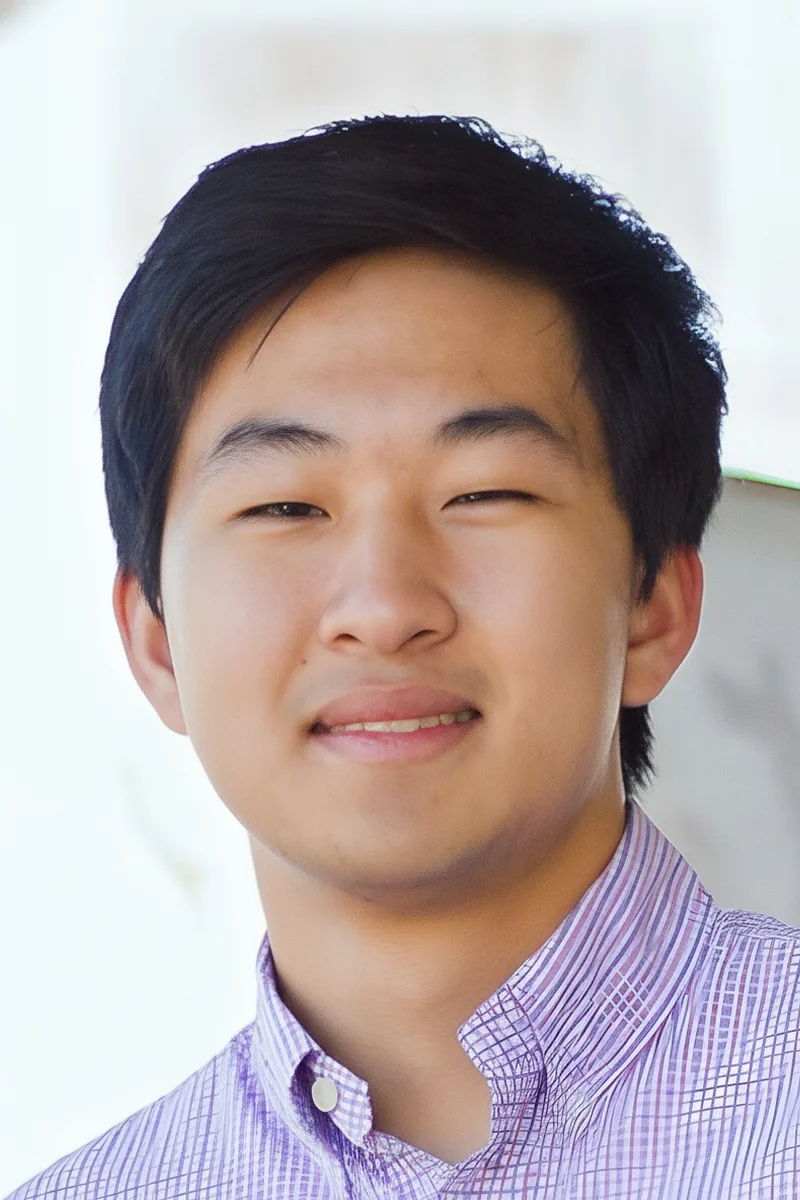
Computational mathematics at Rice is essentially applied calculus with the volume turned up — Vinson's coursework in differential equations and numerical methods maps directly onto the mechanics problems where students need to set up Newton's second law as a differential equation and solve it, not just memorize kinematic formulas. His 36 ACT and National AP Scholar status (including AP Physics and the full calculus sequence) mean he's been through the exact exam pressure these students face. Rated 4.8 by students.

Data analytics trains you to model systems mathematically and interpret what the numbers actually mean — skills Vishank applies directly when tackling AP Physics C: Mechanics problems that require setting up kinematic equations or integrating variable forces. His coursework in calculus through linear algebra, combined with tutoring across both math and science, means he can diagnose whether a student's struggle on a free-response problem is a physics misunderstanding or a calculus execution error. Rated 4.9 by students.
Jonathan earned his PhD in physics, which means the calculus-based mechanics in AP Physics C — from deriving equations of motion for coupled oscillators to setting up torque integrals for non-uniform rigid bodies — is territory he's navigated at a research level. His teaching fellowship during graduate school had him running students through exactly these problems, building intuition for when to apply Newton's second law in differential form versus jumping straight to energy methods. Rated 5.0 by students.
UCLA's engineering curriculum has David solving the same calculus-based mechanics — work-energy integrals, variable-force problems, rotational inertia derivations — that the AP Physics C exam tests, and his computer science training adds a systematic, algorithmic approach to setting up multi-step free-response problems. He's especially sharp at teaching students to diagram a physical system, identify which conservation law applies, and then write the correct integral or derivative before calculating anything. Rated 4.8 by students.
Bidyut's biomedical engineering coursework at Johns Hopkins fuses calculus-based mechanics with real physical systems — analyzing forces on prosthetic joints, modeling fluid dynamics in arteries — so the Newtonian mechanics and rotational problems on the AP Physics C exam feel like simplified versions of what he already does daily. He scored a 36 ACT and holds a 5.0 tutoring rating, and he's particularly sharp at showing students how to translate a word problem into the correct integral or differential equation before touching any numbers.
A math degree gives Dalila the calculus fluency that separates AP Physics C from the algebra-based course — she's comfortable setting up the integrals and derivatives that underpin variable-force problems, work-energy applications, and kinematics beyond constant acceleration. She also tutors AP Physics 1, AP Physics 2, and both SAT Math Subject Tests, so she understands how to scale her explanations depending on whether a student needs help with the underlying physics concepts or specifically with translating a free-body diagram into a solvable differential equation.
Double-majoring in physics and computer science at Stony Brook, Kiran lives in the calculus-based mechanics world daily — setting up work-energy integrals, deriving equations of motion, solving the same kinds of problems AP Physics C puts on the free-response section. His 34 ACT and physics coursework give him both the mathematical fluency and the physical intuition to explain why a particular integral applies to a given force scenario, not just how to evaluate it.
Scoring a 5 on both AP Physics C: Mechanics and AP Calculus BC while taking 16 AP courses total, Derek built the habit of connecting calculus tools to physical intuition under real exam pressure — and he brings that same efficiency to tutoring. His computer science major at Harvard sharpens his approach to mechanics problems: decompose the system, identify constraints, then execute the math cleanly, much like debugging code. Rated 4.9 by students, he's particularly effective at teaching the structured problem-solving that turns rotational dynamics and variable-force scenarios into manageable steps.
An applied physics degree means Karen didn't just study mechanics for an exam — she built her entire undergraduate education around the Newtonian framework, calculus-based problem-solving, and laboratory work that AP Physics C condenses into a single course. She's especially sharp at connecting real-world scenarios (a spinning figure skater, a car banking a curve) to the free-body diagrams and integrals students need to produce under timed conditions. Rated 5.0 by students.
Simulating cosmic ray acceleration through turbulent plasmas requires exactly the kind of calculus-based mechanics reasoning that AP Physics C tests — Newton's laws applied to complex systems, rotational dynamics, and energy methods. Dennis walks students through the hardest problems on the exam by teaching them to set up the physics first and let the calculus follow naturally. Rated 4.7 by students.
Biology majors at Cornell don't usually seek out calculus-based physics — but Drishti's 1500 SAT and her comfort across both AP Calculus BC and AP Physics C suggest she genuinely clicks with the quantitative side of science, not just the biological. She's especially useful for students who need someone to slow down on the free-body-diagram-to-integral pipeline, translating the physical setup into the calculus without assuming steps are obvious. Rated 5.0 by students.
Rice's mechanical engineering program puts Ashton through calculus-based statics, dynamics, and kinematics every semester — the same core mechanics that AP Physics C tests, just applied to real structural and machine systems. That daily exposure means he can spot whether a student's free-response mistake is a physics misread or a calculus execution error, and address the right one. His 32 ACT underscores the quantitative fluency backing his approach.
Testimonials
Because the right AP Physics C: Mechanics tutor makes all the difference.
Average Session Rating – Based on 3.4M Learner Ratings
Practice AP Physics C: Mechanics
Free practice tests, flashcards, and AI tutoring for AP Physics C: Mechanics
Nearby AP Physics C: Mechanics Tutors
Other New Orleans Tutors
Related Science Tutors in New Orleans
Frequently Asked Questions
AP Physics C: Mechanics focuses on classical mechanics concepts including kinematics, Newton's laws, work and energy, momentum, circular motion, and oscillations. The course emphasizes calculus-based problem-solving, requiring students to apply derivatives and integrals to physics scenarios. For students in New Orleans preparing for the exam, understanding how to translate real-world motion problems into mathematical models is essential for success on both the multiple-choice and free-response sections.
Yes, AP Physics C: Mechanics is generally considered more challenging than AP Physics 1 because it requires calculus proficiency alongside physics concepts. While AP Physics 1 uses algebra-based approaches, AP Physics C demands that students differentiate and integrate equations to solve problems—adding a significant layer of mathematical complexity. Students in New Orleans often find the transition manageable with focused preparation that builds both calculus skills and physics intuition simultaneously.
Score improvement depends on your starting point and consistency with practice, but students typically see meaningful gains—often 1-2 points on the 1-5 scale—when they work with personalized 1-on-1 instruction to address specific weak areas. Tutors can help you identify whether your challenges stem from calculus gaps, conceptual misunderstandings, or problem-solving strategy, then target those areas directly. For students in New Orleans, even a few weeks of focused tutoring on free-response techniques and practice problems can significantly boost confidence and performance.
Free-response questions require you to show your work, set up equations correctly, and communicate your reasoning—not just arrive at the right answer. The most effective strategy is to practice full problems under timed conditions, then review your solutions to identify where you lost points for incomplete explanations or algebraic errors. Personalized tutoring helps you develop a consistent problem-solving framework and learn how to structure your responses in ways that earn maximum credit, which is especially valuable for the mechanics section where partial credit is generous.
Yes, calculus proficiency is important because the course regularly uses derivatives to find velocity and acceleration, and integrals to calculate displacement and work. However, you don't need to be an advanced calculus student—you primarily need to understand how to apply basic differentiation and integration in physics contexts. Tutors can help bridge any calculus gaps while teaching you the specific techniques most commonly tested, so you build confidence in both subjects simultaneously.
Most students benefit from completing 4-6 full-length practice tests over their preparation period, spacing them out to allow time for review and targeted practice between attempts. Taking practice tests under realistic exam conditions—with strict timing and minimal distractions—helps you identify pacing issues and weak topics early. After each test, focus on understanding why you missed questions rather than just checking answers; personalized tutoring can accelerate this review process by pinpointing exactly which concepts need reinforcement.
Common mistakes include misapplying Newton's second law to multi-object systems, confusing displacement with distance, making sign errors in work and energy problems, and rushing through free-response setups without clearly defining variables or drawing diagrams. Many students also struggle with rotational motion and oscillations because these topics require integrating multiple concepts. Working with a tutor who can watch you solve problems in real-time helps catch these patterns early and build habits that prevent careless errors on test day.
Your first session typically involves assessing your current understanding of key mechanics concepts, identifying specific topics that feel confusing, and discussing your AP exam timeline and goals. The tutor will likely work through a few sample problems with you to understand your problem-solving approach and where you tend to struggle. This diagnostic helps create a personalized study plan focused on your needs, whether that's filling calculus gaps, mastering conceptual foundations, or refining test-taking strategies before your exam date.
Let’s find your perfect tutor
Answer a few quick questions. We’ll recommend the right plan and match you with a top 5% tutor.