Award-Winning Pre-Calculus Tutors
serving New Orleans, LA
Pre-Calculus
Tutors in New Orleans
Private 1-on-1 tutoring, weekly live classes for academic support, test prep & enrichment, practice tests and diagnostics, and more to elevate grades and test scores.
Based on 3.4M Learner Ratings
UniversitiesSchools & Universities
DeliveredHours Delivered
ProficiencyGrowth in Proficiency
Who needs tutoring?
No obligation. Takes ~1 minute.
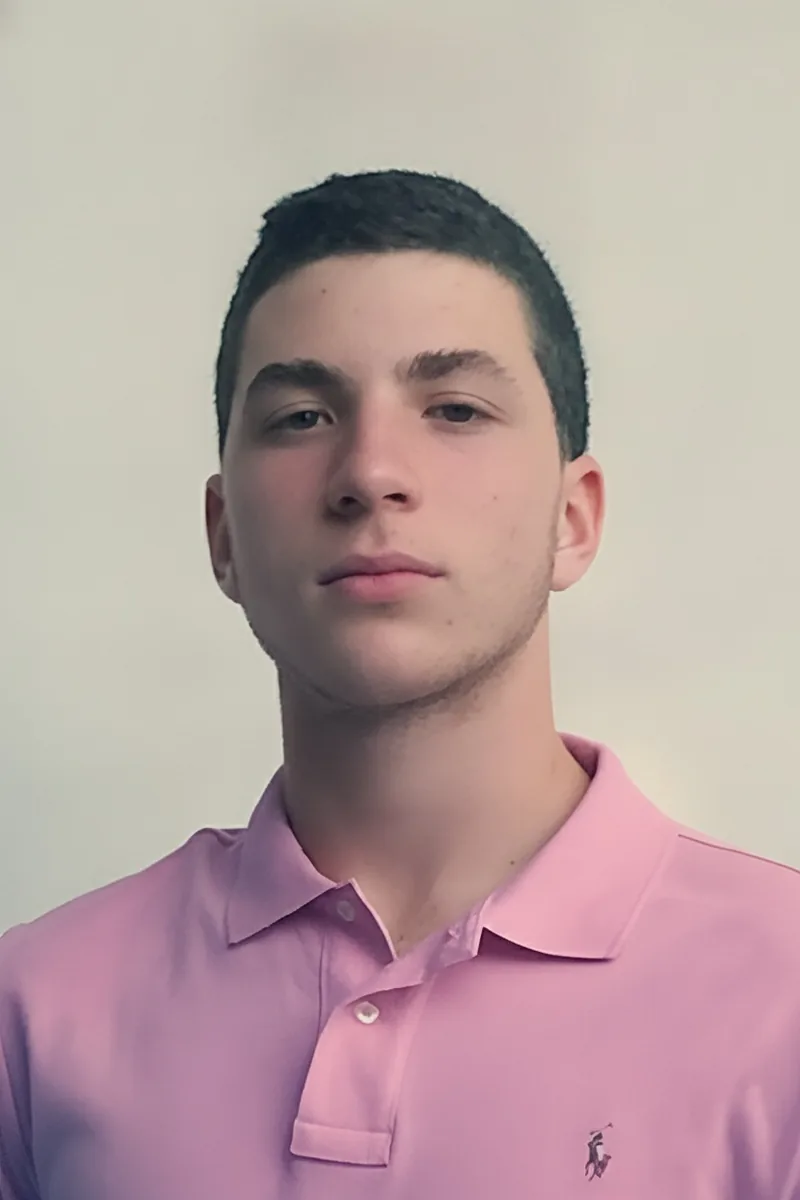
Daniel's favorite trick for pre-calculus is flipping the script — once he's walked through a concept like composite functions or rational asymptotes, he asks students to teach it back to him, which exposes exactly where understanding is solid and where it's still shaky. His finance coursework keeps him actively working with the polynomial and exponential models that form the backbone of the course, so the material stays fresh rather than distant. He covers everything from trigonometric identities through sequences and series with that same explain-it-back approach.
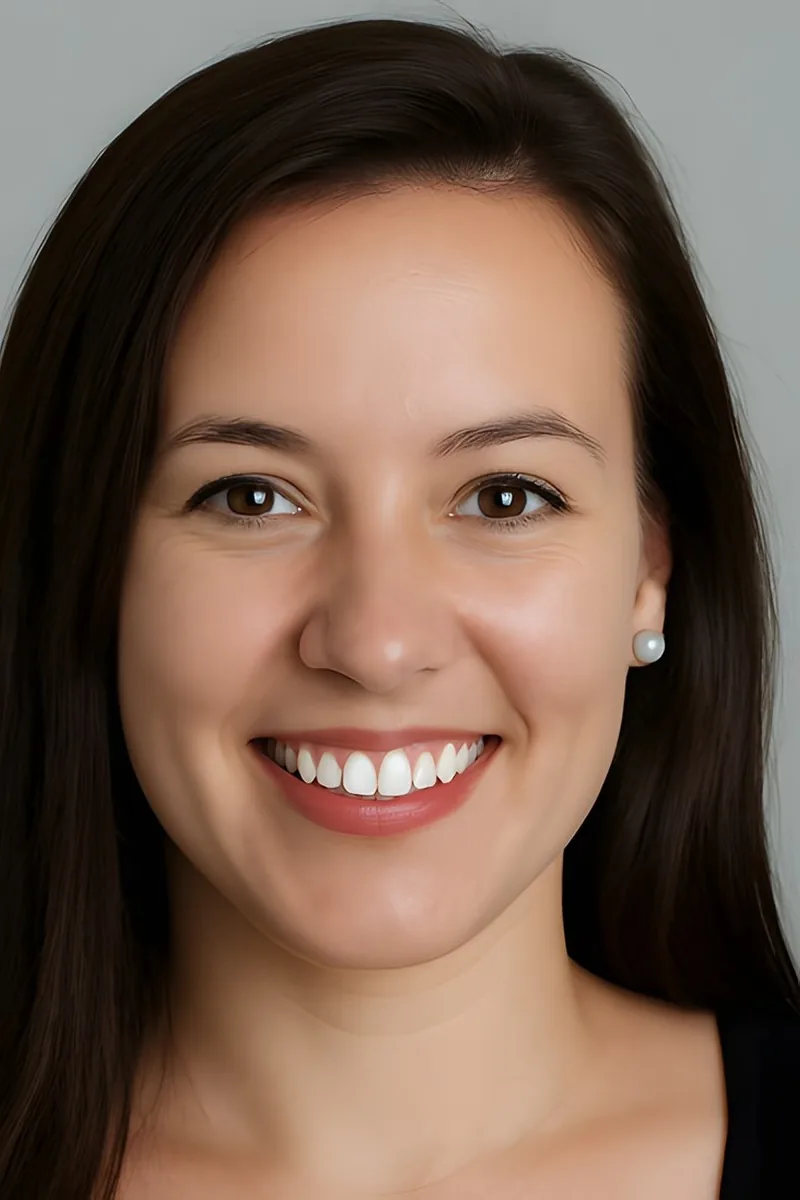
Environmental engineering coursework — modeling pollutant dispersion, watershed flow rates, decay of contaminants — runs on exactly the exponential, logarithmic, and trigonometric functions that pre-calculus introduces. Kate teaches these topics with the instinct of someone who's built real models around them through both her bachelor's and master's work, connecting each function family to the physical behavior it describes. Her 1580 SAT and 4.9 rating confirm the precision she brings to every session.
Everything in Pre-Calculus — trigonometric identities, rational functions, limits intuition — exists to set students up for calculus, but most courses don't make that connection explicit. Annie does, because she's already on the other side of it: her engineering program at Cornell showed her exactly which Pre-Calc skills matter most and where gaps tend to cause trouble later.
A Cornell chemical engineering degree means Rahul spent years working with exponential decay, logarithmic scales, and trigonometric models before most students even encounter them in a textbook. He teaches pre-calculus by emphasizing the conceptual reasoning behind each topic — why a logarithm undoes an exponential, how the unit circle generates every trig value — so the mechanics actually make sense. Rated 4.9 by students, with a 36 ACT to back up the quantitative chops.
Civil engineering at Cornell means Ryan is constantly applying the pre-calculus toolkit — trigonometric functions for force resolution, logarithmic models for material behavior, vectors for structural loads — so he teaches these topics with the instinct of someone who builds on them daily. He's particularly sharp at bridging the gap between algebraic manipulation and the functional thinking that calculus will demand, making sure concepts like domain restrictions and composite functions actually make sense rather than just get memorized. His 35 ACT and 4.7 rating back that up.
A dual BS in physics and math plus a PhD in economics at Yale means Anthony has moved through pre-calculus material from every possible direction — trigonometric reasoning in mechanics, function composition in mathematical proofs, exponential and logarithmic models in econometric analysis. He teaches the course as someone who knows exactly which skills carry forward and which shortcuts collapse under pressure in later coursework. Holds a 5.0 rating and a 1560 SAT.
Researching cosmic ray acceleration at Princeton's astrophysics department meant Dennis had to model particle behavior using the exact toolkit pre-calculus teaches — parametric equations, vector components, and the interplay between exponential and trigonometric functions. He brings that research intuition to sessions, breaking down how and why transformations reshape a graph or how polar and rectangular forms connect, so the material clicks as a coherent system rather than a checklist. A 36 ACT and 4.7 rating back up the depth of understanding he brings.
Mechanical engineering at the undergraduate level means Andrea spent semesters grinding through the exact transition pre-calculus prepares students for — mastering polar coordinates, parametric equations, and trigonometric identities before they became essential tools in dynamics and thermodynamics courses. She teaches that material as someone who knows precisely where each concept resurfaces, breaking down topics like composite functions and rational expressions by connecting them to the engineering problems they eventually power. Her 32 ACT and 4.8 rating reflect consistent results across a wide range of students.
Fred's aerospace engineering degree from Princeton meant living inside the math that pre-calculus students are just meeting — parametric equations describing flight paths, trigonometric models for oscillating systems, and the limit-adjacent thinking that bridges algebra to calculus. He teaches the course knowing exactly which concepts will matter most once students cross into derivatives and integrals, and he builds that forward-looking intuition into every session. His 1550 SAT confirms the quantitative depth behind the approach.
Doing research in Spectral Graph Theory at MIT means Enrico encounters the full toolkit of pre-calculus — eigenvalue behavior, polynomial roots, matrix transformations — at a level where shaky fundamentals would be immediately exposed. He teaches the course by making definitions click intuitively, so that concepts like composite functions or rational expressions feel like natural extensions of algebra rather than arbitrary new rules. His 36 ACT, 1570 SAT, and 5.0 rating confirm the depth behind that intuition.
After studying economics and computer science at Caltech, Brian developed a habit of thinking about functions as machines — inputs transform into outputs through a chain of operations, and pre-calculus is where that mechanical intuition gets built. He digs into the transition points that trip students up most, like moving from polynomial behavior to rational functions where asymptotes and holes suddenly matter. His 1580 SAT reflects the kind of precision he brings to breaking down each concept.
As a Course Assistant for Harvard's introductory calculus sequence, Sanjana sees exactly where pre-calculus gaps — shaky grasp of limits intuition, weak trigonometric identities, or incomplete understanding of function transformations — trip students up once the pace accelerates. She teaches those topics with that forward view, building each concept so it holds weight in the calculus course that's coming next. Holds a 5.0 rating and a 1560 SAT.
Having scored 5s on both AP Calculus BC and AP Physics C while at a Harvard-track pace of 16 AP courses, Derek built the kind of deep pre-calculus fluency — limits of rational expressions, trigonometric manipulation, composite function analysis — that only comes from leaning on those tools constantly across multiple disciplines. His computer science major adds a distinctive angle: he teaches sequences, recursive definitions, and function behavior through the algorithmic thinking that makes those concepts precise rather than fuzzy. A 1550 SAT and 4.9 rating round out the picture.
Testimonials
Because the right Pre-Calculus tutor makes all the difference.
Average Session Rating – Based on 3.4M Learner Ratings
Practice Pre-Calculus
Free practice tests, flashcards, and AI tutoring for Pre-Calculus
Nearby Pre-Calculus Tutors
Other New Orleans Tutors
Related Math Tutors in New Orleans
Frequently Asked Questions
Pre-Calculus requires a shift from memorizing procedures to understanding why those procedures work. Many students struggle with this transition, especially when tackling word problems and multi-step equations that demand deeper conceptual thinking. Personalized tutoring helps bridge this gap by breaking down complex ideas into manageable pieces and showing how different topics connect—skills that are essential for success in Calculus.
Graphing often feels abstract until you see the visual patterns. A tutor can work with you to connect equations to their graphs, showing how changes in a function's formula translate to shifts and stretches on the coordinate plane. This hands-on approach helps you build intuition rather than just memorizing transformation rules, making future topics like Calculus much more accessible.
Word problems require you to translate real-world scenarios into mathematical language—a skill that's separate from solving equations. Many students can solve the math but struggle with the translation step. Tutors help by teaching problem-solving strategies: identifying what you know, what you're looking for, and which Pre-Calculus tools apply. With practice, these strategies become second nature.
Math anxiety often stems from feeling rushed or misunderstood in a classroom setting. One-on-one instruction removes that pressure—you can ask questions without worrying about judgment, work at your own pace, and celebrate small wins. When a tutor explains concepts in a way that clicks for you specifically, confidence builds naturally, and anxiety decreases.
Absolutely. Pre-Calculus courses can vary depending on your school's textbook and approach. When you connect with a tutor through Varsity Tutors, they'll align with your specific curriculum, whether that's focusing on trigonometry, sequences and series, or advanced function analysis. This targeted approach means you get help on exactly what your class covers.
Your first session is about building a foundation for future progress. The tutor will assess your current understanding, identify specific areas where you're struggling (like proofs, trigonometric identities, or rational functions), and discuss your goals. From there, they'll create a personalized plan that addresses your gaps and builds toward mastery.
Pre-Calculus is full of interconnected ideas—functions, trigonometry, sequences, and exponentials all relate to each other. A tutor helps you step back from individual problems to see the bigger picture: how a trigonometric function is still a function, how exponential growth appears in different contexts, and how these patterns prepare you for Calculus. This deeper understanding makes learning more efficient and enjoyable.
Varsity Tutors connects you with expert tutors in the New Orleans area who specialize in Pre-Calculus. Whether you attend a school in Orleans Parish or the surrounding districts, you can get matched with a tutor who understands your curriculum and learning style. The process is straightforward: tell us what you need help with, and we'll find the right fit for personalized instruction.
Let’s find your perfect tutor
Answer a few quick questions. We’ll recommend the right plan and match you with a top 5% tutor.