Award-Winning Calculus Tutors
serving New Orleans, LA
Calculus
Tutors in New Orleans
Private 1-on-1 tutoring, weekly live classes for academic support, test prep & enrichment, practice tests and diagnostics, and more to elevate grades and test scores.
Based on 3.4M Learner Ratings
UniversitiesSchools & Universities
DeliveredHours Delivered
ProficiencyGrowth in Proficiency
Who needs tutoring?
No obligation. Takes ~1 minute.
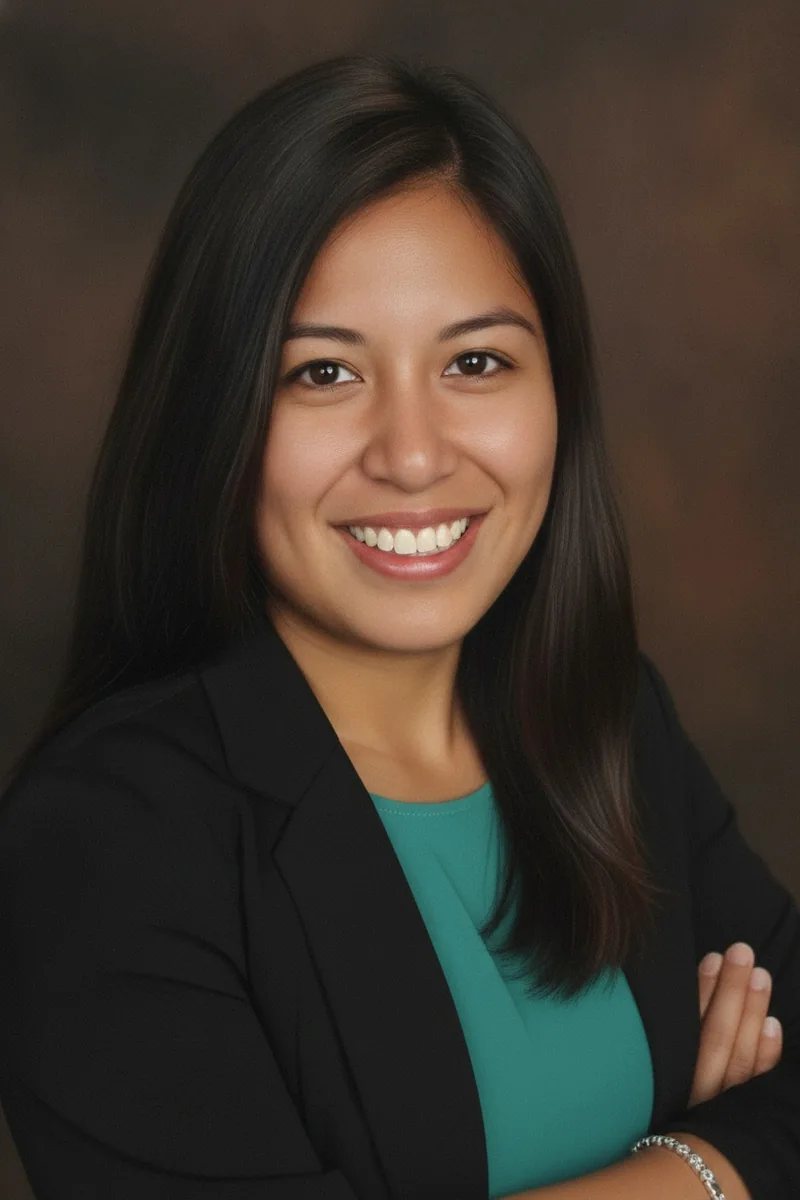
A biology and medical background might seem unusual for calculus, but Robin used differential equations and integration routinely in pharmacokinetics and physiological modeling during her medical training. She explains limits, derivatives, and integrals through real-world rate-of-change problems that give abstract notation a concrete purpose.
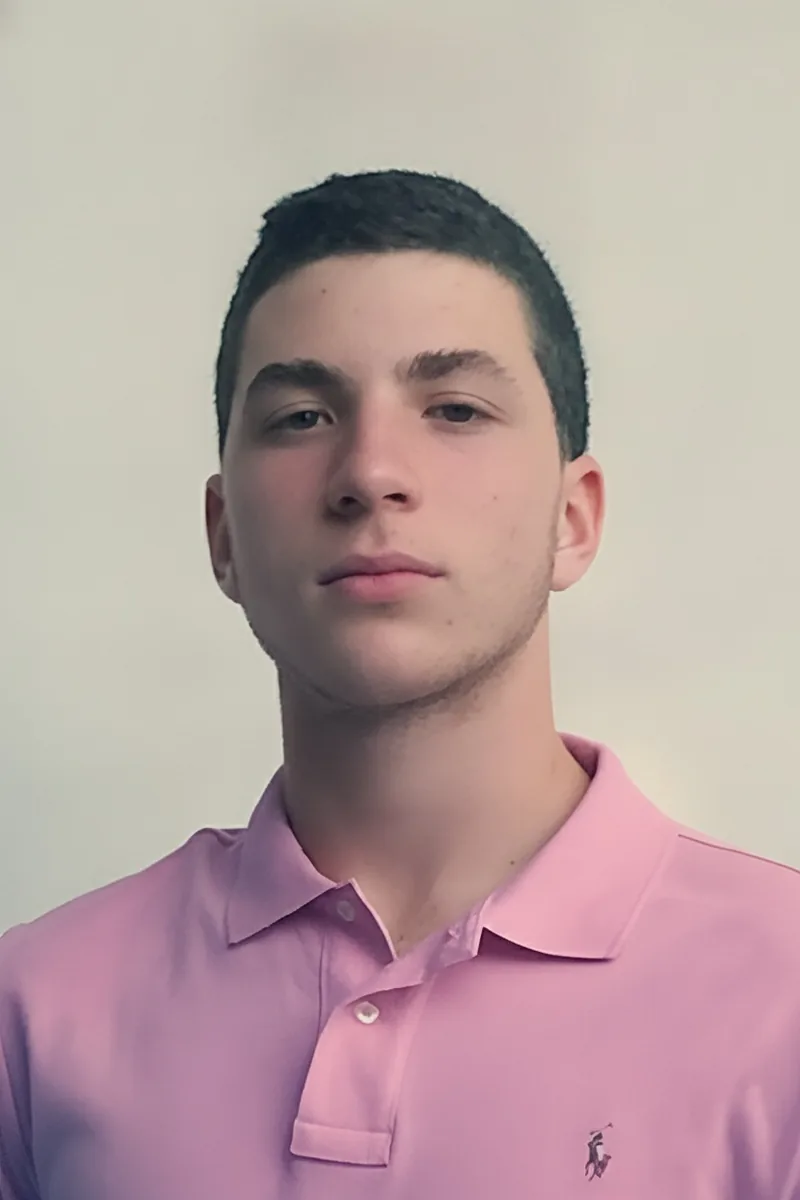
From the limit definition of a derivative through integration techniques like u-substitution and integration by parts, Calculus rewards students who understand the "why" behind each rule. Daniel's finance studies at the Freeman School of Business keep him applying derivatives and integrals to real optimization and accumulation problems weekly. He pushes students to explain each step back to him — a method that exposes shaky understanding before it shows up on an exam.
Let me tell you a little bit about myself. I have a Bachelors degree and two Masters degrees in Mathematics from the United States Naval Academy, the University of Pennsylvania, and the University of Georgia. All of my degrees were earned with at least a 3.9 GPA and I earned the honor of being named the top math major from my undergraduate institution when I graduated. I have also had the pleasure of teaching mathematics at two different colleges and started tutoring math and physics over 20 years ago. Please allow me to accompany you on the exciting journey of exploration into math and physics!
As a passionate tutor with over 2 years of experience, I am dedicated to helping students excel in subjects like AP Calculus, AP English, and ACT preparation. Currently pursuing my Bachelor's degree in Political Science at Louisiana Tech University, I integrate practical applications into my teaching, ensuring that students not only grasp concepts but also retain them. I believe in creating a supportive learning environment where students feel empowered to ask questions and deepen their understanding. My commitment to their success drives me to tailor my instruction to meet individual needs, making learning an enjoyable journey. In my spare time, I enjoy exploring aviation and delving into literature, both of which enhance my tutoring approach and foster meaningful connections with my students.
Teaching middle school math and special education for years means Liz has seen exactly where students' algebraic foundations crack under the weight of new calculus concepts — and she knows how to shore those gaps up before they snowball. Her 34 ACT composite confirms she can handle the quantitative side, and her special education training gives her a toolkit of strategies for breaking down intimidating ideas like limits and derivatives into steps that actually land for different types of learners.
Limits, derivatives, and integrals all click faster when a student sees the underlying logic instead of just memorizing formulas. Brian studied math and economics at Caltech, where calculus wasn't just a course but the daily language of nearly every discipline — so he teaches it with an emphasis on why the chain rule or integration by parts works, not just when to apply it.
Three BS degrees including one in Finance means Matt has worked through the calculus that underpins financial modeling — present value derivations, marginal cost optimization, and the continuous compounding formulas that rely on limits and exponentials. His 1530 SAT confirms the quantitative chops to back that up, and he teaches the material by connecting each rule to the business logic that makes it worth learning.
Philosophy at the University of Chicago is built on formal logic — the same structural reasoning that underpins proofs about limits, continuity, and the behavior of functions at boundary cases. Justin applies that logical rigor to calculus, breaking down each rule into a chain of reasoning rather than a formula to memorize, which is especially useful when students hit the conceptual wall around the chain rule or related rates. His 34 ACT and 5.0 tutoring rating back up the quantitative chops behind that approach.
Biostatistics at the master's and doctoral level means Nina uses calculus constantly — integration for probability density functions, derivatives for maximum likelihood estimation, and multivariable chain rules that underpin regression models. That daily fluency lets her teach concepts like Riemann sums or related rates by connecting them to the statistical machinery they actually power. Rated 5.0 by students.
Seven years of tutoring math through the calculus sequence means Kate has seen nearly every way a student can misunderstand the chain rule or botch a u-substitution. She digs into the specific step where confusion starts — whether that's setting up a Riemann sum or interpreting a derivative graphically — and rebuilds understanding from there.
Between a biomedical engineering degree and a PhD in statistics, Sam has used calculus as a daily working tool — from modeling biological systems to deriving the probability distributions that underpin advanced statistical theory. That means he teaches integration techniques, series convergence, and multivariable concepts as tools with clear purpose, not just abstract exercises. Rated 4.9 by students.
As a biochemistry major at Rice, Michelle used calculus constantly — modeling reaction rates, analyzing enzyme kinetics, interpreting area-under-the-curve problems with real lab data. She teaches derivatives and integrals by connecting the mechanics of each rule to the reasoning behind it, so students understand when and why to apply techniques like chain rule or u-substitution.
Limits, derivatives, and integrals each demand a shift in how students think about change and accumulation. Sugi's biochemistry background means she regularly used calculus to model reaction kinetics and enzyme behavior, so she can show students what these tools actually do beyond textbook exercises. She walks through each concept with concrete examples that make the abstraction tangible.
From epsilon-delta definitions of limits to integration techniques like substitution and parts, calculus demands both conceptual understanding and mechanical skill. James has tutored college students through calculus courses at Harvard for years, often connecting abstract ideas — like why the chain rule works — back to tangible applications in chemistry and the physical sciences. That dual perspective makes dense material more intuitive.
Limits, derivatives, and integrals each demand a different kind of thinking, and students who try to memorize procedures without grasping the underlying logic tend to hit a wall at the chain rule or related rates. Asta unpacks each concept visually and algebraically so the reasoning behind techniques like u-substitution actually clicks. Her 35 ACT composite speaks to the quantitative rigor she brings.
Electrical engineering at Stanford means Jai didn't just take calculus — he used it daily, from analyzing circuit behavior with differential equations to applying Fourier transforms in signal processing. That depth turns him into someone who can explain not just how to evaluate an integral but why it models the physical quantity it does. His 1590 SAT confirms the quantitative precision he brings to every problem.
Testimonials
Because the right Calculus tutor makes all the difference.
Average Session Rating – Based on 3.4M Learner Ratings
Nearby Calculus Tutors
Other New Orleans Tutors
Related Math Tutors in New Orleans
Frequently Asked Questions
Many students struggle with the transition from algebra and precalculus to the conceptual thinking required in Calculus. The biggest hurdles typically include understanding limits and continuity, mastering derivative and integral applications, tackling word problems that require translating real-world scenarios into mathematical models, and connecting visual representations (graphs) to symbolic notation. Personalized 1-on-1 instruction helps students see these concepts as interconnected rather than isolated procedures, building both understanding and confidence.
During an initial session, a tutor will assess your current understanding of foundational concepts like limits, derivatives, and integrals, identify specific areas where you're struggling, and learn about your learning style and goals. This helps the tutor create a personalized plan that targets your unique needs—whether that's strengthening conceptual understanding, improving problem-solving strategies, or preparing for an exam. The first session sets the foundation for productive, focused tutoring moving forward.
Word problems require students to translate written scenarios into mathematical equations—a skill that doesn't always come naturally. Tutors teach systematic strategies for breaking down complex problems, identifying what information is relevant, and determining which Calculus concepts to apply. By working through problems step-by-step and discussing the reasoning behind each choice, students develop confidence in approaching unfamiliar problems and learn to recognize patterns across different problem types.
Showing work in Calculus isn't just about getting the right answer—it demonstrates your understanding of the process and helps identify where mistakes occur. Tutors emphasize clear problem-solving strategies, teaching students how to organize their work logically and justify each step. This approach not only improves exam performance but also helps students catch their own errors and deepen their conceptual understanding of why methods work.
Yes. Whether you're using AP Calculus, IB Calculus, or a standard high school or college Calculus curriculum, tutors can adapt their instruction to align with your specific course materials and expectations. Tutors for students in New Orleans work across all major Calculus approaches—from traditional textbook-based courses to newer problem-centered curricula. They understand the core concepts remain consistent while teaching methods and notation may vary.
Math anxiety often stems from gaps in understanding or previous negative experiences with math. Personalized 1-on-1 instruction removes the pressure of a classroom setting, allowing you to ask questions without judgment and learn at your own pace. As you experience success with targeted practice and see concepts click into place, confidence naturally builds. Tutors also teach problem-solving strategies and test-taking techniques that reduce test anxiety and help you approach Calculus with a growth mindset.
Calculus is fundamentally about understanding how things change and relate to each other. Tutors help students recognize patterns—like how derivatives and integrals are inverse operations, or how the behavior of a function's derivative predicts the shape of the original function. By making these connections explicit and exploring them through multiple representations (graphs, equations, real-world examples), students develop deeper conceptual understanding and retain information longer than with memorization alone.
Look for tutors with strong subject expertise in Calculus and a track record of helping students improve their understanding and grades. Ideal tutors can explain concepts in multiple ways, ask probing questions to identify misconceptions, and adapt their teaching style to your learning preferences. Varsity Tutors connects you with expert tutors who have demonstrated mastery of Calculus and experience helping students in New Orleans succeed in the subject.
Let’s find your perfect tutor
Answer a few quick questions. We’ll recommend the right plan and match you with a top 5% tutor.