Award-Winning Algebra Tutors
serving New Orleans, LA
Algebra
Tutors in New Orleans
Private 1-on-1 tutoring, weekly live classes for academic support, test prep & enrichment, practice tests and diagnostics, and more to elevate grades and test scores.
Based on 3.4M Learner Ratings
UniversitiesSchools & Universities
DeliveredHours Delivered
ProficiencyGrowth in Proficiency
Who needs tutoring?
No obligation. Takes ~1 minute.
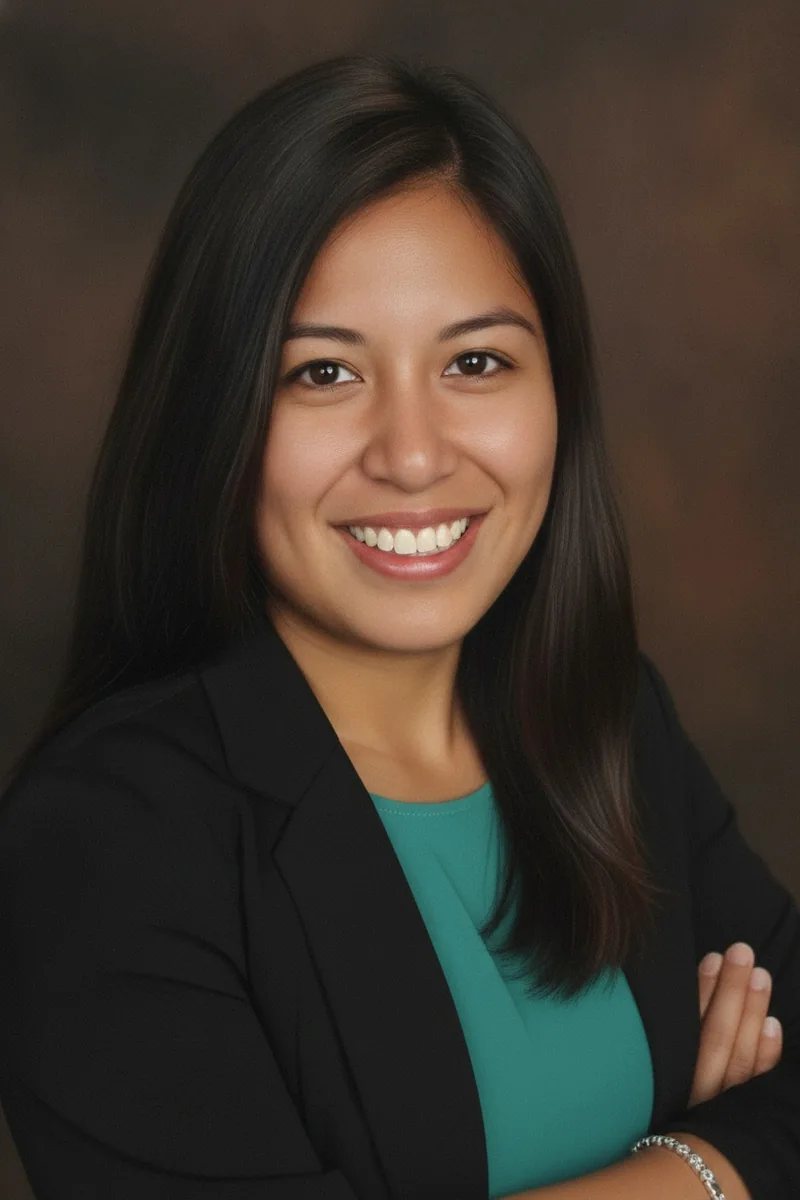
Factoring a quadratic or solving a system of equations becomes far less intimidating when a student understands *why* each step works, not just which buttons to press. Robin teaches algebra by connecting symbolic manipulation to number sense — so when a problem looks unfamiliar on a test, students have reasoning strategies instead of blank stares. She holds a 5.0 rating across her tutoring sessions.

Daniel lists algebra as one of his favorite subjects to teach, and his approach centers on a simple test: if a student can't explain a concept back clearly — why you flip the inequality sign when dividing by a negative, for instance — then it's not yet mastered. His finance studies keep him working with algebraic modeling regularly, from building out loan amortization formulas to solving for break-even points, so the techniques stay sharp and grounded in real applications.
I am a dedicated tutor with a genuine passion for helping students to improve their grades and fall in love with learning. I believe that every student has the potential to succeed, and my greatest joy comes from helping them discover their own strength and confidence. I am here to provide a supportive, patient, and encouraging space for growth.
I am an educator of the sciences. I have taught Life Science, Biology, Physical and Earth Sciences for fourteen years in grades 7-12. I trained with the Keystone Science School of Denver, Colorado, the LSU Coastal Roots Program and have earned over six hundred hours in science literacy training in many areas. Science has a very strong mathematical component and that is why I also specialize in Math tutoring.
Let me tell you a little bit about myself. I have a Bachelors degree and two Masters degrees in Mathematics from the United States Naval Academy, the University of Pennsylvania, and the University of Georgia. All of my degrees were earned with at least a 3.9 GPA and I earned the honor of being named the top math major from my undergraduate institution when I graduated. I have also had the pleasure of teaching mathematics at two different colleges and started tutoring math and physics over 20 years ago. Please allow me to accompany you on the exciting journey of exploration into math and physics!
My life's work has been and continues to be assisting students in building confidence while exploring the wonders of language and mathematics. Whether it be Algebra, ACT preparation, or English for non-native speakers, I have enjoyed my 20+ years working with students both in the U.S. and abroad (China & India). I have tutored students as young as Pre-K, but most of my experience lies with high school, university & adult students. For those seeking assistance with the ACT, I have several years of experience tutoring all subjects - content & strategies. With the changes in the ACT last year (science optional, shorter subject tests with differing times), I decided to take the new Enhanced ACT with hundreds of high school students to gain first-hand experience with how the alterations might affect test strategy and gauge any changes in content. My split focus affected the science score most (:D), but I look forward to sharing my newly gained insights with my students.
Most Algebra struggles come down to a handful of recurring mistakes — sign errors in distribution, confusion about when to flip an inequality, or losing track of variables in word problems. Christopher zeroes in on those patterns early so students stop repeating them. His engineering training at Harvard gives him a practical, problem-solving mindset that makes abstract topics like factoring and linear systems feel purposeful.
A lot of algebra frustration comes from word problems: translating a real-world scenario into an equation feels like learning a second language. James approaches these translations systematically, teaching students to identify variables and relationships before writing a single symbol. His chemistry background at Harvard means he's constantly converting real situations into mathematical models, and he brings that same structured thinking to algebra.
Most algebra struggles come down to one thing: students learn to mimic steps without understanding why factoring works or what a solution to a system of equations actually represents. Asta digs into that "why" — connecting symbolic manipulation to graphs and real scenarios so that quadratics, linear models, and inequalities make sense on multiple levels.
A solid grip on algebra is what separates students who coast through later math and science from those who struggle, and Josef zeros in on the manipulation skills that matter most — factoring, working with rational expressions, and translating word problems into solvable equations. His science background at Cornell means he's constantly reinforcing algebraic thinking with real examples rather than abstract drills.
A lot of algebra frustration comes from word problems — translating a sentence into an equation feels like guesswork if nobody teaches the translation step explicitly. Ben zeroes in on that skill, walking through how to identify variables, set up relationships, and check whether an answer actually makes sense in context. His math background at Penn runs deep, but his algebra teaching stays grounded and practical.
A philosophy background might seem unusual for an algebra tutor, but Justin's specialty is logical structure — exactly what students need when translating word problems into equations or reasoning through systems of inequalities. He teaches algebra as a language for modeling relationships, which makes topics like linear functions and factoring feel purposeful instead of mechanical.
Most algebra struggles aren't really about algebra — they're about not seeing what an equation is asking you to do. Simon approaches every topic, from factoring quadratics to solving systems, by first translating the problem into plain language so the strategy becomes obvious. His economics training reinforced this habit, since modeling real situations with algebraic expressions was a daily requirement.
When variables start representing real situations — mixture problems, rate-of-change scenarios, systems with multiple unknowns — algebra stops feeling like symbol manipulation and starts requiring actual reasoning. Lauren zeroes in on that transition, building the kind of algebraic thinking that carries into higher math rather than falling apart at the next level.
Eight years of tutoring across age groups means Solange has seen exactly where algebra trips students up — whether it's distributing negatives, setting up equations from word problems, or graphing linear inequalities for the first time. She breaks each problem type into a repeatable process so students build genuine confidence rather than just pattern-matching from examples.
Building confidence in algebra often comes down to one shift: understanding what an equation actually says instead of just moving symbols around. Perry tackles core skills like solving systems, factoring, and translating word problems into expressions, drawing on the quantitative rigor his science coursework at Rice demanded daily.
The moment algebra stops being about "solve for x" and starts involving systems, inequalities, or function notation, many students lose their footing. Sabira approaches each of these transitions by connecting new notation back to arithmetic reasoning students already trust — a habit she developed through her Applied Math studies at Johns Hopkins. She holds a 5.0 client rating.
Most Algebra frustration comes from one place: students learn procedures without understanding what variables and equations actually represent. Michelle tackles that gap head-on, tying concepts like systems of equations and quadratic factoring back to concrete scenarios so the symbolic manipulation feels purposeful rather than arbitrary.
Testimonials
Because the right Algebra tutor makes all the difference.
Average Session Rating – Based on 3.4M Learner Ratings
Practice Algebra
Free practice tests, flashcards, and AI tutoring for Algebra
Nearby Algebra Tutors
Other New Orleans Tutors
Related Math Tutors in New Orleans
Frequently Asked Questions
Many students struggle with the transition from arithmetic to abstract algebraic thinking—moving from "what is this?" to "why does this work?" Word problems, multi-step equations, and graphing are frequent pain points because they require connecting multiple concepts at once. With New Orleans' average student-teacher ratio of 24.8:1, personalized attention to these specific gaps can make a significant difference in building both understanding and confidence.
In the first session, a tutor will assess your current understanding—identifying which foundational concepts are solid and where gaps exist. They'll ask about specific challenges you're facing, whether that's factoring, systems of equations, or graphing, and discuss your learning style. This personalized approach helps create a focused plan that addresses your unique needs rather than generic review.
Showing work isn't just about getting credit—it reveals your thinking process and helps you catch mistakes. Tutors guide students to see that algebra is about building a logical argument, not just getting an answer. When you understand the "why" behind each step, you're also building problem-solving strategies you can apply to unfamiliar problems on tests.
Word problems require translating English into mathematical language—a skill that's separate from solving equations. Tutors help you develop a system: identifying what you know, what you're looking for, and which operations connect them. Breaking this process into manageable steps reduces anxiety and helps you see patterns across different problem types.
Graphing connects abstract equations to visual patterns, which helps many students "see" algebra rather than just manipulate symbols. Tutors use multiple approaches—starting with concrete examples, then building to general principles—so you understand what a graph represents and why certain equations create certain shapes. This conceptual foundation makes more advanced topics like transformations and compositions much more manageable.
Math anxiety often stems from feeling lost or behind, which personalized tutoring directly addresses. Working one-on-one with a tutor in a judgment-free environment helps rebuild confidence through small wins and clear explanations. As you start seeing patterns and understanding concepts rather than just memorizing steps, the anxiety typically decreases significantly.
Yes. With 62 schools across New Orleans using various approaches, tutors are experienced with different textbooks and teaching methods. Whether your school uses a traditional, integrated, or competency-based curriculum, Varsity Tutors connects you with tutors who understand your specific course structure and can help you succeed within that framework.
Pricing varies based on the tutor's experience level, how frequently you meet, and session length. Varsity Tutors works with students at different budget levels and can discuss package options. Most students start with 1-2 sessions per week to build momentum, though your tutor will help you determine what works best for your goals and schedule.
Let’s find your perfect tutor
Answer a few quick questions. We’ll recommend the right plan and match you with a top 5% tutor.