Award-Winning Physics Tutors
serving Baton Rouge, LA
Physics
Tutors in Baton Rouge
Private 1-on-1 tutoring, weekly live classes for academic support, test prep & enrichment, practice tests and diagnostics, and more to elevate grades and test scores.
Based on 3.4M Learner Ratings
UniversitiesSchools & Universities
DeliveredHours Delivered
ProficiencyGrowth in Proficiency
Who needs tutoring?
No obligation. Takes ~1 minute.

Let me tell you a little bit about myself. I have a Bachelors degree and two Masters degrees in Mathematics from the United States Naval Academy, the University of Pennsylvania, and the University of Georgia. All of my degrees were earned with at least a 3.9 GPA and I earned the honor of being named the top math major from my undergraduate institution when I graduated. I have also had the pleasure of teaching mathematics at two different colleges and started tutoring math and physics over 20 years ago. Please allow me to accompany you on the exciting journey of exploration into math and physics!
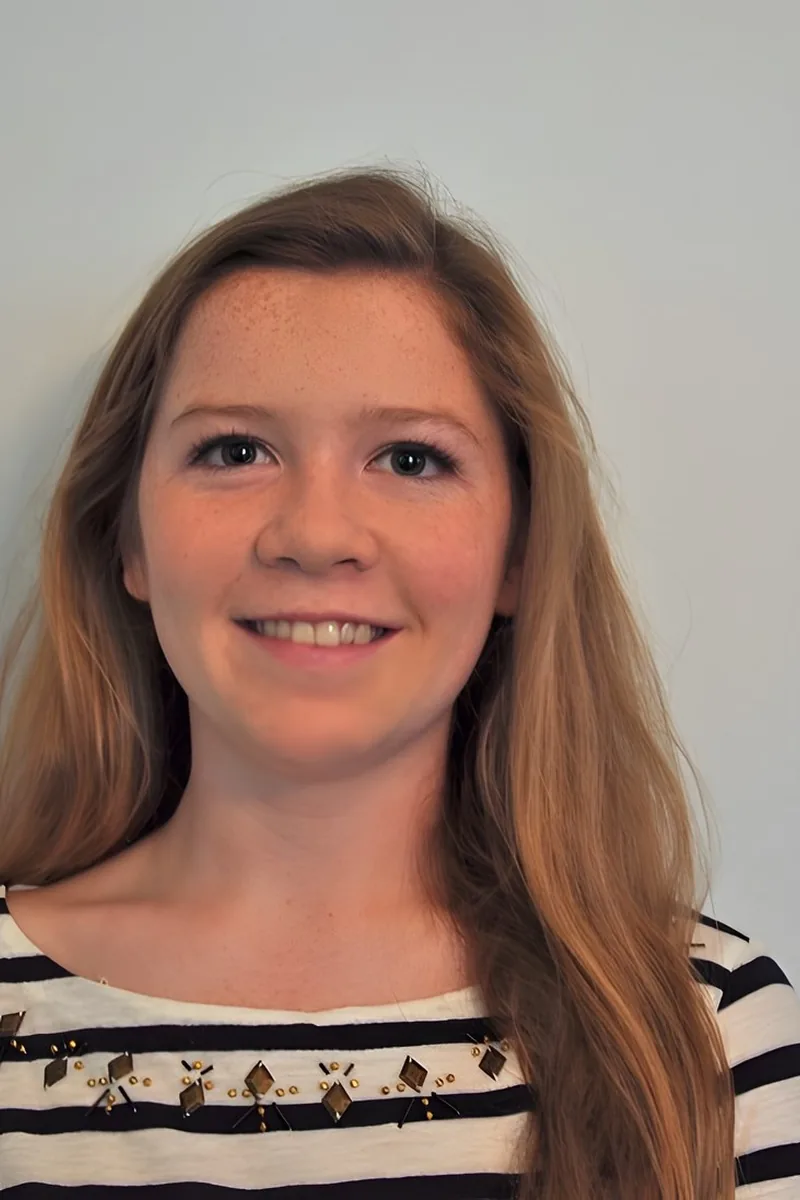
A Stanford computer science and political science student, Margaret went through the Project Lead the Way STEM magnet program, where physics wasn't just a class but a daily toolkit for engineering challenges. She teaches kinematics, force diagrams, and energy conservation by tying each concept to tangible scenarios that make the math feel purposeful.
Engineering training changes how you see physics problems — instead of hunting for the right equation, you learn to diagram forces, track energy, and let the math follow the physics. Christine brings that engineering mindset from her biomedical engineering studies at Johns Hopkins, where mechanics and electromagnetism aren't just coursework but tools she applies in lab and design projects.
Engineering is applied physics, so Kate spent years solving the exact kinds of problems — free-body diagrams, energy conservation, circuit analysis — that show up in introductory physics courses. She walks through each problem by identifying what physical principle applies and why, which builds the kind of intuition that makes new problems feel approachable instead of intimidating.
A Princeton-trained mechanical and aerospace engineer, Fred spent years solving physics problems that mattered — calculating drag forces on aircraft, modeling orbital mechanics, analyzing stress distributions in structural components. That depth lets him teach everything from Newtonian mechanics to electromagnetism with real intuition about what the equations describe physically. He unpacks the free-body diagrams, energy conservation setups, and vector decompositions that students struggle with most.
Kinematics equations and free-body diagrams intimidate a lot of students, but the underlying logic is surprisingly systematic once someone shows you how to set up each problem. Annabel's science background means she can unpack both the math and the physical intuition behind Newton's laws, energy conservation, and wave behavior without skipping the steps that textbooks gloss over.
Kinematics equations and free-body diagrams become far less intimidating once a student learns to read each problem as a physical story rather than a math puzzle. Garrett breaks problems into setup, diagram, and solve phases, teaching students a repeatable framework they can apply from Newton's laws through electromagnetism. His science and math background lets him bridge the conceptual reasoning and the calculations seamlessly.
Most physics struggles come down to one thing: not knowing how to start a problem. Phillip teaches a systematic approach — draw the diagram, identify the forces, pick the right coordinate system — that turns intimidating multi-step problems into a sequence of smaller, solvable ones. He's taken physics through the college level as part of his biomedical engineering degree at Brown and knows exactly where conceptual gaps tend to hide.
Emily approaches physics problems the way her science training taught her: sketch the situation, identify the forces, then translate the diagram into math. That structured method is especially useful for kinematics and Newton's laws, where students often know the equations but struggle to set problems up correctly. Her background in neurobiology also means she's comfortable with the biophysics applications that make the subject feel more relevant.
Three science degrees from Yale — including one in chemistry — mean Zosia has worked through mechanics, thermodynamics, and electromagnetism problems repeatedly across disciplines, building the kind of cross-subject fluency that makes her especially clear on where physics concepts connect to the math underneath. She digs into the specific step where a student's reasoning breaks down, whether that's setting up Newton's second law for a pulley system or tracking signs through a conservation-of-energy equation. Rated 4.9 by students.
Cornell's biology curriculum put Alec through the full gauntlet of introductory and intermediate physics — mechanics, electromagnetism, and thermodynamics — all in the calculus-based sequence that pre-med and science majors dread most. His experience as a general chemistry TA sharpened his instinct for spotting where students lose track of units, signs, or vector directions in multi-step problems, and he teaches the habit of mapping out the physical situation before writing a single equation. Rated 4.8 by students.
Dennis doesn't just teach physics — he does it. His research at Princeton simulating cosmic ray acceleration at supernova shock fronts and his engineering work designing optical filters at Norfolk State mean he can connect textbook topics like kinematics, energy conservation, and wave behavior to real systems. That context turns abstract force diagrams and equations into something students can actually picture.
Benjamin's finance and economics training at Notre Dame runs on the same quantitative backbone that physics demands — modeling systems, isolating variables, and reasoning through multi-step problems where one misstep cascades. He brings a toolkit of computation shortcuts and pattern-recognition tricks to kinematics and energy problems that make the math faster and less error-prone. Holds a 5.0 rating from students.
Testimonials
Because the right Physics tutor makes all the difference.
Average Session Rating – Based on 3.4M Learner Ratings
Practice Physics
Free practice tests, flashcards, and AI tutoring for Physics
Nearby Physics Tutors
Other Baton Rouge Tutors
Related Science Tutors in Baton Rouge
Frequently Asked Questions
Many students struggle with translating abstract concepts—like forces, energy, and motion—into real-world applications. Beyond conceptual understanding, balancing equations, unit conversions, and problem-solving strategies often trip up learners. With Baton Rouge's average student-teacher ratio of 22.4:1, personalized 1-on-1 instruction can help students move past these stumbling blocks and build genuine confidence in physics reasoning.
Your first session focuses on understanding your specific needs, learning style, and current physics challenges—whether that's kinematics, thermodynamics, or exam prep. A tutor will assess your grasp of foundational concepts and identify gaps that may be holding you back. From there, you'll develop a personalized plan that connects theory to real-world applications and builds your problem-solving skills from the ground up.
Absolutely. Tutors can help you understand the scientific method, design experiments, interpret data, and connect lab observations to theoretical concepts you're learning in class. Whether you're struggling to understand why an experiment produced certain results or need help writing lab reports, personalized instruction helps you develop both hands-on skills and the reasoning behind them.
Physics is fundamentally about understanding how the world works, not memorizing equations. Expert tutors focus on building your conceptual understanding—why forces cause acceleration, how energy transforms, what motion really means—so formulas become tools for solving problems rather than random symbols. This deeper approach helps you tackle new problems confidently and perform better on exams that test reasoning, not just recall.
Many physics concepts—like vector forces, electromagnetic fields, or quantum behavior—are invisible and hard to picture. Tutors use diagrams, real-world analogies, demonstrations, and step-by-step problem breakdowns to make these abstractions concrete. Personalized instruction lets your tutor adjust explanations to match how you learn best, whether that's visual, kinesthetic, or analytical.
Ideally, 2-3 months before an AP Physics or standardized exam gives you time to build foundational understanding and practice problem-solving under pressure. However, even a few weeks of focused tutoring can boost your score by helping you target weak areas and develop test-taking strategies. The earlier you start, the more time you have to move from memorizing formulas to truly understanding concepts.
Varsity Tutors connects you with tutors who have strong backgrounds in physics—many with degrees in physics, engineering, or related sciences, and often with teaching or tutoring experience. Each tutor is vetted for expertise and the ability to explain complex concepts clearly. You can review a tutor's background before your first session to ensure they're the right fit for your learning goals.
Pricing varies based on the tutor's experience and your specific needs, and you have flexibility to adjust frequency and duration as your goals change. Whether you need intensive weekly sessions leading up to an exam or ongoing support throughout the school year, you can work with your tutor to find an arrangement that fits your budget and schedule. Many students find that even a few sessions strategically placed can make a meaningful difference.
Let’s find your perfect tutor
Answer a few quick questions. We’ll recommend the right plan and match you with a top 5% tutor.