Award-Winning Trigonometry Tutors
serving Des Moines, IA
Trigonometry
Tutors in Des Moines
Private 1-on-1 tutoring, weekly live classes for academic support, test prep & enrichment, practice tests and diagnostics, and more to elevate grades and test scores.
Based on 3.4M Learner Ratings
UniversitiesSchools & Universities
DeliveredHours Delivered
ProficiencyGrowth in Proficiency
Who needs tutoring?
No obligation. Takes ~1 minute.

Trig is where math stops being about numbers and starts being about relationships — and that shift trips up a lot of students. Ben breaks down the unit circle, identities, and inverse functions by connecting each concept back to the geometric intuition behind it, so formulas feel logical rather than arbitrary. Rated 5.0 by students.
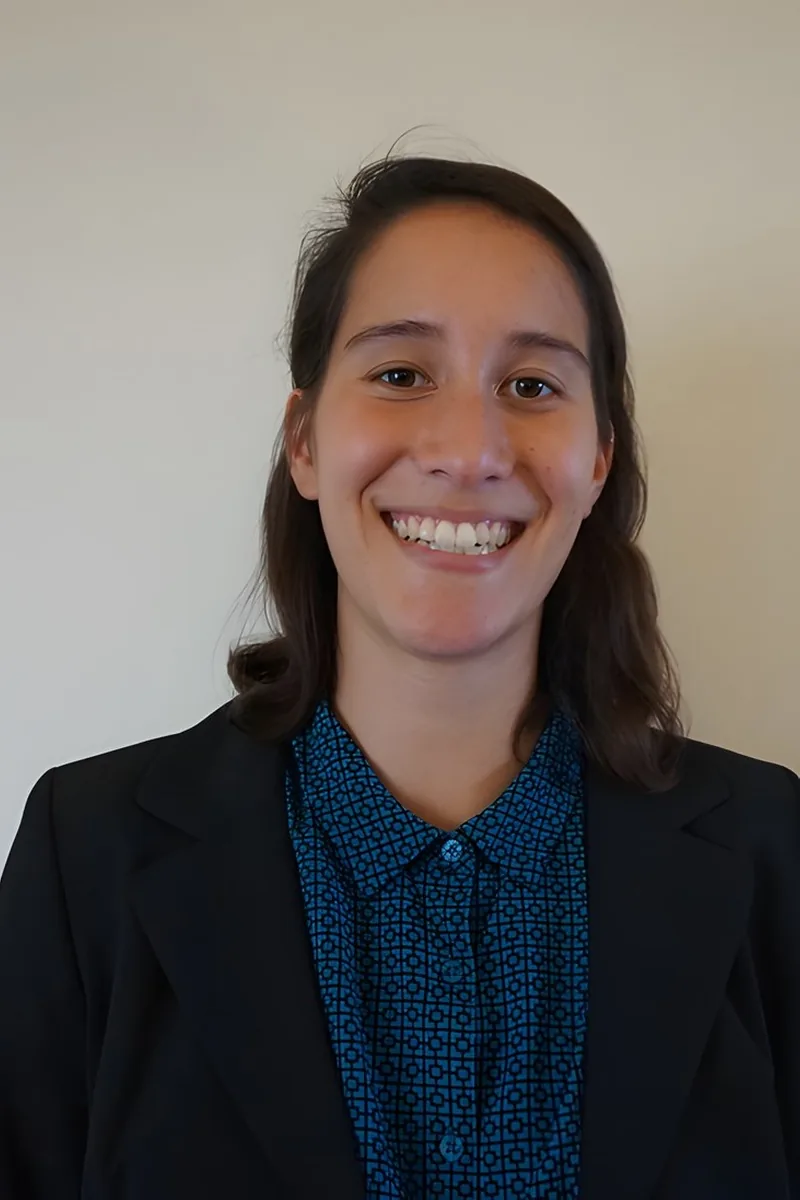
The unit circle, inverse trig functions, and identity proofs tend to feel like arbitrary memorization until someone shows you the geometric logic underneath. Caroline breaks trig down through the engineering lens she developed earning her M.S. in Mechanical Engineering magna cum laude — where sine and cosine aren't abstract but describe real oscillations and forces. That applied perspective turns a notoriously frustrating subject into something intuitive.
Trig identities and the unit circle can feel like arbitrary rules until someone shows you the geometry underneath them. Charles uses trigonometry constantly in his Yale mechanical engineering coursework — from force decomposition to wave analysis — and breaks down concepts like the law of cosines and radian measure by connecting them to problems you can actually picture.
The unit circle doesn't have to be a memorization exercise. Enrico teaches trig identities and sinusoidal functions by showing where they come from geometrically, so that formulas like the angle addition identities or the law of cosines feel like things students can derive on the spot rather than recall under pressure.
Trig identities and unit circle values can feel like an endless list to memorize, but there's a structure underneath that makes most of it derivable on the spot. Charles approaches trigonometry by teaching students to see the relationships between sine, cosine, and tangent graphically and algebraically, so they aren't relying on flashcards during exams. His strong math background across algebra through calculus means he connects trig concepts to what comes next.
Trig is where many students first encounter math that feels genuinely spatial — unit circles, radian measure, sinusoidal graphs that actually describe physical phenomena. Allen breaks down identities and transformations by tying them back to their geometric origins, making it easier to see why an identity holds instead of just memorizing the formula.
The unit circle, identities, and inverse trig functions trip students up because they feel like arbitrary rules disconnected from anything visual. Rahi teaches trigonometry by anchoring every identity and equation back to the geometry it came from, so that relationships like the double-angle formulas become intuitive rather than something to cram. Three engineering degrees gave him years of applying trig in real contexts.
Trig can feel like a wall of identities and unit circle values to memorize, but Jessy approaches it by connecting sine, cosine, and tangent back to the geometry students already understand. As a biosciences major at Rice, she regularly uses trigonometric relationships in physics and lab coursework, so she teaches the material as a toolkit rather than an abstraction.
Trig identities and the unit circle click faster when a student sees them as patterns rather than formulas to memorize. Samuel's applied math training at Caltech means he uses trigonometric functions constantly — in wave equations, Fourier analysis, and modeling — so he can show exactly where sine, cosine, and tangent show up beyond the textbook.
Trig identities, the unit circle, and the Law of Sines aren't just abstract exercises for Matthew — they're tools he applies constantly in his Mechanical and Aerospace Engineering program at Princeton. He identifies which specific trig concepts a student is shaky on and drills those through worked examples and targeted practice problems until the reasoning clicks.
A year as a course assistant in Harvard's math department meant Richard taught calculus daily — and calculus lives and dies on trig fluency, from evaluating limits of sinusoidal functions to integrating with trig substitutions. That constant reinforcement gives him a sharp sense of exactly where students get tripped up on identities, graphing transformations, and radian-degree conversions. His perfect 1600 SAT and 36 ACT confirm the foundational math chops behind that teaching experience.
Trig identities and unit circle values click faster when a student understands *why* sine and cosine behave the way they do, not just where to look on a reference sheet. Czarina's biophysics coursework at Johns Hopkins means she uses trigonometric functions constantly — in wave equations, vector decomposition, and signal analysis — so she teaches them with real context baked in.
Testimonials
Because the right Trigonometry tutor makes all the difference.
Average Session Rating – Based on 3.4M Learner Ratings
Practice Trigonometry
Free practice tests, flashcards, and AI tutoring for Trigonometry
Nearby Trigonometry Tutors
Other Des Moines Tutors
Related Math Tutors in Des Moines
Frequently Asked Questions
The first session is all about understanding where you are right now. A tutor will assess your comfort level with foundational concepts like angles, the unit circle, and basic ratios, then identify specific areas where you need support—whether that's understanding sine and cosine or applying trig to word problems. This helps create a personalized plan that builds on your strengths rather than starting from scratch.
Many students struggle with the conceptual leap from memorizing formulas to understanding why those formulas work and when to use them. Word problems that require translating real-world situations into trig equations are another major pain point, as is graphing trigonometric functions and understanding their periodic behavior. Tutors help bridge these gaps by showing you the patterns and connections that make trig click, rather than just drilling procedures.
Proofs require both technical skill and strategic thinking—knowing which identities to apply and in what order. Tutors teach you to recognize patterns in expressions, break complex problems into manageable steps, and develop a toolkit of problem-solving strategies. By working through problems together and discussing your reasoning, you'll build the confidence to tackle unfamiliar proofs independently.
Yes. Des Moines schools use various approaches to teaching trigonometry, and tutors are familiar with different textbooks, pacing guides, and teaching methods. Whether your class emphasizes the unit circle approach, right triangle trigonometry, or applications, tutors can align their instruction with what you're learning in class and help clarify concepts that feel confusing in your specific curriculum.
One-on-one instruction in a low-pressure environment helps reduce anxiety by letting you ask questions without judgment and work at your own pace. When you understand the 'why' behind trigonometric concepts—not just the 'how'—math feels less like memorization and more like problem-solving, which builds real confidence. Tutors celebrate progress and help you see that struggling with a concept is a normal part of learning, not a sign you can't do math.
Word problems require translating English into mathematical equations, which is a skill separate from solving the equations themselves. Tutors teach you a systematic approach: identifying what you know and what you're solving for, sketching diagrams, choosing the right trig ratios, and checking that your answer makes sense in context. With practice and guided feedback, you'll develop the confidence to tackle unfamiliar scenarios.
Showing work helps you catch your own mistakes, makes your thinking visible to your tutor (so they can pinpoint where confusion happens), and demonstrates understanding to your teacher. Tutors model clear, organized problem-solving and give you feedback on how to present your work effectively—not just getting the right answer, but explaining how you got there.
Varsity Tutors connects you with tutors who have strong backgrounds in mathematics and proven experience teaching trigonometry to high school and college students. Tutors understand both the technical content and the common conceptual roadblocks students face, allowing them to explain ideas in multiple ways until they click for you.
Let’s find your perfect tutor
Answer a few quick questions. We’ll recommend the right plan and match you with a top 5% tutor.