Award-Winning AP Environmental Science Tutors
serving Des Moines, IA
AP Environmental Science
Tutors in Des Moines
Private 1-on-1 tutoring, weekly live classes for academic support, test prep & enrichment, practice tests and diagnostics, and more to elevate grades and test scores.
Based on 3.4M Learner Ratings
UniversitiesSchools & Universities
DeliveredHours Delivered
ProficiencyGrowth in Proficiency
Who needs tutoring?
No obligation. Takes ~1 minute.

Kelsey earned her Master of Science in Environmental Sciences and Policy from Johns Hopkins, which means she doesn't just know the APES curriculum — she's done the fieldwork and data analysis behind it. From biogeochemical cycles to environmental legislation and ecological footprint calculations, she teaches students to think like environmental scientists, not just memorize vocabulary for the exam. Rated 4.9 by students.
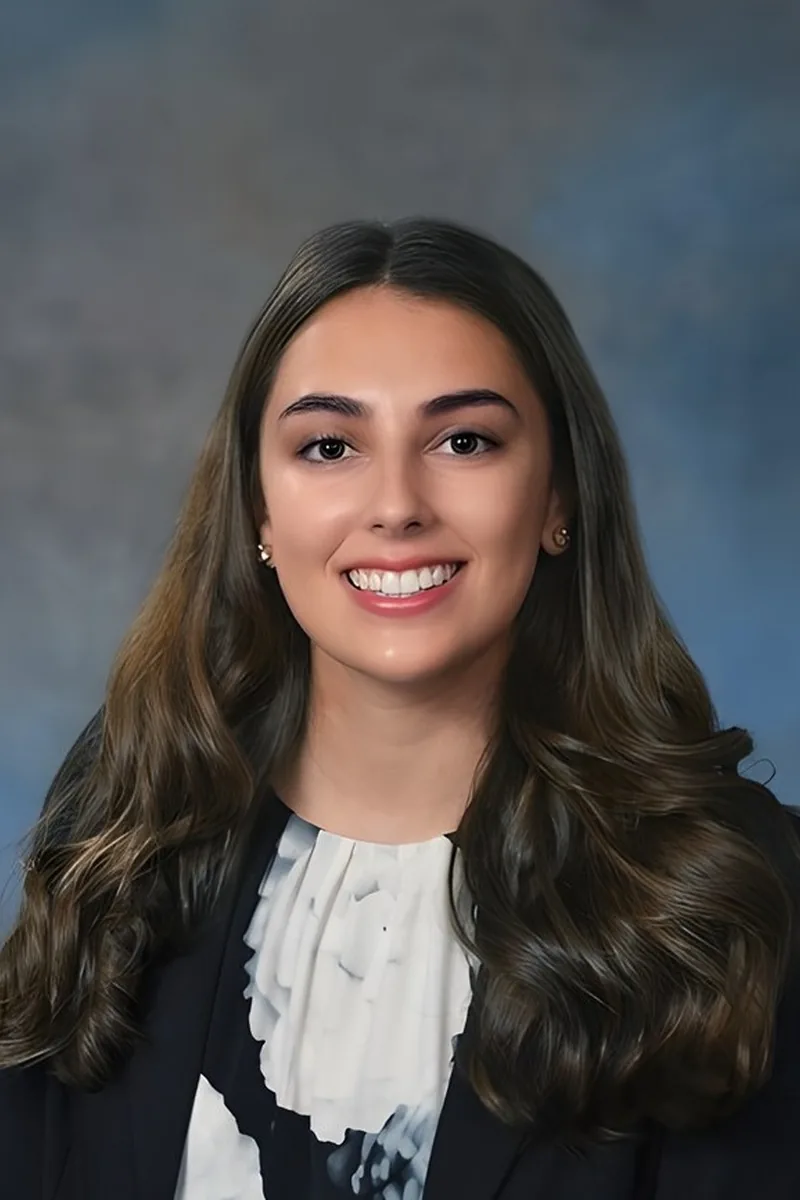
Medical training reshapes how you think about environmental health — Amanda's MD/MPH work means she understands toxicology pathways, epidemiological data, and the public health consequences of pollution at a clinical level, which gives her a distinctive angle on APES units covering air and water quality, disease vectors, and human impact. She teaches students to read dose-response data and environmental risk assessments the way a physician would, building the analytical reasoning the free-response section rewards.
Business students learn to think in systems — supply chains, market feedback loops, cost-benefit trade-offs — and Myna applies that same framework to APES topics like resource depletion, environmental policy trade-offs, and the economic arguments embedded in free-response questions about sustainability. Her 34 ACT reflects sharp reading comprehension and data interpretation skills, which she channels into breaking down the graphs, experimental designs, and calculation problems that catch students off guard on exam day.
Political science might seem distant from APES, but Emily's government background is a real asset for the policy-heavy free-response questions — evaluating legislation like the Clean Air Act, weighing economic trade-offs of resource management, and constructing evidence-based arguments about environmental regulation. She pairs that with a 34 ACT and the visual-thinking skills of a trained photographer, which means she's unusually effective at teaching students to extract information from the data tables, diagrams, and graphs the exam relies on. Rated 5.0 by students.
As a PhD student researching microbial ecology, Isaac lives the material that AP Environmental Science covers — biogeochemical cycles, ecosystem dynamics, biodiversity loss, and human impact on natural systems. He brings current research context into exam prep, connecting FRQ strategies to the kind of scientific reasoning the College Board actually rewards. His 5.0 rating speaks to how well that approach lands with students.
Between his dual majors in Statistics/Economics and Business Analytics at Carnegie Mellon, Nitin spends most of his time building and interpreting data models — which is exactly the skill set APES leans on when students have to calculate ecological footprints, analyze pollution trends, or interpret population growth curves on the exam. He approaches the course's free-response questions as data-driven arguments, teaching students to pull evidence from graphs and tables and structure answers that actually earn full credit.
Having earned her bachelor's in Environmental Science, Patricia didn't just survey APES topics — she studied biogeochemical cycles, soil science, and ecosystem dynamics at the college level they're drawn from. She zeroes in on the quantitative side students often underestimate, like calculating energy transfer efficiency or interpreting species diversity indices, while also sharpening the cause-and-effect reasoning the free-response section demands.
A Harvard-trained researcher who wrote his senior thesis on John Dewey's philosophy of education, Henry connects AP Environmental Science topics like biogeochemical cycles and ecosystem dynamics to the real-world policy debates that make them matter. He teaches students to interpret data sets and construct free-response answers that earn full credit by linking evidence to scientific claims.
Finance majors learn to model complex systems with multiple interacting variables — resource scarcity, cost-benefit trade-offs, long-term risk — and Rinky applies that same analytical framework to APES topics like resource depletion, environmental cost analysis, and sustainability trade-offs that show up heavily in free-response prompts. Her 1520 SAT and 5.0 tutoring rating speak to the precision she brings when walking through the data-interpretation and calculation questions that surprise students expecting a soft science course.
A history and political science background turns out to be a real asset for the APES units on environmental legislation, resource policy, and the human-systems questions that dominate the free-response section — Andrew can explain why the Clean Air Act matters in both a political and ecological context. He also tutors across math and science, so he's comfortable walking through the quantitative problems like resource depletion rates and energy calculations that trip up students who expected a purely memorization-based course.
Chellam earned her Environmental Science degree from UC Berkeley with a biological science concentration, which means AP Environmental Science isn't a subject she studied once — it was her entire academic focus. She breaks down everything from biogeochemical cycles to environmental policy analysis with the depth of someone who's done the fieldwork and the lab work behind the textbook diagrams.
Chemical and biomolecular engineering coursework covers thermodynamics, mass balances, and reaction kinetics — the same principles underlying APES topics like energy transfer through trophic levels, pollutant fate in water systems, and carbon cycle calculations. Akshaya uses that engineering lens to demystify the quantitative free-response problems where students need to set up unit conversions and efficiency calculations under time pressure. Rated 4.8 by students.
Testimonials
Because the right AP Environmental Science tutor makes all the difference.
Average Session Rating – Based on 3.4M Learner Ratings
Practice AP Environmental Science
Free practice tests, flashcards, and AI tutoring for AP Environmental Science
Nearby AP Environmental Science Tutors
Other Des Moines Tutors
Related Science Tutors in Des Moines
Frequently Asked Questions
AP Environmental Science covers eight major units: energy transfer, the atmosphere, terrestrial and aquatic biomes, populations and communities, land and water use, energy resources, atmospheric pollution, and human impacts on the environment. The course emphasizes real-world environmental problems and scientific reasoning, so you'll study both the science behind environmental issues and practical solutions. Understanding these interconnected systems is key to performing well on the exam and the free-response questions.
The exam consists of two sections: 80 multiple-choice questions (90 minutes) and three free-response questions (90 minutes). The multiple-choice section tests your knowledge across all eight units, while the free-response questions often require you to analyze data, design experiments, or propose environmental solutions. Success requires both content mastery and the ability to apply concepts to unfamiliar scenarios—this is where targeted practice with realistic questions makes a real difference.
Many students struggle with balancing breadth and depth—the course covers a lot of ground, making it easy to feel overwhelmed. Others find the free-response section challenging because it requires applying concepts to novel situations rather than just recalling facts. Additionally, quantitative reasoning (calculations involving population growth, energy flow, and pollution levels) trips up students who haven't practiced enough with numbers and data interpretation. Identifying your specific weak area early helps you focus your study time effectively.
Score improvement depends on your starting point and how consistently you engage with focused study. Students who work with a tutor typically see gains of 1–2 score points over a semester by targeting weak units, practicing timed free-response questions, and refining test-taking strategies. The key is identifying which topics are holding you back—whether it's understanding ecosystems, mastering calculations, or improving your ability to analyze data under time pressure—and then drilling those areas systematically.
With 80 questions in 90 minutes, you have roughly one minute per question—so efficient reading and quick decision-making are essential. Effective strategies include reading the question before the passage (when applicable), eliminating obviously wrong answers first, and flagging difficult questions to revisit if time allows. Many students benefit from practicing full-length exams under timed conditions to build stamina and identify which question types consistently slow them down, then working with a tutor to address those specific patterns.
Free-response questions reward clear communication of scientific reasoning, so practice writing concise, well-organized responses that directly address the prompt. Study past AP free-response questions and scoring rubrics to understand what graders are looking for—usually a clear explanation of the concept, application to the scenario, and sometimes a calculation or prediction. Working through these questions with feedback from an experienced tutor helps you learn to structure answers efficiently and avoid common mistakes like overthinking or providing irrelevant information.
Ideally, starting tutoring in the fall or early winter gives you time to build a strong foundation in the eight units before the May exam. However, even starting in February or March can help if you focus on targeted review of weak areas and intensive practice testing. For students in Des Moines, connecting with a tutor early in the school year allows you to get ahead on challenging concepts and avoid last-minute cramming, which is particularly important for a cumulative exam like AP Environmental Science.
Varsity Tutors connects you with expert tutors who specialize in AP Environmental Science and understand the exam's demands. When you reach out, you'll be matched with a tutor experienced in helping students master the curriculum, develop test-taking strategies, and build confidence. Whether you need help with specific units, practice test review, or comprehensive exam prep, you can find personalized instruction tailored to your goals and schedule.
Let’s find your perfect tutor
Answer a few quick questions. We’ll recommend the right plan and match you with a top 5% tutor.