Award-Winning AP Physics C: Electricity and Magnetism Tutors
serving Des Moines, IA
AP Physics C: Electricity and Magnetism
Tutors in Des Moines
Private 1-on-1 tutoring, weekly live classes for academic support, test prep & enrichment, practice tests and diagnostics, and more to elevate grades and test scores.
Based on 3.4M Learner Ratings
UniversitiesSchools & Universities
DeliveredHours Delivered
ProficiencyGrowth in Proficiency
Who needs tutoring?
No obligation. Takes ~1 minute.
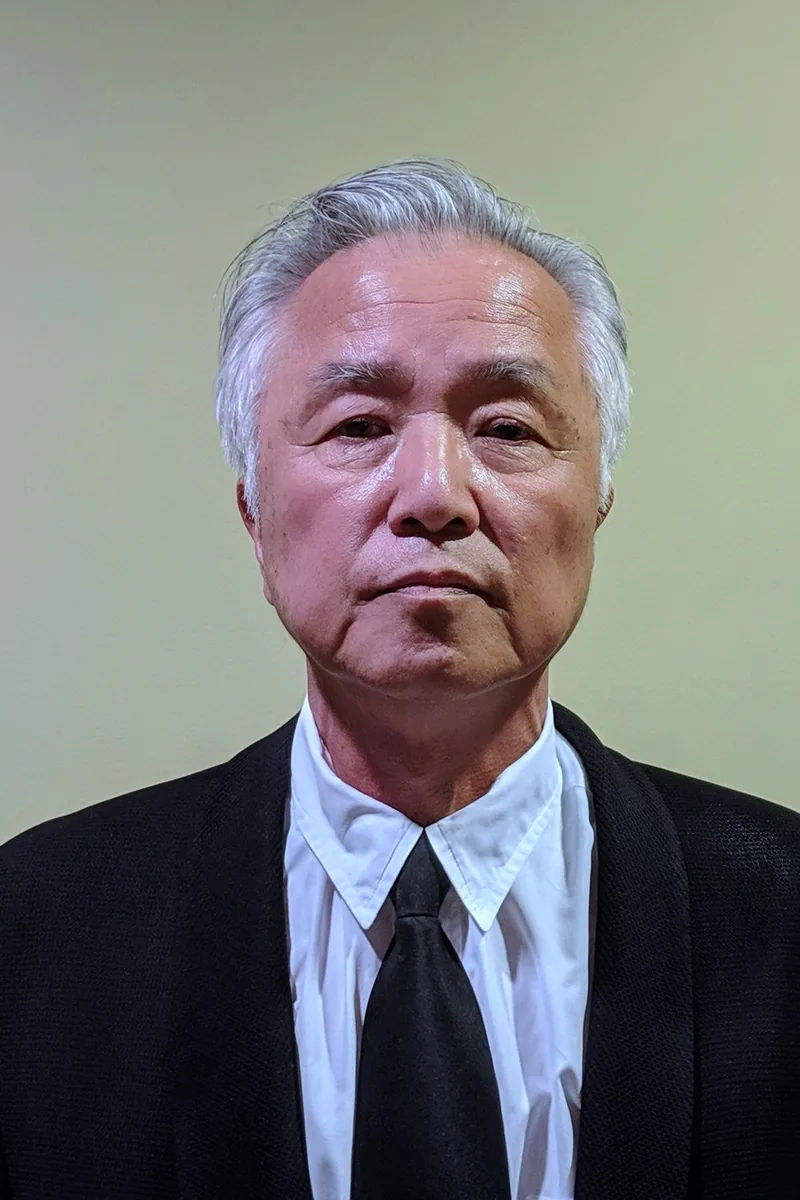
I love to teach. I love young minds and fresh brains. Those are just like clean sheets of papers I can draw anything I like. I really like to help young people to achieve their full capacities with my long experience of teaching. I am very patient and good at explaining complex concepts in simple terms. I am looking forward to meeting students who need my help.
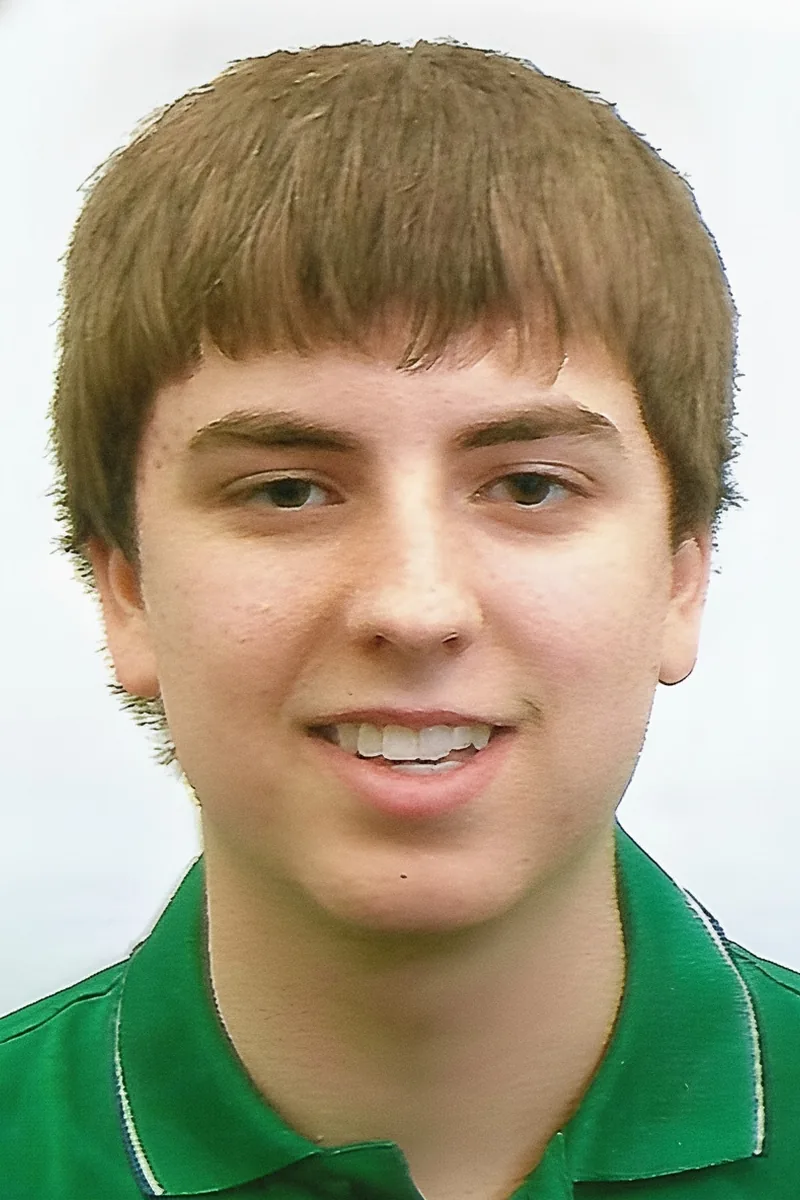
Gauss's law, Ampère's law, and RC circuits can feel impossibly abstract until someone connects the math to something tangible. Matthew's engineering coursework in electrical systems gives him practical fluency with E&M concepts, and he teaches students to visualize field lines and charge distributions rather than just grinding through integrals. His 5.0 rating speaks to how well that approach lands.
AP Physics C: E&M is one of the toughest AP exams because it layers calculus on top of already abstract concepts like Gauss's law, Faraday's law, and RC circuits. Ian's chemical engineering program at Cornell covers electromagnetism in depth, so he can unpack Maxwell's equations and walk through the calculus-heavy derivations the exam demands. He treats each problem as a chance to build physical intuition, not just grind through integrals.
Gauss's law, Ampère's law, RC circuits, electromagnetic induction — AP Physics C: E&M is where most students hit a wall because the math and the physical intuition have to work together simultaneously. Dennis's research designing optical-electronic multiplexers required him to model electromagnetic wave behavior at a professional level, and he brings that fluency to breaking down the toughest problems on the exam.
Gauss's law, Ampère's law, RC circuits — AP Physics C: E&M demands comfort with vector calculus applied to invisible fields, which is a steep jump for most students. David's engineering coursework at UCLA keeps him immersed in this material, and he excels at translating abstract field equations into concrete, visual reasoning.
Gauss's law, Ampère's law, RC circuits — AP Physics C: E&M piles abstract vector calculus on top of already counterintuitive electromagnetic concepts. Victoria unpacks each topic by building physical intuition first, like visualizing electric field lines before setting up a flux integral, so the math serves the physics instead of obscuring it. Her background in medical imaging gives her real-world examples of how electromagnetic principles show up beyond the textbook.
Gauss's law, Ampère's law, Faraday's law — AP Physics C: E&M asks students to wield vector calculus inside electromagnetic theory, which is a steep jump from most prior coursework. Steven approaches each topic by first explaining the physical picture, then showing the mathematical framework, then working through a practical example that ties both together. His PhD in chemical engineering required deep work with electromagnetic principles and multivariable calculus alike.
AP Physics C: E&M is widely considered the hardest AP science exam, demanding fluency with vector calculus, Gauss's law, Faraday's law, and RC/RL circuit analysis under serious time pressure. Nima is a physics major at Duke who earned a 1580 SAT, and he unpacks these topics by deriving results from Maxwell's equations so students understand the structure behind each problem type rather than pattern-matching from examples.
E&M is where most AP Physics students hit their ceiling — Gauss's law, Ampère's law, and Faraday's law demand spatial reasoning and calculus fluency at the same time. Bidyut's biomedical engineering curriculum at Johns Hopkins required extensive work with electromagnetic theory, from circuit analysis to field modeling. He unpacks each law by building the physical picture first, then layering in the math so the integrals actually make sense.
AP Physics C: E&M is where calculus and physics genuinely merge — Gauss's law, Ampère's law, and Faraday's law all require setting up and evaluating integrals that many students haven't encountered outside a math class. Maxwell's dual degree in mathematics and physics means he tackles both the vector calculus and the physical intuition simultaneously, so concepts like electric flux and induced EMF actually click. Rated 5.0 by students.
Gauss's law, Ampère's law, Faraday's law — E&M asks students to visualize invisible fields and then describe them with surface and line integrals. Bryan breaks each problem into two stages: building geometric intuition about what the field looks like, then choosing the right mathematical tool to exploit symmetry. His physics degree and 5.0 student rating back up that structured approach.
Gauss's law, Ampère's law, Faraday's law — AP Physics C: E&M asks students to wield vector calculus in physical contexts that feel genuinely abstract at first. Jacques tackles this by grounding each law in a concrete setup (a charged sphere, a solenoid, a changing magnetic flux) before layering in the integral formulations. His engineering training at Princeton and decades of classroom physics teaching make him unusually comfortable in this territory.
Testimonials
Because the right AP Physics C: Electricity and Magnetism tutor makes all the difference.
Average Session Rating – Based on 3.4M Learner Ratings
Practice AP Physics C: Electricity and Magnetism
Free practice tests, flashcards, and AI tutoring for AP Physics C: Electricity and Magnetism
Nearby AP Physics C: Electricity and Magnetism Tutors
Other Des Moines Tutors
Related Science Tutors in Des Moines
Frequently Asked Questions
AP Physics C: Electricity and Magnetism focuses on electrostatics, conductors and dielectrics, electric circuits, magnetic fields, and electromagnetic induction. The course emphasizes calculus-based problem solving, with heavy use of Gauss's law, Ampère's law, and Faraday's law. Students work through both conceptual understanding and rigorous mathematical applications, which is why many find this course significantly more challenging than introductory physics.
Students typically struggle most with Gauss's law applications, understanding magnetic force and field interactions, and electromagnetic induction problems. The transition from conceptual thinking to calculus-based derivations trips up many learners, especially those who haven't mastered multivariable calculus or vector operations. Practice with vector fields and consistent problem-solving practice are essential to building confidence in these areas.
Most students benefit from 3-4 months of consistent preparation if starting from a solid foundation in introductory physics and calculus. If you're weaker in either prerequisite, starting earlier (6+ months) gives you time to fill gaps without rushing. The key is regular practice with released AP exams and problem sets—cramming rarely works for a course this conceptually dense.
A score of 3 or higher (out of 5) qualifies for college credit at most institutions, though competitive schools typically expect a 4 or 5. Realistic improvement depends on your starting point: students scoring 2-3 on practice tests can often reach 4 with focused tutoring and consistent practice, while jumping from 3 to 5 requires mastering both conceptual understanding and exam strategy. Working with a tutor helps you identify which weak areas will give you the biggest score gains.
A tutor can help you understand difficult concepts like Gauss's law and electromagnetic induction through personalized explanations tailored to how you learn best. They'll also identify your specific weak areas through practice problems, teach you efficient problem-solving strategies, and help you manage pacing during the exam. For a course this mathematically rigorous, having someone catch conceptual gaps early prevents them from snowballing into larger problems.
Practice tests are essential—they're the best way to identify which topics you've mastered and which need more work, plus they help you build stamina and timing skills for the actual exam. Most students benefit from taking at least 3-4 full practice exams under timed conditions in the weeks leading up to test day. A tutor can review your practice test results with you to pinpoint patterns in your mistakes and adjust your study strategy accordingly.
In your first session, a tutor will assess your current understanding of key concepts, review your recent test scores or practice problems, and learn about your specific goals and timeline. You'll discuss which topics feel most confusing and what study strategies you've already tried. From there, the tutor will create a personalized study plan focused on your biggest gaps and help you get started with targeted practice.
Yes, Varsity Tutors connects Des Moines students with expert physics tutors who specialize in AP Physics C: Electricity and Magnetism. Whether you attend school in one of Des Moines' three school districts or are homeschooled, you can get matched with a tutor who understands the course curriculum and has experience helping students improve their scores. Personalized 1-on-1 instruction lets you work at your own pace and focus on exactly what you need.
Let’s find your perfect tutor
Answer a few quick questions. We’ll recommend the right plan and match you with a top 5% tutor.