Award-Winning AP Physics C: Mechanics Tutors
serving Des Moines, IA
AP Physics C: Mechanics
Tutors in Des Moines
Private 1-on-1 tutoring, weekly live classes for academic support, test prep & enrichment, practice tests and diagnostics, and more to elevate grades and test scores.
Based on 3.4M Learner Ratings
UniversitiesSchools & Universities
DeliveredHours Delivered
ProficiencyGrowth in Proficiency
Who needs tutoring?
No obligation. Takes ~1 minute.
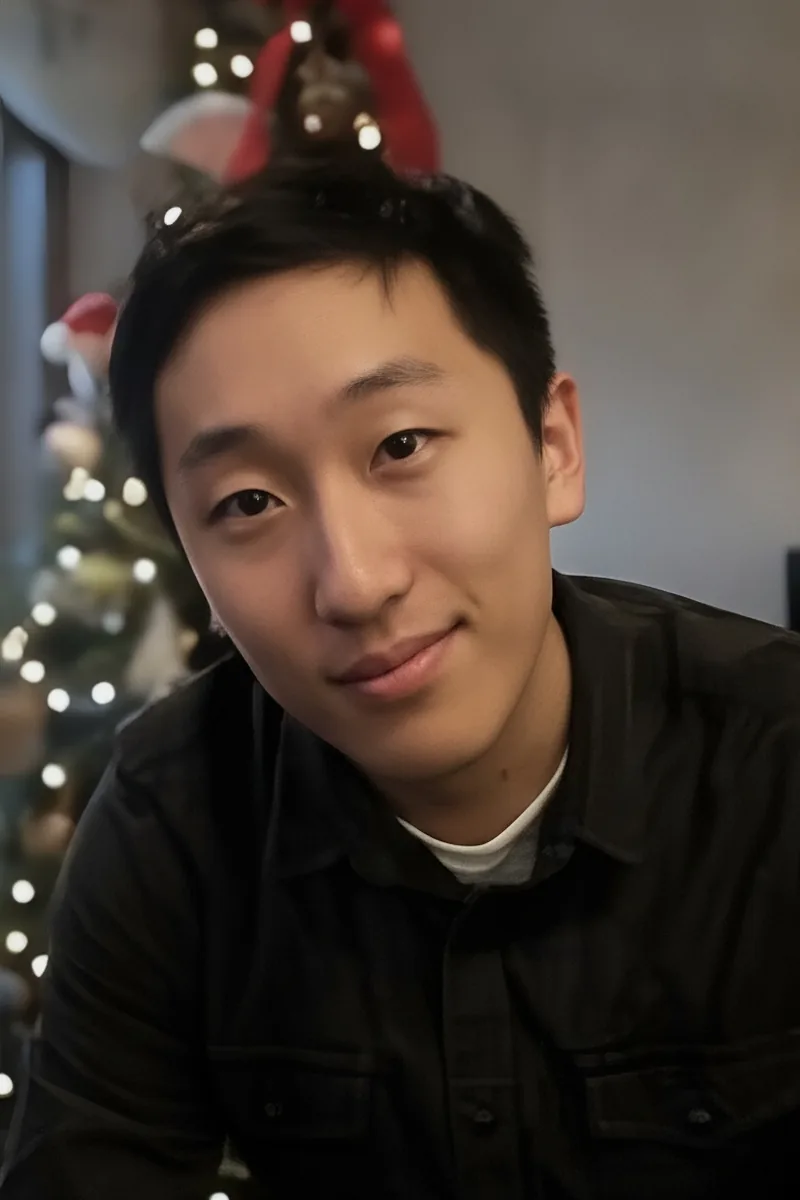
Between his mechanical engineering studies at Case Western Reserve and a perfect 36 ACT, Kevin has the calculus chops and physical intuition that AP Physics C: Mechanics rewards — especially on free-response problems where a sloppy free-body diagram dooms the entire solution. He zeroes in on the skill most students underestimate: translating a physical setup into the right differential expression before any computation begins, whether it's a variable-mass system or a non-trivial torque problem.

Most pre-med students avoid the calculus-heavy physics — Manideep leans into it, tackling AP Physics C: Mechanics alongside his biological sciences coursework at Northwestern, where he also TAs in the sciences. He breaks down conservation of energy and momentum problems by starting with the physical scenario and building the integral from there, so students learn a repeatable process instead of hunting for the right formula. Rated 5.0 by students.
AP Physics C: Mechanics often trips up students who are comfortable with calculus in a math class but freeze when they need to apply it to a pulley system or a variable-force spring problem. Andrew pairs his strong math background — he's pursuing a double focus in finance and mathematics at Boston College — with hands-on physics tutoring across multiple levels, including the SAT Physics subject test. That cross-subject fluency means he can spot whether a student's stuck on the physics setup or the calculus execution and address the right one.
Rice's physics program throws Will into calculus-based mechanics every day — working through Lagrangian setups, variable-force integrations, and the rotational dynamics problems that make AP Physics C's free-response section so demanding. His approach starts with the underlying physical principle, then builds the math around it piece by piece, so students internalize the reasoning instead of pattern-matching to memorized solutions.
Biomedical engineering throws you into calculus-based mechanics from day one — Spencer's coursework has him modeling forces on biological systems using the same Newtonian framework and integral setups that AP Physics C tests on free-response problems. His 35 ACT and parallel teaching across both AP Calculus BC and AP Physics C mean he can diagnose whether a student's stuck on the physics concept or the calculus execution, and address the right one.
Biochemistry might seem unrelated to mechanics, but Shira's coursework in physics and calculus — plus a 1550 SAT — means she's built the quantitative chops to handle the kinematics, force analysis, and integration problems that define AP Physics C. She approaches mechanics the way she approaches lab work: isolate the variables, set up the math carefully, then check whether the answer makes physical sense. Rated 4.9 by students.
Working as a postdoctoral researcher at Brookhaven National Laboratory while teaching university physics at Hofstra, Lindamulage lives in the world of Newtonian mechanics and calculus-based dynamics daily — not as textbook exercises, but as tools for active research. That depth shows when tackling AP Physics C: Mechanics topics like rotational inertia derivations or variable-force work integrals, where real-life examples from the lab make abstract setups feel grounded. Students get someone who can explain why a conservation law works the way it does, not just how to apply it on exam day.
Sanjana's applied math studies at Harvard and her role as a Course Assistant for introductory calculus mean she's fluent in the exact differential and integral techniques that AP Physics C: Mechanics layers onto every force, torque, and energy problem. She's especially effective at bridging the gap when students grasp the physics intuitively but struggle to translate a scenario — say, a block on a spring with friction — into the correct differential equation and solve it cleanly. Rated 5.0 by students.
John scored a 36 on the ACT and tutors the full calculus-to-physics pipeline — AP Calculus AB, AP Physics 1, and AP Physics C: Mechanics — so he sees exactly where students' math skills break down under the pressure of a mechanics problem. He teaches students to recognize which physical scenarios call for integration versus differentiation before they even write an equation, turning the free-response section into a series of deliberate decisions rather than panicked formula hunts. Rated 4.9 by students.
Corrina's mechanical engineering degree means she's solved the calculus-based force, torque, and energy problems in AP Physics C: Mechanics not as exam prep but as daily coursework — and her 1580 SAT reflects the quantitative precision that makes the difference on tricky free-response integrations. She zeroes in on the transition from linear to rotational dynamics, where most students lose points by misapplying familiar formulas instead of building the physics from the differential equation up.
Free-body diagrams, rotational inertia, and conservation of energy problems all require calculus-based reasoning that trips students up when they try to rely on formulas alone. Emily completed the full pre-med physics sequence at Cornell and spent her senior year tutoring calculus — two skills that converge directly in AP Physics C: Mechanics. She breaks multi-step problems into the underlying math so students see why the setup matters as much as the answer.
AP Physics C: Mechanics isn't the obvious fit for a political science major — but Lila also tutors calculus, pre-calculus, and both AP Physics C courses, and her 36 ACT reflects the quantitative chops that calculus-based mechanics actually demands. She's especially useful for students who need someone to slow down and rebuild the connection between a free-body diagram and the integral it implies, rather than racing through derivations.
Testimonials
Because the right AP Physics C: Mechanics tutor makes all the difference.
Average Session Rating – Based on 3.4M Learner Ratings
Practice AP Physics C: Mechanics
Free practice tests, flashcards, and AI tutoring for AP Physics C: Mechanics
Nearby AP Physics C: Mechanics Tutors
Other Des Moines Tutors
Related Science Tutors in Des Moines
Frequently Asked Questions
AP Physics C: Mechanics focuses on classical mechanics and includes kinematics, Newton's laws, work and energy, momentum, circular motion, oscillations, and gravitation. The course emphasizes calculus-based problem solving, so you'll need to apply derivatives and integrals to physics concepts. For students in Des Moines preparing for the exam, understanding how to set up and solve differential equations is just as important as knowing the physics principles themselves.
The main difficulty is the calculus requirement—you're not just applying formulas, but deriving and manipulating them using derivatives and integrals. Many students struggle with the transition from algebra-based physics to calculus-based reasoning, especially when problems require multiple steps of mathematical manipulation. Additionally, the exam tests both conceptual understanding and problem-solving speed, so pacing during the test becomes critical.
Score improvement depends on where you're starting and how consistently you work, but personalized 1-on-1 instruction typically helps students gain 2-4 points on the 5-point AP scale. The biggest gains come from identifying your specific weak areas—whether that's calculus application, free-body diagrams, or energy conservation problems—and targeting those gaps with focused practice. Working with a tutor also helps you develop efficient problem-solving strategies and build confidence in your approach before test day.
Time management is critical—you have 45 minutes for 35 multiple-choice questions and 90 minutes for 3 free-response problems, so you need to know when to move on. For multiple-choice, eliminate obviously wrong answers first and use dimensional analysis to check if your answer makes physical sense. On free-response, show all your work and clearly label your variables and equations, since partial credit is awarded for correct method even if your final answer is wrong.
Students often struggle with energy conservation problems, especially when potential energy and kinetic energy transformations are involved. Circular motion and rotational dynamics also trip up many test-takers because the concepts feel abstract. Additionally, setting up differential equations correctly and understanding when to use calculus versus algebra is a frequent source of mistakes. Tutors can help you recognize problem patterns and develop systematic approaches to each topic.
Most students benefit from starting test prep 2-3 months before the exam, with consistent weekly study sessions. If you're taking the course concurrently, working with a tutor throughout the year helps you master topics as they're taught rather than cramming at the end. For Des Moines students who want to solidify their understanding and boost their score, even 4-6 weeks of focused tutoring combined with regular practice tests can make a meaningful difference.
Practice tests are essential—they help you get comfortable with the exam format, identify timing issues, and pinpoint which topics need more review. You should take full-length practice tests under timed conditions at least 3-4 times before exam day. Reviewing your mistakes afterward is where the real learning happens; a tutor can help you understand not just what went wrong, but why you made that mistake and how to avoid it on test day.
Look for tutors with strong physics backgrounds—ideally someone who has taught AP Physics C or scored well on the exam themselves. They should understand both the physics concepts deeply and the calculus required to solve problems. Most importantly, they should be able to explain complex ideas clearly and help you develop problem-solving strategies that work for your learning style, not just give you answers.
Let’s find your perfect tutor
Answer a few quick questions. We’ll recommend the right plan and match you with a top 5% tutor.