Award-Winning GED Math Tutors
serving Milwaukee, WI
Who needs tutoring?
FEATURED BY


TUTORS FROM
- YaleUniversity
- PrincetonUniversity
- StanfordUniversity
- CornellUniversity
Award-Winning GED Math Tutors serving Milwaukee, WI

Certified Tutor
9+ years
Isabella
An MIT math degree and current PhD work in Operations Research at Georgia Tech mean Isabella has spent years breaking complex quantitative problems into structured, solvable steps — exactly the skill that turns the GED's mix of arithmetic, algebra, and geometry from overwhelming to manageable. She z...
Massachusetts Institute of Technology
Bachelor of Science in Mathematics (minors in Management Science and Ancient and Medieval Studies)
Georgia Institute of Technology-Main Campus
Current Grad Student, Operations Research

Certified Tutor
10+ years
Caroline
Medical school entrance exams and a pre-med curriculum at Notre Dame kept Caroline drilling the same quantitative skills the GED covers — proportions, algebraic setups, data interpretation — long after most people stop thinking about them. She breaks each problem into a clear sequence of smaller ste...
University of Notre Dame
Bachelors (double major in Chinese and pre-medicine)
University of Illinois at Chicago
Current Grad Student, Medicine
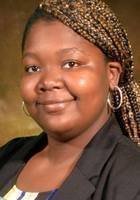
Certified Tutor
6+ years
Wamweni
Earning a GED math score requires solid command of topics like proportional reasoning, basic algebra, and graph interpretation — areas Wamweni covered extensively as both a math teacher and tutorial program manager. She structures sessions around the specific question types the GED uses, including d...
University of Pennsylvania
Masters in Education, International and Comparative Education
Stetson University
Bachelor in Arts, International Relations

Certified Tutor
8+ years
Aimee
Chemical engineering coursework at Georgia Tech drills exactly the kind of math the GED covers — algebra, proportional reasoning, interpreting graphs — except at a much higher intensity, so Aimee can break those concepts down to their simplest moving parts without losing accuracy. She's spent three ...
Georgia Institute of Technology-Main Campus
Bachelor of Science, Chemical and Biomolecular Engineering
Massachusetts Institute of Technology
Current Grad Student, Biological/Biosystems Engineering

Certified Tutor
5+ years
Theodora
Theodora's biology and biotechnology training at Johns Hopkins and Emory meant constant work with quantitative reasoning — dilution calculations, statistical analysis, interpreting experimental data — all built on the same arithmetic and algebra foundations the GED tests. She uses that science-groun...
Johns Hopkins University
Master of Science in Biotechnology
Emory University
Bachelor of Science, Biology, General

Certified Tutor
10+ years
Sarah
Most adults sitting for the GED haven't seen a math classroom in years, and Sarah's Master's in Secondary Education gave her specific training in meeting that challenge — rebuilding comfort with operations, proportions, and basic algebra in a sequence that actually sticks. She's taught math at every...
Providence College
Masters, Secondary Education
University of Notre Dame
Bachelors, Psychology
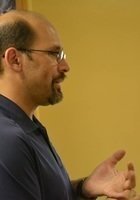
Certified Tutor
Shawn
Covering algebra, geometry, data analysis, and basic quantitative reasoning, the GED Math exam rewards students who understand underlying concepts rather than those who've memorized isolated procedures. Shawn tackles each domain by connecting it to practical scenarios — unit conversions, percentage ...
University of California Los Angeles
Master of Science, Chemistry

Certified Tutor
Peter
Peter's journalism degree and Masters in English Education might not scream 'math tutor,' but years of teaching across subjects from pre-algebra through calculus mean he knows exactly where adult learners get tripped up — especially on the kind of reading-heavy word problems the GED loves to throw i...
Ohio State
Masters in Education, English Education
Syracuse University
Bachelor of Science, Journalism

Certified Tutor
4+ years
Megan
Fifteen years of teaching math to students with learning differences gave Megan a sharp eye for the specific moment a concept stops making sense — whether it's converting between fractions and decimals, setting up a proportion, or interpreting a graph. She rebuilds each skill using methods adapted f...
Lipscomb University
Master of Arts, Educational Administration
Vanderbilt University
Masters in Education, Special Education
Sewanee: The University of the South
Bachelor in Arts, English

Certified Tutor
6+ years
Louis
Twenty years of teaching math at Massachusetts colleges means Louis has watched adults at every skill level wrestle with the same sticking points the GED exploits — sign errors in algebra, shaky fraction arithmetic, freezing on word problems that require two or three steps. He ties each concept to a...
Cambridge College
Master of Science, Instructional Technology
Salem State University
Associate in Science, Mathematics
Practice GED Math
Free practice tests, flashcards, and AI tutoring for GED Math
Nearby GED Math Tutors
Other Milwaukee Tutors
Related Test Prep Tutors in Milwaukee
Frequently Asked Questions
The GED Math test focuses on four main areas: quantitative reasoning (fractions, decimals, percentages, ratios), algebraic problem solving (expressions, equations, inequalities), geometric and spatial reasoning (area, volume, coordinate planes), and data analysis and probability. The test includes both multiple-choice and constructed-response questions, with about 45% focusing on algebra, 20% on functions and sequences, 20% on geometry and measurement, and 15% on statistics and probability. Tutors can help you master each domain and develop strategies for tackling different question types.
Word problems require you to translate real-world scenarios into mathematical equations—a skill that combines reading comprehension, conceptual understanding, and procedural fluency. Many students struggle because they focus on finding the answer rather than understanding what the problem is asking. Personalized tutoring helps you develop a systematic approach: identifying what you know, what you need to find, choosing the right operation or formula, and checking your work. With guided practice and feedback, you'll build confidence in breaking down complex problems into manageable steps.
Math anxiety is common and very treatable—it often stems from past negative experiences or feeling rushed through concepts you didn't fully understand. A tutor works at your pace, breaking topics into smaller, manageable pieces and celebrating progress along the way. By revisiting foundational concepts and building genuine understanding (rather than just memorizing procedures), you'll start to see math as logical and learnable. Regular, low-pressure practice with immediate feedback helps rewire your relationship with math and builds the confidence you need for test day.
Your first session focuses on assessment and goal-setting. A tutor will discuss your background with math, identify specific topics where you feel stuck (like multi-step equations, graphing, or percentages), and understand your timeline for taking the GED. You'll likely work through a few practice problems together so the tutor can see your problem-solving approach and where misconceptions might be occurring. This foundation helps create a personalized learning plan tailored to your needs and learning style.
On constructed-response questions, showing your work is essential—it demonstrates your reasoning and can earn you partial credit even if your final answer is incorrect. More importantly, writing out your steps helps you catch mistakes, organize your thinking, and avoid careless errors. Tutors emphasize the habit of showing work from day one because it transforms math from a guessing game into a transparent, logical process. This approach also helps you identify exactly where errors occur, making it easier to learn and improve.
Most students benefit from 2-4 months of consistent preparation, though the timeline depends on your starting point and how much time you can dedicate weekly. If you're working through significant gaps in foundational skills (like fractions or basic algebra), you may need longer. Tutors typically recommend 2-3 sessions per week combined with independent practice between sessions. The key is consistent, focused work rather than cramming—spaced practice over time helps you retain concepts and build the problem-solving fluency the test requires.
Yes—the GED Math test allows a calculator on about 80% of questions (Part 2), but Part 1 is calculator-free. This means you need both calculator skills and strong mental math and estimation abilities. Tutors help you develop judgment about when to use a calculator and when to work without one, ensuring you're not over-reliant on technology. You'll also practice with the specific calculator allowed on test day (the TI-30XS) so you're comfortable with its functions and limitations during the actual exam.
Varsity Tutors connects you with expert tutors who specialize in GED Math and understand the specific challenges Milwaukee students face. When you reach out, you'll be matched with a tutor based on your schedule, learning style, and specific needs—whether you're starting from scratch or polishing skills before test day. Tutors bring real teaching experience and a deep understanding of the GED curriculum, so you're getting personalized instruction from someone who knows exactly what the test demands.
Connect with GED Math Tutors in Milwaukee
Get matched with local expert tutors