Award-Winning SAT Math Tutors
serving Richmond, VA
SAT Math
Tutors in Richmond
Private 1-on-1 tutoring, weekly live classes for academic support, test prep & enrichment, practice tests and diagnostics, and more to elevate grades and test scores.
Based on 3.4M Learner Ratings
UniversitiesSchools & Universities
DeliveredHours Delivered
ProficiencyGrowth in Proficiency
Who will be getting tutoring?
No obligation. Takes ~1 minute.

I am very excited to have the chance to work with students preparing for the PSAT, the SAT, or the LSAT! While I'm originally from Connecticut, I attended college and law school in Buffalo, New York. While there, I worked for a test prep agency helping students prepare for the SAT and the LSAT. In 2003, I moved to Richmond. I worked with the Virginia Department of Taxation for 7 years doing policy work and assisting with the legislative process. In 2011, I began working for Bryant and Stratton College, where I taught students in the Paralegal Studies program. I loved helping my students prepare for new careers. I can't wait to work with you and help you succeed as well!
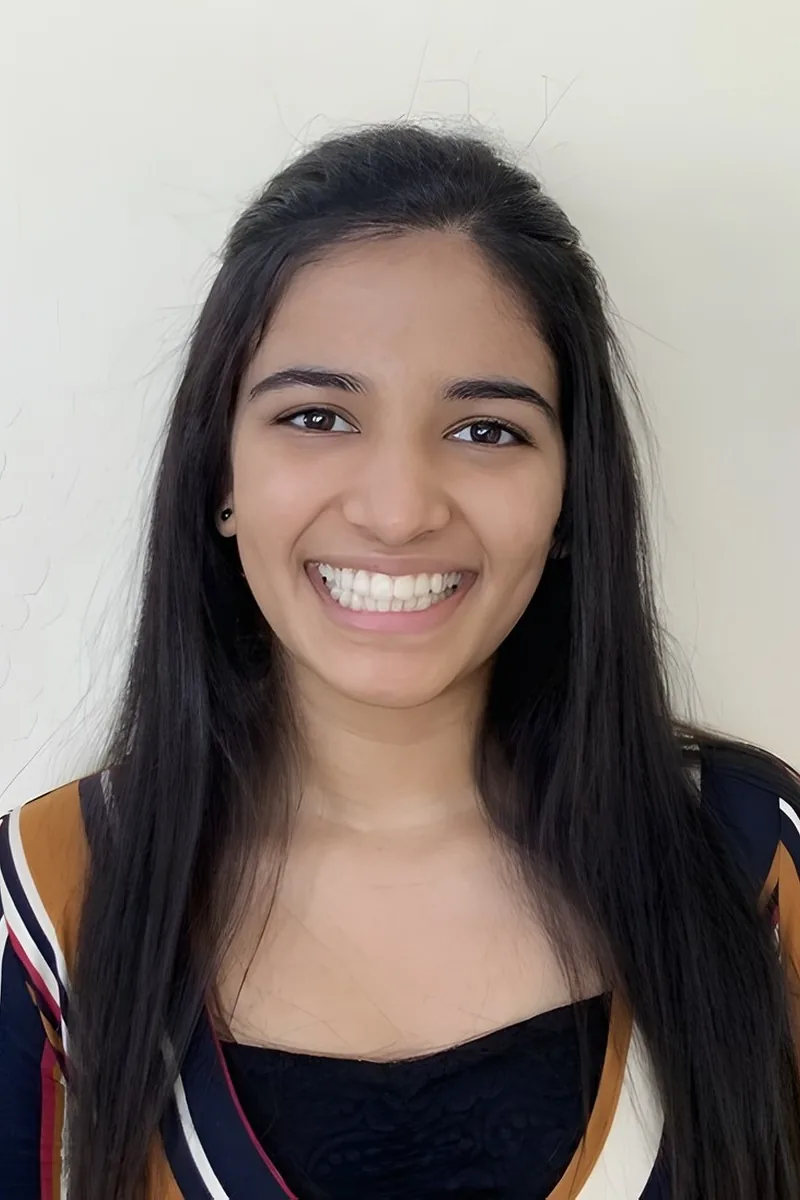
The BS/MD program at VCU means Roshni is still close enough to her own 1550 SAT to remember exactly which math topics felt straightforward and which ones required a deliberate strategy shift — particularly the geometry and trigonometry questions that students often under-practice relative to algebra. Her eight months teaching math to students ages 5 through 18 sharpened her ability to adjust explanations on the fly, meeting a calculus-ready junior and a still-building-foundations sophomore with completely different language. Rated 4.9 by students.
I am a sophomore electrical engineering student and member of the honors college at Virginia Commonwealth University. I recently graduated from Maggie L. Walker Governor's School in June of 2017. I have a passion for mathematics, especially calculus, and am excited to share my knowledge with others.
Joel scored a 1510 on the SAT and breaks the math section down into its core skill areas — heart of algebra, passport to advanced math, and problem solving with data analysis — so students know exactly what to expect. His biochemistry background means the calculator and no-calculator sections feel intuitive, especially on problems involving ratios, percentages, and interpreting graphs. Rated 5.0 by students.
I am currently applying to medical schools in hopes of attending in the Fall of 2015. Helping my younger brother manage his genetic disorder, in addition to years of teaching special needs students at summer camp, has inspired me to pursue a career as a Pediatrician with a focus in Medical Genetics.
I am currently preparing to begin a Master's of Teaching program at VCU this fall and have continued to excel in the math and history courses I need to round out my teaching endorsements. Because my future career path focuses on teaching at the high school level, I have a preference for tutoring math (especially algebra through calculus) and history, along with writing and my current subject of philosophy. Besides my career motivations, I find that I stand out the most as a tutor in these areas because of my capability in clearly presenting complex material and my ability to grasp the diverse perspectives of my students.
I am a recent graduate of Virginia Commonwealth University, where I earned a Bachelors of Science in Biology. Throughout my three years of undergrad, I have been a preceptor for Cell Biology and Genetics. In addition, I was a supplemental instruction leader in CHEM 101 and CHEM 102. I am currently a Medical Scribe, but I will be attending VCOM for medical school starting Fall 2018.
I am an avid enthusiast for following your passions, no matter what they are. I enjoy teaching and spending time with others. I have a great vast amount of experience tutoring other peers, students, children, etc. I hope that I can help others reach their goals in learning!
I am a 19 year old student taking a year off from college to explore opportunities in the intersection between art and cognitive studies. I am currently residing in Los Angeles, but traveled from Charlottesville, Virginia where I was studying Cognitive Science and Studio Art at University of Virginia. I am patient, flexible, and love working with students in different subjects, but especially math. I prefer to cater the way I teach a student based on how they learn, whether it be by visuals, repetition, etc. I create methods that are out of the box if a student struggles with the way she/he are learning in school since school tends to teach in a uniform method rather than on an individualized basis.
I am currently a lead preschool teacher. I received my Bachelor's in Psychology from VCU and am looking to return to school to further my education. While in college, I worked as a Supplemental Instruction leader, teaching general biology and anatomy. I have also worked in an after school program with elementary age children, but I have my fondest memories volunteering as a counselor for Camp Kesem. In my own experience, I loved school and now I love teaching even more at all age levels! I especially enjoy the challenge of getting creative to discover what approach and mediums work best for each student. I am available for in person as well as online tutoring.
I am a two-time graduate of James Madison University in Harrisonburg, Virginia, receiving a bachelor's degree in English in 2008 and a master's degree in secondary education in 2009. Since graduation, I have worked teaching high school English and coaching wrestling in a relatively poor and rural district just south of Richmond. Though I am fully qualified and capable of tutoring any subject related to English, one of the things I have enjoyed the most success with as a teacher is preparation for standardized tests. I also very much enjoy teaching British literature and the writing process. There is no better feeling to me than seeing the gratitude in a student's face when he or she exceeds expectations and can go on to complete the next step in his or her educational journey. Outside of teaching, I am a rabid baseball fan (Let's go, Mets!), I love going to concerts, and I enjoy hanging out with my cats.
I am a graduate of Tufts University. I received my Bachelor of Arts in English as well as a minor in History. Since graduation, I have worked as a 7th grade Reading Language Arts teacher in Dallas Texas at a newly formed public all boys school. This has provided me with great experience and insight into how students best learn and how to create culturally responsive lessons that students will engage with. I am most passionate about English, Literature, History, and Spanish. In my experience, working to prepare students for state standardized tests has had the additional benefit of helping students to discover what they enjoy reading about. This increase in intrinsic motivation to read has had an important impact on struggling students. I am dedicated towards ensuring that students are provided with an education that increases their quality of life.
The SAT Math section rewards strategic thinking as much as computational skill, and Austin's approach zeroes in on the highest-yield topics: heart-of-algebra questions, data analysis, and the tricky no-calculator section where number sense matters most. With a 1430 SAT and an applied math background, he breaks down each problem type into a repeatable decision process that builds speed and confidence.
I am confident that I can help raise your exam scores and improve your overall test-taking abilities.
Michael scored a 1440 on the SAT and knows exactly where the math section tries to trip students up — especially on data analysis questions and multi-step algebra problems disguised as word problems. He teaches efficient strategies for translating those wordy setups into clean equations, then checking answers in under a minute. Rated 5.0 by students.
The SAT Math section buries straightforward algebra and geometry inside wordy, context-heavy problems designed to slow students down. Mac, who earned a 1420 SAT composite, walks through techniques for translating word problems into equations quickly and recognizing which problems to skip and return to. That kind of pacing strategy is often the difference between a good score and a great one.
I am available to help students with any topics they are struggling with in their high school or early college-level Physics courses.
I am a graduate of Brigham Young University, where I received my Bachelor of Arts in International Relations with an emphasis in Middle Eastern Studies and Arabic. As part of my coursework, I studied Arabic for three years and spent a semester in Amman, Jordan. After graduating, I worked on a U.S. Senate campaign, then interned at a think tank and congressional office in Washington, DC. While at the think tank, I co-authored an article that was published in US News and World Report. I am currently pursuing my juris doctorate (JD) at the University of Georgia School of Law.
I am currently a second year law student at Harvard Law School. I am passionate about public interest law, particularly immigration and criminal defense.
I am a recent cum laude graduate of the University of Amsterdam's Masters in Economics Program where I specialized in Monetary Policy and Banking. While there, I worked as a teaching assistant and tutored in economics and mathematics. Prior to that, I worked as an ESL teacher for two years in Russia and China.
I am ready to help all students by answering their questions and frequently addressing some questions to them....
Carnegie Mellon's engineering curriculum throws calculus and linear algebra at students daily, so the algebra, advanced math, and geometry on the SAT feel like familiar territory for Ayaan. He zeroes in on the specific traps the SAT Math section sets — misread word problems, sign errors in quadratics, and tricky coordinate geometry setups — and teaches students to spot them before they lose points. His approach emphasizes strategic problem selection and back-solving techniques that save time on test day.
Carnegie Mellon's Statistics and Machine Learning program throws Victoria into probability, data analysis, and algebraic modeling daily — concepts that map cleanly onto the SAT Math section's questions about linear functions, scatterplots, and statistical inference. She's especially useful for students who need to tighten their pacing on the algebra-heavy portions, since her coding background trained her to think in efficient, step-by-step logic rather than brute-forcing every calculation.
Biomedical engineering at Yale means Abril works with calculus, statistics, and applied math daily — but she also remembers exactly which SAT Math patterns gave her trouble as a test-taker, especially the geometry and trigonometry questions that catch students off guard because they look simple but require careful setup. She teaches a stripped-down approach to those problems: sketch it, label what you know, identify the relationship, then solve — no wasted steps under time pressure.
Software engineering sharpens a very specific habit: translating a messy real-world problem into clean, step-by-step logic — which is exactly what the SAT Math section demands on its algebra and word-problem questions. Aditi applies that programmer's instinct for breaking down complexity when she teaches students to convert the test's deliberately tangled setups into straightforward equations they can solve quickly. Her experience tutoring across both math and English means she also catches the reading-comprehension mistakes that cost points before a student ever picks up a pencil.
I am passionate about helping others and would love to help you to achieve your academic goals! Writing and language are my strongest suits, and I have plenty of experience working with kids and communicating with individuals of all age groups. You will gain a source of encouragement as well as practical help from my tutoring services.
Brittany scored a 1490 on the SAT and breaks the math section down by question type — heart of algebra, passport to advanced math, and problem solving with data analysis — so students know exactly what to expect and where to focus. Her approach zeroes in on the reasoning behind each problem, training students to recognize patterns quickly rather than grinding through every calculation. Rated 5.0 by students.
From the moment I began helping classmates in middle school study for math quizzes, I realized how much I enjoyed guiding others toward understanding. Over time, that spark grew into a genuine passion for education. What drives me most is witnessing the transformation in a student's confidencethe moment when confusion gives way to clarity, and they begin to believe in their own abilities. Tutoring, for me, is not simply about helping students achieve better grades; it's about empowering them to trust their capacity to learn and grow. My journey as a tutor began in high school, where I volunteered as a math tutor for underclassmen struggling with algebra and geometry. I worked one-on-one with students after school, helping them tackle difficult problems and build foundational skills. This early experience taught me how patience and consistent encouragement could make a lasting difference. In college, I served as a teaching assistant for general chemistry at the University of Virginia.
I am in graduate school and she is in undergraduate college, we have regular online sessions where I explain her the concepts as best as possible.
I am an undergraduate student at the University of Virginia (UVA) originally from Fairfield, Connecticut. I am pursuing my Bachelor of Arts in Biology and Global Public Health on the pre-med track with the hopes of becoming a physician (hopefully in pediatrics). At UVA, I am involved in youth mentoring as a Program Director of "GEMS" (Girls Excited about Math and Science), where I teach exciting lessons and conduct experiments with a class of elementary school girls in a variety of scientific topics, while I am also the Head Program Director of Youth Mentoring at UVA. I was also involved in tutoring throughout high school, where I worked with a group of special needs students. While I tutor in a broad range of subjects, I am most passionate about English, Science (especially Biology and Chemistry), and Humanities, which are most strongly reflected in my own studies. In my experience in the areas of reading and writing in particular, strong literary thinking skills helped me to be more creative and set myself apart in many of my applications to college, so I am passionate about helping students of any age to become stronger writers. I am also passionate about enhancing students' skills in critical thinking, especially through STEM topics, which can set students up for success in any difficult course or standardized test. I hope to instill a strong appreciation for education and learning within each of my students, and I believe that the first step is to help students feel more confident in their areas of interest while setting goals for the future. In my spare time, I enjoy hiking and being outdoors, traveling, painting, and playing soccer.
I am an expert writer and communicator in both English and Spanish, and my thorough knowledge of linguistics (phonetics and syntax) makes me especially qualified to help second language learners. While I am an effective and capable tutor for a broad range of subjects, I am most passionate about English, Spanish, and ESL, for I believe that strong communication skills are the foundation for success.
Most SAT Math questions reward careful reading as much as calculation — and Julia's humanities background at Columbia actually sharpens that skill, since she's trained to pull precise meaning from dense, layered text before doing any analysis. She scored 1510 on the SAT and applies that same close-reading instinct to the section's wordiest algebra and data problems, teaching students to translate the setup into a clean equation before picking up their pencil. Rated 5.0 by students.
Elena scored a 1600 on the SAT and treats the math section as a strategic exercise, not just a math test. She teaches students to recognize which problems reward algebraic setup versus back-solving or plugging in, then builds that decision-making instinct through timed practice where she listens to their reasoning in real time and flags inefficient habits.
I am currently pursuing a Bachelors of Science in Aerospace Engineering at the Georgia Institute of Technology. I am also a graduate of the high school International Baccalaureate Program. I have informal experience tutoring high school physics, but am most passionate about tutoring students for the ACT standardized test, having had extensive experience preparing for standardized tests throughout high school. I am eager to aid students in boosting their scores before their upcoming college applications, an important milestone in many students' lives. In my free time, I also enjoy playing tennis.
I am passionate about helping students with math, science, test prep, and more! As sophomore undergraduate at Brown University studying Mathematics and Biophysics, I am well experienced with many topics. I received a perfect 36 on my ACT, so I am very confident with test taking.
A math degree from Georgetown plus a 1580 SAT means Peter doesn't just know the content — he knows which algebraic shortcuts and graph-reading strategies actually save time under pressure. He breaks the SAT Math section into pattern categories so students recognize problem types within seconds and spend their energy solving, not deciphering. Rated 5.0 by students.
Kevin earned a 1550 SAT alongside his 36 ACT, so he knows exactly where the two math sections diverge — the SAT leans harder into multi-step word problems, data interpretation, and algebraic reasoning that rewards setting up equations carefully over grinding through calculations. He breaks down the no-calculator section's trickiest question types, like systems of equations and quadratic modeling, into repeatable strategies. His engineering training at Case Western Reserve keeps him sharp on every concept the test covers.
Viktor scored a perfect 1600 on the SAT, and his math degree from UChicago means he doesn't just know the answers — he understands why the College Board designs each question the way it does. He breaks down the no-calculator and calculator sections differently, showing students how to spot which algebraic manipulation or data-analysis shortcut each problem is actually testing.
Scoring 1530 on the SAT gave Asta firsthand insight into how the Math section layers algebra, data analysis, and advanced concepts like passport-to-advanced-math quadratics into increasingly tricky contexts. She zeroes in on the specific question types a student struggles with — whether that's systems of equations, percent-change word problems, or interpreting scatterplot data — and builds targeted practice around those gaps.
David scored a 1570 SAT and brings a computer scientist's precision to the Math section, particularly the no-calculator portion where algebraic fluency and number sense matter most. He emphasizes understanding why a technique works — whether it's completing the square or setting up a system of equations — so students can recognize which tool fits each problem without second-guessing.
Testimonials
Because the right SAT Math tutor makes all the difference.
Average Session Rating – Based on 3.4M Learner Ratings
Practice SAT Math
Free practice tests, flashcards, and AI tutoring for SAT Math
Other Richmond Tutors
Related Test Prep Tutors in Richmond
Frequently Asked Questions
Score improvement depends on your starting point and commitment level, but most students see meaningful gains within 8-12 weeks of focused preparation. Students who work with a tutor typically improve 50-100+ points by identifying their specific weak areas—whether that's algebra, geometry, or test-taking strategy—and targeting practice accordingly. The key is consistent practice between sessions combined with personalized feedback on your approach.
Pacing is one of the biggest challenges students face, since you have about 1.4 minutes per question on average. A tutor can help you develop strategies like identifying which question types you can solve quickly versus those requiring more thought, and when to skip and return to harder problems. Practice tests under timed conditions are essential—they help you build speed without sacrificing accuracy, and show you exactly where you're losing time.
The best way is to take a full-length practice test under timed conditions, then review your wrong answers by topic—algebra, advanced math, problem-solving, geometry, and trigonometry. A tutor can analyze your results to spot patterns: Are you missing certain question types? Making careless errors under time pressure? Struggling with conceptual understanding? Once you identify the real issue, targeted practice on those specific skills is far more efficient than reviewing everything.
Absolutely. Much of test anxiety comes from feeling unprepared or unsure of your approach—both things tutoring directly addresses. By building confidence through practice, learning proven test-taking strategies, and working through timed practice tests in a low-pressure environment, you'll feel more in control on test day. A tutor can also teach you specific techniques to manage stress, like breaking problems into smaller steps and knowing when to move on rather than getting stuck.
The SAT Math section includes multiple-choice questions and student-produced response (grid-in) questions across topics like algebra, advanced math, problem-solving, geometry, and trigonometry. Each question type has its own strategy—for example, multiple-choice lets you use answer choices to check your work, while grid-ins require you to be precise with your answer format. A tutor can walk you through the nuances of each format and show you which strategies work best for your learning style.
Most students benefit from 1-2 sessions per week over 8-12 weeks leading up to test day, though this depends on your starting score and target goal. Consistency matters more than frequency—regular sessions combined with practice between meetings help material stick. A tutor can help you create a realistic study schedule that fits your school workload and builds toward your goal score without burning out.
Practice tests do two critical things: they show you exactly which topics and question types trip you up, and they train your brain to work under time pressure. Taking full-length tests under timed conditions is the closest simulation to test day, so you can identify pacing issues, careless mistakes, and knowledge gaps before they count. A tutor can help you review each practice test strategically, focusing on understanding why you missed questions rather than just getting the right answer.
Your first session is about getting to know you and understanding where you stand. You'll likely take a diagnostic test or review your recent practice test results, discuss your target score and timeline, and talk about your biggest challenges with math. From there, Varsity Tutors connects you with a tutor who can create a personalized study plan tailored to your specific needs and learning style.
Let’s find your perfect tutor
Answer a few quick questions. We’ll recommend the right plan and match you with a top 5% tutor.