Award-Winning Japanese Tutors
serving Charleston, SC
Japanese
Tutors in Charleston
Private 1-on-1 tutoring, weekly live classes for academic support, test prep & enrichment, practice tests and diagnostics, and more to elevate grades and test scores.
Based on 3.4M Learner Ratings
UniversitiesSchools & Universities
DeliveredHours Delivered
ProficiencyGrowth in Proficiency
Who needs tutoring?
No obligation. Takes ~1 minute.
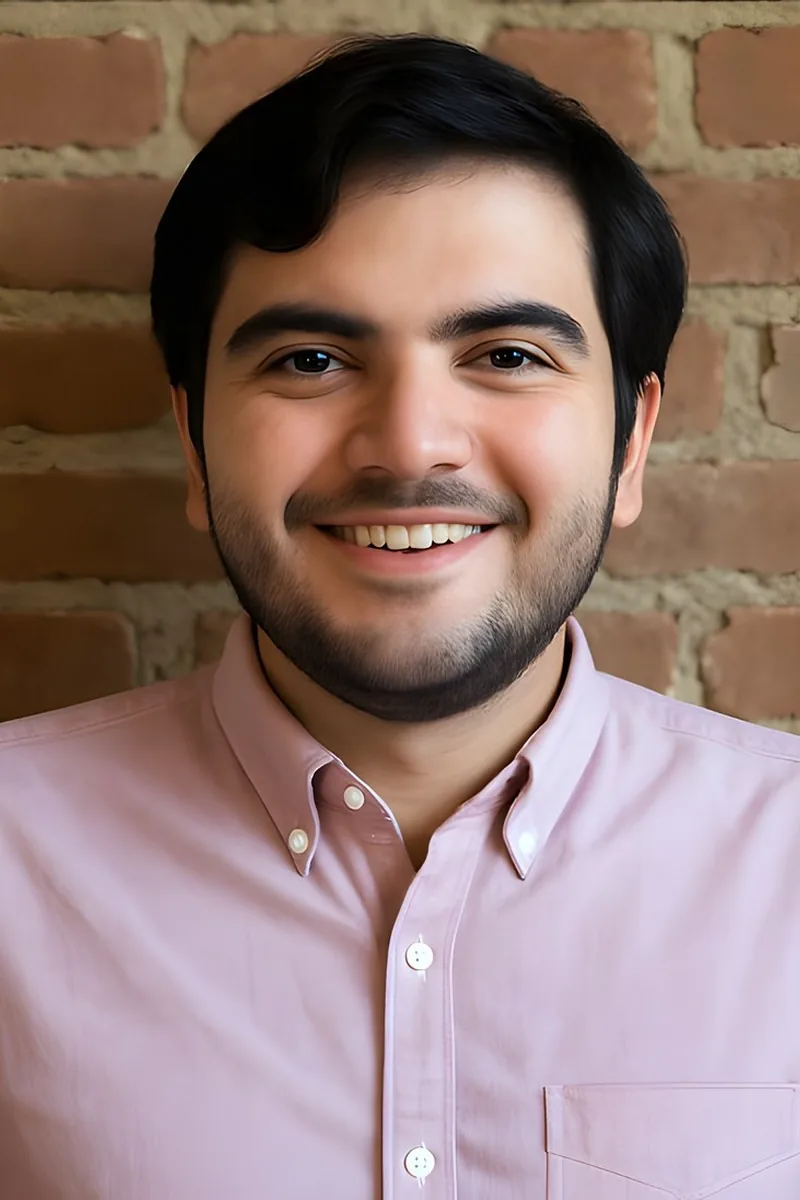
I am currently finishing my thesis. For the past two years I was an adjunct instructor at The City College of New York, teaching statistics and introductory neuroscience, where I learned the importance of communicating complicated concepts clearly at an individualized level. All of my classes performed above average, and I discovered how satisfying it is to help people understand difficult ideas. I've found that by creating a good rapport with my students I am able to more effectively impart difficult concepts to them while causing them less stress. My passion is people, which first led me to study psychology, leading to my work in statistics, and later into teaching.
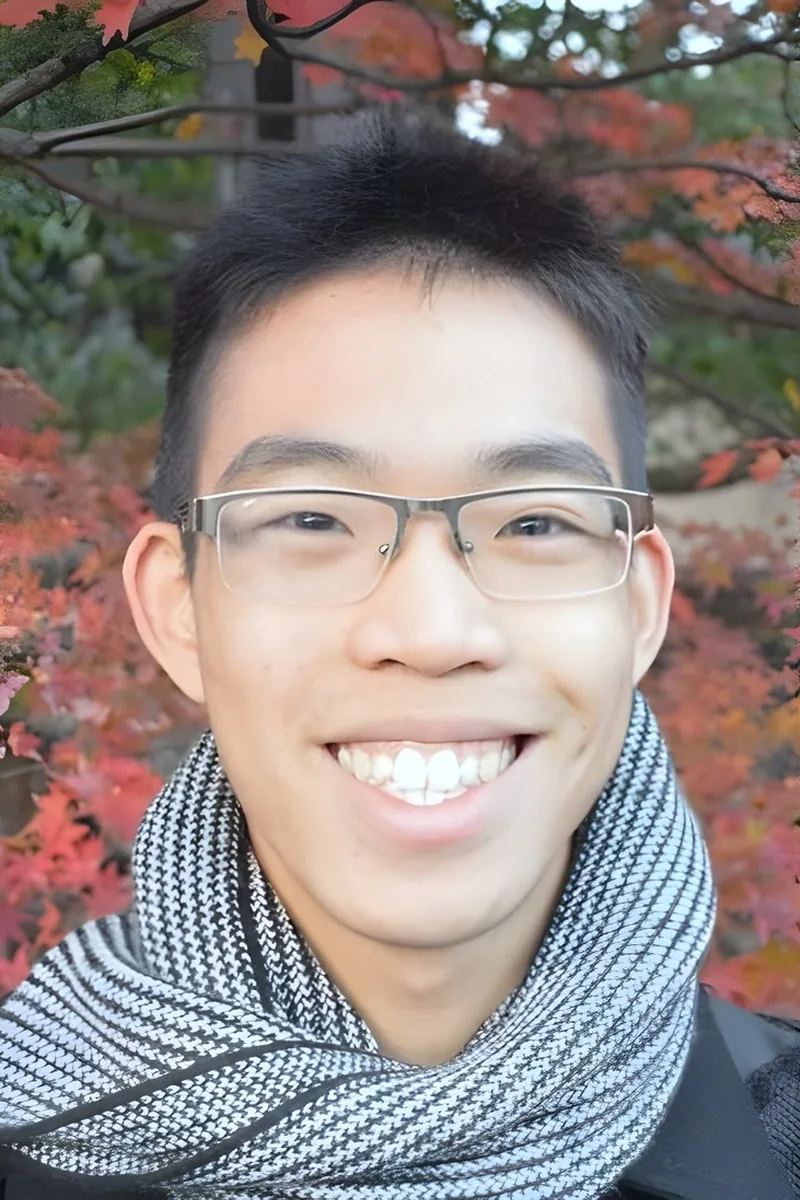
An Asian Studies degree gave Andrew sustained exposure to Japanese language and culture throughout his undergraduate work, and he pairs that academic grounding with fluency in Mandarin Chinese to bring a comparative lens to East Asian language learning. He's particularly good at creating a low-pressure environment for speaking and reading practice — the kind of space where students actually start producing sentences instead of freezing up over perfect particle placement.
Having completed an Asian Languages minor at UCLA, Abrahim brings formal training in Japanese grammar, kanji acquisition, and reading comprehension to his tutoring. He approaches the language methodically — building from particle usage and verb conjugation patterns up to reading authentic texts — which works especially well for students who want structure rather than immersion-only learning.
I am studying Chemical Biology in UC Berkeley. One of my passions is Organic Chemistry, which I used to loath but now enjoys after taking a year of it. Also, because I like helping others, I enjoys tutoring/teaching students who are struggling. During high school, I have tutored other high students after school on various subjects such as Math, Physics, Chemistry, and Latin. During college, I have held informal review sessions for General Chemistry and Organic Chemistry for my underclassmen. I tutored my roommate and one of my underclassmen in Organic Chemistry. Finally, with a Graduate Student TA, I co-taught a Organic Chemistry Lab class section , where I answer questions regarding lab material and demonstrate lab techniques. Currently, I am interested in tutoring Organic Chemistry, General Chemistry, Biochemistry, Physics, and Calculus
I currently work for an afterschool enrichment program (Best Brains) tutoring elementary English and math, and I have 4+ years of experience as a private ESL tutor for both children and adults. I am working toward my Masters of Science in Secondary English Education and ESL at the University of Wisconsin- Madison. I graduated from the University of Oregon with a Bachelor of Arts in Comparative World Literature and Japanese, and from the University of Wisconsin-Madison with a Master of Arts in Japanese Language and Literature. I began tutoring while I was in high school, assisting with algebra homework. In college, I volunteered as a kindergarten reading assistant through a program called Start Making a Reader Today. I later volunteered while in graduate school at a local high school tutoring students in beginner Japanese. I have also been employed by the University of Wisconsin as a Teaching Assistant, and taught in Religious Studies and East Asian Studies. In all cases, it has been a pleasure watching students progress in their academics and to see them grow as young scholars. I especially enjoy teaching language arts because of the feeling of connection that language can bring. My favorite part of teaching is seeing the smiling face of someone the moment that they finally "get" something they've been struggling with and watching their confidence boost. In my free time, I host a small book club, pen pal with friends around the world, and try my hand at new recipes.
I am a current student at the University of Vermont. I am completing two Bachelors in Linguistics and Japanese, and am a researcher for both departments. From high school to the present day I have tutored people my age and younger, and I have experience working with refugee/ELL students; I have collected 2 years of experience. Though I can tutor several subjects, I am most passionate for Japanese, and feel it is my true calling. In my experience helping those who want to learn a foreign language like Japanese, I have found that scaffolding, or building off of, your interests in film, food, literature and culture has a profound and positive effect on your learning. I love education and learning for the sake of learning, and I will soon graduate and plan to teach English in Japan; sharing language and culture is my way of helping others and the world.
Damien studied Asian studies at Cornell, where Japanese language and culture were central to his coursework. He approaches the language by grounding grammar patterns — particles like は versus が, verb conjugation groups, and sentence-ending forms — in real context so they stick. Rated 5.0 by students, he makes the jump from textbook exercises to actual comprehension feel manageable.
I am motivated in addressing the disparities in educational equity here in the Twin Cities, particularly for students of color and students of differing socio-economic backgrounds. I work to build strong relationships with students to determine the strengths and knowledge they bring to the table.
Crystal minored in Japanese Language and Culture at Northern Kentucky University, so she brings both formal study and genuine cultural curiosity to teaching everything from kana writing to grammar fundamentals. Her day job as a K-12 reading and ESL instructor means she's trained to break down unfamiliar language structures for learners at any level — a skill that pays off when explaining Japanese concepts like sentence-final particles or basic verb tenses that have no English equivalent. Rated 5.0 by students.
Learning Japanese means juggling three writing systems, a grammar structure that's the reverse of English, and cultural nuances that change how you speak depending on who you're talking to. Natasha taught Japanese at the high school level and lived in Japan teaching in elementary schools, giving her the kind of practical fluency that makes hiragana drills, particle usage, and conversational practice feel grounded in real life. She's 5.0-rated and works with beginners through advanced learners.
Linguistics training gives Andrew a structural advantage when teaching Japanese — he understands how languages build meaning differently, which matters when explaining why particles replace prepositions or why verbs land at the end of every sentence. His background in Korean and German means he's personally navigated multiple grammar systems far removed from English, and he applies that comparative instinct to make Japanese word order and conjugation feel logical rather than arbitrary.
I'm a student at Brown University with an eclectic set of interests. I am trilingual, analytical, and creative and look forward to tutoring you! :)
Testimonials
Because the right Japanese tutor makes all the difference.
Average Session Rating – Based on 3.4M Learner Ratings
Nearby Japanese Tutors
Other Charleston Tutors
Related Languages Tutors in Charleston
Frequently Asked Questions
Your first session is a chance for a tutor to understand your current level, learning goals, and what aspects of Japanese you find most challenging—whether that's kanji, grammar, conversation, or cultural context. The tutor will assess your strengths and create a personalized plan that focuses on the skills you want to develop, whether you're building from scratch or refining fluency.
In a classroom of 19,000+ Charleston students, speaking practice is often limited. With personalized tutoring, you get dedicated speaking time every session—no waiting for your turn. A tutor can correct your pronunciation in real time, help you think through responses naturally, and gradually build your confidence speaking Japanese in real conversations, which is essential for developing actual fluency.
Grammar and kanji are best learned together through context rather than memorization alone. A tutor helps you understand why verb conjugations work the way they do, shows you kanji patterns that make learning faster, and uses spaced repetition to lock them into long-term memory. This approach—learning rules through real usage—is far more effective than drilling in isolation.
Yes. Language and culture are inseparable—understanding Japanese customs, media, and communication styles helps you use the language authentically. Many tutors incorporate cultural context into lessons, whether through discussing Japanese films, news, or social norms, which deepens both your language skills and appreciation for the culture.
Rote memorization fades quickly. The most effective approach uses retrieval practice—actively recalling words in different contexts, spacing out reviews over time, and connecting new vocabulary to words you already know. A tutor designs your practice sessions around these principles, ensuring vocabulary sticks and becomes part of your active vocabulary, not just a list you forget.
Fluency depends on your starting point and how much you practice. The U.S. Foreign Service Institute estimates roughly 2,200 hours to reach professional proficiency in Japanese—a significant commitment due to kanji and grammar complexity. With consistent tutoring, immersion practice, and self-study, many students reach conversational fluency in 1-2 years, though mastery is an ongoing journey.
Look for tutors with native or near-native fluency, teaching experience, and expertise in the specific areas you need—whether that's test prep, business Japanese, or conversational skills. Varsity Tutors connects you with tutors who understand both the language and how to teach it effectively, ensuring you're learning from someone who can explain nuances and cultural context authentically.
Pricing varies based on tutor expertise and your location in Charleston, but personalized tutoring is an investment in real progress. Most students see meaningful improvement with weekly sessions, though frequency depends on your goals and timeline. Varsity Tutors can match you with tutors at different price points and help you find a schedule that works for your budget and learning pace.
Let’s find your perfect tutor
Answer a few quick questions. We’ll recommend the right plan and match you with a top 5% tutor.