Award-Winning SAT Math Tutors
serving Charleston, SC
SAT Math
Tutors in Charleston
Private 1-on-1 tutoring, weekly live classes for academic support, test prep & enrichment, practice tests and diagnostics, and more to elevate grades and test scores.
Based on 3.4M Learner Ratings
UniversitiesSchools & Universities
DeliveredHours Delivered
ProficiencyGrowth in Proficiency
Who will be getting tutoring?
No obligation. Takes ~1 minute.

Scoring in the 99th percentile on the SAT (1540 composite), Saad knows exactly where the test hides its difficulty — not in advanced math, but in tricky wording on algebra, ratios, and data analysis questions. He walks students through the specific patterns the College Board reuses across practice tests, turning problems that feel unfamiliar into ones they've already solved.
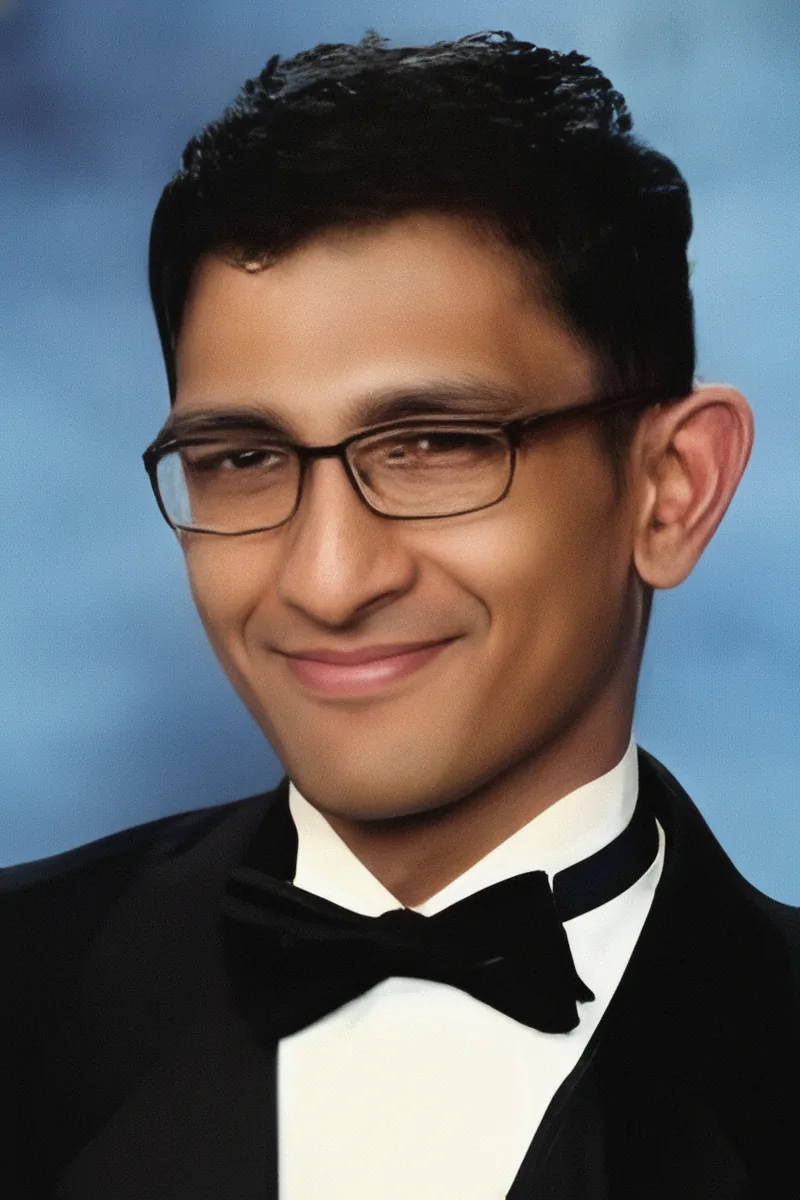
I am an undergraduate student at UC Berkeley in pursuit of a degree in Data Science. Prior experience has taught me that the difference between a wish and a goal is consistency. This ethos has enabled me to excel in primary school and allows me to continuously enjoy watching others make progress toward their academic objectives under my guidance.
I am currently learning how to do is to play the piano, and I can tell you first hand that practice and determination does make a difference! Outside of tutoring, I also love to dance, ski, and watch airplanes! Hope we can connect sometime soon. :)
I am currently pursuing a degree in Chemical Engineering and Spanish at Virginia Tech. I have a strong academic record in my fields. I enjoy sharing knowledge and helping others overcome learning challenges. Through previous tutoring, I have developed excellent communication, organization, and problem-solving skills. I am comfortable using online learning technologies and am committed to providing engaging, supportive lessons that help students reach their full potential.
I've helped several hundred students in a wide variety of subjects, from executive functioning to computer science to standardized testing. I also help students with general support in math and English. Most of my students are around 9-17, but I work well with students who are older and a little younger as well. I also work very well with students who have specific obstacles or requirements, such as neurodiversity support or schedules that change a lot. Most of my background is in computer science, from my college major to my experience hands-on over the past 10 years. Regardless of the subject, I believe every student's needs are unique and every student is able to achieve great things with the right preparation and support. My number one goal is to provide that whenever I can, both to the student and to their parents. I communicate with parents outside of sessions a lot to establish their expectations, better understand students, and recommend ways they can directly support their children in their journey as well.
I am currently a resident physician at Northwestern Hospital.
I am currently studying molecular biology and I hope to work at a pediatric hospital after graduating from medical school. As an undergraduate, I am involved in volunteering organizations, photography, dance companies, and Asian-American political organizations.
I am a junior at Purdue University studying Aerospace Engineering and am part of the Air Force ROTC program. I have 6 years of tutoring experience at places including Kumon, Mathnasium, and Purdue University. I have worked with kids of all ages from kindergarten to sophomores in college, each with their own set of unique strengths, and tutored a variety of subjects, including calculus, trigonometry, geometry, thermodynamics, chemistry, and physics. Like many of my previous students, I struggled to understand concepts that I was being taught and was a terrible test taker. However, I found ways to overcome my obstacles and develop an better intuition for what I was learning. I believe that it is only this intuition and understanding that helps overcome these obstacles. My least favorite thing to see people be discouraged, so with a little bit of guidance and reassurance, I want to show people that they are capable of anything they put their mind to.
I am in my second year at MIT studying mathematics, and I am currently doing a research project in Spectral Graph Theory. I have been a tutor since my junior year in high school, and I enjoy teaching all levels of math; everything from pre-algebra through calculus and linear algebra! I focus primarily on making sure that the definitions and processes given in class make intuitive sense, so that math can begin to feel like second nature.
Three semesters teaching ESL gave Danielle an unusually sharp instinct for breaking down dense, wordy problems — a skill that pays off on SAT Math, where half the battle is translating a convoluted setup into a clean equation before any calculating begins. Her 1550 SAT and biology-to-med-school math background mean she's fluent in the geometry, statistics, and algebraic reasoning the test actually emphasizes. Rated 5.0 by students.
David scored a 1570 SAT and brings a computer scientist's precision to the Math section, particularly the no-calculator portion where algebraic fluency and number sense matter most. He emphasizes understanding why a technique works — whether it's completing the square or setting up a system of equations — so students can recognize which tool fits each problem without second-guessing.
I am a Yale graduate with over 8 years experience tutoring students from a variety of backgrounds. I recently graduated from the Yale School of Public Health with a MPH concentrating in Epidemiology and Global Health. I also received my B.S. from Yale with a double major in Molecular, Cellular, and Developmental Biology and French. I have experience both leading group classes and working with students one on one. I will respond to a student's strengths, weaknesses, and learning style in order to help them succeed and make the most of our time together. I earned a perfect score of 36 on the ACT, 2280 on the SAT, and qualified as a National Merit Scholar on the PSAT. I look forward to working with you!
Finance and statistics coursework at NYU means Dennis spends his days building models around the same quantitative reasoning the SAT Math section tests — probability, linear relationships, and interpreting data from tables and graphs. His 1550 SAT score came partly from treating the no-calculator questions as logic puzzles rather than computation drills, an approach he now teaches by walking students through how to eliminate answer choices using number properties before ever picking up a pencil.
Emily's 1590 SAT score speaks for itself, but what makes her effective on SAT Math specifically is how she categorizes problems. She teaches students to distinguish between questions that reward algebraic manipulation and ones where plugging in values or back-solving is faster — a distinction that can recover five or ten minutes on test day. Her Cornell math and CS coursework keeps her sharp on the harder quadratic and function-based problems.
I am no longer needed.
I'm not tutoring or buried in my textbooks, you will either find me rock climbing at the Triangle Rock Club, playing Ultimate Frisbee, working on my car, or enjoying the great outdoors (beaches, mountains, forests--you name it, I love it). On rainy weekends I enjoy tinkering with computers and old electronics, playing Pokemon, or picking at my guitar.
Scoring 1570 on the SAT means Eric knows exactly where the test tries to trip students up — especially on the math side, where questions about quadratics, systems of equations, and data interpretation are designed to punish rushing. He breaks each problem type into a decision tree so students recognize what's being asked before they start calculating. That pattern-recognition skill is what separates a good math score from a great one.
Testimonials
Because the right SAT Math tutor makes all the difference.
Average Session Rating – Based on 3.4M Learner Ratings
Practice SAT Math
Free practice tests, flashcards, and AI tutoring for SAT Math
Nearby SAT Math Tutors
Other Charleston Tutors
Related Test Prep Tutors in Charleston
Frequently Asked Questions
Score improvement depends on your starting point and commitment level, but students typically see gains of 50-100+ points after working with a tutor who understands the SAT's specific question formats and timing constraints. Many students struggle not because they lack math skills, but because they're unfamiliar with how the SAT tests concepts differently than their high school courses. A personalized approach helps you identify which question types trip you up most and develop targeted strategies to address them.
The most common struggles are pacing (running out of time), misunderstanding what a question is actually asking, and gaps in foundational algebra or geometry concepts. Many students also freeze on word problems or questions that require multiple steps. Tutors can help you develop efficient problem-solving strategies, learn to spot trick questions, and build confidence by practicing with actual SAT question formats rather than generic math problems.
Your first session focuses on assessment and strategy planning. Expect to review a sample SAT Math section or recent practice test to identify your specific weak areas—whether that's algebra, geometry, data analysis, or test-taking pacing. From there, your tutor will create a personalized study plan that targets your biggest opportunities for improvement and fits your timeline before test day.
Practice tests are essential—they're the best way to build familiarity with the test's format, pacing, and question types, plus they reveal exactly which concepts need work. Most students benefit from taking full practice tests under timed conditions every 1-2 weeks, then reviewing mistakes with a tutor to understand not just the right answer, but why they made the error. This combination of practice and targeted feedback accelerates improvement far more than studying concepts in isolation.
Pacing improves through a combination of knowing which questions to tackle first (usually easier ones), recognizing when to skip and come back, and practicing under real time pressure. Many students waste time on difficult problems early and rush through easier ones at the end. A tutor can teach you strategic approaches—like the "two-pass method" (easy questions first, harder ones second)—and help you practice until these strategies become automatic.
Confidence comes from preparation and familiarity. When you've practiced SAT Math questions repeatedly and understand the patterns, the test feels less intimidating. Tutors also teach stress-management techniques like deep breathing, positive self-talk, and breaking the test into smaller, manageable chunks. Working through practice tests with a tutor in a low-pressure environment helps you build the mental resilience to stay calm on test day.
Most students benefit from 8-12 weeks of consistent preparation, though this varies based on your starting score and target score. If you're aiming for significant improvement (100+ points), longer preparation with regular tutoring sessions—typically 2-3 times per week—gives you time to master weak areas and build test-taking stamina. Your tutor can help you create a realistic timeline and adjust your study schedule based on your progress.
Look for tutors with strong math backgrounds and specific SAT test prep experience—they should understand not just high school math, but how the SAT tests those concepts uniquely. Experience with diverse learners and a track record of score improvement matter too. When you connect with Varsity Tutors, you'll be matched with expert tutors for students in Charleston who have proven success helping students master SAT Math and develop lasting test-taking confidence.
Let’s find your perfect tutor
Answer a few quick questions. We’ll recommend the right plan and match you with a top 5% tutor.