Award-Winning College Chemistry Tutors
serving Charleston, SC
College Chemistry
Tutors in Charleston
Private 1-on-1 tutoring, weekly live classes for academic support, test prep & enrichment, practice tests and diagnostics, and more to elevate grades and test scores.
Based on 3.4M Learner Ratings
UniversitiesSchools & Universities
DeliveredHours Delivered
ProficiencyGrowth in Proficiency
Who needs tutoring?
No obligation. Takes ~1 minute.
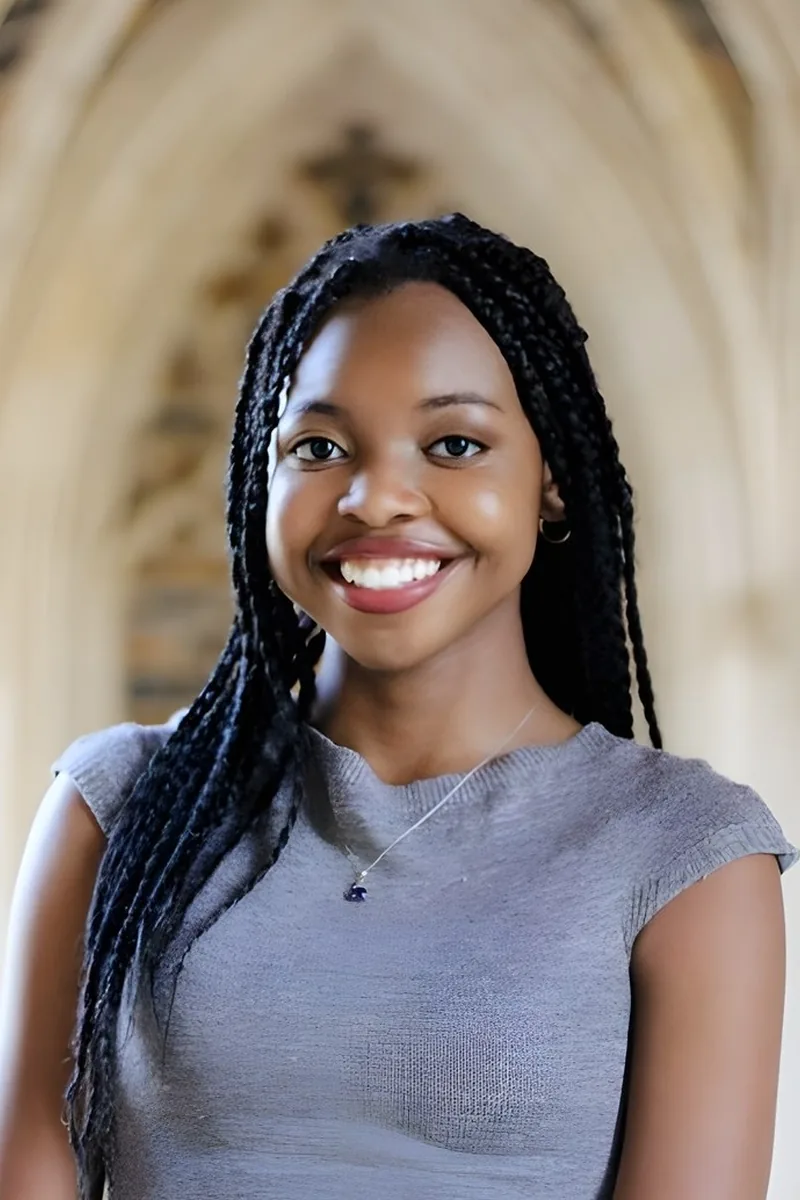
A chemistry minor at Duke alongside her biology major, Lenique spent years working through thermodynamics, equilibrium, and reaction kinetics at a level that prepared her for the rigors of medical school at Yale. She breaks down tough concepts like molecular orbital theory and acid-base chemistry by connecting them to real biological systems, which makes abstract ideas click faster.

General chemistry at the college level moves fast — one week it's quantum numbers, the next it's molecular orbital theory, and suddenly midterms cover both. Katheryn instructed gen chem classes and organic chemistry labs at UGA, giving her a detailed understanding of how university courses are structured and where students most often fall behind. She rated 4.8 across her tutoring sessions.
I've been working with students for over seven years, from middle school all the way through college, across subjects like math, calculus, statistics, linear algebra, chemistry, and physics, with a lot of SAT and ACT prep mixed in. My background is perhaps a little unconventional. I have two bachelor's degrees, one in Engineering and one in Communication Studies, plus a Master's in Design. That combination means I can guide you through challenging technical material and communicate it in a way that is easy to grasp. What I care most about is helping students get to a place where they don't need me anymore. I know that sounds like a strange thing for a tutor to say, but I think it's the right goal. I'm not here to walk you through steps to copy down. I want you to understand why something works, because that's what holds up under pressure, on a test you haven't seen before. If you're ready to ace that test or prove that theorem that's been bugging you, reach out and let's work together
Thermodynamics, equilibrium constants, electrochemistry — college chemistry demands that students juggle quantitative problem-solving with conceptual reasoning at the same time. Raj tackles both sides, drawing on his biochemistry training at Rice to show how general chemistry principles connect to larger molecular behavior. His 5.0 rating speaks to how well that approach lands.
Having scored 1580 on the SAT and completed AP Chemistry coursework, Kendall brings sharp quantitative instincts to the trickiest parts of gen chem — the unit conversions buried inside equilibrium problems, the logarithmic reasoning behind pH calculations, the algebra hiding inside rate law expressions. She also knows that college chemistry often overwhelms students not because the concepts are impossibly hard, but because the pace is relentless, so she zeroes in on the specific spots where understanding broke down rather than re-teaching entire chapters. Rated 4.9 by students.
Predentistry at Columbia means Erica is preparing for a career where gen chem concepts like acid-base chemistry, molecular bonding, and solution properties aren't abstract — they're clinically relevant every day. Her Harvard history of science background also gives her an unusual knack for explaining *why* chemical models were built the way they were, which makes memorizing periodic trends and electron configurations feel less arbitrary. Rated 4.9 by students.
Having served as an undergraduate teaching assistant at Cornell for introductory biochemistry, Josef has spent real time diagnosing where students get stuck on foundational chemistry — electron configurations bleeding into bonding theory, or mole concepts falling apart during stoichiometric conversions. He teaches college chemistry with a life sciences backbone, connecting topics like solution chemistry and reaction energetics to the biological applications his students will actually encounter next semester. Rated 5.0 by students.
Neuroscience at Yale meant David couldn't just skim gen chem — he needed concepts like electrochemistry, molecular bonding, and reaction thermodynamics to stick, because they showed up again in every neurobiology and biochemistry course that followed. Now pursuing graduate work in bioethics, he teaches college chemistry by linking each topic to the bigger scientific picture, so students see why mastering something like intermolecular forces or acid-base equilibria pays off well beyond the final exam. Rated 5.0 by students.
Second-year med student at Baylor College of Medicine, Michelle still remembers exactly which gen chem concepts — electron orbitals, buffer systems, reaction thermodynamics — became non-negotiable once biochemistry and physiology started building on them. Her Rice biochemistry degree means she learned college chemistry at a place where the coursework was rigorous enough to expose every shortcut that doesn't hold up, and she teaches accordingly: precise on the fundamentals so nothing collapses later.
Going from a Penn undergrad to medical school means Jessica sat through college chemistry twice — once as a prerequisite and again when biochemistry and pharmacology demanded she actually internalize concepts like reaction energetics, acid-base equilibria, and molecular interactions at a deeper level. That second pass gave her a clear sense of which gen chem topics students need to truly own versus merely survive, and she teaches accordingly. Rated 4.8 by students.
Studying biochemistry at Boston College means Kellie is taking college chemistry right now — she knows which exam questions are tricky, which textbook explanations fall flat, and which shortcuts actually hold up under pressure. She breaks down topics like electron configurations, VSEPR geometry, and solution stoichiometry with the clarity of someone who just wrestled with them herself and figured out what finally made them click.
Pre-med bio-psychology coursework at UCSB means Aaron has pushed through college chemistry the same way his students are — as a high-stakes prerequisite where every gap in stoichiometry or equilibrium shows up again in upper-division science courses. He talks through problems conversationally, pressing students to explain the reasoning back to him, which exposes shaky understanding far faster than just re-solving practice sets. Holds a 5.0 rating.
Having taken the full gen chem sequence at Cornell alongside organic chemistry and upper-level biology coursework, Jonathan knows exactly where college chemistry concepts like electron configuration, VSEPR theory, and solution stoichiometry start causing problems — usually when the course shifts from memorizable rules to applied reasoning. His human biology background means he naturally ties chemical principles back to biological systems, which tends to click for the pre-med and life science students who make up most of his college chemistry sessions. Rated 4.9 by students.
Most college chemistry students don't expect a math major to be the one who makes electron configurations or equilibrium expressions click — but Tessa's mathematics training at Yale means she can cleanly separate the quantitative mechanics of a problem from the chemical reasoning, which is exactly where most gen chem confusion hides. She also scored a 36 ACT and holds a 4.9 rating, though what matters more is her knack for showing students the logical structure underneath topics that otherwise feel like pure memorization.
Testimonials
Because the right College Chemistry tutor makes all the difference.
Average Session Rating – Based on 3.4M Learner Ratings
Nearby College Chemistry Tutors
Other Charleston Tutors
Related Science Tutors in Charleston
Frequently Asked Questions
College Chemistry typically covers atomic structure, chemical bonding, stoichiometry, thermodynamics, equilibrium, acid-base chemistry, and oxidation-reduction reactions. Many courses also include lab work that reinforces theoretical concepts through hands-on experiments. The curriculum builds from foundational principles to more complex problem-solving, so understanding early concepts like balancing equations and unit conversions is essential for success in later topics.
Balancing equations requires understanding both the rules of stoichiometry and the ability to visualize how atoms rearrange during chemical reactions. Many students struggle because it combines pattern recognition with logical reasoning—you need to track multiple elements simultaneously while keeping equations valid. Personalized tutoring helps break down the systematic approach, starting with simple equations and building to more complex ones, so the process becomes intuitive rather than memorized.
Lab work in College Chemistry requires understanding both the theory behind experiments and the practical skills to execute them correctly. Tutors can help you understand the scientific method, predict outcomes based on chemical principles, and interpret experimental results—not just follow procedures. This deeper comprehension makes labs more meaningful and helps you connect abstract concepts like molecular interactions to observable phenomena.
Concepts like molecular structure, bonding, and reaction mechanisms are inherently abstract, making them difficult to grasp from textbooks alone. Tutors use multiple strategies—drawing molecular diagrams, using models, relating concepts to real-world applications, and working through practice problems—to help you build mental models of how atoms and molecules behave. This visualization skill is crucial for success in College Chemistry and helps you move beyond memorization to true understanding.
Unit conversions appear throughout College Chemistry—from moles to grams to liters—and mistakes here can derail problem-solving. The key is understanding the logic behind conversions (using dimensional analysis) rather than memorizing formulas. Personalized tutoring focuses on building this systematic approach so you can confidently convert between any units, which strengthens your overall problem-solving skills in stoichiometry and other quantitative topics.
Your first session focuses on understanding where you're struggling—whether it's specific topics like equilibrium, general problem-solving skills, or exam preparation. The tutor will assess your current understanding, identify gaps, and create a personalized plan tailored to your goals and learning style. This foundation ensures that future sessions target your unique needs rather than following a generic curriculum.
Exam preparation with a tutor goes beyond reviewing notes—it focuses on practicing problems under timed conditions, identifying weak areas, and building test-taking strategies. Tutors help you understand not just the "what" but the "why" behind concepts, which is essential for tackling unfamiliar problems on exams. Regular practice with feedback also builds confidence and reduces test anxiety.
Look for tutors with strong chemistry backgrounds—ideally with chemistry degrees or extensive coursework—who have experience teaching at the college level. Beyond credentials, the best tutors understand how to break down complex concepts, adapt to different learning styles, and connect theory to real-world applications. Varsity Tutors connects you with experienced chemistry tutors for students in Charleston who can provide the personalized instruction you need to succeed.
Let’s find your perfect tutor
Answer a few quick questions. We’ll recommend the right plan and match you with a top 5% tutor.