Award-Winning College Physics Tutors
serving Charleston, SC
College Physics
Tutors in Charleston
Private 1-on-1 tutoring, weekly live classes for academic support, test prep & enrichment, practice tests and diagnostics, and more to elevate grades and test scores.
Based on 3.4M Learner Ratings
UniversitiesSchools & Universities
DeliveredHours Delivered
ProficiencyGrowth in Proficiency
Who needs tutoring?
No obligation. Takes ~1 minute.

Environmental engineering is essentially physics with consequences — Kate's master's work required her to model fluid flow, heat transfer, and pressure systems in real infrastructure, which means she's solved the same types of problems that show up on college physics exams but with actual design constraints attached. That applied perspective makes her particularly effective at teaching students to set up force balances and energy equations from a physical scenario rather than reverse-engineering from a formula sheet. Rated 4.9 by students.
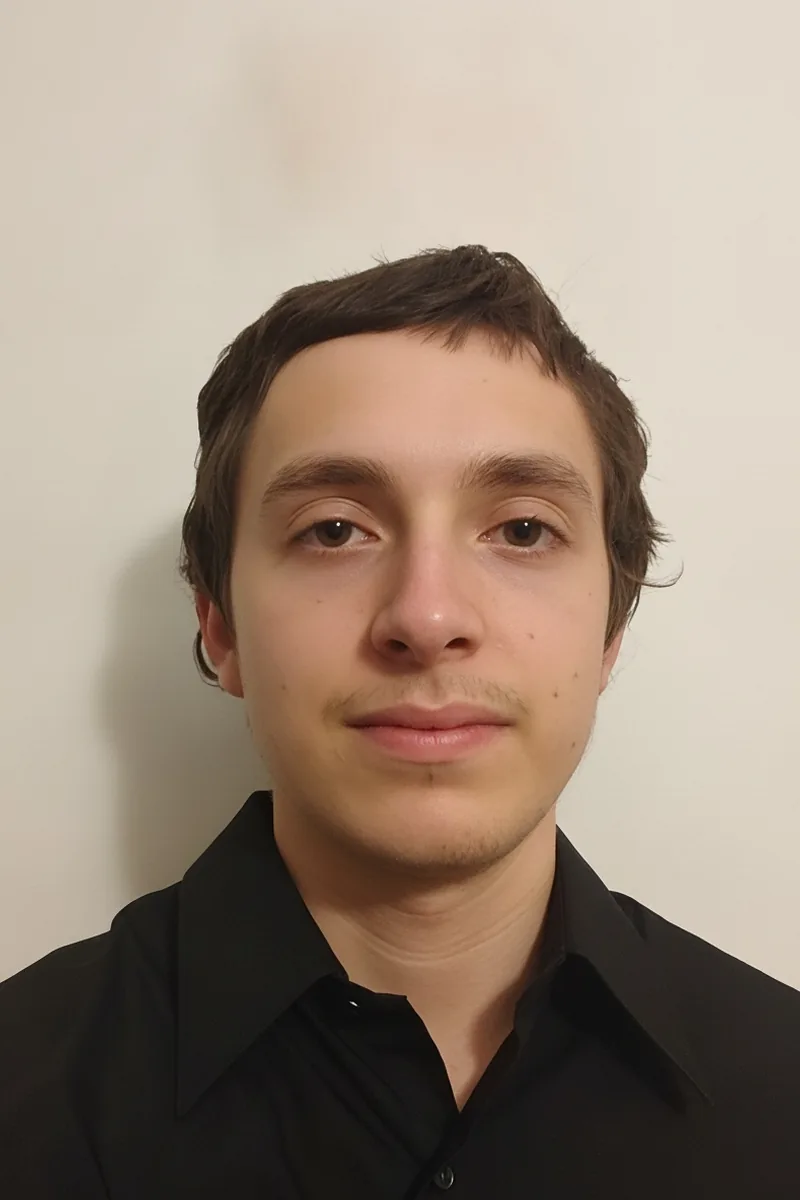
Three years of tutoring introductory physics while completing dual bachelor's degrees in physics and mathematics gave Justin a detailed map of exactly where students lose the thread — the jump from one-dimensional kinematics to rotational analogs, the shift from intuitive force reasoning to formal energy methods. His PhD in Computational Mathematics at the University of Chicago deepened that foundation, adding fluency with the differential equations and vector calculus that make the leap from algebra-based to calculus-based physics so steep. Rated 5.0 by students.
When a college physics problem looks like pure abstraction — a block on a frictionless ramp, a charge in a uniform field — Dylan's instinct is to sketch it out, graph it, and show what's physically happening before touching an equation. That visual, graphical approach comes from his physics major at Vanderbilt, where he's simultaneously studying classics and computer science, giving him an unusual ability to translate dense quantitative reasoning into clear, intuitive language. He holds a 4.5 rating and a 36 ACT composite.
Dylan has taken both college mechanics and electricity/magnetism at Northwestern's engineering school, so he's worked through the exact problem sets — free-body diagrams, circuit analysis, wave optics — that trip up most college physics students. His computer science background also means he's comfortable walking through the math-heavy derivations that make physics click rather than feel like guesswork. Rated 5.0 by students.
Ava's strength in college physics isn't a deep engineering background — it's her ability to teach students how to actually study the material. She breaks down problem-solving into structured steps, emphasizing how to read a force diagram or energy scenario before jumping to equations, and builds note-taking systems tailored to physics courses where lecture moves fast and notation piles up quickly.
Biomedical engineering at Duke means Eric solves physics problems daily — modeling forces on prosthetic joints, analyzing fluid flow through artificial vessels, calculating electrical signals in biosensors — so the mechanics and electromagnetism in a college physics course map directly onto work he's already doing. He breaks multi-step problems into their physical components first, making sure the reasoning is solid before any math hits the page. Holds a 5.0 rating.
A PhD in biomedical engineering means Andrew has spent years applying physics to biological systems — modeling forces on joints, analyzing fluid flow through tissues, understanding how electromagnetic fields interact with the body. That depth in mechanics, thermodynamics, and E&M carries directly into the calculus-based problem solving college physics courses demand. Rated 4.9 by students.
A dual BS in physics and math from Yale means Anthony didn't just take college physics — he took the honors sequence and then kept going through differential equations, multivariable calculus, and upper-division mechanics. His PhD work in economics at Yale still draws on that training daily, since building economic models requires the same setup-and-solve discipline as a multi-step Newton's law problem. Rated 5.0 by students.
College-level physics demands more than plug-and-chug — problems in electrodynamics, rotational mechanics, or thermodynamics often require combining multiple principles in a single solution. Pranav digs into these multi-step problems as a Biomedical Engineering student at Johns Hopkins, where physics underpins much of his coursework. He walks through derivations and problem-solving strategies that build real fluency with the material rather than surface-level familiarity.
Chemical engineering at Georgia Tech means Aimee's spent years solving problems that blend thermodynamics, fluid mechanics, and energy balances — the same physics concepts that make college-level courses demanding, except she's applied them to reactor design and process optimization. Her biosystems engineering graduate work adds another layer, connecting classical mechanics and heat transfer to biological systems in ways that make abstract problem sets feel more concrete. Rated 4.9 by students.
Working at an ExxonMobil refinery before MIT Sloan meant Caroline spent years applying thermodynamics, fluid mechanics, and force analysis to real industrial systems — the same physics that fills college problem sets, except with actual consequences for getting the math wrong. Her mechanical engineering M.S. from WashU (magna cum laude) gave her deep fluency with calculus-based derivations, so she can walk through everything from torque problems to heat transfer without skipping the steps that textbooks gloss over. Rated 5.0 by students.
Running an immunology lab at Columbia University Medical Center means Matthew applies physics daily in ways most tutors haven't — calibrating imaging equipment, analyzing force and pressure data in tissue samples, and troubleshooting instruments that depend on optics and electromagnetism. That hands-on fluency, combined with a physics degree and a 35 ACT, lets him teach college-level mechanics and E&M problems by connecting equations to the physical systems they actually describe.
Testimonials
Because the right College Physics tutor makes all the difference.
Average Session Rating – Based on 3.4M Learner Ratings
Nearby College Physics Tutors
Other Charleston Tutors
Related Science Tutors in Charleston
Frequently Asked Questions
College Physics usually spans mechanics (motion, forces, energy, momentum), waves and sound, thermodynamics, electricity and magnetism, and often includes optics and modern physics. The course emphasizes both conceptual understanding and problem-solving skills, requiring you to apply mathematical reasoning to real-world phenomena. Many courses also include lab work where you'll conduct experiments to verify theoretical principles and develop hands-on scientific skills.
Physics concepts like forces, fields, and energy can feel disconnected from reality, but expert tutors excel at bridging that gap through visualization, analogies, and real-world examples. A tutor can help you sketch force diagrams, work through thought experiments, and connect abstract equations to tangible applications—like understanding how Newton's laws apply to a car's motion or how electromagnetic fields work in everyday devices. This approach transforms abstract ideas into concrete mental models you can actually reason with.
Many College Physics students grasp the theory but get stuck translating it into mathematical solutions—especially with unit conversions, setting up equations, or deciding which formula to use. Tutors can teach you a systematic approach to problem-solving: identifying what you know, determining what you're solving for, choosing the right physics principles, and checking your work. With guided practice, you'll develop the strategic thinking skills that make problem-solving feel less like guessing and more like logical reasoning.
Absolutely. Lab work is where physics comes alive, but it can also be challenging—from designing experiments to analyzing data and drawing valid conclusions. Tutors can help you understand the scientific method, prepare for lab sessions, work through data analysis, and connect your experimental results back to theoretical predictions. This support strengthens both your experimental skills and your conceptual understanding of the physics principles you're testing.
Your first session is about building a personalized learning plan. The tutor will assess your current understanding of key concepts, identify specific challenges (whether it's kinematics, energy conservation, or circuit analysis), and learn your learning style. You'll likely work through a problem or two together to establish a baseline, then create a focused strategy for tackling your biggest obstacles. This foundation ensures every future session targets exactly what you need.
Look for tutors with a strong background in physics—ideally a degree in physics, engineering, or a related field—and proven experience teaching College Physics at the level you're studying. Beyond credentials, the best tutors can explain complex ideas clearly, ask questions that deepen your thinking, and adapt their approach to your learning style. When you connect with a tutor through Varsity Tutors, you'll be matched with someone who has both the expertise and the ability to make physics click for you.
For students in Charleston taking College Physics at the College of Charleston, MUSC, or other local institutions, personalized tutoring bridges the gap between lecture halls and real understanding. With an average student-teacher ratio of 13.9:1 in Charleston schools, many students benefit from one-on-one attention that lectures can't provide. Varsity Tutors connects you with expert tutors who understand the rigor of college-level physics and can provide the focused support you need to master both the content and the problem-solving skills that define success in the course.
Yes. Exam preparation goes beyond cramming—it's about building deep understanding and practicing under exam-like conditions. Tutors help you identify which topics are likely to appear, work through practice problems with time constraints, review common mistakes, and develop test-taking strategies specific to physics (like checking units and reasonableness of answers). This targeted preparation builds both confidence and the problem-solving fluency that translates directly to better exam performance.
Let’s find your perfect tutor
Answer a few quick questions. We’ll recommend the right plan and match you with a top 5% tutor.