Award-Winning Pre-Calculus Tutors
serving Charleston, SC
Pre-Calculus
Tutors in Charleston
Private 1-on-1 tutoring, weekly live classes for academic support, test prep & enrichment, practice tests and diagnostics, and more to elevate grades and test scores.
Based on 3.4M Learner Ratings
UniversitiesSchools & Universities
DeliveredHours Delivered
ProficiencyGrowth in Proficiency
Who needs tutoring?
No obligation. Takes ~1 minute.
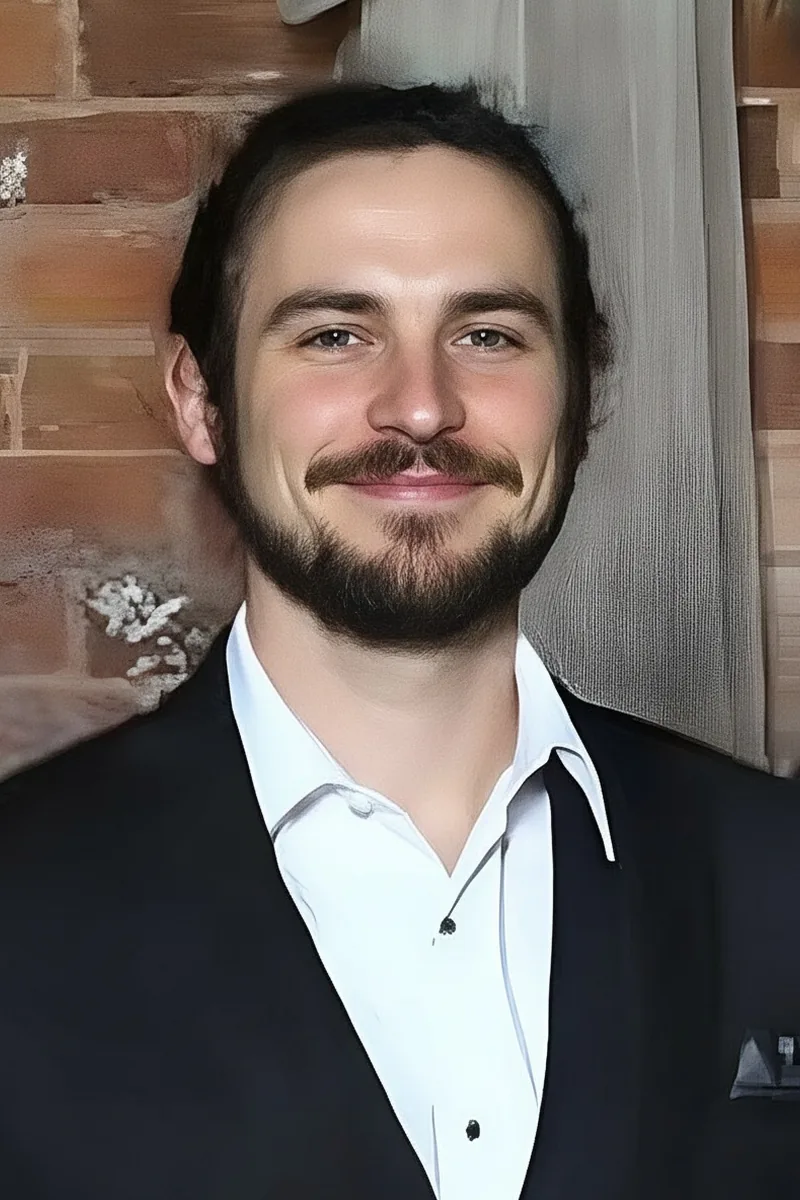
Most pre-calculus struggles trace back to a shaky relationship with functions — not knowing what they are so much as not trusting how they behave when transformed, composed, or inverted. David's biology background means he learned function families through growth models, decay curves, and dose-response relationships before ever teaching them, so he explains the intuition behind each transformation rather than just the rules. Rated 5.0 by students.

I'm a Structural Engineering graduate from UC San Diego with a passion for helping students in the math and science fields, as well as SAT/ACT test prep. I've had experience tutoring all subjects up to the high school level, and I strive to create a fun and rewarding environment for students. I've worked with a variety of age groups as a member of the Big Brothers Big Sisters program, and I find it easy to relate to all types of students. When I'm not studying or tutoring, I enjoy playing chess and basketball.
I've been working with students for over seven years, from middle school all the way through college, across subjects like math, calculus, statistics, linear algebra, chemistry, and physics, with a lot of SAT and ACT prep mixed in. My background is perhaps a little unconventional. I have two bachelor's degrees, one in Engineering and one in Communication Studies, plus a Master's in Design. That combination means I can guide you through challenging technical material and communicate it in a way that is easy to grasp. What I care most about is helping students get to a place where they don't need me anymore. I know that sounds like a strange thing for a tutor to say, but I think it's the right goal. I'm not here to walk you through steps to copy down. I want you to understand why something works, because that's what holds up under pressure, on a test you haven't seen before. If you're ready to ace that test or prove that theorem that's been bugging you, reach out and let's work together
A Cornell chemical engineering degree means Rahul spent years working with exponential decay, logarithmic scales, and trigonometric models before most students even encounter them in a textbook. He teaches pre-calculus by emphasizing the conceptual reasoning behind each topic — why a logarithm undoes an exponential, how the unit circle generates every trig value — so the mechanics actually make sense. Rated 4.9 by students, with a 36 ACT to back up the quantitative chops.
Until age 16, Viktor saw math as mindless formula memorization — then a series of great teachers revealed the deeper logic underneath, and he ended up majoring in mathematics at UChicago. That conversion story shapes how he teaches pre-calculus: he digs into *why* the unit circle works or what a logarithm actually means, so students build real understanding instead of a formula sheet they'll forget by finals. His 1600 SAT and 35 ACT confirm the mathematical fluency behind that approach.
Harvard's History of Science program is surprisingly math-heavy — Erica spent semesters tracing how logarithmic scales, conic sections, and trigonometric models evolved from practical tools into the abstract framework students now encounter in pre-calculus. That historical lens gives her a distinctive way of teaching function families: she builds intuition for why a concept was invented before drilling the mechanics of how to use it. Rated 4.9 by students.
Mechanical engineering at the undergraduate level means Andrea spent semesters grinding through the exact transition pre-calculus prepares students for — mastering polar coordinates, parametric equations, and trigonometric identities before they became essential tools in dynamics and thermodynamics courses. She teaches that material as someone who knows precisely where each concept resurfaces, breaking down topics like composite functions and rational expressions by connecting them to the engineering problems they eventually power. Her 32 ACT and 4.8 rating reflect consistent results across a wide range of students.
The jump into pre-calculus is really about learning to think in terms of functions — how they behave, transform, and connect to each other across trigonometric, polynomial, and rational families. Dane's engineering coursework at Duke means he uses these tools daily and can show students how concepts like limits, composite functions, and unit circle values actually build toward calculus rather than existing as isolated topics.
A math degree from Penn means Ben didn't just pass through pre-calculus — he built everything that came after on top of it, from linear algebra to multivariable calculus. That depth lets him teach topics like rational functions and trigonometric identities by revealing the structural logic underneath, so students carry real understanding into calculus instead of a fragile set of memorized steps. Holds a 5.0 rating.
Kevin's competition math background gives him an unusual edge in Pre-Calculus — he's used to attacking problems involving sequences, series, and trigonometric manipulations from angles most textbooks never cover. That depth, combined with a 35 ACT and Stanford CS coursework heavy in mathematical foundations, means he can explain why a parametric equation behaves the way it does, not just how to graph it.
Tim's computational neuroscience work at MIT sits right at the intersection where pre-calculus stops being abstract — he uses trigonometric models for neural oscillations, exponential decay for signal processing, and function composition to build the simulations his research depends on. That daily fluency means he can trace a topic like polar coordinates or logarithmic properties back to the intuition underneath it, not just the procedure on the page. His 34 ACT and 4.9 rating reflect the precision he brings to each session.
The jump to pre-calculus is where many students first encounter limits of their algebraic intuition — rational functions behave strangely, trigonometric identities pile up, and sequences suddenly matter. Emily tackles these topics by emphasizing the graphical and conceptual logic underneath, drawing on a math background that earned her a 1590 SAT and a 36 ACT.
Everything in Pre-Calculus — trigonometric identities, rational functions, limits intuition — exists to set students up for calculus, but most courses don't make that connection explicit. Annie does, because she's already on the other side of it: her engineering program at Cornell showed her exactly which Pre-Calc skills matter most and where gaps tend to cause trouble later.
Researching cosmic ray acceleration at Princeton's astrophysics department meant Dennis had to model particle behavior using the exact toolkit pre-calculus teaches — parametric equations, vector components, and the interplay between exponential and trigonometric functions. He brings that research intuition to sessions, breaking down how and why transformations reshape a graph or how polar and rectangular forms connect, so the material clicks as a coherent system rather than a checklist. A 36 ACT and 4.7 rating back up the depth of understanding he brings.
Testimonials
Because the right Pre-Calculus tutor makes all the difference.
Average Session Rating – Based on 3.4M Learner Ratings
Practice Pre-Calculus
Free practice tests, flashcards, and AI tutoring for Pre-Calculus
Nearby Pre-Calculus Tutors
Other Charleston Tutors
Related Math Tutors in Charleston
Frequently Asked Questions
Pre-Calculus shifts from mainly procedural math (following steps) to deeper conceptual understanding—you'll move beyond "how do I solve this?" to "why does this work?" This means more focus on functions, their properties, and how they behave graphically. Many students find this transition challenging because it requires connecting multiple concepts together rather than applying isolated formulas. Personalized tutoring helps bridge this gap by building those conceptual connections at your own pace.
Students typically find trigonometry, function transformations, and logarithms most challenging—especially when combining them in multi-step problems. Graphing functions and understanding domain/range restrictions also trip up many learners. Word problems that require translating real-world scenarios into functions are another common pain point. Tutors can break these topics into manageable pieces, show you patterns and connections, and help you build the confidence to tackle complex problems step by step.
Word problems require you to translate language into mathematical expressions and then solve—it's a two-step thinking process that many students find overwhelming. The key is developing a strategy: identify what you know, what you're looking for, choose the right function or equation, and solve systematically. Working with a tutor helps you practice this process repeatedly with different problem types, so patterns emerge and you build a toolkit of strategies rather than memorizing solutions.
In Pre-Calculus, showing work isn't just about getting points—it's about demonstrating your thinking and making it easier to spot where understanding breaks down. Teachers and tutors can see if you're making a conceptual error versus a careless arithmetic mistake, which changes how to help you. Showing work also helps *you* catch your own mistakes and builds the habit of clear mathematical communication you'll need in Calculus and beyond.
Yes—Varsity Tutors connects you with tutors who can work flexibly with whatever curriculum your Charleston school uses, whether it's a traditional textbook approach or a standards-based program. Tutors understand that different textbooks present concepts in different orders and use different notation, so they adapt their explanations to match what you're learning in class. This alignment ensures tutoring reinforces what you're doing in school rather than creating confusion.
Your first session is about assessment and building a plan. A tutor will ask about your current Pre-Calculus unit, review recent assignments or tests, and identify specific gaps—whether that's foundational Algebra 2 concepts, particular topics like trigonometry, or test-taking strategies. This conversation helps the tutor understand your learning style and create a personalized approach for upcoming sessions focused on your actual needs.
Math anxiety often stems from feeling lost or behind, which Pre-Calculus can intensify because concepts build quickly. One-on-one tutoring removes the pressure of a classroom and lets you ask questions without judgment, work at your own pace, and celebrate small wins—all of which rebuild confidence. As you understand *why* concepts work instead of just memorizing steps, Pre-Calculus starts feeling less intimidating and more like a puzzle you can actually solve.
Strong Algebra 2 fundamentals are essential—especially factoring, exponent rules, solving equations, and graphing. If you're concerned about gaps, a tutor can assess your readiness and focus on weak areas before the course starts or during the first few weeks. Starting Pre-Calculus with solid foundational skills makes the transition to conceptual thinking much smoother and helps you keep up with the pace in Charleston schools.
Let’s find your perfect tutor
Answer a few quick questions. We’ll recommend the right plan and match you with a top 5% tutor.