Award-Winning AP Computer Science Tutors
serving Reno, NV
AP Computer Science
Tutors in Reno
Private 1-on-1 tutoring, weekly live classes for academic support, test prep & enrichment, practice tests and diagnostics, and more to elevate grades and test scores.
Based on 3.4M Learner Ratings
UniversitiesSchools & Universities
DeliveredHours Delivered
ProficiencyGrowth in Proficiency
Who needs tutoring?
No obligation. Takes ~1 minute.

I am currently a Biology major at the University of Nevada Las Vegas. I am in the process of switching into Computer Science. My background is primarily in the sciences and math, mostly Biology and Chemistry. I also am proficient in Spanish; I have received two awards from the National Spanish exam and I passed the AP Spanish and Culture exam. Prior to college, I graduated with an Advanced Honors Diploma from Northwest Career and Technical Academy under the program area of Biotechnology. I have some tutoring experience with my peers and with friends of the family. Outside of school, my hobbies include video games and digital media.
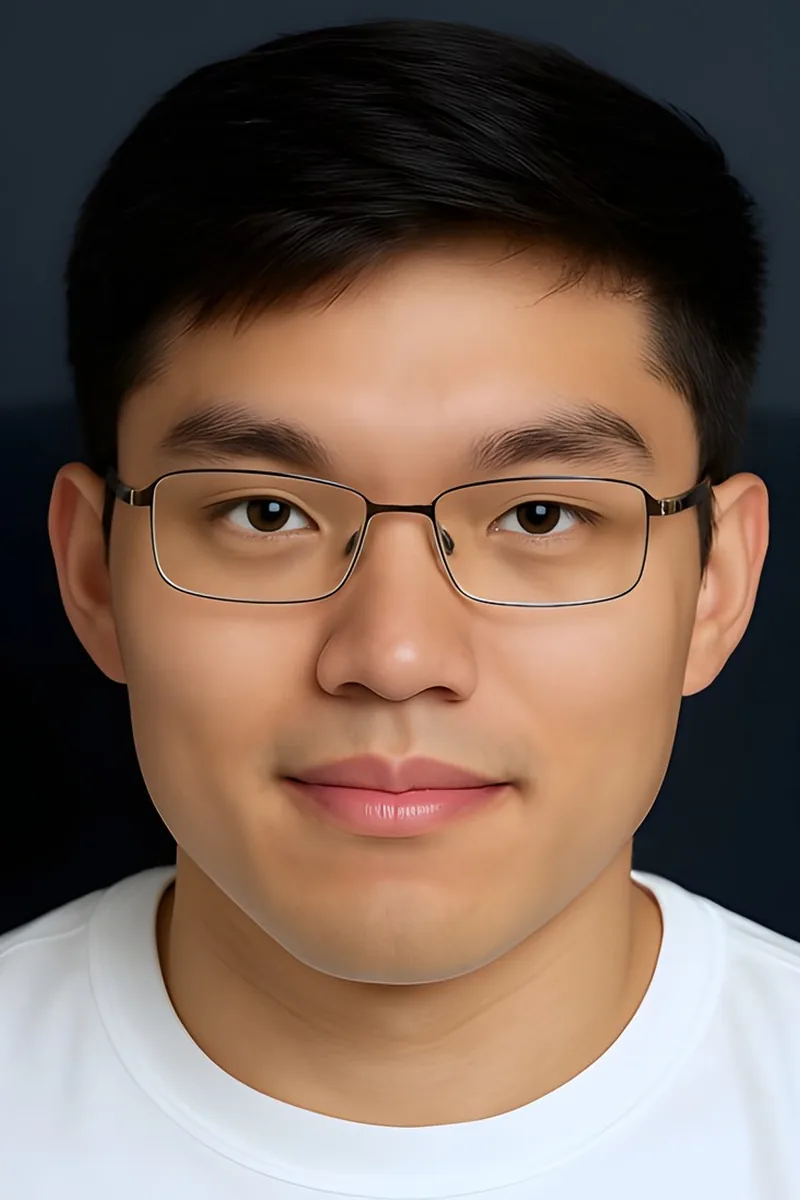
Currently studying computer science at MIT, Brice writes Java and Python regularly enough that AP Computer Science A topics like inheritance, polymorphism, and recursive methods feel like second nature rather than exam abstractions. He teaches the *why* behind each design pattern — why you'd use an ArrayList over an array, why a method should return a value instead of printing it — so students build real programming intuition. Rated 4.9 by students.
Swarthmore's CS curriculum throws students into Java early and often, so Eric isn't just reviewing AP Computer Science A material — he's actively building on it in his own coursework every week. That proximity to the content means he can pinpoint exactly where topics like array manipulation or class hierarchy design tend to trip students up, and explain them in the clear, plain-language style his liberal arts training sharpened.
I am a 2023 graduate of the University of Notre Dame with a Finance/Economics major and a minor in Innovation and Entrepreneurship. I am a passionate student in the math and business realms, as I enjoy the intuitiveness of the former and the real-world potential of the latter. During classes in middle and high school, I developed a reputation of being a good source of help within my classes in a non-tutor capacity, and grew that into a peer tutor role a couple times a week during lunch my senior year of high school. What I hope to accomplish with my tutoring is ensure that you not only achieve your desired grade/score, but see how the different concepts relate to each other in the bigger picture. The more important part is to critically think about the subject matter in other, more unfamiliar contexts. Also, in my math subjects, I seek to provide personal secrets in realms including quicker computation strategies, unique acronyms for certain rules, and other intuitive shortcuts.
I am very passionate about teaching material in a way that works with each student's personal learning needs and making sure that they understand the material at its core, not just how to answer a test question. Because I majored in Neuroscience, I have expertise in a wide range of sciences, as Neuroscience is a very interdisciplinary subject. I have also had extensive experience in Computer Science. Outside of Neuroscience, I devoted a lot of time to studying the humanities. I even started a blog my junior year as an outlet to further pursue these academic interests! As a result, I also enjoy tutoring in Literature, English, and Writing.
Kevin earned his master's in computer science from NYU, so the Java fundamentals tested in AP Computer Science A — class design, control flow, recursion — are concepts he's built on for years rather than topics he's revisiting. He's the kind of tutor who'd rather over-explain a tricky loop trace than leave any ambiguity, which pays off when students hit the free-response section and need to write clean, correct code under pressure. Rated 4.8 by students.
I'm a freshman at Stanford University pursuing a degree in mathematical and computational science. I've been tutoring students from grades 3-12 throughout high school, and I look forward to continue in college. Nothing excites me more than learning something new, and I strive to share my excitement with my tutees.
Robotics engineering at Penn means Mohamed writes code daily to solve real problems — sensor integration, control systems, data processing. He brings that applied perspective to AP Computer Science, teaching algorithmic thinking and program design principles through problems that show students why the concepts matter beyond the exam.
AP Computer Science isn't listed among Hannah's core subjects, but her physics degree required writing code to model systems, analyze data, and solve computational problems — skills that map directly onto the algorithmic thinking and logical reasoning the AP exam tests. She's strongest at teaching students to slow down and trace through control flow and conditionals methodically, the same systematic approach her physics training drilled into her.
I am currently an undergraduate student at Stanford University, and I recently graduated top of my class from Phillips Academy, a prestigious private boarding school in Massachusetts. For the past few years, I have tutored students of all different ages, serving as a peer tutor, faculty-nominated department tutor, and mentor for elementary school students. Although I tutor many different subjects, I am particularly passionate about Writing, Math, Physics, and Economics. My tutees and I always have a lot of fun revising essays, and academic research experience has given me a better appreciation of the other subjects. I am also well-versed in standardized test prep. My teaching philosophy is that no subject or concept is beyond the capabilities of any studentwe must only find the right teaching method. I would characterize my tutoring style as adaptable and empowering. I want to focus on not only solving the given problem or revising an essay, but also developing the skills and thinking process to apply to other assignments. For instance, one of my preferred teaching methods utilizes the Socratic method.
Computational problem-solving sits at the core of Srini's biophysics work at Brown, where modeling biological systems requires writing and debugging code regularly. He teaches AP Computer Science by grounding abstract ideas — algorithms, data representation, the internet's layered protocols — in concrete examples that make the material click on exam day.
As a lab assistant and grader for Rice University's Fundamentals of Computer Engineering course, Omar has seen firsthand where students stumble on AP Computer Science topics like recursion, array manipulation, and object-oriented design. He breaks down each concept by connecting it to how computers actually execute code at the hardware level — a perspective most AP prep can't offer. Rated 5.0 by students.
Jett codes in Java, Python, and C as part of his electrical and computer engineering program at UT Austin, so the AP Computer Science A curriculum — from writing classes to implementing algorithms — overlaps with work he's already doing for his degree. Where he especially shines is connecting programming logic to the underlying hardware, explaining how a for-loop or recursive call actually executes at the machine level, which makes debugging and tracing problems far less mysterious. Rated 5.0 by students.
Testimonials
Because the right AP Computer Science tutor makes all the difference.
Average Session Rating – Based on 3.4M Learner Ratings
Other Reno Tutors
Related Technology and Coding Tutors in Reno
Frequently Asked Questions
AP Computer Science A covers fundamental programming concepts including variables, data types, control structures, arrays, and object-oriented programming. The curriculum also includes algorithms, recursion, sorting and searching techniques, and 2D arrays. Students learn to write, analyze, and modify Java code while developing problem-solving skills that extend beyond the exam itself.
Score improvement depends on your starting point and commitment level, but students typically see meaningful gains—often 1-3 points on the 5-point AP scale—with focused preparation over several months. The key is identifying your specific weak areas (whether that's understanding object-oriented concepts, writing efficient algorithms, or managing time during the exam) and addressing them systematically through practice and personalized feedback.
Many students struggle with object-oriented programming concepts, particularly inheritance and polymorphism, as well as understanding how to trace through code logic. Time management during the exam is another major challenge—the free-response section requires students to write and debug code under pressure. Additionally, translating word problems into code solutions and understanding recursive functions trip up many test-takers.
Varsity Tutors connects you with expert tutors who assess your current understanding and create a customized study plan targeting your specific gaps. Tutors help you master difficult concepts through explanation and practice, develop efficient problem-solving strategies, review released exam questions and practice tests, and build confidence in time management during the exam. This personalized approach is far more effective than generic test prep, as it focuses on what you actually need.
Practice tests are essential—they help you understand the exam format, identify weak areas, and build stamina for the full 3-hour exam. Taking full-length practice tests under timed conditions is particularly valuable because it simulates real exam pressure and helps you develop pacing strategies. A tutor can review your practice test results with you, pinpoint exactly where you're losing points, and help you avoid repeating the same mistakes.
Ideally, you should begin focused exam preparation 2-3 months before the May AP exam, though this depends on your current comfort level with the material. If you're struggling with foundational concepts like loops, arrays, or object-oriented programming, starting earlier—even in the fall—gives you time to build a strong foundation. A tutor can assess where you stand and recommend a realistic timeline based on your specific needs.
In your first session, a tutor will assess your current knowledge of AP Computer Science concepts, understand your goals, and identify which topics feel most challenging. You might review some practice problems, discuss your study habits, and talk about your timeline before the exam. This diagnostic approach helps the tutor create a personalized study plan that addresses your specific needs rather than generic test prep.
Reno's schools and libraries offer study spaces and sometimes AP prep resources, but personalized tutoring fills a critical gap—the 18.9:1 student-teacher ratio in local schools means classroom teachers often can't provide the individualized attention needed for challenging concepts like recursion or polymorphism. Connecting with an expert tutor gives you the focused, one-on-one instruction that complements classroom learning and accelerates your progress toward a strong AP score.
Let’s find your perfect tutor
Answer a few quick questions. We’ll recommend the right plan and match you with a top 5% tutor.