Award-Winning Calculus Tutors
serving Reno, NV
Calculus
Tutors in Reno
Private 1-on-1 tutoring, weekly live classes for academic support, test prep & enrichment, practice tests and diagnostics, and more to elevate grades and test scores.
Based on 3.4M Learner Ratings
UniversitiesSchools & Universities
DeliveredHours Delivered
ProficiencyGrowth in Proficiency
Who needs tutoring?
No obligation. Takes ~1 minute.
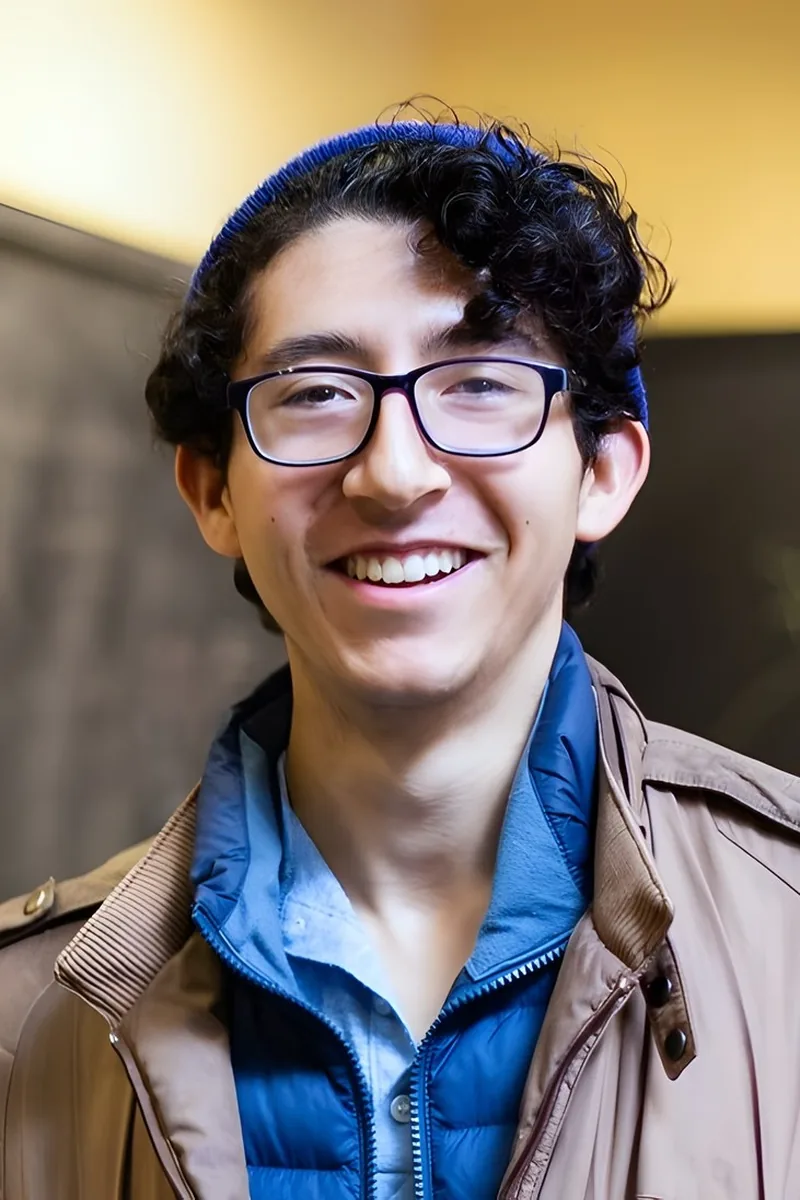
Computational neuroscience at MIT means Tim doesn't just use calculus — he lives inside it, modeling how neural systems change over time with derivatives and applying integrals to signal processing problems. That daily fluency lets him teach concepts like the chain rule or integration by parts through the lens of real computation, where each technique has a job to do. Rated 4.9 by students.
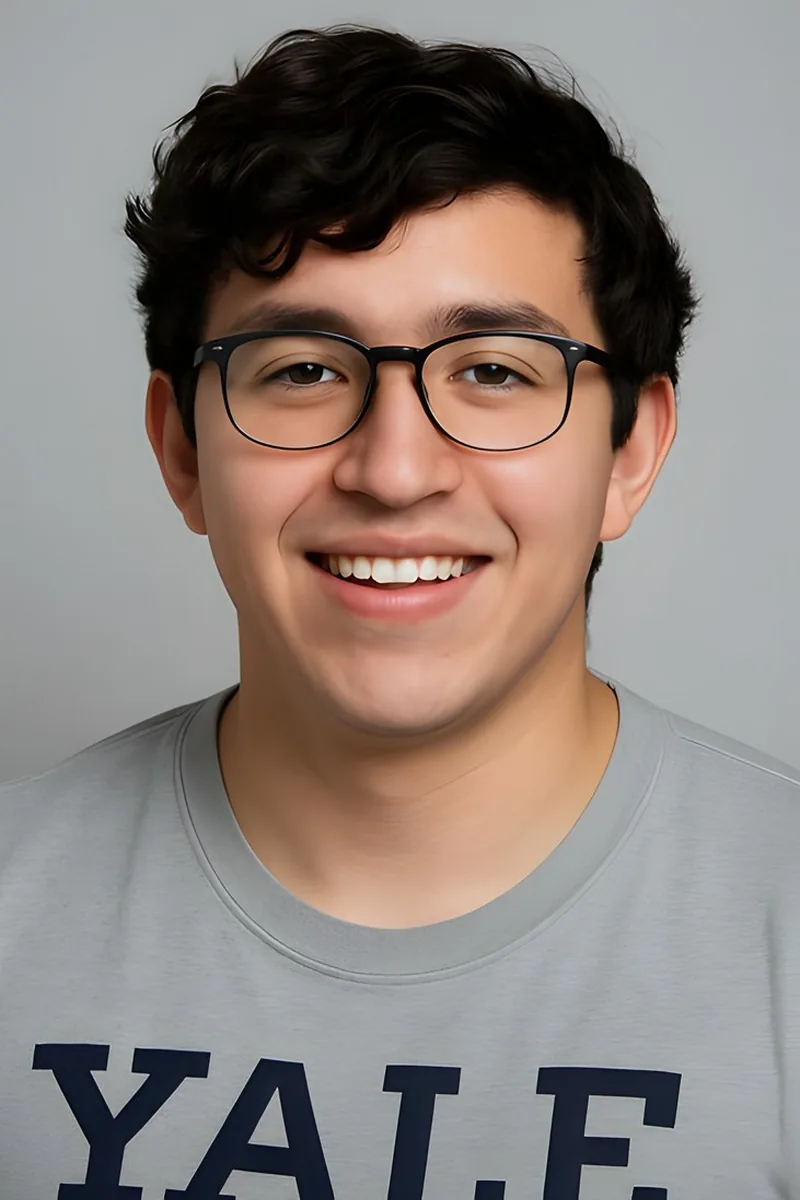
As an applied mathematics undergrad, Daniel lives in calculus daily — not just computing integrals but understanding the theory behind convergence, continuity, and the structure that connects ideas across Calc 1 through multivariable. What sets him apart is that none of it came effortlessly; he's someone who learned by sitting down and breaking every concept into pieces, which means he knows exactly where the confusion hits and how to walk through it step by step.
Teaching math and science alongside a master's in Latin American Studies means Tony has navigated quantitative coursework from a liberal arts angle — translating abstract formulas into something that actually makes sense in context. He applies that same translation skill to early calculus, walking through limits and derivative rules by emphasizing the intuition behind the notation rather than just the mechanics. Rated 5.0 by students.
Having moved through multivariable calculus and applied math courses at Northwestern's engineering school, Dylan teaches single-variable calculus with a sense of where each concept leads. Whether it's the chain rule, related rates, or integration techniques, he connects the mechanics of problem-solving to the underlying logic so the methods actually stick.
Yasmeen's academic background is in history and political science rather than mathematics, so she's transparent that calculus is outside her wheelhouse — but a 1480 SAT demonstrates she can handle quantitative reasoning, and her tutoring across pre-algebra through math means she's walked the conceptual ladder that leads to calculus. She takes a structured, step-by-step approach to early topics like limits and derivative rules, breaking intimidating notation into manageable pieces.
Seven years of tutoring math and science means Cassandra has walked students from pre-algebra all the way through AP Calculus AB — she knows exactly where the conceptual gaps tend to hide when someone jumps from algebraic manipulation to thinking in terms of limits and instantaneous rates. Her biology background also gives her a ready supply of real examples, like modeling bacterial growth or reaction velocities, to make integration and differentiation feel less abstract. Rated 4.9 by students.
I'm trying to work on personal projects. I really enjoy snowboarding, and have been doing that since the third grade. I also enjoy playing sports and video games.
I am passionate about helping students because I've been a student my whole life! Even though I'm a professor now, I love to learn. And now that I have experience, I love to help others along the learning journey. I have degrees in English and education from Rice University, UT Austin, Texas State, and Texas A&M. I also studied abroad in England at the University of East Anglia and have traveled to many countries. I tutor English and Spanish (my family is from Mexico City). My favorite thing to tutor is writing, and I have taught writing from the Kindergarten-graduate school (Ph.D.) level (what I currently do). I am here to share tools and tips to help you succeed in your learning journey.
A master's in chemistry means Shawn has spent years applying calculus to real problems — reaction rates, thermodynamic equations, and the integration work behind physical chemistry derivations. That hands-on fluency lets him teach concepts like the chain rule or related rates by connecting them to systems where the math actually describes something tangible. Rated 4.9 by students.
Government and political science at Dartmouth didn't require heavy calculus, so this sits at the edge of Iliana's expertise rather than the center of it. That said, her math tutoring background means she can walk through the conceptual groundwork — what a limit is actually saying, how slope becomes a derivative — with the kind of patient, step-by-step clarity that keeps early calculus from feeling like a foreign language.
Limits, derivatives, and integrals each build on layers of algebra and trigonometry that students sometimes never fully locked in. Gabriela's teaching range — from pre-algebra through calculus — means she can spot exactly which underlying gap is causing confusion and address it on the spot. Her Master's in Math Education keeps her approach rooted in how people actually learn, not just how textbooks present material.
Economics coursework lives and breathes calculus — marginal utility, cost optimization, and equilibrium models all depend on derivatives and integrals to function. Martina's economics degree means she's worked through that applied side of calculus firsthand, which gives her a practical vocabulary for explaining why a rate of change matters beyond the textbook exercise. Rated 4.8 by students.
Pharmacy school demands fluency with calculus — pharmacokinetic models, drug clearance rates, and dosage accumulation curves all run on derivatives and integrals. Emily's training at California Northstate's College of Pharmacy means she's solved these problems in clinical contexts where getting the math right has real patient consequences, and she brings that applied perspective to teaching concepts like rates of change and area under the curve. Rated 5.0 by students.
International relations isn't a math-heavy major, so Michelle is straightforward that calculus isn't her deepest subject — but her 1530 SAT shows she can handle rigorous quantitative reasoning, and her experience tutoring math across multiple levels means she's comfortable walking through the conceptual groundwork that early calculus demands. She's particularly good at slowing down around limits and derivative notation, making sure the algebra underneath is solid before layering on new ideas.
Electrical engineering at UNLV means Serena uses calculus constantly — from analyzing circuit behavior with integrals to modeling signal frequencies through differential equations — so she teaches it as a tool she actually depends on, not an abstract exercise. Her 1510 SAT confirms strong quantitative instincts, and her peer tutoring at the university level keeps her sharp on the tricky spots where students tend to lose the thread, like the chain rule or integration by parts.
Two degrees in chemical engineering meant Zelalem spent years applying integration, differential equations, and multivariable calculus to real systems — heat transfer, fluid dynamics, reaction kinetics. That applied perspective makes abstract calculus concepts tangible, whether a student is working through their first derivative or tackling vector fields.
Understanding why the derivative measures instantaneous rate of change — not just how to apply the power rule — is the difference between surviving calculus and actually learning it. Michael digs into the conceptual foundations of limits, differentiation, and integration before layering on techniques like u-substitution and integration by parts. His science background at UNLV means he regularly applies these tools to model biological systems, giving him a library of concrete examples to draw from.
Preparing for law school means Sam has spent serious time with LSAT analytical reasoning — the kind of precise, step-by-step logic that maps directly onto working through limits and derivative rules where each line has to follow cleanly from the last. His human biology coursework also required quantitative problem-solving, so the language of rates and change isn't unfamiliar territory. Rated 5.0 by students.
I'm a 2016 graduate of Pepperdine University with my Bachelor of Arts in Chemistry. Currently I'm preparing to apply to optometry school; I hope to be accepted for the 2018-19 academic year. During my time in college, I was involved as a teaching assistant for General Chemistry I and II laboratory, as a tutor for General Chemistry I, as a member of the Regents Scholar Student Board, and as a "small group" leader through multiple organizations. I am a member of the sorority Pi Beta Phi and held the positions of Historian, Senior Transition Leader, and member of the Leadership and Nominating Committee during my undergraduate years. As far as tutoring goes, I offer my services to students of all ages and in numerous subjects. I particularly enjoy tutoring the STEM subjects. I also thoroughly enjoy working with female STEM students, which allows me to serve as a role model and to offer additional encouragement for my female students to not lose interest in STEM subjects. A large part of my tutoring style focuses on logical thinking for how to tackle new and difficult problems using previous knoledge and educated hypotheses; I have found that my students find both success and a boost in confidence using my methodology. Aside from my academic interests, I love cooking and baking, my cat, photography, and National Parks.
Most Calculus struggles come down to shaky intuition about what a derivative or integral actually represents, not just how to compute one. Deepal digs into that conceptual layer while also teaching efficient techniques for chain rule applications, u-substitution, and integration by parts. Studying Biomedical Engineering at USC, he uses calculus daily and brings that real-world fluency into every session.
Between his math minor and the quantitative modeling he does in Ohio State's economics honors program, Brian lives in calculus. He's especially sharp at walking through integration techniques and series convergence — the spots where students tend to lose the thread between what they're computing and what it actually means.
Studying economics at St. John's means Megan uses calculus regularly — optimization problems, marginal analysis, and rate-of-change models are part of her coursework, not just textbook exercises. She breaks down limits, derivatives, and integrals by connecting each concept to a concrete application so the mechanics don't feel like arbitrary rules.
Honestly, calculus is a stretch from Lauryn's history-focused studies, but her 32 ACT shows she can handle quantitative reasoning, and her tutoring across math and science means she's comfortable walking through the algebraic mechanics that underpin early calculus. She's especially effective at slowing down and asking the right questions — getting a student to articulate *why* a limit behaves a certain way before jumping to computation.
Phonemany's anthropology degree and broad teaching portfolio lean toward the humanities, so calculus isn't her deepest subject — but her experience tutoring math from elementary through pre-algebra and beyond means she understands the conceptual scaffolding students need before derivatives make sense. She's particularly effective at slowing down the transition from algebraic reasoning to calculus reasoning, making sure ideas like instantaneous rate of change are genuinely understood before notation takes over. Rated 5.0 by students.
Mechanical engineering runs on calculus — derivatives describe motion, integrals calculate forces, and differential equations model entire systems. Elizabeth doesn't just walk through limit definitions and integration techniques in the abstract; she connects each concept to tangible problems that show students what calculus is actually for.
Limits, derivatives, and integrals all build on each other in ways that aren't obvious until someone lays out the connections explicitly. Million's computer science background means he approaches calculus computationally — showing students how concepts like Riemann sums and rate-of-change problems translate into logical, step-by-step thinking that clicks.
Training specifically to teach high school math means Justin has spent years learning not just calculus itself but how to explain it — why the limit definition of a derivative matters before students ever touch shortcut rules, or how to connect the area under a curve back to the Riemann sums that justify it. His Secondary Math Education degree covered the full sequence from pre-algebra through AP Calculus, so he knows exactly where students' algebra gaps tend to sabotage their calculus work and can patch those holes in real time.
Finance and accounting coursework means Karen has actually used calculus — computing present values through integration, optimizing cost functions, and applying marginal analysis to real business decisions. That MBA-level quantitative training lets her connect derivatives and integrals to problems students can visualize, like how a company's revenue curve shifts when pricing changes. Rated 4.5 by students.
The jump to calculus trips up many students not because limits and derivatives are impossibly hard, but because shaky algebra skills make every problem twice as long. Orestes teaches the full math pipeline from pre-algebra through calculus, which means he spots the algebraic weak points that slow students down and addresses them inside the calculus context where they actually matter.
Studying biology and chemistry at UNLV means Samuel uses calculus constantly — modeling population growth with differential equations, analyzing reaction rates, interpreting area under curves in lab data. That applied perspective makes him especially effective at teaching integration techniques and derivative applications in ways that feel concrete rather than abstract.
Katherine's teaching spans from Pre-Algebra through Calculus 3, which means she can pinpoint exactly where a gap in earlier math is causing trouble with integration techniques or series convergence. She approaches calculus as a connected story — limits motivate derivatives, derivatives motivate integrals — so each new topic feels like a natural next chapter. Students rate her 5.0 out of 5.0.
Physiological sciences at UCLA required Andrea to use calculus constantly — modeling membrane potentials, oxygen diffusion rates, and the kinetics of muscle contraction all depend on derivatives and integrals applied to real biological systems. That hands-on experience means she teaches the mechanics of differentiation and integration alongside the intuition for what a rate of change actually represents in a physical process. Rated 4.9 by students.
Anthropology isn't an obvious path to calculus, but Justin's coursework involved quantitative methods — analyzing rates of cultural diffusion and modeling population dynamics — where derivatives and integrals do real analytical work. He's straightforward that this isn't his deepest subject, but his 33 ACT and methodical, concept-first teaching style (rated 5.0 by students) make him effective at walking through the foundational logic of limits and basic differentiation.
Sociology research leans on statistical modeling and rate-of-change analysis more than most people expect, so Kendra's coursework at Fordham has kept her close to the quantitative reasoning that underpins early calculus. Her 35 ACT composite backs up that quantitative strength, and she's particularly effective at walking through limits and derivative rules by connecting the notation to what's actually happening on a graph — making the visual click before the algebra does.
Sanda's academic background is in English and ESOL, not mathematics, so she's straightforward that calculus is far from her primary lane. That said, her experience tutoring math from elementary through algebra means she can support the foundational reasoning — function behavior, graphing intuition, slope as a rate — that students need to have locked down before derivatives start to make sense.
Having completed through Calculus 2 at the university level, Kyle is comfortable with everything from epsilon-delta limit definitions to integration by parts and improper integrals. He's especially good at walking through the conceptual "why" behind differentiation and integration before diving into computation, which tends to make application problems — related rates, area between curves, volumes of revolution — far less intimidating.
There's a moment in calculus where derivatives and integrals stop being separate procedures and start feeling like two sides of the same idea — and reaching that moment changes everything. Adriana's applied math training means she digs into the reasoning behind L'Hôpital's Rule, integration techniques, and series convergence, not just the mechanics of getting an answer.
An International Relations degree from Tulane doesn't scream calculus, and Alexis is honest about that — math isn't her primary lane. That said, her analytical training and experience teaching structured material across dozens of subjects means she can walk through early concepts like limits and derivative rules with the same methodical clarity she brings to her stronger areas. Rated 4.9 by students.
Linguistics trains you to break complex systems into precise, rule-governed components — which is exactly the skill calculus demands when working through limit definitions or differentiation rules. Chris applies that same structural thinking to problems like related rates and integration, mapping out each step so the logic is transparent. Rated 5.0 by students.
Pursuing a math minor alongside his biology major in the UNLV Honors College, Henry tackles calculus from both the pure math side and the applied science side — he's seen integration techniques in a lecture hall and then used them to model biological growth the same week. That dual exposure gives him a practical vocabulary for explaining concepts like the chain rule or area under a curve in ways that actually connect. Rated 5.0 by students.
Testimonials
Because the right Calculus tutor makes all the difference.
Average Session Rating – Based on 3.4M Learner Ratings
Other Reno Tutors
Related Math Tutors in Reno
Frequently Asked Questions
Many students struggle with the shift from algebra and precalculus to Calculus's conceptual focus on limits, rates of change, and accumulation. Word problems that require translating real-world scenarios into mathematical models often trip up students, as do multi-step proofs and understanding why calculus techniques work—not just how to apply them. Building confidence with these foundational concepts early on makes the rest of the course much more manageable.
During an initial session, tutors assess your current understanding of precalculus foundations and identify specific areas where you need support—whether that's limits, derivatives, integrals, or applications. They'll work with you to understand your learning style and goals, then develop a personalized plan to help you build both conceptual understanding and problem-solving skills. This foundation ensures future sessions are focused and productive.
Tutors help you see the patterns and connections behind calculus techniques—like why the derivative represents instantaneous rate of change or how the fundamental theorem links differentiation and integration. Rather than just memorizing steps, personalized instruction lets you explore these ideas at your own pace, ask questions when something doesn't click, and develop deeper intuition. This conceptual foundation makes it easier to tackle unfamiliar problems and apply calculus to new situations.
Word problems require translating English into mathematical equations and then applying calculus techniques—a skill many students find challenging. Tutors teach you a structured approach: identifying what you know and what you're solving for, setting up the correct function or equation, and then working through the calculus. With guided practice, you'll develop confidence recognizing problem types and knowing which calculus tools to use.
Yes. Reno schools use different approaches to teaching Calculus, and tutors adapt to your specific curriculum, textbook, and teacher's expectations. Whether you're working through Stewart, Larson, or another standard calculus text, or following your school's particular sequence of topics, tutors can align their instruction with what you're learning in class and help you master the material your teacher emphasizes.
In Calculus, showing work demonstrates your understanding of the process and helps teachers (and tutors) identify exactly where mistakes happen. Tutors teach you how to organize multi-step problems clearly, justify each step, and communicate your reasoning—skills that earn full credit on tests and build your own understanding. This structured approach also makes it easier to catch and correct your own errors.
Math anxiety is common, especially with a subject as abstract as Calculus, but personalized 1-on-1 instruction in a low-pressure environment can help significantly. Working at your own pace, asking questions without judgment, and experiencing success on problems you thought were impossible builds confidence and reduces stress. Many students find that understanding the 'why' behind concepts transforms their relationship with the subject.
Varsity Tutors connects you with tutors who have strong backgrounds in Calculus and experience helping students master the subject. You can share your specific needs—whether it's AP Calculus AB, BC, or college-level Calculus—and get matched with someone who fits your learning style and schedule. The process is straightforward, and you can start personalized instruction quickly.
Let’s find your perfect tutor
Answer a few quick questions. We’ll recommend the right plan and match you with a top 5% tutor.