Award-Winning College Physics Tutors
serving Reno, NV
College Physics
Tutors in Reno
Private 1-on-1 tutoring, weekly live classes for academic support, test prep & enrichment, practice tests and diagnostics, and more to elevate grades and test scores.
Based on 3.4M Learner Ratings
UniversitiesSchools & Universities
DeliveredHours Delivered
ProficiencyGrowth in Proficiency
Who needs tutoring?
No obligation. Takes ~1 minute.
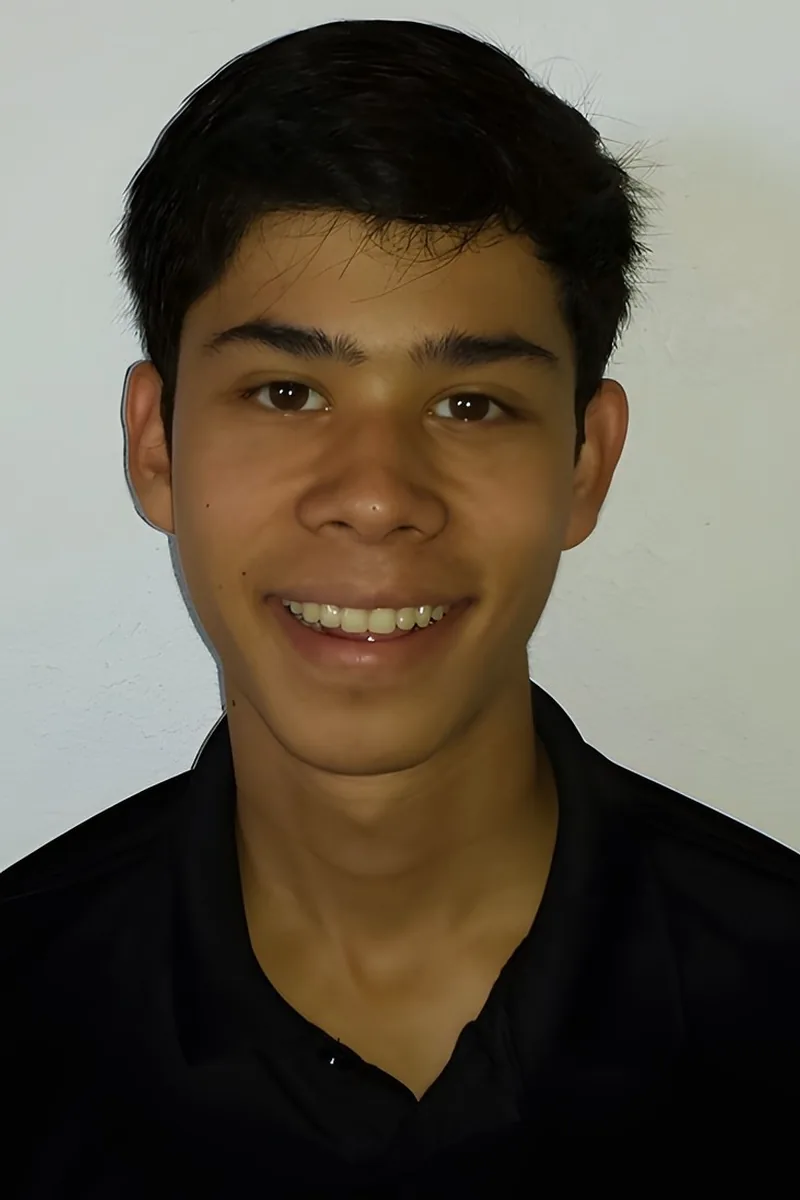
Dylan has taken both college mechanics and electricity/magnetism at Northwestern's engineering school, so he's worked through the exact problem sets — free-body diagrams, circuit analysis, wave optics — that trip up most college physics students. His computer science background also means he's comfortable walking through the math-heavy derivations that make physics click rather than feel like guesswork. Rated 5.0 by students.
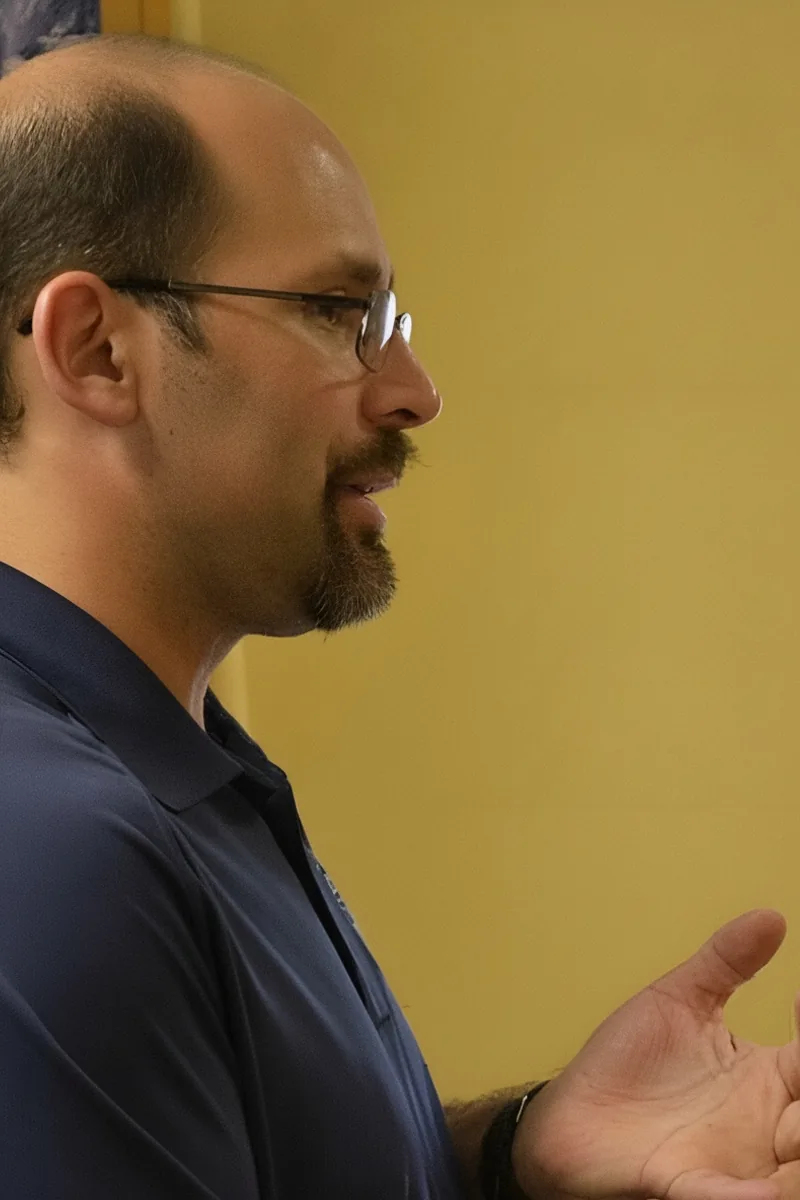
Shawn's master's in chemistry means he's already internalized the physics that chemistry leans on — thermodynamics, kinetics, electrostatics, and wave behavior — so he explains these topics with the fluency of someone who uses them daily rather than someone reciting definitions. He's particularly sharp at teaching students to set up problems from scratch, identifying which physical principles apply before plugging anything into an equation. Rated 4.9 by students.
College physics ramps up the mathematical demands significantly, especially once integration enters the picture for topics like work-energy problems or electric flux calculations. Michael's coursework through multivariable calculus and differential equations means he can bridge the gap between the physics concepts and the calculus tools students need to solve them. He's particularly effective at teaching students to translate a physical scenario into a mathematical setup — the skill that separates students who understand from those who just memorize.
Forensic science coursework is surprisingly physics-heavy — ballistics relies on projectile motion and energy transfer, blood spatter analysis is fluid dynamics in action, and accident reconstruction demands a working command of kinematics and Newton's laws. Kyle brings that applied context into college physics tutoring, connecting textbook problems to scenarios where the physics actually determines real outcomes. Rated 4.6 by students.
Engineering coursework put Aaron through the full sequence of calculus-based physics — mechanics, E&M, waves, thermodynamics — and he still remembers which concepts made him struggle before they clicked. He breaks down problem-solving into concrete steps: sketch the system, identify the governing principle, then translate to math, so students stop guessing which equation to use. Rated 4.8 by students.
Studying biophysics at Rice means Aadith lives where physics and biology collide — modeling protein folding forces, analyzing fluid flow through membranes, applying thermodynamic principles to living systems — so he brings a concrete, research-informed perspective to the mechanics, waves, and electromagnetism that fill college physics syllabi. His 1590 SAT reflects serious quantitative chops, and his dual exposure to physics and biochemistry means he can walk through a tough problem from multiple angles until the reasoning clicks.
Between simulating supernova shock fronts at Princeton and building optical filters at Norfolk State, Dennis has applied college-level physics across mechanics, electromagnetism, thermodynamics, and wave optics in real research settings. He unpacks difficult problem sets by connecting each concept to the physical scenario it describes — an approach that's especially effective for students transitioning from plug-and-chug to genuine problem-solving.
Ava's strength in college physics isn't a deep engineering background — it's her ability to teach students how to actually study the material. She breaks down problem-solving into structured steps, emphasizing how to read a force diagram or energy scenario before jumping to equations, and builds note-taking systems tailored to physics courses where lecture moves fast and notation piles up quickly.
Engineering coursework at Cornell means Abby is actively grinding through the same calculus-based physics — mechanics, wave motion, electromagnetism — that her students are tackling, which keeps her explanations grounded in the specific problem styles and pitfalls that show up on current exams. She breaks down multi-step problems by isolating the physical principle first, then translating it into the math, so students stop guessing which equation to use. Holds a 5.0 rating.
Studying computer science at MIT means Brice lives inside the math and physics that most students only encounter on problem sets — his coursework regularly demands fluency in mechanics, wave behavior, and electromagnetism as foundations for everything from signal processing to computational modeling. He breaks physics problems into the same kind of step-by-step logical structure he'd use to debug code, which makes tangled multi-concept questions feel systematic rather than overwhelming. Rated 4.9 by students.
A computer science degree from UCLA means Michael spent semesters deep in the physics that underpins simulation and graphics — kinematics, force modeling, energy systems — and his 1560 SAT confirms the quantitative chops to handle calculus-based problem solving. He teaches students to treat each physics problem like debugging code: isolate what you know, identify the governing principle, then execute step by step until the answer falls out.
Predentistry requires a deep pass through college physics — optics, fluid dynamics, mechanics of materials — and Erica tackled that coursework at Harvard alongside a History of Science degree that gave her an unusual ability to explain *where* physical concepts come from and how they evolved into the frameworks students use today. She breaks down problem-solving by connecting the conceptual narrative to the math, so students aren't just plugging into formulas but understanding the physics driving each step. Rated 4.9 by students.
Biomedical engineering at Duke means Eric solves physics problems daily — modeling forces on prosthetic joints, analyzing fluid flow through artificial vessels, calculating electrical signals in biosensors — so the mechanics and electromagnetism in a college physics course map directly onto work he's already doing. He breaks multi-step problems into their physical components first, making sure the reasoning is solid before any math hits the page. Holds a 5.0 rating.
Working at an ExxonMobil refinery before MIT Sloan meant Caroline spent years applying thermodynamics, fluid mechanics, and force analysis to real industrial systems — the same physics that fills college problem sets, except with actual consequences for getting the math wrong. Her mechanical engineering M.S. from WashU (magna cum laude) gave her deep fluency with calculus-based derivations, so she can walk through everything from torque problems to heat transfer without skipping the steps that textbooks gloss over. Rated 5.0 by students.
Statics, dynamics, circuits, electromagnetics — Steve didn't just take these courses, he took them twice over, earning degrees in both mechanical and electrical engineering before working as a practicing engineer. That dual perspective is especially useful in college physics, where a problem about induced EMF or stress in a beam benefits from someone who's designed real systems around those principles. Rated 4.9 by students.
Thermodynamics is where Rahul lights up — it was his favorite corner of Cornell's chemical engineering program, and that enthusiasm shows when he's walking someone through heat engines, entropy, or the first and second laws in a college physics context. His engineering training means he treats every problem as a physical system first and an equation second, pushing for the conceptual reasoning behind each step rather than formula-matching. Rated 4.9 by students.
Building things that actually work — which is what mechanical engineering is — means Vania spent her degree applying Newton's laws to real structures, calculating heat transfer through materials, and analyzing fluid flow, not as textbook exercises but as design requirements. That hands-on engineering intuition shows up when she breaks down free-body diagrams or walks through energy conservation problems, because she's solved versions of them that had to hold up in the physical world. Her 1590 SAT underscores the quantitative precision she brings to calculus-based problem solving.
Testimonials
Because the right College Physics tutor makes all the difference.
Average Session Rating – Based on 3.4M Learner Ratings
Other Reno Tutors
Related Science Tutors in Reno
Frequently Asked Questions
College Physics courses usually cover mechanics (motion, forces, energy), waves and sound, electricity and magnetism, optics, and modern physics concepts. The exact curriculum varies by institution, but most courses emphasize both theoretical understanding and problem-solving skills. Tutors can help you master these topics by connecting abstract concepts to real-world applications and breaking down complex problem-solving strategies.
Many students struggle with visualizing invisible forces and fields—this is one of the biggest challenges in College Physics. Personalized tutoring helps by using diagrams, physical analogies, and step-by-step explanations to make abstract ideas concrete. A tutor can also show you how to translate word problems into visual representations, which is key to solving complex problems accurately.
Effective problem-solving in College Physics requires identifying the relevant concepts, setting up equations correctly, and checking that your answer makes physical sense. Many students jump straight to formulas without understanding the underlying physics—this leads to errors and confusion. Tutors help you develop a systematic approach: analyzing the problem, choosing the right principles, solving step-by-step, and verifying your results against real-world expectations.
Yes—tutoring can significantly improve your lab performance by helping you understand the physics principles behind experiments before you enter the lab. Tutors can explain what you're measuring, why the experimental design matters, and how to analyze your data meaningfully. This preparation makes you more confident during lab sessions and helps you write stronger lab reports that demonstrate real understanding.
Unit conversions and dimensional analysis are foundational skills that many College Physics students find tedious—but they're essential for getting correct answers. Tutors teach you systematic methods for converting units and checking your work, plus strategies to catch common mistakes before they snowball. Once you master these skills, you'll solve problems faster and with greater confidence.
In your first session, a tutor will assess your current understanding of key concepts, identify specific areas where you're struggling, and learn about your learning style. You might work through a sample problem together to see how the tutor explains concepts and approaches problem-solving. This helps both you and the tutor establish a personalized plan focused on your biggest challenges, whether that's conceptual understanding, problem-solving strategy, or exam preparation.
Varsity Tutors connects you with expert tutors for College Physics for students in Reno who need personalized 1-on-1 instruction. Whether you're preparing for exams, working through challenging problem sets, or building a stronger foundation in mechanics and electromagnetism, you can get matched with a tutor who understands the College Physics curriculum and knows how to explain difficult concepts clearly.
College Physics is fundamentally about understanding concepts—memorizing formulas without grasping the underlying physics will hurt you on exams and in problem-solving. Tutors focus on building deep conceptual understanding so you can apply principles to new situations and solve unfamiliar problems. When you truly understand the physics, formulas become tools that make sense, rather than mysterious equations to memorize.
Let’s find your perfect tutor
Answer a few quick questions. We’ll recommend the right plan and match you with a top 5% tutor.