Award-Winning SAT Tutors
serving Reno, NV
SAT
Tutors in Reno
Private 1-on-1 tutoring, weekly live classes for academic support, test prep & enrichment, practice tests and diagnostics, and more to elevate grades and test scores.
Based on 3.4M Learner Ratings
UniversitiesSchools & Universities
DeliveredHours Delivered
ProficiencyGrowth in Proficiency
Who will be getting tutoring?
No obligation. Takes ~1 minute.

Zachary's Dartmouth education and master's in political science built the exact skill set the SAT rewards — fast, precise reading of dense passages and tight analytical reasoning under time pressure. He scored a 1550 on the exam and uses that experience to teach concrete strategies for evidence-based reading questions and the algebra-heavy math section, with a step-by-step approach that makes each question type feel predictable rather than overwhelming.
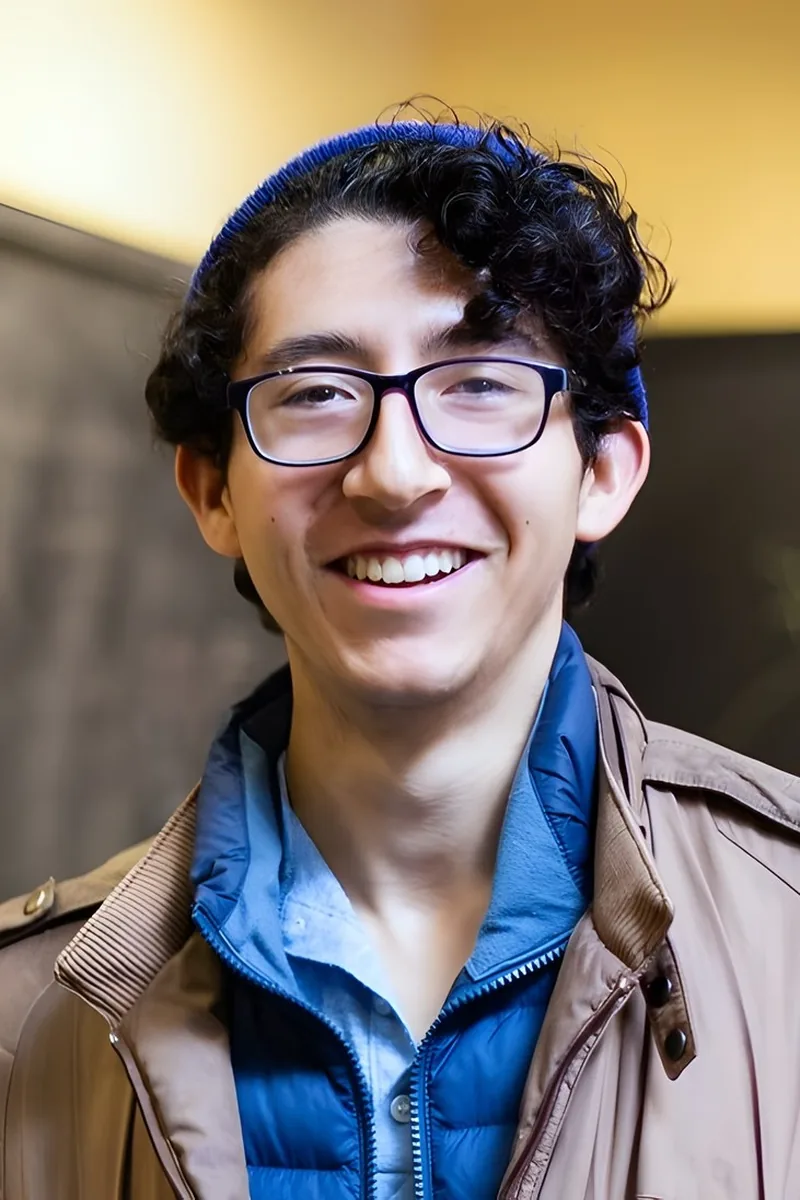
Studying computational neuroscience and philosophy at MIT means Tim lives at the intersection of quantitative reasoning and critical reading — exactly the skill split the SAT demands. He scored a 1560 and uses that experience to teach specific strategies for the trickiest question types, from no-calculator algebra to command-of-evidence pairs where both the answer and the supporting citation need to align. Rated 4.9 by students.
Biology and chemistry coursework at UNLV built Michael's comfort with the data interpretation and experimental design questions that show up throughout the SAT Math section — the ones that look like science but are really testing whether you can read a table and set up an equation. He scored a 1570 and uses that experience to coach students through both the math and verbal sides, with particular attention to pacing and the evidence-based reading pairs where strong science students often overthink the answer choices.
Deepal's approach to the SAT centers on efficiency — he's developed shortcut methods for the math section's algebra and data analysis questions that cut solving time significantly, freeing up minutes students can redirect to trickier problems. His 1570 SAT score backs up those strategies, and his biomedical engineering coursework at USC keeps his quantitative reasoning sharp. He also coaches students on the Writing and Language section's grammar patterns, drawing on the same principle he applies everywhere: if the standard method feels clunky, find a cleaner path to the answer.
Scoring a 1530 on the SAT herself, Michelle built her test prep expertise further as a teaching assistant at an SAT prep center, where she drilled verbal, writing, and math strategies with students daily. She's particularly sharp on the Writing and Language section — breaking down sentence structure rules and grammar patterns so they become second nature rather than guesswork. Her Tufts International Relations background also gives her an edge on the reading-heavy passages that trip up so many test-takers.
Scoring a 1510 on the SAT herself, Serena knows the specific tricks that separate a good score from a great one — timing strategies on the Reading section, grammar rule patterns in Writing, and the algebra and data analysis concepts that dominate the Math portion. Her electrical engineering coursework at UNLV keeps her sharp on the quantitative side, while her love of English means she's equally comfortable breaking down evidence-based reading questions and rhetorical analysis passages.
Northwestern's engineering curriculum forced Dylan to master the exact quantitative reasoning the SAT Math section demands — algebra, data analysis, and multi-step problem solving under pressure — while his broad humanities coursework sharpens his approach to the Reading and Writing sections. He scored a 1500 on the SAT and uses that experience to teach students how to spot the structural patterns behind each question type rather than relying on brute-force practice. Rated 5.0 by students.
What sets Kendra apart for SAT prep is that she's recently been through it — she scored a 1450 and knows exactly which pacing mistakes and second-guessing habits cost students points on test day. Her writing-heavy sociology coursework at Fordham keeps her sharp on the Evidence-Based Reading and Writing sections, where she teaches students to trace argument structure through paired passages. She also covers the math side, drawing on her comfort with algebra and data analysis across multiple math subjects.
Scoring a 1500 on the SAT gave Megan a sharp sense of where points are won and lost — particularly in the Evidence-Based Reading section, where pairing answer choices with specific line references trips up even strong readers. Her economics coursework at St. John's keeps her analytical reasoning sharp, and she breaks down both the math and verbal sections into repeatable strategies rather than relying on intuition.
Economics coursework at Ohio State's Honors College means Brian spends his weeks interpreting data sets and building quantitative arguments — exactly the skills the SAT Math section rewards, from algebraic modeling to data analysis. His 1470 SAT score and strength across both English and math subjects let him coach the full exam, connecting the grammar and evidence-based reasoning on the verbal side to the same logical patterns students already use in the quantitative sections.
Seven years of tutoring math and science across middle school through college means Cassandra knows the SAT Math section cold — from heart-of-algebra questions to passport-to-advanced-math problems that demand real fluency with functions and quadratics. Her biology training also sharpens the data-interpretation skills that show up in both the math and evidence-based reading sections, where students need to pull conclusions from graphs and tables quickly. She scored a 1480 on the SAT and holds a 4.9 rating.
Scoring a 1420 on the SAT herself, Carsen knows what it takes to perform across both the Evidence-Based Reading and Math sections on test day. Her chemistry background sharpens the analytical reasoning she brings to data interpretation and passage-based questions, while her experience as a college teaching assistant means she's practiced at breaking down tricky concepts until they actually make sense. Rated 5.0 by students.
SAT prep is where Yasmeen's two strongest skills converge — the analytical reading she honed studying political science and history at Penn, and the structured essay and grammar instincts she's built through years of writing instruction. She scored a 1480 and knows how to coach students through the pacing decisions and evidence-pairing logic that separate a good score from a great one. Rated 5.0 by students.
Chemistry grad students learn to read dense, data-heavy material under pressure — a skill Shawn now applies directly to SAT prep, where he teaches students to extract answers from evidence-based passages and interpret graphs quickly on the math side. His 1420 SAT score and deep comfort with algebra, trigonometry, and quantitative reasoning mean he covers both sections without skipping a beat. Rated 4.9 by students.
I love teaching patiently and accurately to achieve concrete goals. A National Merit scholar, a college student, and an aspiring writer, I encourage high achievement and creativity in all my students. With 2+ years of tutoring experience and 1+ years of teaching experience, both in-person and online, I will gladly adapt to your educational and personal needs! Primarily, I tutor the SAT and ACT. I have the most experience in tutoring English (up to 12th grade) and math (up to Algebra II/pre-calc). I can also tutor competitive Lincoln-Douglas and policy debate as well as Impromptu speech at a middle/high school level or general public speaking and argumentation. My favorite subjects are English, which I am pursuing at UNLV, and Speech & Debate, which I teach at a private school. I have an AP Honors Diploma and AP Scholar with Distinction Award from high school.
Nina's biostatistics training at Columbia and Northwestern means the SAT Math section — especially data analysis, scatterplot interpretation, and multi-step algebra — plays directly to her strengths. She scored a 1550 and knows how to teach the quantitative reasoning patterns that separate a good math score from a great one, while her experience with college essays and literature gives her practical tools for the Reading and Writing sections too.
Keith's political science and history coursework at Williams built exactly the kind of dense, argument-heavy reading that mirrors SAT Evidence-Based Reading passages — he teaches students to trace an author's claim through supporting evidence and spot the distractor answers designed to punish skimming. His 1560 SAT score backs up a full-test approach that extends to the math and Writing & Language sections, where he emphasizes the repeatable grammar rules and algebraic setups that appear on every administration.
Stanford med student with a perfect 1600 SAT, Maggie knows the test inside out — but what sets her apart is a dual background in economics and molecular biology that gives her genuine fluency on both sides of the exam, from data-heavy math questions to dense science passages in the Reading section. She pinpoints where each student is leaking points and builds targeted drills around those specific question types rather than grinding through full-length practice tests. Rated 5.0 by students.
Daniel's 1590 SAT sits in the 99th percentile, but what makes him useful as a prep tutor is that he covers both sides of the exam himself — his math degree handles the quantitative sections while his arts background and experience teaching literature, grammar, and essay writing anchors the verbal side. He teaches students to spot the SAT's recurring question structures so that timing pressure shrinks as familiarity grows.
Classics and philosophy trained Austin to read dense, argument-heavy texts with precision — exactly the skill that separates good SAT Reading scores from great ones. He scored a 1570 and teaches students to trace an author's reasoning through evidence-based questions rather than relying on surface-level comprehension. His grammar and writing chops carry over to the Writing and Language section, where he unpacks the punctuation and syntax rules the test recycles in every form.
Harvard chemistry coursework and a 1570 SAT score give James credibility across both halves of the exam — he's equally comfortable unpacking no-calculator algebra strategies and teaching students to trace argument structure through dense reading passages. His approach centers on learning the test's patterns: which grammar rules appear most often, which math concepts get recycled in disguise, and how to manage pacing so nothing gets left blank. Rated 4.9 by students.
A 1530 SAT scorer who tinkers with cars and old electronics for fun, Aaron brings that same diagnostic mindset to test prep — isolating exactly where points are being lost and building targeted strategies for each section. He's particularly sharp on the math side, where his mechanical engineering background makes even the trickiest word problems and data interpretation questions feel routine. Rated 5.0 by students.
Most SAT prep treats the math and verbal sections as two separate exams, but Viktor's UChicago math degree and his experience teaching literature, grammar, and college essays mean he can coach the full test without switching gears. He scored a 1600 — a perfect composite — and uses that familiarity with the exam's logic to teach students how to spot the algebraic structures hidden in word problems and the rhetorical patterns that make Reading section trap answers so tempting.
Public policy coursework at the college level means Dana spent years doing exactly what the SAT rewards — reading dense, argument-driven passages quickly and pulling out the evidence that actually supports a claim. She scored a 1450 on the SAT herself and pairs that firsthand experience with strategies for the Writing and Language section's grammar and rhetoric questions, where her strong background in essay writing and English syntax pays off.
What separates David's SAT approach is his computer science mindset — he treats the test as a system to decode, teaching students to spot the predictable logic behind both the math section's algebra and data problems and the reading section's evidence-based question structures. He scored a 1570 on the SAT himself and knows exactly where the exam rewards methodical process over intuition. Rated 5.0 by students.
A perfect 1600 on the SAT gives Richard firsthand knowledge of what it takes to navigate every section — from evidence-based reading passages to the no-calculator math grid-ins that trip up even strong students. As a Harvard government major, he brings particularly sharp critical reading and argument-analysis skills to the Reading and Writing sections, where identifying an author's central claim quickly can save crucial minutes. He also spent a year as a math course assistant at Harvard, so the quantitative side is equally covered.
Medical school trains you to process dense, unfamiliar material under pressure — which is essentially what the SAT Reading section demands. Conor pairs that skill with a 1560 SAT score and an engineer's approach to the Math section, where he teaches students to spot the underlying structure of multi-step problems instead of relying on brute-force calculation. Rated 5.0 by students.
Testimonials
Because the right SAT tutor makes all the difference.
Average Session Rating – Based on 3.4M Learner Ratings
Practice SAT
Free practice tests, flashcards, and AI tutoring for SAT
Other Reno Tutors
Related Test Prep Tutors in Reno
Frequently Asked Questions
For students in Reno targeting the University of Nevada, Reno (UNR), the middle 50% of admitted students typically score between 1050-1220. For the University of Nevada, Las Vegas (UNLV), scores generally range from 1000-1200. If you're aiming for out-of-state schools, competitive universities typically want 1300+, while highly selective schools look for 1450+. The national average hovers around 1050, so scoring above that puts you in a stronger position for most Nevada schools.
Most students see meaningful improvements of 100-200 points with focused, personalized preparation—though the amount depends on your starting score and how much you practice. Students starting around the national average (1050) often reach 1200-1300 with consistent effort, while those already scoring higher may see smaller but still significant gains. The key is targeting your specific weak areas, whether that's Reading comprehension, grammar, or Math problem-solving, rather than trying to improve everything at once.
Most juniors benefit from starting SAT prep in the spring or early fall of junior year, giving themselves 4-6 months before taking the test. This timeline allows for diagnostic testing to identify weak areas, targeted skill-building, and multiple practice tests before test day. If you're planning to apply early decision or early action to colleges, starting prep earlier in junior year is especially important. Even sophomores can benefit from beginning foundational work, particularly if they struggle with reading or math fundamentals.
The SAT is scored from 400-1600 and has three main sections: Evidence-Based Reading & Writing (200-800 points), Math (200-800 points), and an optional Essay (though most colleges no longer require it). The Reading section has 52 questions in 65 minutes and focuses on comprehension and evidence-based analysis. Writing & Language covers grammar and expression in 44 questions over 35 minutes. Math is split into a no-calculator section (20 questions, 25 minutes) and a calculator section (38 questions, 55 minutes), testing algebra, problem-solving, and data analysis.
The Reading section is where most students struggle with pacing—you have about 75 seconds per question, which feels tight. A smart strategy is to skim the questions first, then read the passage with those questions in mind, rather than reading passively. For Math, tackle easier questions first to build confidence and secure points, then return to harder multi-step problems. Practice tests are essential for developing your personal pacing strategy; many students find that doing timed sections repeatedly helps them internalize the rhythm before test day.
Both tests are equally accepted by colleges, but the SAT tends to be more popular among Nevada students and is often the default choice for Reno-area high schools. The main difference: the ACT emphasizes speed and breadth of knowledge, while the SAT rewards deeper reasoning and evidence-based thinking. If you're strong at quick recall and science, the ACT might suit you; if you prefer analyzing passages and working through complex problems methodically, the SAT is likely a better fit. Many students take a practice test in each format to see which plays to their strengths.
SAT Math requires both conceptual understanding and test-specific strategy. Many students struggle with multi-step problems and data interpretation from graphs—these are high-value questions worth mastering. Start by identifying which topics trip you up (algebra, geometry, statistics), then build foundational skills before moving to harder problems. Practice testing is critical: review every mistake carefully to understand not just the right answer, but why you chose wrong. Working with a tutor on your specific weak spots—whether that's setting up equations correctly or reading complex graphs—typically yields faster improvement than generic prep.
The Reading section tests comprehension and evidence-based analysis more than vocabulary, though context clues matter. Focus on understanding the author's main point and supporting evidence rather than memorizing word lists. For Writing & Language, grammar rules are testable and learnable—master comma usage, verb tense, pronoun agreement, and sentence structure. Many students improve fastest by doing timed practice sections, reviewing every error, and identifying patterns in what trips them up. If you consistently miss questions about tone or inference, targeted practice in those areas will move your score more than random studying.
Let’s find your perfect tutor
Answer a few quick questions. We’ll recommend the right plan and match you with a top 5% tutor.