Award-Winning Organic Chemistry Tutors
serving Detroit, MI
Organic Chemistry
Tutors in Detroit
Private 1-on-1 tutoring, weekly live classes for academic support, test prep & enrichment, practice tests and diagnostics, and more to elevate grades and test scores.
Based on 3.4M Learner Ratings
UniversitiesSchools & Universities
DeliveredHours Delivered
ProficiencyGrowth in Proficiency
Who needs tutoring?
No obligation. Takes ~1 minute.

Having completed both semesters of organic chemistry at the University of Michigan — on top of AP Chemistry before that — Ajay knows exactly where students get stuck, whether it's arrow-pushing in reaction mechanisms or keeping substitution and elimination pathways straight. He teaches students to recognize electron behavior patterns so new reactions feel predictable instead of random.
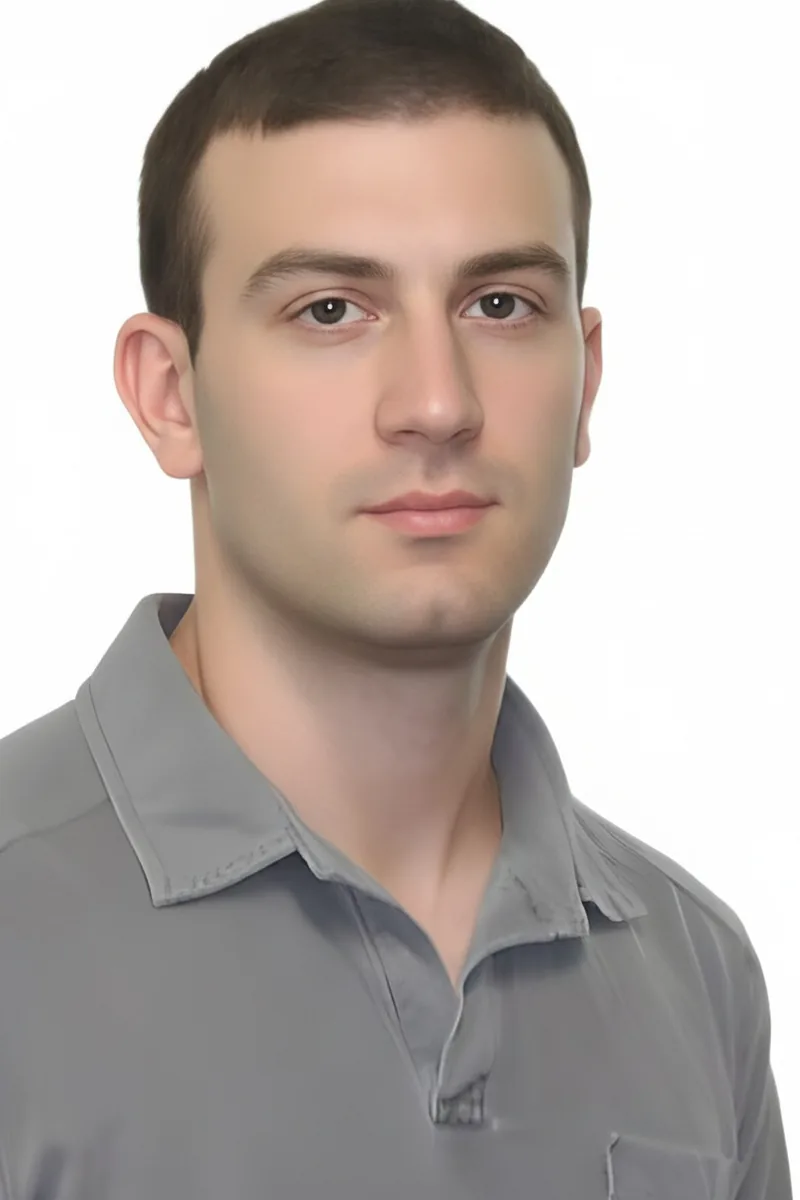
Reaction mechanisms click when you understand electron movement — why a nucleophile attacks one carbon over another, or how steric hindrance reshapes a synthesis pathway. Vazrik's chemistry degree and doctoral work in materials science mean he can trace organic reactions from their molecular-orbital roots through to real laboratory outcomes, making arrow-pushing feel intuitive rather than arbitrary.
I am eternally grateful! I minored in Chemistry after getting interested in the inner workings of organic chemistry. While going to college I earned money by tutoring classes I had already taken. I also offered "supplemental instruction" which were informal classroom question and answer sessions. I worked in a research lab after earning an undergraduate research fellowship and explored Physiology at the School of Medicine. Then went on to study Toxicology at the University of Wisconsin, Madison. While there a decision appeared clear between focusing on research or teaching. I like teaching better. I truly enjoy spreading knowledge about Biology and Chemistry and finding fun ways to introduce people to these (often difficult) subjects.
I am a PhD student in Chemistry at the University of Windsor. I did both my Undergraduate and Master's degree in Chemistry at the University of Windsor as well. I also did a year and a half of course/research work at Cornell University. I am interested in the academic field and hope to one day hold a position in the academic world to do groundbreaking research and teach the next generation of students the very fundamentals of Chemistry. I love teaching and I have been doing it since 2011. I have taught many students at different levels and from different backgrounds. I like to make sure that students understand concepts rather than memorize. I take my time explaining concepts and always have examples on the top of my head to help understand different problems in Chemistry.
I'm your girl! I majored in Biochemistry at the University of Michigan and am looking to help any students in need of assistance.
Reaction mechanisms are the language of organic chemistry — if you can't follow electron movement through a nucleophilic substitution or an elimination, every new reaction feels like something to memorize from scratch. Cassandra teaches students to recognize the patterns that repeat across seemingly different reactions: leaving group quality, steric effects, acid-base behavior. That pattern-recognition approach, sharpened by her biology and biochemistry background, turns a notoriously overwhelming course into something students can actually reason through.
Penn's pre-health track put Brittany through rigorous chemistry coursework alongside her psychology degree, and she spent her undergraduate years tutoring General Chemistry I and II at the university's Tutoring Center — building the kind of fluency with reaction fundamentals that carries directly into organic mechanisms. She approaches topics like nucleophilic substitution and carbonyl reactivity by connecting them back to the foundational principles of electron behavior and molecular structure, making each new reaction type feel like an extension of something students already know.
Studying physics with a concentration in chemical principles at Penn means Max encounters organic chemistry from the physical side first — thermodynamics of reaction pathways, orbital interactions driving nucleophilic attacks, and the energy landscapes that determine whether a substitution or elimination wins out. That perspective lets him teach mechanisms by grounding arrow-pushing in the physics of why electrons move, not just where they go.
Reaction mechanisms are the language of organic chemistry, and Amin earned an entire master's degree becoming fluent in them. He teaches students to read electron flow the way you'd read a sentence — identifying nucleophiles, leaving groups, and stereoelectronic effects so that predicting products becomes a reasoning exercise, not a memorization marathon. Rated 4.5 by students.
Reaction mechanisms are the backbone of organic chemistry, and Enoch teaches them by building a visual logic: tracking electron movement, recognizing nucleophile-electrophile patterns, and predicting products from functional group behavior. His biomedical science background means he also connects orgo to real biochemical contexts — amino acid chemistry, drug metabolism, lipid structures — which makes the material stick for premed students especially.
Reaction mechanisms are essentially stories told with curved arrows, and the trick is learning to read them rather than memorize hundreds individually. Mark approaches organic chemistry by teaching students to recognize patterns — nucleophilic attacks, leaving group stability, steric effects — so they can predict products on reactions they've never seen before. His chemistry coursework at Notre Dame keeps these concepts fresh and grounded in real molecular behavior.
Jeff's molecular biology degree meant spending serious time with organic chemistry — not just passing it, but applying it to understand enzyme active sites, metabolic intermediates, and drug interactions at the molecular level. That applied perspective makes him especially effective at teaching synthesis strategy and functional group transformations, because he can ground abstract mechanisms in real biochemical context. Rated 5.0 by students.
Reaction mechanisms are the language of organic chemistry, and David treats them that way — once a student can read electron flow through curved arrows, predicting products for substitution, elimination, and addition reactions becomes systematic rather than overwhelming. His Yale neuroscience training required two semesters of organic chemistry, and he still uses those fundamentals daily in his bioethics graduate work.
Reaction mechanisms are the backbone of organic chemistry, and most exam mistakes trace back to shaky arrow-pushing fundamentals. Abhinav teaches students to classify reactions by nucleophile-electrophile interactions first, then layer on stereochemistry and regiochemistry — an approach that turns a seemingly infinite number of reactions into a manageable set of patterns.
Reaction mechanisms are the backbone of organic chemistry, and most students struggle not because the material is impossibly hard but because they try to memorize hundreds of reactions instead of learning the handful of electron-pushing patterns that explain almost all of them. Rebecca's science training means she teaches students to read a mechanism the way you'd read a sentence — subject, verb, object — so new reactions become predictable rather than surprising.
Reaction mechanisms click when you understand electron movement — why a nucleophile attacks one carbon over another, how steric hindrance redirects a pathway, what drives an elimination versus a substitution. Enric's PhD in Chemistry means he's spent years thinking at the mechanistic level and can unpack arrow-pushing, stereochemistry, and retrosynthetic analysis in ways that make each reaction type feel logical rather than arbitrary.
Studying biochemistry and molecular biology means Raj encountered organic chemistry not as a single course but as the language underlying everything from enzyme kinetics to metabolic pathways — so he teaches functional group reactivity and stereochemistry with that bigger picture always in view. His 5.0 rating and a perfect 36 ACT reflect someone who thinks systematically, which translates directly into how he walks students through multi-step synthesis problems: identify the transformation, trace the electron flow, then confirm the regiochemistry.
Testimonials
Because the right Organic Chemistry tutor makes all the difference.
Average Session Rating – Based on 3.4M Learner Ratings
Practice Organic Chemistry
Free practice tests, flashcards, and AI tutoring for Organic Chemistry
Other Detroit Tutors
Related Science Tutors in Detroit
Frequently Asked Questions
Organic chemistry requires students to visualize molecular structures and reaction mechanisms in three dimensions—something that doesn't come naturally without practice. Many students struggle because they try to memorize reactions rather than understanding the underlying principles of how electrons move and bonds form. With Detroit's average student-teacher ratio of 20.7:1, many students don't get enough individual feedback to catch these conceptual gaps early. Personalized 1-on-1 instruction focuses on building this foundational understanding, which makes everything else click into place.
Strengthening your general chemistry foundation is essential—make sure you're comfortable with atomic structure, bonding, electronegativity, and equilibrium concepts. Many students benefit from reviewing Lewis structures, formal charges, and VSEPR theory before their first organic chemistry class. If you're uncertain about these fundamentals or want to get a head start on mechanisms and nomenclature, connecting with a tutor over the summer can set you up for success in the fall semester. Starting prepared makes a significant difference in your confidence and grade.
Understanding is always the better strategy. When you understand why a reaction happens—how nucleophiles attack electrophiles, how electron-withdrawing groups affect reactivity—you can predict new reactions instead of being trapped by memorization. However, some key reactions and mechanisms do need to be internalized through repeated practice. The best approach balances both: build conceptual understanding first, then reinforce it through problem-solving and practice tests. Tutors for students in Detroit can help you recognize which reactions are foundational principles versus variations you can derive from those principles.
Beyond theory, personalized instruction covers how to apply organic chemistry concepts in the lab—understanding why you're performing each step of a procedure, predicting outcomes, and troubleshooting when results don't match expectations. Tutors help you connect lab observations to reaction mechanisms and theoretical principles, so you understand not just what happened but why. This builds stronger scientific reasoning skills and helps you write better lab reports that demonstrate deep understanding rather than just following instructions.
AP Chemistry focuses on general chemistry concepts with an introduction to organic basics, requiring broad knowledge across multiple topics. College organic chemistry goes much deeper into mechanisms, synthesis, and spectroscopy—it's more specialized and rigorous. The study strategies differ too: AP requires efficient memorization and quick problem-solving under time pressure, while college organic demands sustained conceptual mastery and the ability to apply principles to novel problems. Tutors experienced with Detroit-area schools and universities can tailor their approach to match exactly what your course requires, whether it's AP preparation or college-level success.
Most students notice improvement in understanding within 3-4 weeks of consistent weekly sessions, especially if they're working on fundamental concepts like mechanisms and nomenclature. However, true mastery—being able to predict reactions and solve novel problems confidently—typically takes 2-3 months of regular practice and tutoring support. The timeline depends on where you're starting and how much you practice between sessions. Students who engage actively with practice problems between tutoring sessions see faster progress than those who only study during sessions.
Varsity Tutors connects you with tutors who have experience with your particular course level—whether that's high school chemistry with organic units, AP Chemistry, college general organic chemistry, or advanced courses like organic synthesis. When matching you with a tutor, we consider the specific curriculum, textbook, and exam format your course uses. This personalized matching ensures your tutor can address exactly what you're studying and prepare you effectively, rather than giving generic chemistry help that may not align with your class.
Let’s find your perfect tutor
Answer a few quick questions. We’ll recommend the right plan and match you with a top 5% tutor.