Award-Winning AP Physics Tutors
serving Milwaukee, WI
AP Physics
Tutors in Milwaukee
Private 1-on-1 tutoring, weekly live classes for academic support, test prep & enrichment, practice tests and diagnostics, and more to elevate grades and test scores.
Based on 3.4M Learner Ratings
UniversitiesSchools & Universities
DeliveredHours Delivered
ProficiencyGrowth in Proficiency
Who needs tutoring?
No obligation. Takes ~1 minute.
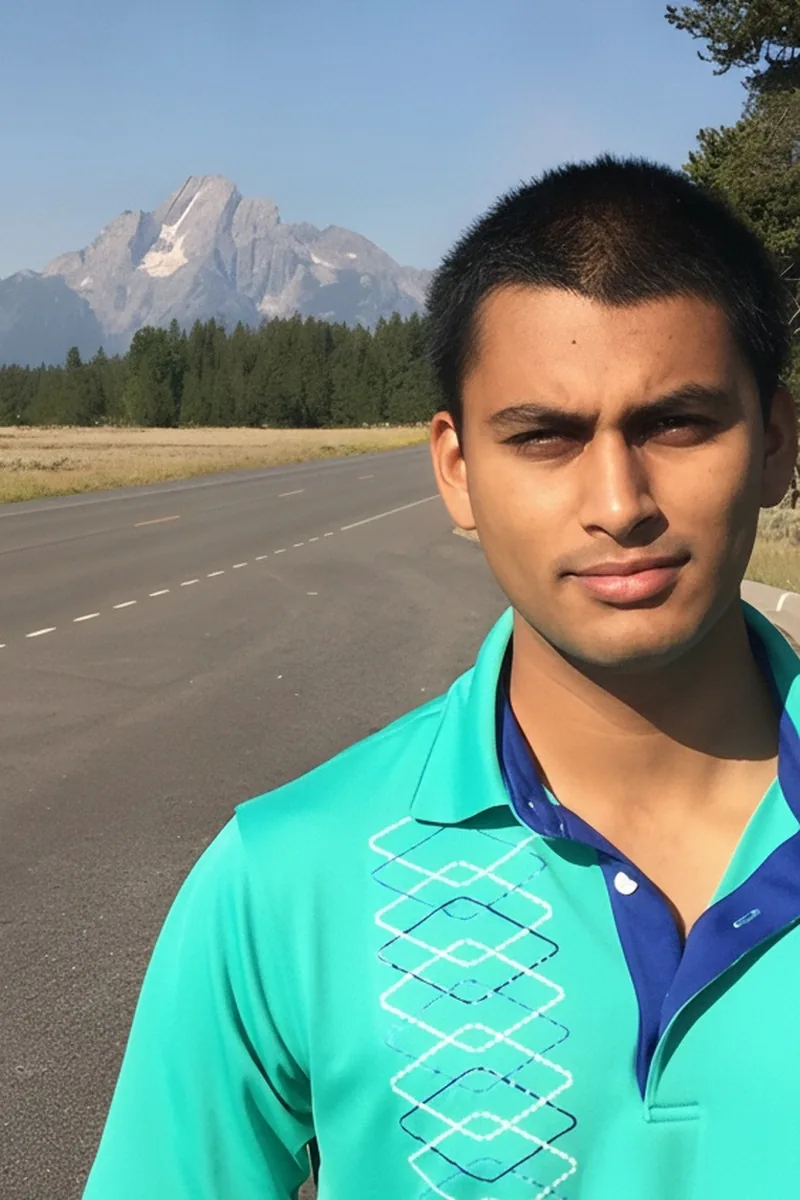
I am currently working on my doctorate in Environment and Resources at Wisconsin-Madison, studying tiger ecology and conservation with sub-field foci on predator ecology, and modeling population dynamics.
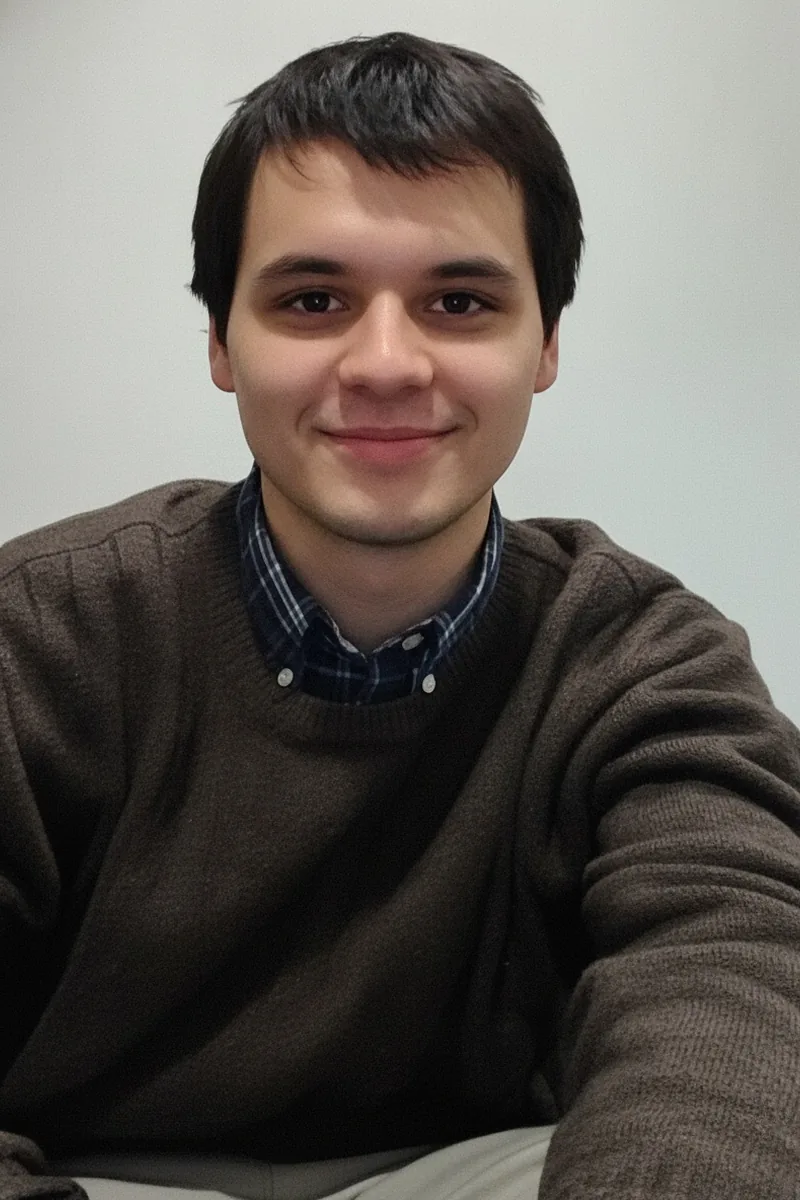
I am currently an undergraduate student at Cornell University. I intend to major in physics and either minor or double major in computer science.
I'm Richard and I love teaching. There are few things more rewarding than being able to create enthusiasm for a subject area. My favorites are math, physics and music. I grew up Spanish bilingual and can teach in both languages having TA'd college level Spanish courses. I also lived in Germany for a year and can help students with that. I have a B.S. in Math, B.S. in Physics and a masters degree in Atmospheric, Oceanic and Space sciences. I also work as a professional musician and am a very organized and dedicated freelancer.
I am attending a lecture about The Great Gatsby, I will be eager if the speaker tells of the beauty she sees, rather than a quick and dirty type of analysis. I regularly talk to people who admit math wasn't their favorite subject in school. Some were self-conscious. Some had gaps they never filled. Some just didn't care. Whatever the case, I admit to them that math is my favorite art form with as much room for expression as sculpting or jazz. I claim that mathematicians are half artists, half observers of fine art. My conversants often tell me it is an epiphany for them to think of math as such, and that it helps heal their math wound. A marvelous way I have found to unveil beauty in the classroom is by using surprise. I like to present ideas from a simple perspective, discuss them briefly, then release a theorem. Thales' theorem (the diameter of a circle subtends a right angle to any point on the circumference) is a great example, especially with the aid of Java applets. After playing a bit with triangles by moving points around in a worksheet, it's surprising to be able to connect two structures as basic as a right triangle and a diameter. Next in importance to marveling at beauty, I want students to learn to think critically to solve problems. Understandably, some students have never had guidance past high school drills. All the more, problem solving should be emphasized and revisited throughout college curriculum. I have many years of experience in problem solving competitions and a collection of principles regarding problem solving that I like to follow. One is about inverse problems. Consider the following: if baseball cards are five cents apiece and shipping costs fifty cents, how many cards will one dollar buy? After making the arithmetic clear, students had better know how to calculate the forward problem, i.e. "How much will x number of cards cost?" I'm depending on them knowing the forward problem because we covered it last week, but it is important to bring it out in more than just a mention so the students have a comfortable base to start. It's like revisiting rational numbers before diving into irrationals. They are intrinsically tied, and it gives the class confidence to start with old material.
I am a player on a student's team with the goal of academic success and increased intellectual understanding. This outcome is impossible without getting down to the student's level, utilizing age appropriate vocabulary, providing constructive criticism, and establishing their baseline.
I am a University of Missouri - Columbia graduate, and umpire for minor league baseball. I started teaching because I genuinely enjoy math (even though I haven't always) and believe it is important for students to excel in math.
I am an international student from China graduating from University of Wisconsin Madison majoring in Math. I also studied in Bonn University in Germany for one semester. While I was in UW Madison, I tutored college students enrolled in up to 13 math courses and entry level German courses both in large groups and individually. I am enthusiastic in teaching what I know and helping others develop problem solving skills by well explaining both concepts and specific related problems. I believe that everyone is unique. It is my pleasure to assist everyone to develop their own way to study based on their strength and weakness.
I'm an electrical engineering major at Brown University with interests in neuroscience, linguistics, and robotics, among other things. I've always loved learning, and my curiosity has led me through numerous subject areas. I constantly seek to apply my classroom learning in practical situations. For example, I have conducted research on dementia using electrophysiology in a mollusk model. I participate in hackathons and robotics challenges that test not only my programming ability but also my hardware skills as a tinkerer. My engineering pursuits require a strong foundation in mathematics, my interest in the life sciences calls for a myriad of memorization techniques, and my participation in the academic world at large reminds me daily of the importance of sharp writing skills. I hope to share some of these things, both content and technique, with my students. Though I will make sure that they can come away from each session armed with the skills needed to take on the modern education system, I also hope that they will take with them some appreciation for learning itself.
A chemical and biomolecular engineering degree means Steve spent years applying thermodynamics, fluid mechanics, and electromagnetism to real systems — the same core principles that drive AP Physics 1 and 2. He's particularly sharp at teaching students how to connect free-body diagrams to Newton's laws and energy bar charts to conservation principles, building the kind of physical intuition the exam's qualitative questions demand. Rated 5.0 by students.
I am now a medical student at Robert Wood Johnson Medical School.
I am an aspiring applied mathematician, with particular interest in image processing and climate science. I graduated in May 2017 from Washington University in St. Louis with a bachelor's in physics and mathematics, and am beginning a PhD program in September 2017 at the University of Chicago in Computational and Applied Mathematics. I've tutored introductory physics students for three years and enjoyed it thoroughly, as a chance to help other students while revisiting fundamental concepts to enhance my own knowledge. I'm eager to continue reaching out and helping students of math and physics to succeed and, furthermore, to appreciate the beauty and power of these subjects.
I'm a freshman at Stanford University pursuing a degree in mathematical and computational science. I've been tutoring students from grades 3-12 throughout high school, and I look forward to continue in college. Nothing excites me more than learning something new, and I strive to share my excitement with my tutees.
I'm a sophomore at Vanderbilt University, majoring in Physics and Classics and minoring in Mathematics and Computer Science. I'm qualified to teach a wide variety of subjects, but prefer to focus on the fields I'm studying in school listed above; I have a passion for those areas that I want to share with everyone, no matter the education level or confidence. I believe that no one is "bad at math," but many people haven't been taught math and science concepts in a way that matches how they best learn. As a result, I try to tailor my teaching style to be the best it can be for each individual student. With regard to math and physics, I myself prefer a physical, graphical understanding of different concepts, so I do best at explaining what seemingly abstract concepts actually mean in the real world and how they act on a graph.
I am still involved in peer tutoring among my friends and classmates.
I am a Brown University graduate with an Sc. B. in Neuroscience and an A.B. in Economics. Although I tutor a range of different subjects, I enjoy tutoring Physics and Math the most. I am passionate about tutoring because I like guiding my students and helping them see problems in a much less complicated way. I have 5+ years of experience teaching and tutoring students of all levels from elementary school to college. Over the past years, I have loved seeing the same students who had difficulty in the subjects become masters in them under my assistance when I taught them simpler approaches. Looking forward to working with you :)
I am currently a student at Brown University seeking a degree in molecular biophysics. I love studying physics and its many applications in the realms of the life sciences. I have a strange penchant for ultimate frisbee and anything that involves golf (mini golf, frisbee golf, actual golf, etc.). One can often find me at Clark Park or Walnut Greens trying to shoot for par or die trying.
I'm a senior undergraduate at Yale University studying biomedical engineering and will be starting my Ph.D next year. I was born and raised in Philadelphia and have travelled to a few other countries through study abroad programs and international conferences. I've been to China several times and love to practice my Chinese with others!
I am a third year electrical engineering student at Princeton University, with a focus in applied physics, and minors in German studies and history. I want to tutor because I am always excited about learning new things, and I want to share this with students of all ages. I find that this way, a student can do difficult work, excel, and feel both accomplished and happy. I have a broad range of specialties, from physics, to programming in Java and C, to German, to test prep and college applications help. I also love workshopping all kinds of writing, whether personal or academic. Some of my qualifications include physics research at a Max Planck Institute and acceptances to Harvard and UC Berkeley. I have experience teaching environmental science to children at a botanical garden and volunteering as a reading tutor for elementary schoolers behind grade level.
I am available to help students with any topics they are struggling with in their high school or early college-level Physics courses.
Testimonials
Because the right AP Physics tutor makes all the difference.
Average Session Rating – Based on 3.4M Learner Ratings
Nearby AP Physics Tutors
Other Milwaukee Tutors
Related Science Tutors in Milwaukee
Frequently Asked Questions
AP Physics covers mechanics, energy, waves, electricity, magnetism, and modern physics—a broad range of concepts that build on each other. Personalized 1-on-1 instruction helps you focus on the areas where you're struggling most, whether that's kinematics, circular motion, or electromagnetism. A tutor can break down complex concepts into digestible pieces and connect them to real-world applications, making the material stick better than lecture-based learning alone.
Score improvement depends on your starting point and how consistently you engage with tutoring, but most students see meaningful gains when they work with a tutor to identify weak areas and practice problem-solving systematically. Many students improve by 1-2 score points on the AP scale (1-5), which can mean the difference between a 3 and a 4, or a 4 and a 5. The key is combining tutoring with regular practice and active review between sessions.
Timing is one of the biggest challenges on AP Physics—you have about 1.5 minutes per multiple-choice question and need to manage your time across the free-response section too. A tutor can teach you strategic approaches like identifying which problems to tackle first, recognizing common question formats, and knowing when to skip and return to a question. Practice tests under timed conditions are essential; working through these with a tutor helps you build speed without sacrificing accuracy.
Students often struggle with conceptual understanding versus plug-and-chug problem-solving, especially in mechanics and electromagnetism. Many also find it hard to visualize abstract concepts like fields and waves, or to set up free-response problems correctly. Personalized tutoring addresses these gaps by helping you build conceptual foundations first, then develop problem-solving strategies that go beyond memorizing formulas.
Test anxiety often stems from feeling unprepared or unsure about your approach to problems. Working with a tutor builds confidence through repeated exposure to different problem types, mastery of key concepts, and success on practice tests. Tutors can also teach you test-day strategies—like how to read questions carefully, check your work, and manage stress—so you feel more in control when exam day arrives.
Practice tests are crucial for AP Physics—they help you identify weak areas, get comfortable with the exam format, and build stamina for the 3-hour test. You should take full-length practice tests under timed conditions, then review every question you missed with your tutor to understand why. This cycle of testing, reviewing, and targeted practice is one of the most effective ways to improve your score.
Look for tutors with strong physics backgrounds—ideally a degree in physics or a related field, plus teaching experience or tutoring experience with AP-level students. It's also valuable if they've scored well on the AP Physics exam themselves or have experience helping other students improve their scores. Varsity Tutors connects you with expert tutors who have been vetted for subject knowledge and teaching ability.
Ideally, start tutoring early in the school year so you can build a strong foundation and address gaps as they emerge, rather than cramming before the May exam. If you're already partway through the course, starting tutoring now can still make a real difference—even a few months of focused work can help you master difficult topics and improve your test-taking strategy. The sooner you identify weak areas, the more time you have to strengthen them.
Let’s find your perfect tutor
Answer a few quick questions. We’ll recommend the right plan and match you with a top 5% tutor.