Award-Winning Physical Chemistry Tutors
serving Milwaukee, WI
Physical Chemistry
Tutors in Milwaukee
Private 1-on-1 tutoring, weekly live classes for academic support, test prep & enrichment, practice tests and diagnostics, and more to elevate grades and test scores.
Based on 3.4M Learner Ratings
UniversitiesSchools & Universities
DeliveredHours Delivered
ProficiencyGrowth in Proficiency
Who needs tutoring?
No obligation. Takes ~1 minute.
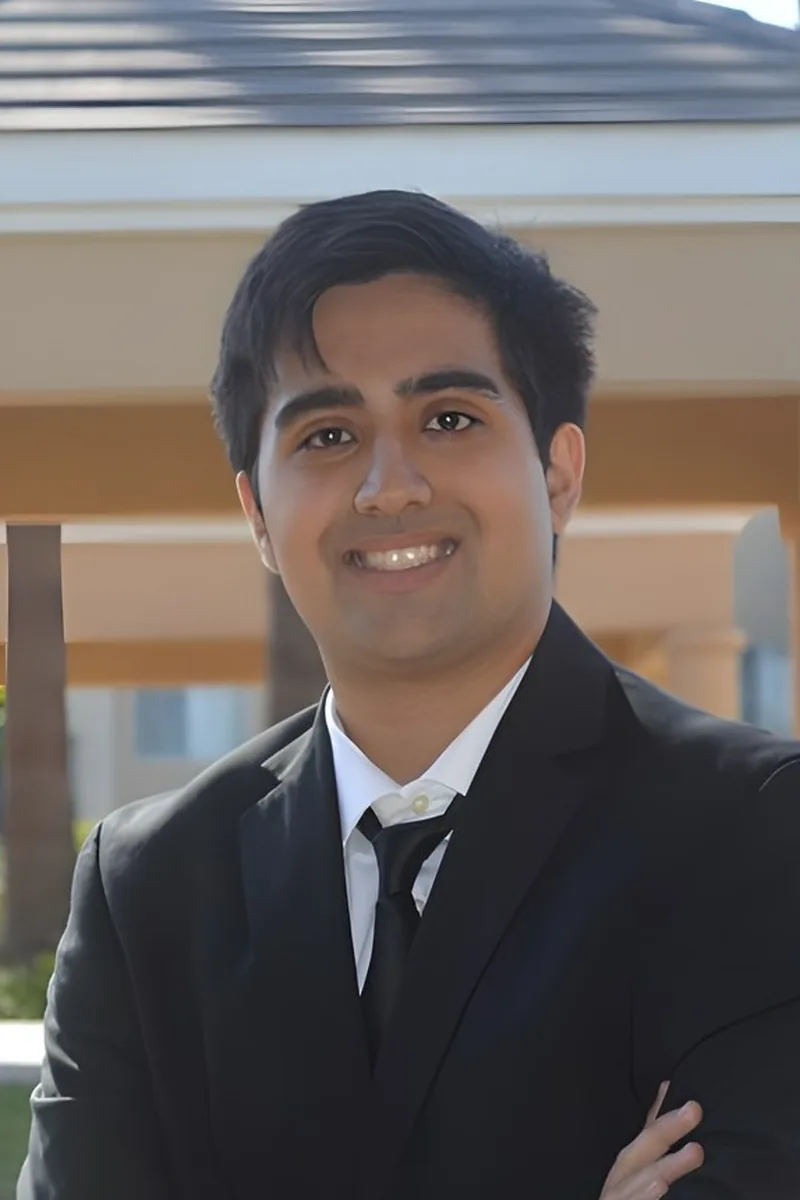
Medical school at the Medical College of Wisconsin means Abrahim encounters p-chem's core concepts daily — reaction kinetics in pharmacology, thermodynamic energy balances in physiology, and the quantum mechanical principles behind spectroscopic diagnostics. His UCLA biology degree and 34 ACT demonstrate the mathematical fluency needed to work through derivations involving state functions, equilibrium constants, and entropy calculations without losing sight of what the chemistry actually describes. Rated 5.0 by students.

Having studied quantum mechanics and electromagnetism as part of his physics degree, Michael already speaks the mathematical language that makes p-chem so demanding — the wave equations, the statistical distributions, the calculus buried inside every thermodynamic derivation. He teaches from the physics side in, explaining why a Boltzmann distribution or a partition function behaves the way it does before layering on the chemical context that gives it practical meaning.
A physics degree gives Cory something many p-chem tutors lack — native comfort with the quantum mechanics and statistical mechanics that chemistry students often encounter for the first time in this course. He treats topics like wave functions, partition functions, and thermodynamic state variables as extensions of the physics he already thinks in, then builds the chemical context around them. Rated 4.9 by students.
Thermodynamic state functions, quantum mechanical models, and kinetic rate laws all converge in Physical Chemistry, and most students need someone who can bridge the math and the chemistry simultaneously. Abismael's chemical engineering training put him through the full gauntlet — partial differential equations applied to heat transfer, Gibbs free energy calculations for phase equilibria, statistical mechanics. He explains each derivation from multiple angles and tests understanding with problems designed to be harder than what shows up on the exam.
A chemistry B.S. means Edward didn't just pass p-chem — he built his degree around it, working through the thermodynamic derivations, quantum mechanical models, and kinetics frameworks that the course demands at full rigor. That direct grounding in the subject lets him zero in on where a student's understanding breaks, whether it's a shaky grasp of partial derivatives in a Maxwell relation or confusion about what a wave function actually represents. Rated 5.0 by students.
Thermodynamics, quantum mechanics, kinetics — physical chemistry is where math and chemistry collide, and most students need a tutor comfortable in both languages. Natasha's chemical engineering degree gave her deep fluency with partition functions, phase diagrams, and rate laws, and her MIT graduate work keeps those concepts sharp. She approaches p-chem by deriving key equations alongside students so the physics behind each formula becomes visible.
Thermodynamics, quantum mechanics, and kinetics all collide in physical chemistry, and the math intensity alone can be overwhelming. As a chemistry major at TCU who's worked through p-chem coursework firsthand, Nathan breaks down derivations — partition functions, the Schrödinger equation, phase diagrams — into manageable logical steps. He connects the heavy math back to the physical meaning so equations stop feeling arbitrary.
As an MD/PhD student at Northwestern with a chemistry PhD focus and a B.S. in Chemical Science from Michigan, Austin has gone deep on the thermodynamics and quantum mechanics that form p-chem's backbone — and he's still actively working through advanced coursework in these areas. He tackles derivations by building chemical intuition first, so when a student hits a wall at, say, a Legendre transform connecting internal energy to Gibbs free energy, the math follows naturally from understanding what each variable physically represents.
Mechanical engineering at Rice means Aleksey has been solving thermodynamic cycles, heat transfer problems, and differential equations for years — the exact mathematical toolkit that p-chem throws at students in a chemistry wrapper. He breaks down topics like entropy, enthalpy, and phase equilibria by treating them as engineering problems first, then layering in the molecular-level chemistry that gives each variable its meaning. Rated 5.0 by students.
Garrett's biology degree means he already thinks in terms of systems — enzyme kinetics, membrane potentials, metabolic energy flow — which gives him a concrete anchor for the abstract math that makes p-chem so intimidating. He teaches thermodynamic and kinetic concepts by connecting derivations to the biological and chemical phenomena they describe, so something like a Gibbs free energy calculation feels like a tool rather than an exercise in symbol-pushing.
Cornell's chemical engineering curriculum puts you through p-chem at an intense pace — Rahul graduated magna cum laude, which means he didn't just survive thermodynamics, quantum mechanics, and kinetics but internalized the reasoning behind each derivation. He pushes past rote symbol manipulation to make sure students can articulate why a particular state function applies or what a phase boundary physically represents. Rated 4.9 by students.
Thermodynamic potentials, quantum mechanical models, kinetic rate laws — physical chemistry demands comfort with both rigorous math and chemical intuition simultaneously. Mark's chemical engineering degree from Yale required multiple semesters of p-chem coursework, and he tackles the subject by grounding intimidating derivations in the physical phenomena they describe. He's especially strong at walking through the calculus embedded in topics like entropy and partition functions.
Medical school at Tufts demands fluency in the thermodynamics and kinetics that p-chem students dread — Eric works through Gibbs free energy calculations, entropy-driven processes, and rate equations daily in a clinical science context, which keeps the material grounded rather than purely abstract. His economics background also sharpens the kind of quantitative modeling and equilibrium thinking that translates surprisingly well to topics like chemical potential and phase diagrams.
Thermodynamics, kinetics, and quantum mechanics all converge in physical chemistry — and that's exactly where Monika's biochemistry and molecular biology training intersects. She breaks down intimidating topics like Gibbs free energy calculations and reaction rate laws by tying them to real chemical systems she studied during her PhD research. Rated 4.8 by students.
Testimonials
Because the right Physical Chemistry tutor makes all the difference.
Average Session Rating – Based on 3.4M Learner Ratings
Nearby Physical Chemistry Tutors
Other Milwaukee Tutors
Related Science Tutors in Milwaukee
Frequently Asked Questions
Physical Chemistry combines abstract theoretical concepts with complex mathematics, making it one of the most challenging chemistry courses. Students often struggle with visualizing molecular-level phenomena, mastering thermodynamics and kinetics equations, and understanding how theoretical principles apply to real lab work. Personalized tutoring helps break down these interconnected topics and build both conceptual understanding and problem-solving confidence.
Your first session is focused on understanding your specific challenges and learning goals. A tutor will assess your current knowledge of foundational concepts like stoichiometry and thermodynamics, identify gaps that might be holding you back, and create a personalized plan tailored to your course pace and upcoming exams. This collaborative approach ensures every session builds directly on your needs.
Physical Chemistry can feel disconnected from reality when you're only working through equations on paper. Expert tutors help you see how concepts like entropy, equilibrium, and reaction rates apply to everything from battery chemistry to atmospheric processes. By connecting abstract theory to tangible examples and lab work, tutoring makes the subject more intuitive and memorable.
Yes. Tutors help you understand the scientific reasoning behind experiments, interpret data correctly, and connect lab results back to theoretical concepts you're learning in class. Whether you're struggling with experimental design, data analysis, or writing lab reports, personalized instruction ensures you develop both technical skills and deeper scientific thinking.
Absolutely. Physical Chemistry requires comfort with calculus, logarithms, and unit conversions—and many students find the math barrier more challenging than the chemistry itself. Tutors work with you on both the mathematical skills and the chemistry concepts simultaneously, so you understand not just how to solve an equation, but why that equation matters for the chemistry problem.
Starting 4-6 weeks before a major exam gives you time to build understanding of difficult topics rather than cramming. However, even shorter-term tutoring can help if you focus on your biggest problem areas. A tutor can help you prioritize what to study, practice problem-solving under timed conditions, and review concepts you find most confusing.
Look for tutors with strong backgrounds in chemistry or chemical engineering who can explain both the 'what' and the 'why' behind concepts. Experience helping students at your level—whether high school AP Chemistry or college Physical Chemistry—matters. The best tutors can translate complex ideas into clear explanations and help you develop problem-solving strategies that work for you.
With an average student-teacher ratio of 20.5:1 across Milwaukee schools, classroom instruction often can't address individual learning gaps in a subject as demanding as Physical Chemistry. Personalized 1-on-1 instruction lets you move at your own pace, ask questions without hesitation, and get targeted help on the specific concepts holding you back—whether that's quantum mechanics, thermodynamics, or kinetics.
Let’s find your perfect tutor
Answer a few quick questions. We’ll recommend the right plan and match you with a top 5% tutor.