Award-Winning AP Psychology Tutors
serving Milwaukee, WI
Award-Winning
AP Psychology
Tutors in Milwaukee
Private 1-on-1 tutoring, weekly live classes for academic support, test prep & enrichment, practice tests and diagnostics, and more to elevate grades and test scores.
Based on 3.4M Learner Ratings
UniversitiesSchools & Universities
DeliveredHours Delivered
ProficiencyGrowth in Proficiency
Who needs tutoring?
No obligation. Takes ~1 minute.
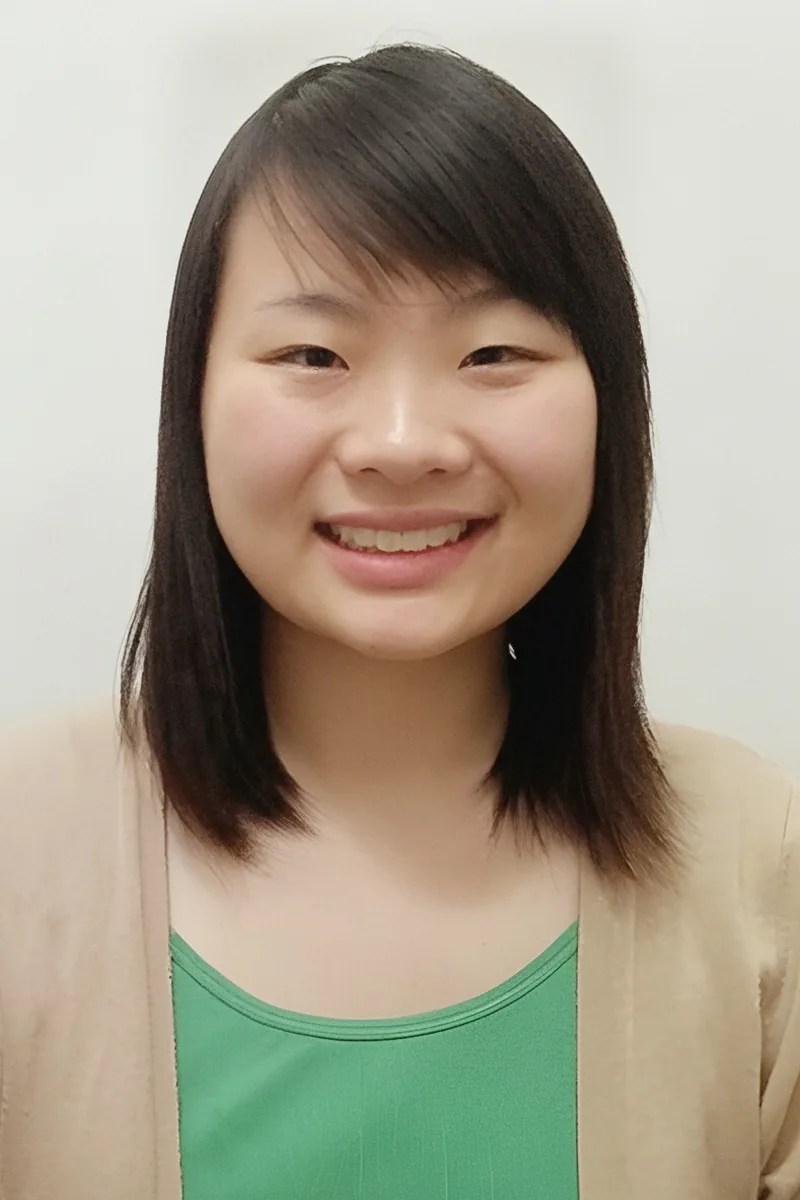
A psychology and linguistics degree from the University of Chicago means Sherry didn't just survey the AP Psych curriculum — she studied the underlying science of language, cognition, and behavior at a research university where the field's foundational theories were developed. That linguistics training is especially useful for the language-and-thought debates in the cognition unit and for unpacking Chomsky, Whorf, and the biological underpinnings of communication that the exam tests in ways students rarely expect. Rated 5.0 by students.
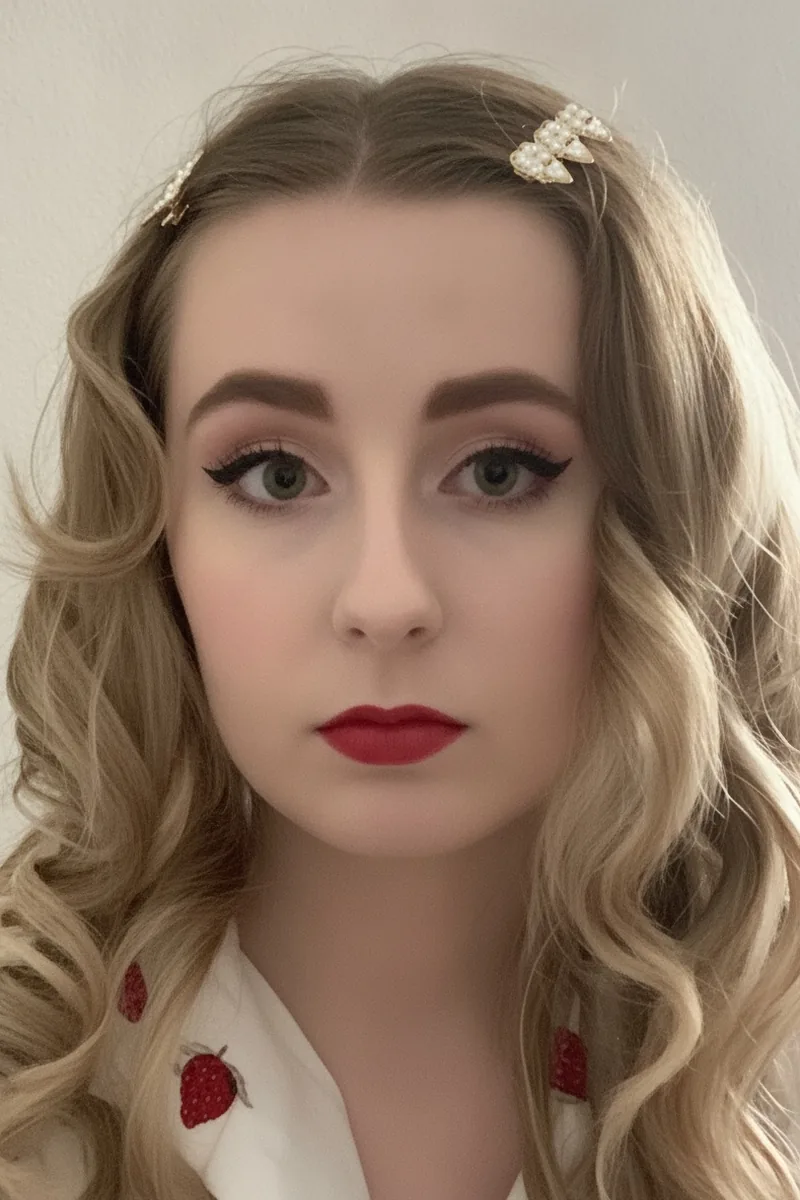
Having earned both a psychology degree and a Doctor of Medicine, Sydny has studied the AP Psych curriculum from two distinct angles — the theoretical frameworks in units like developmental and abnormal psychology, and the biological underpinnings of behavior that her medical training made tangible. She breaks down the interplay between neurotransmitters, brain structures, and clinical diagnoses with the specificity of someone who carried those concepts from a psych lecture hall into anatomy labs and clinical rotations.
Brian's economics training at Caltech — heavy on behavioral models, decision theory, and statistical reasoning — gives him a quantitative angle on AP Psychology that's especially useful in the research methods unit and anywhere the exam tests concepts like heuristics, framing effects, or rational choice. His 1580 SAT also means he's sharp on the reading-and-argument skills that drive free-response scoring, where students need to define terms cleanly and apply them to unfamiliar scenarios under time pressure.
Matthew's pre-med track at Yale pairs biochemistry with philosophy — a combination that pays off in AP Psychology, where the biological bases of behavior unit demands real science fluency and the free-response section rewards precise, logically structured arguments. His hands-on work with tools like CRISPR-Cas9 in a research lab gives him a concrete way to explain neural signaling, genetics of behavior, and neurotransmitter pathways that most students only encounter as textbook diagrams. Rated 5.0 by students.
Martha's PhD research at Michigan sits at the intersection of culture and self-concept — the exact territory AP Psychology's social psychology and personality units cover, except she's generating original data on it, not just reviewing textbook summaries. That active research background, built on a Duke psychology degree and global health training, gives her a way to teach concepts like attribution theory, conformity, and identity formation through real cross-cultural examples rather than Western-only defaults. Rated 5.0 by students.
Natalie's neurobiology major at Penn means she's studied the brain systems behind AP Psych's biological bases of behavior unit — neural signaling, neurotransmitter pathways, brain anatomy — in far more depth than the course requires, which lets her explain those concepts with real precision rather than surface-level definitions. That science backbone also sharpens how she approaches units like sensation-perception and memory, where understanding the underlying biology turns abstract terminology into something students can actually reason through on free-response questions.
Tashina earned her PhD in Psychological and Brain Sciences, so the AP Psych curriculum — from operant conditioning to the intricacies of the DSM — is territory she's navigated at the research level, not just the introductory one. Her statistics expertise is particularly useful for the research methods unit, where she breaks down experimental design, p-values, and confounding variables with the fluency of someone who runs studies rather than just reads about them. She also brings sharp writing instincts to the free-response section, coaching students to define terms with precision and apply them cleanly to scenario prompts.
Todd's Master of Social Work gives him direct clinical exposure to concepts that dominate AP Psychology's abnormal psychology and social psychology units — diagnostic frameworks, group dynamics, cognitive-behavioral models — all material he's applied in practice, not just studied in a textbook. His biology undergraduate degree also means the biological bases of behavior unit, from neurotransmitter pathways to brain structure, clicks naturally rather than feeling like a detour from the social science content. Rated 5.0 by students.
Cognitive science at Rice meant Adam studied the AP Psych curriculum from the inside out — perception, memory, language processing, and the neural underpinnings of behavior were core coursework, not elective reading. That training makes him especially sharp on the cognition and biological bases units, where he connects concepts like dual-process theory and neural plasticity to the real research behind them rather than treating them as isolated vocabulary terms.
Ian's premed coursework gives him a solid handle on the biological bases of behavior — neurotransmitter systems, brain anatomy, hormonal influences — while his breadth across biology, Spanish, and literature means he can pull examples from multiple disciplines when explaining concepts like language acquisition or cultural influences on perception. He tackles the free-response section by drilling students on precise term application, turning vague definitions into the kind of specific, scenario-linked answers that earn full credit. Rated 5.0 by students.
Linguistics at Yale trains you to analyze how language shapes thought, perception, and social interaction — concepts that map directly onto AP Psychology units like cognition, memory, and social psychology, where understanding how people process and communicate information is half the battle. William brings that analytical lens to the free-response section too, where his writing background and 5.0 rating reflect how well he coaches students to define terms with precision and build scenario-based answers that earn full credit.
Neuroscience and psychology overlap more than most AP students realize — concepts like neurotransmitter function, brain lateralization, and action potentials show up heavily on the AP Psychology exam. Rithi's neuroscience degree and current medical training mean she can explain the biological underpinnings behind every major psychological theory rather than asking students to memorize disconnected terms. Rated 4.9 by students.
Elliot's PhD in Neuroscience means the biological bases of behavior unit — neurotransmitter systems, brain lateralization, neural plasticity — is his actual research territory, not a chapter he's reviewing from a prep book. That depth reshapes how he teaches the rest of the AP Psych curriculum too: units like sensation-perception, memory, and abnormal psychology all snap into focus when a student genuinely understands the neural machinery underneath. Rated 5.0 by students.
Dental school requires mastering the same biological foundations that underpin AP Psychology's toughest unit — Nik knows neurotransmitter pathways, neural signaling, and brain anatomy from his predentistry and biology training, not from flashcards. His 32 ACT also means he's familiar with the kind of timed, high-stakes testing where precise terminology and quick recall matter, which he channels into coaching students through the vocabulary-dense units like learning theory and memory. Rated 4.9 by students.
Neuroscience is Alex's self-described favorite subject, and that shows up most clearly in how she tackles AP Psychology's biological bases of behavior unit — breaking down neurotransmitter systems, brain regions, and neural pathways with the depth of someone heading into a doctorate program at Washington University's OT school this fall. Her psychology major and neuroscience minor mean the rest of the curriculum, from developmental theory to abnormal psychology, draws on coursework she's already completed with honors. Rated 5.0 by students.
Alyssa's psychology coursework — she tutors multiple psychology subjects alongside her math degree at Vanderbilt — means she approaches AP Psych's statistics-heavy research methods unit with genuine fluency, breaking down concepts like standard deviation, correlation vs. causation, and statistical significance that trip up students who haven't taken a dedicated math course. Her 34 ACT and 5.0 rating speak to the precision she brings to the free-response section, where she coaches students to structure tight, term-specific answers rather than vague summaries.
Economics at Duke teaches you to model how people make decisions under uncertainty — which is essentially what AP Psychology's cognition, motivation, and social psychology units are about, just with different vocabulary. Devanshi leans on that behavioral economics overlap to make concepts like heuristics, cognitive biases, and group decision-making feel intuitive rather than like a wall of flashcards. Her 35 ACT also signals the kind of precise, fast reading that pays off on the exam's dense multiple-choice passages.
Hidefusa didn't just take a psych course — he earned a BA in Psychology from NYU, then completed a clinical psychology master's at Harvard before pursuing a PhD in Clinical Neuropsychology, which means he's studied the AP Psych curriculum at every level from introductory to doctoral. That depth is especially visible in the research methods unit, where his proficiency in SPSS and Stata lets him teach experimental design, statistical significance, and data interpretation as tools he actually uses rather than definitions to memorize. Rated 4.9 by students.
A biology major at Cornell, Drishti brings genuine science fluency to the biological bases of behavior unit — but her edge in AP Psych is actually how she bridges that biology knowledge into the more conceptual units like memory, learning theory, and sensation-perception, where students often lose points by treating terms as disconnected vocabulary. She tackles free-response prep by drilling students on precise term application within scenario prompts, a skill her own 1500 SAT writing practice sharpened. Rated 5.0 by students.
Studying cognitive science on a pre-med track at Rice, Natalie digs into the overlap between brain structure and behavior every day — exactly the territory AP Psych tests hardest. She's especially sharp on the cognitive and biological units, breaking down topics like memory models, perception, and states of consciousness in ways that go beyond vocabulary flashcards and into the kind of conceptual reasoning the exam's scoring rubrics actually reward.
Medical school immerses Evelyn in the very systems AP Psychology tests — neurotransmitter pathways, brain anatomy, stress physiology, abnormal behavior classifications — so she teaches the biological bases and abnormal psychology units with clinical specificity rather than flashcard-level definitions. Her experience learning English as a second language also gives her a practical understanding of the language-and-cognition topics in the curriculum, from Whorfian linguistic relativity to how memory encoding shifts across languages.
Having studied psychology alongside microbiology and the biological sciences, Felix brings a dual lens to AP Psych — particularly in units like biological bases of behavior and sensation-perception, where his science training makes neurotransmitter pathways and neural signaling click rather than feel like rote vocabulary. He also teaches the research methods unit with the rigor of someone trained in scientific methodology, breaking down experimental design and variable identification in concrete terms. Rated 5.0 by students.
Studying neuroscience at Johns Hopkins means Christopher encounters AP Psychology concepts — from neural signaling and brain anatomy to memory encoding and cognitive biases — in his own coursework on a daily basis. He breaks down dense units like biological bases of behavior and research methods by tying them to real experiments and clinical examples. Students preparing for the AP exam get someone who understands both the science and the test format.
I am a sophomore at Duke University with a strong academic background and a passion for helping students build both confidence and mastery in challenging subjects. Having recently completed AP coursework myself, I understand not only the content but also the strategies needed to succeed under time pressure, particularly on exams and free-response questions. My approach to tutoring is highly structured but adaptable. I focus on breaking down complex concepts into clear, manageable steps while reinforcing patterns that help students recognize how to approach different types of questions. I also emphasize active learningworking through problems together, identifying mistakes, and developing efficient study methods that students can apply independently. In addition to content review, I help students improve test-taking skills, including time management, question interpretation, and organization of written responses. I aim to create a supportive environment where students feel comfortable asking questions and engaging with the material at a deeper level. I am reliable, responsive, and committed to meeting students where they are, whether they need ongoing support or targeted help before an exam. My goal is not only to improve grades but to help students feel more confident and capable in their academic work.
A psychology major at the University of Chicago with a neuroscience specialization, Emerson lives and breathes the material that shows up on the AP Psychology exam — from Piaget's developmental stages to action potentials and neurotransmitter pathways. He connects textbook concepts to the actual research studies that College Board loves to test, making free-response questions far less intimidating. Rated 5.0 by students.
As a psychology major who currently directs a research study on sleep and academic performance in adolescents, Margaret brings AP Psychology concepts like experimental design, neuroscience, and developmental theory out of the textbook and into real-world context. She knows which free-response question formats the exam favors and teaches students to write answers that earn full credit by hitting every scoring rubric point.
A biology master's student researching evolution and bioanthropology, Alex brings a lens to AP Psychology that's rooted in how organisms actually develop and behave — making units like biological bases of behavior and developmental psychology feel like natural extensions of what he already studies. His dual English and Theater training at Bowdoin also sharpens the free-response side, where crafting precise, well-structured answers under time pressure is essentially a writing and performance exercise. Rated 4.8 by students.
Shant's psychobiology degree from UCLA means AP Psychology isn't a subject he studied adjacent to — it's the core of his training, from neural signaling and brain anatomy to research methodology and statistical analysis. He breaks down dense units like cognition, abnormal psychology, and sensation/perception by tying them to real biological mechanisms. Rated 5.0 by students, he knows exactly which free-response pitfalls cost points on exam day.
Alexis earned her psychology degree and knows exactly which theories, experiments, and terminology the AP exam emphasizes — from Milgram's obedience studies to the nuances of classical versus operant conditioning. She breaks down the trickiest free-response prompts by teaching students to weave multiple perspectives (biological, cognitive, sociocultural) into a single cohesive answer. Rated 5.0 by students.
Lisa's history training taught her to trace how ideas evolve across time periods — a skill that translates directly to AP Psychology, where understanding the progression from Freud to cognitive-behavioral frameworks makes dense theory units like personality and abnormal psychology far more intuitive than rote memorization allows. Her strong writing and editorial background also gives her a practical edge coaching students through free-response questions, where defining terms like "schema" or "self-serving bias" with precision and applying them to scenario prompts is what separates 3s from 5s. Rated 4.9 by students.
With degrees in both mathematics and psychology from UCLA, Professor Florence teaches AP Psychology the way the exam actually tests it — connecting research methodology and statistical reasoning to every major unit, from learning theory to abnormal psych. That dual background means topics like experimental design, correlation vs. causation, and interpreting data feel intuitive rather than bolted on, which is exactly where many students quietly lose points on both multiple-choice and free-response sections.
Nicole's chemistry background gives her a tangible way to teach the biological bases of behavior unit — she explains neurotransmitter pathways and synaptic signaling with the precision of someone who studied those molecules, not just their psychological effects. Her English literature training then kicks in for the free-response section, where she coaches students to construct tight, definition-rich answers that don't waste words. Rated 5.0 by students.
Architecture school at Columbia demands understanding how people perceive, navigate, and emotionally respond to spaces — which means Allison has spent years thinking about sensation-perception, cognition, and motivation in applied contexts that bring AP Psych concepts off the page. Her physics background also gives her a structural approach to the biological bases of behavior unit, where she breaks down neural signaling and brain anatomy with the precision of someone trained in systems thinking. Rated 5.0 by students.
Working in a genetics lab and as an EMT gives Evan an unusual double lens on AP Psychology — he understands the biological bases of behavior unit from his research in genetics and neuroscience, and he's seen concepts like stress response, decision-making under pressure, and abnormal behavior play out firsthand in emergency medicine. That real-world clinical experience makes units like motivation, emotion, and abnormal psychology feel concrete rather than theoretical. Rated 5.0 by students.
The AP Psychology exam covers everything from neurotransmitter functions to Piaget's developmental stages, but the real challenge is distinguishing between concepts that sound nearly identical under time pressure. Lisa breaks down each unit's vocabulary with concrete examples and targeted practice on the kinds of stimulus-based questions the College Board actually asks. Her 5.0 rating speaks to how well that approach translates to exam day.
Robert is currently completing his Master's in Psychology, which means the AP Psych curriculum — from Piaget's stages to the nuances of the DSM — covers ground he's actively working in at the graduate level, not material he's revisiting from an intro course. His research background is especially useful for the research methods unit, where he breaks down concepts like operational definitions, control groups, and statistical significance with the precision of someone who designs studies and is currently working toward publication in peer-reviewed journals.
Political science trains you to analyze how people form beliefs, respond to authority, and behave in groups — which overlaps directly with AP Psychology's social psychology and cognition units, where concepts like obedience, conformity, and groupthink show up on nearly every exam. Linnea pairs that analytical background with strong writing and editing skills, coaching students to construct the kind of precise, term-rich free-response answers that separate 4s from 5s.
Orlando's economics training built real fluency with statistical reasoning and data interpretation — skills that translate directly to AP Psychology's research methods unit, where students need to parse experimental designs, identify variables, and evaluate significance without getting lost in jargon. He also brings strong essay-writing chops from his arts background, which he applies to coaching free-response answers where precise term definitions and clean scenario application separate 4s and 5s from 3s.
A psychology degree gives Maggie direct familiarity with the AP Psych curriculum — she studied the theories of Erikson, Piaget, and Kohlberg in depth, which is especially useful for the developmental psychology unit where students need to distinguish overlapping stage models under exam pressure. Her strong writing and reading background also translates to the free-response section, where she coaches precise term definitions woven into scenario-based answers that earn full credit.
Liana's biological sciences coursework gives her a running start on the AP Psych units that trip up most students — biological bases of behavior, sensation-perception, and the neuroscience threading through topics like memory and motivation. She tackles the terminology-dense sections by tying psychological concepts back to the underlying biology, turning flashcard-style definitions into something students can actually reason through on free-response questions. Rated 4.9 by students.
Testimonials
Because the right AP Psychology tutor makes all the difference.
Average Session Rating – Based on 3.4M Learner Ratings
Practice AP Psychology
Free practice tests, flashcards, and AI tutoring for AP Psychology
Nearby AP Psychology Tutors
Other Milwaukee Tutors
Related Social Sciences Tutors in Milwaukee
Frequently Asked Questions
The AP Psychology exam is 2 hours long and consists of 100 multiple-choice questions (66% of your score) and two free-response essays (34% of your score). The multiple-choice section tests your knowledge across 9 units: scientific foundations, biopsychology, sensation and perception, learning, cognition, motivation/emotion/personality, testing and individual differences, abnormal psychology, and treatment of abnormal behavior. The free-response questions require you to apply psychological concepts to real-world scenarios, so understanding concepts deeply—not just memorizing definitions—is essential for success.
The national average AP Psychology score is around 2.9 out of 5, so scoring a 3 (passing) puts you ahead of many test-takers. With focused preparation and personalized 1-on-1 instruction, students typically improve by 1-2 points on the 5-point scale. The key is identifying your specific weak areas—whether that's understanding research methods, distinguishing between similar psychological theories, or structuring strong free-response answers—and targeting those gaps systematically.
Students often struggle with three main areas: (1) memorizing the sheer volume of theories, psychologists, and studies without understanding how they connect; (2) distinguishing between similar concepts like classical conditioning vs. operant conditioning or different therapeutic approaches; and (3) writing free-response essays that apply concepts rather than just defining them. Additionally, many students underestimate the importance of understanding research methods and statistics, which appear throughout the exam. Personalized tutoring helps you master these concepts deeply rather than cramming isolated facts.
Ideally, you should begin focused AP Psychology preparation 8-12 weeks before the exam in May. If you're taking the course, consistent studying throughout the year is more effective than last-minute cramming. A typical study schedule includes 3-4 hours per week of active learning: reviewing unit notes, taking practice tests, analyzing your mistakes, and applying concepts to case studies. Starting with a tutor early in the course helps you build strong foundational understanding, which makes exam prep much less stressful.
Practice tests are critical—they help you get comfortable with the exam format, identify weak units before test day, and build test-taking stamina. You should take full-length practice tests under timed conditions starting 6-8 weeks before the exam, then review every question you missed to understand why you got it wrong. Many students make the mistake of taking practice tests without analyzing their errors; a tutor can help you identify patterns in your mistakes and develop targeted strategies to address them, whether that's misreading questions, second-guessing correct answers, or gaps in specific content areas.
The two free-response questions require you to apply psychological concepts to novel scenarios, so generic answers won't earn full credit. Strong FRQ responses identify relevant concepts, define them clearly, and explain how they apply to the specific situation in the prompt. Practice writing timed essays (typically 25 minutes each) and learn to structure your response: identify the concept, define it in your own words, and connect it directly to the scenario. A tutor can review your practice essays, give you specific feedback on your reasoning, and help you develop a consistent approach that maximizes points.
Test anxiety in AP Psychology often stems from feeling unprepared or overwhelmed by the volume of content. The best antidote is thorough, strategic preparation: knowing you've mastered the material and practiced under exam conditions builds genuine confidence. Additionally, develop a test-day routine—arrive early, do light review of key concepts, take deep breaths, and remember that you don't need a perfect score to succeed. Working with a tutor throughout your prep helps you feel genuinely ready, which naturally reduces anxiety and allows you to perform at your best.
An effective AP Psychology tutor should have strong knowledge of the AP curriculum and exam format, experience helping students improve their scores, and the ability to explain complex concepts clearly. They should help you move beyond memorization to deep understanding—for example, explaining why certain therapeutic approaches work for specific disorders, or how research methods connect to psychological conclusions. Varsity Tutors connects you with expert tutors for students in Milwaukee who can tailor instruction to your learning style and focus on the areas where you need the most support.
Let’s find your perfect tutor
Answer a few quick questions. We’ll recommend the right plan and match you with a top 5% tutor.