Award-Winning Math Tutors
serving Charleston, SC
Math
Tutors in Charleston
Private 1-on-1 tutoring, weekly live classes for academic support, test prep & enrichment, practice tests and diagnostics, and more to elevate grades and test scores.
Based on 3.4M Learner Ratings
UniversitiesSchools & Universities
DeliveredHours Delivered
ProficiencyGrowth in Proficiency
Who needs tutoring?
No obligation. Takes ~1 minute.
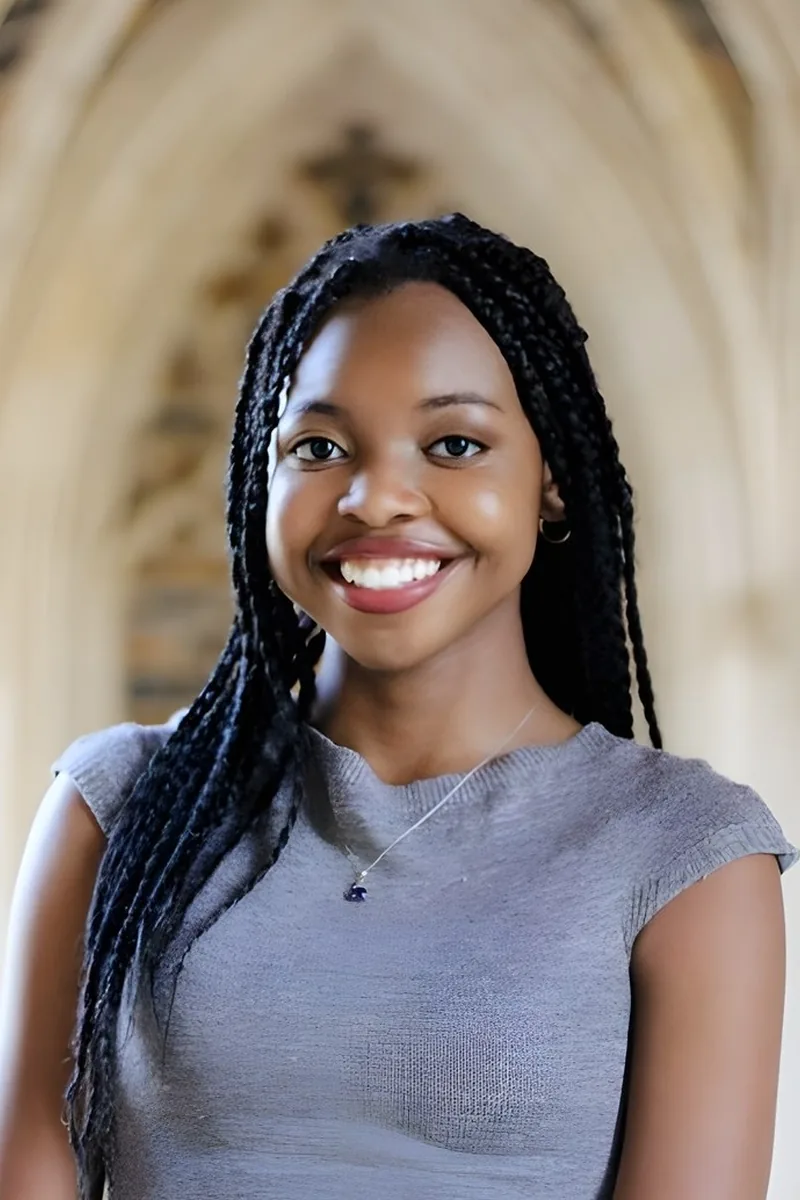
From basic arithmetic to pre-algebra concepts like fractions, ratios, and order of operations, Lenique breaks math problems into clear, repeatable steps that build genuine number sense. Her science background means she naturally connects math to real-world applications — calculating dosages, interpreting data, measuring ingredients — which gives students a reason to care about getting the answer right.
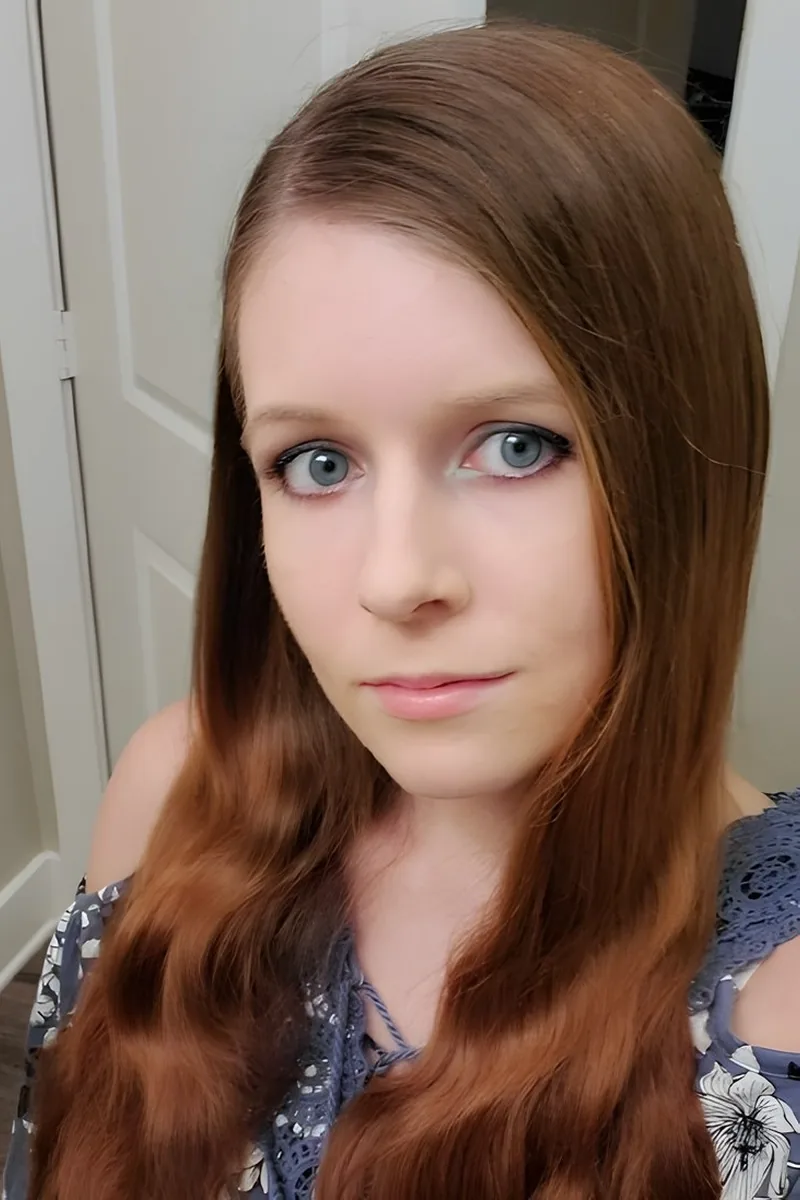
From arithmetic refreshers to early calculus concepts, Katheryn covers a broad math range and knows how to adjust her explanations depending on where a student is. Her chemistry degree required heavy quantitative coursework — calculus, algebra, statistical analysis — so she understands math not just as abstract rules but as tools that solve real problems. She's especially effective at untangling word problems, where translating English into equations trips most students up.
Whether the challenge is fraction operations in elementary school or function transformations in pre-calc, David identifies the specific conceptual gap holding a student back. His science training means he's comfortable with applied math — unit conversions, rate problems, data interpretation — and can show students why the math matters beyond the worksheet.
Whether a student is working through long division or tackling their first equations, Rachael zeroes in on the specific step where confusion starts and rebuilds understanding from that point. She's particularly strong at translating word problems into mathematical setups — a skill that trips up students who can handle computation but freeze when the numbers are buried in a sentence. Math is one of her go-to subjects, and her organized teaching style keeps multi-step problems from feeling chaotic.
From pre-algebra fundamentals through calculus, Kelly covers a wide math range and adapts her explanations to wherever a student is getting stuck. She's particularly good at identifying the specific gap — maybe it's fraction operations buried under an algebra problem, or a shaky grasp of function notation — and addressing that root cause before moving forward.
From fraction operations in middle school to polynomial division in high school, math builds on itself — and one shaky concept can quietly derail everything that follows. Saad's mechanical engineering studies keep him immersed in applied mathematics daily, so he can pinpoint exactly where a student's understanding broke down and rebuild from that specific point. He emphasizes the reasoning behind each step so formulas stop feeling arbitrary.
From fractions to functions, the thread running through every math course is learning to recognize patterns and apply them to unfamiliar problems. Janay's engineering coursework keeps her immersed in math daily — calculus, linear algebra, differential equations — so she can show students where middle and high school concepts are actually heading. She unpacks each problem step by step, making sure the reasoning is clear before moving on.
Whether a student is wrestling with fractions or working through polynomial long division, Garrick pinpoints exactly where the reasoning breaks down and rebuilds from that point. His mathematics coursework gives him a deep bench of strategies for explaining arithmetic, pre-algebra, and early algebra concepts in more than one way until something clicks.
I have a BS in both Mathematics and Chemistry from Emory University and MSc in Quantum Science and Technology from Trinity College Dublin. My master's thesis focused on my research on quantifying causality in quantum systems. As a Tutor, I see it as my job to help you understand what you already know and connect that to what you want to know. I believe the best way to learn any concept is to approach it from several perspectives to develop a more comprehensive understanding and find the framing you find most intuitive. It is my goal to help you develop the skills and confidence to realize how to solve problems on your own and directly identify any misconceptions or gaps in knowledge. I would love to share my passion for science, mathematics, and learning with students that share my passion and enjoy challenging themselves.
I've helped several hundred students in a wide variety of subjects, from executive functioning to computer science to standardized testing. I also help students with general support in math and English. Most of my students are around 9-17, but I work well with students who are older and a little younger as well. I also work very well with students who have specific obstacles or requirements, such as neurodiversity support or schedules that change a lot. Most of my background is in computer science, from my college major to my experience hands-on over the past 10 years. Regardless of the subject, I believe every student's needs are unique and every student is able to achieve great things with the right preparation and support. My number one goal is to provide that whenever I can, both to the student and to their parents. I communicate with parents outside of sessions a lot to establish their expectations, better understand students, and recommend ways they can directly support their children in their journey as well.
From skip-counting in second grade to statistical distributions in high school, Rachelle has tutored math at virtually every level for over a decade. She zeroes in on the specific operation or concept causing confusion — whether that's long division, proportional reasoning, or quadratic functions — and builds understanding step by step rather than rushing to the answer.
I am committed to helping students achieve their academic goals through personalized and engaging sessions. I strive to help students succeed in any way I can.
As a dedicated tutor with experience in elementary and middle school math, as well as standardized test preparation for the SAT, PSAT, and SSAT, I am currently pursuing a Bachelor's degree in Biology at Vanderbilt University. My passion for teaching comes from a desire to empower students to not only master academic skills but also to grow in confidence and independence. I create a supportive environment where questions are encouraged, concepts are broken down clearly, and learning feels both engaging and relevant through interactive methods and real-world applications. Having attended The Hotchkiss School, one of the nation's premier boarding schools, I bring a strong academic background and proven study strategies to my tutoring. I believe every student has the potential to excel, and I am committed to guiding them toward their goals with patience, clarity, and enthusiasm.
I have always loved school and have always had a passion for helping others. From a very young age, I especially loved to read, not only for myself but to others. I look forward to working with students and helping them to reach their goals, whatever they may be.
I'm a Structural Engineering graduate from UC San Diego with a passion for helping students in the math and science fields, as well as SAT/ACT test prep. I've had experience tutoring all subjects up to the high school level, and I strive to create a fun and rewarding environment for students. I've worked with a variety of age groups as a member of the Big Brothers Big Sisters program, and I find it easy to relate to all types of students. When I'm not studying or tutoring, I enjoy playing chess and basketball.
Jennifer's tutoring background spans algebra through calculus, but her real strength in math is translating word-heavy problems into clear steps — a natural extension of her language arts training. She's especially effective with students who understand concepts in class but freeze when facing unfamiliar problem formats on their own.
Keith teaches math at the elementary and middle school level, where the goal is building number sense and confidence with operations, fractions, and early algebraic thinking. He's patient with students who feel stuck and good at finding the specific conceptual gap — whether it's place value, proportional reasoning, or translating word problems into equations — that's holding them back.
Between competition math experience and a Stanford cognitive science degree that included heavy quantitative coursework, David approaches math problems by teaching the reasoning behind each step — whether that's factoring polynomials or setting up related rates in calculus. His 1570 SAT speaks to the precision he brings to mathematical thinking at every level.
Doctoral work in clinical psychology at Duke means Shelley spends her days immersed in statistics, data analysis, and quantitative reasoning — skills she brings directly into tutoring everything from arithmetic through calculus. Her specialty in executive functioning also gives her a practical edge: she teaches students how to organize multi-step problems, manage their scratch work, and catch their own errors before they snowball. Rated 5.0 by students.
Philosophy majors spend four years doing something most people don't associate with math: constructing airtight logical proofs where every step must follow necessarily from the last. Emily's BA in Philosophy from Northwestern built exactly that kind of sequential reasoning, which she now applies to walking through algebraic and arithmetic problems where students need to see why each operation is justified, not just what button to press. Her legal career reinforced that discipline — building a case and solving a multi-step equation aren't as different as they sound.
A triple Bachelor of Science holder, Sung has spent years working through math at every level — from proportional reasoning and equation-solving in middle school to the limit definitions and derivative rules of calculus. He breaks problems into smaller logical steps so students can see the reasoning behind each move, not just follow a memorized procedure.
While Brittney's primary expertise is in English and literature, she also tutors math and brings the same structured, step-by-step reasoning she applies to literary analysis. Her SAT composite of 1440 reflects strong quantitative skills, and she's particularly effective at translating word problems into mathematical language for students who think more verbally.
Years of teaching middle school math at a Boston charter school gave Liz a toolbox of ways to break down fractions, ratios, proportions, and early algebraic thinking so they actually click. She's especially skilled at identifying where a student's understanding breaks down and rebuilding from that exact point — a strength sharpened by her special education training. Rated 4.7 by students and families.
Not every math student needs calculus-level intensity — sometimes the gap is in foundational skills like fraction operations, proportional reasoning, or translating word problems into equations. Connor identifies exactly where the disconnect is and rebuilds confidence from that point, drawing on the quantitative rigor his dual science degrees required.
Not every math tutor comes from a pure math background, and that's actually Lauren's advantage — she learned to break down concepts like linear equations and function behavior through persistence and structured problem-solving rather than intuition. Her approach zeroes in on where a student's reasoning goes off track, then rebuilds that specific step until the logic clicks.
Comparative literature trains you to find structure in complex, layered texts — and Jacob applies that same analytical instinct to math, teaching students to read a problem carefully, identify what's being asked, and map out a logical path to the answer. His 1550 SAT speaks to genuine quantitative fluency, and his experience teaching at the college level means he knows how to break down a concept multiple ways until the right explanation lands.
A biology major at Penn, Shayan brings a scientist's precision to math — breaking down word problems into variables, teaching proportional reasoning through real-world dosage calculations, and making algebra feel like a tool rather than an abstract exercise. His tutoring spans everything from fractions and ratios up through calculus, and he's rated 5.0 by students.
Testimonials
Because the right Math tutor makes all the difference.
Average Session Rating – Based on 3.4M Learner Ratings
Practice Math
Free practice tests, flashcards, and AI tutoring for Math
Nearby Math Tutors
Other Charleston Tutors
Related Math Tutors in Charleston
Frequently Asked Questions
During your first session, a tutor will assess your current math level, understand your specific challenges (whether it's word problems, graphing, or multi-step equations), and learn about your learning style. This helps the tutor create a personalized plan aligned with your Charleston school's curriculum and your goals. You'll also start building confidence by working through problems together and identifying which strategies work best for you.
Many students can follow steps but struggle to understand *why* those steps work—this is where personalized tutoring makes a difference. Tutors help you see the patterns and connections behind formulas and procedures, so you can apply them flexibly to new problems. This conceptual understanding is especially important as math gets more advanced, where memorizing steps alone won't get you through algebra, geometry, or calculus.
Word problems require translating real-world language into mathematical equations—a skill many students find intimidating. Tutors break this down by teaching problem-solving strategies like identifying what you know, what you're solving for, and which operations apply. With guided practice, students learn to recognize problem patterns and build confidence tackling unfamiliar scenarios rather than freezing up.
Absolutely. Math anxiety often stems from past struggles or feeling rushed—personalized tutoring removes both pressures. Working 1-on-1 with a tutor at your own pace, asking questions without judgment, and experiencing small wins builds real confidence. As students start understanding concepts instead of just guessing, they naturally feel more capable and less anxious about math.
Yes. Varsity Tutors connects you with tutors who understand different math curricula and textbook approaches used across Charleston schools. Whether your student is working with a traditional textbook, standards-based materials, or a specific sequence, tutors can align their instruction to reinforce what's being taught in class and fill gaps where needed.
These are common sticking points where students often memorize steps without grasping the underlying concepts. Tutors use visual and hands-on approaches to help students see how equations relate to graphs, why certain steps matter, and how to check their work. Breaking multi-step problems into manageable pieces also helps students track their thinking and catch mistakes early.
Geometry proofs require a shift from computational thinking to logical reasoning—a jump many students find challenging. Tutors help by teaching proof strategies, showing how to connect given information to conclusions, and building comfort with abstract thinking. Regular guided practice with feedback helps students develop the reasoning skills needed for proofs and higher-level math.
Showing work reveals your thinking process, helping teachers identify where misunderstandings happen—and helping you catch your own mistakes. Tutors teach students to organize their work clearly, explain their reasoning, and use proper notation. This habit not only improves grades but also deepens understanding, since writing out steps forces you to think through each part of the problem.
Let’s find your perfect tutor
Answer a few quick questions. We’ll recommend the right plan and match you with a top 5% tutor.