Award-Winning AP Physics C: Mechanics Tutors
serving Charleston, SC
AP Physics C: Mechanics
Tutors in Charleston
Private 1-on-1 tutoring, weekly live classes for academic support, test prep & enrichment, practice tests and diagnostics, and more to elevate grades and test scores.
Based on 3.4M Learner Ratings
UniversitiesSchools & Universities
DeliveredHours Delivered
ProficiencyGrowth in Proficiency
Who needs tutoring?
No obligation. Takes ~1 minute.
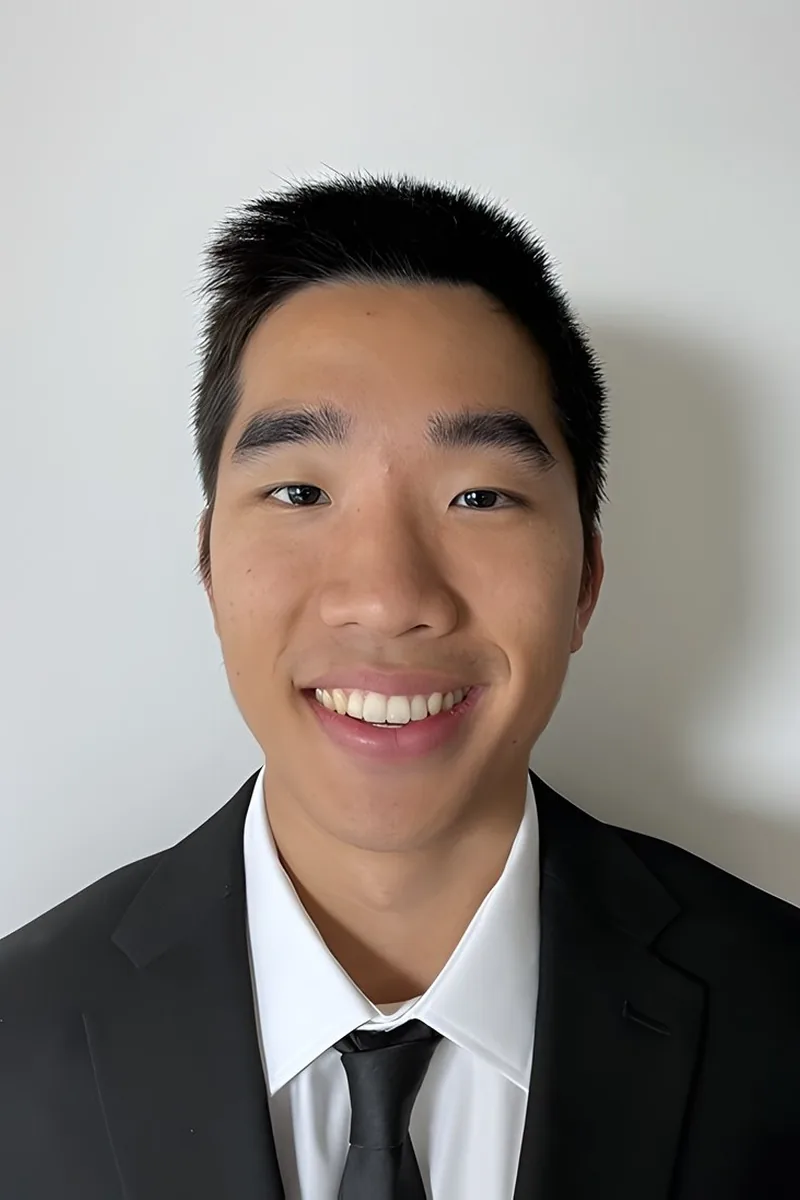
Steven's biology degree from Drexel included the calculus-based physics sequence that maps directly onto AP Physics C: Mechanics — kinematics, Newton's laws in differential form, and energy conservation problems that demand clean integral setups. Where many science-track tutors skim the mechanics, his organismal physiology concentration meant applying force and motion concepts to biological systems, giving him a concrete way to explain why a free-body diagram matters before any calculus happens. Rated 5.0 by students.
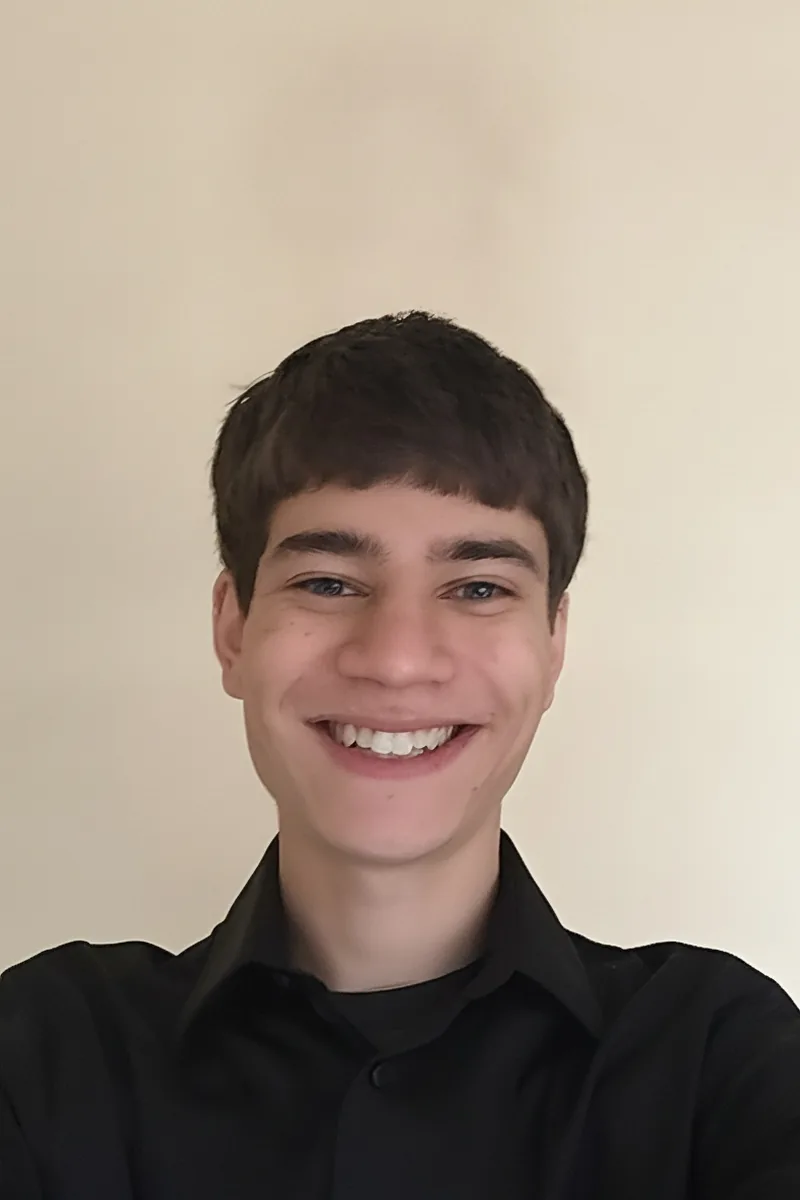
Double-majoring in physics and computer science at Stony Brook, Kiran lives in the calculus-based mechanics world daily — setting up work-energy integrals, deriving equations of motion, solving the same kinds of problems AP Physics C puts on the free-response section. His 34 ACT and physics coursework give him both the mathematical fluency and the physical intuition to explain why a particular integral applies to a given force scenario, not just how to evaluate it.
Rice's physics program throws Will into calculus-based mechanics every day — working through Lagrangian setups, variable-force integrations, and the rotational dynamics problems that make AP Physics C's free-response section so demanding. His approach starts with the underlying physical principle, then builds the math around it piece by piece, so students internalize the reasoning instead of pattern-matching to memorized solutions.
AP Physics C: Mechanics often trips up students who are comfortable with calculus in a math class but freeze when they need to apply it to a pulley system or a variable-force spring problem. Andrew pairs his strong math background — he's pursuing a double focus in finance and mathematics at Boston College — with hands-on physics tutoring across multiple levels, including the SAT Physics subject test. That cross-subject fluency means he can spot whether a student's stuck on the physics setup or the calculus execution and address the right one.
Sanjana's applied math studies at Harvard and her role as a Course Assistant for introductory calculus mean she's fluent in the exact differential and integral techniques that AP Physics C: Mechanics layers onto every force, torque, and energy problem. She's especially effective at bridging the gap when students grasp the physics intuitively but struggle to translate a scenario — say, a block on a spring with friction — into the correct differential equation and solve it cleanly. Rated 5.0 by students.
Designing control systems for Northwestern's solar car means Michael applies Newtonian mechanics, rotational dynamics, and energy conservation principles daily — the exact topics AP Physics C: Mechanics tests. He teaches students to translate word problems into free-body diagrams and then into the calculus-based equations that earn full marks on free-response questions.
Three physics degrees and a 1570 SAT give Bryan the kind of deep mathematical fluency that AP Physics C: Mechanics rewards — particularly on problems where students need to set up differential equations for non-uniform circular motion or derive momentum impulse through integration. He teaches the course across both high school and college levels, so he knows exactly which conceptual leaps trip students up when the exam shifts from straightforward kinematics to multi-step rotational problems. Rated 5.0 by students.
Jared's PhD work in mechanical engineering at Lehigh means he's solving advanced dynamics problems daily — the kind where AP Physics C's rotational kinematics and work-energy integrals are just the warm-up. His biomedical engineering background adds a practical dimension: he can show students how a torque problem on the exam mirrors the same mechanics behind joint loading or prosthetic design, making abstract calculus-based physics feel grounded in something real.
Bettina didn't just study mechanics in a textbook — she earned a PhD in mechanical engineering, meaning she's derived equations of motion for real systems where assumptions about friction, constraints, and rigid-body approximations actually matter. That depth shows up when she teaches AP Physics C: Mechanics topics like rotational dynamics and gravitational potential energy, because she can explain not just how to set up the integral but why that particular model fits the physical situation.
Holding dual degrees in mathematics and physics, Maxwell brings the rare ability to see both sides of every AP Physics C: Mechanics problem simultaneously — the physical intuition and the calculus machinery. Where many students stumble is in translating a free-body diagram into the correct line integral or second-order differential equation; Maxwell treats that translation step as the core skill to master, not an afterthought. Rated 5.0 by students, with a 1520 SAT backing up the quantitative chops.
Cornell pre-med students rarely double down on calculus-based physics, but Pratik tutors AP Physics C: Mechanics alongside AP Chemistry and AP Biology — giving him a cross-disciplinary lens that's especially useful when mechanics problems involve biological or chemical systems in free-response scenarios. His 35 ACT confirms the quantitative fluency needed to walk students through setting up torque equations or integrating variable forces without losing sight of the underlying physics.
Having TA'd multiple engineering courses at WashU while earning dual degrees in mechanical and energy engineering, Ava spent semesters breaking down the same calculus-based force analysis, work-energy theorems, and rotational dynamics that define the AP Physics C: Mechanics curriculum. Her 35 ACT speaks to the quantitative precision she brings to exam prep, and her current graduate work in environmental engineering keeps her fluent in the applied physics and differential equations students encounter on test day.
Testimonials
Because the right AP Physics C: Mechanics tutor makes all the difference.
Average Session Rating – Based on 3.4M Learner Ratings
Practice AP Physics C: Mechanics
Free practice tests, flashcards, and AI tutoring for AP Physics C: Mechanics
Nearby AP Physics C: Mechanics Tutors
Other Charleston Tutors
Related Science Tutors in Charleston
Frequently Asked Questions
AP Physics C: Mechanics focuses on classical mechanics and includes kinematics, Newton's laws, work and energy, momentum, circular motion, and oscillations. The course uses calculus throughout, so strong calculus skills are essential. For students in Charleston preparing for the exam, understanding how these topics connect—especially the relationships between force, acceleration, and energy—is critical for success on both the multiple-choice and free-response sections.
AP Physics C: Mechanics is one of the more rigorous AP exams because it requires both conceptual understanding and strong mathematical skills, particularly calculus. Many students struggle with translating word problems into equations, applying Newton's laws correctly, and managing the time pressure during the exam. Personalized 1-on-1 instruction helps identify whether gaps are in physics concepts or math execution—a distinction that makes tutoring highly effective for improvement.
Score improvement depends on your starting point and consistency, but students typically see meaningful gains—often 1-2 score points—within 8-12 weeks of focused tutoring. The key is identifying your specific weak areas: some students need help with problem-solving strategies, while others need deeper conceptual understanding or calculus application skills. Varsity Tutors connects you with expert tutors who can pinpoint exactly what's holding you back and create a targeted study plan.
Free-response questions require you to show your work and justify your reasoning, which is very different from multiple-choice. The best preparation involves practicing full problems under timed conditions, learning to organize your solutions clearly, and understanding what graders are looking for. A tutor can review your work, point out where you're losing points for incomplete reasoning, and teach you how to structure answers that earn full credit—skills that practice tests alone won't fully develop.
The exam gives you 90 minutes for 35 multiple-choice questions and 90 minutes for 3 free-response problems—pacing is critical. Many students spend too long on difficult multiple-choice questions and run out of time for free-response, where partial credit is possible. Tutors help you develop a strategic approach: which questions to tackle first, how to quickly identify if you're on the wrong track, and how to allocate time based on point value rather than difficulty.
Common mistakes include forgetting to use calculus when needed, misapplying Newton's second law in non-inertial reference frames, confusing energy conservation with momentum conservation, and making sign errors in kinematics. Students also often rush through free-response questions without clearly defining variables or showing all steps, which costs points even when the final answer is correct. Working with a tutor helps you catch these patterns in your own work before test day.
Your first session focuses on assessment and planning. A tutor will review your current understanding, discuss your goals (target score, timeline), and identify your strongest and weakest topic areas through conversation and possibly a practice problem or two. This diagnostic helps create a personalized study plan tailored to your needs—whether you need to build foundational concepts, strengthen problem-solving skills, or refine test-taking strategy. You'll leave with clear next steps and a realistic roadmap to your goal score.
Varsity Tutors connects you with expert tutors who have strong physics and calculus backgrounds and experience preparing students for AP exams. When you get matched with a tutor, you can discuss their specific experience with AP Physics C, their teaching approach, and whether they've helped students improve scores in areas where you need support. The goal is finding someone whose expertise and teaching style align with how you learn best.
Let’s find your perfect tutor
Answer a few quick questions. We’ll recommend the right plan and match you with a top 5% tutor.