Award-Winning College Physics Tutors
serving Columbia, SC
College Physics
Tutors in Columbia
Private 1-on-1 tutoring, weekly live classes for academic support, test prep & enrichment, practice tests and diagnostics, and more to elevate grades and test scores.
Based on 3.4M Learner Ratings
UniversitiesSchools & Universities
DeliveredHours Delivered
ProficiencyGrowth in Proficiency
Who needs tutoring?
No obligation. Takes ~1 minute.

Princeton's mechanical and aerospace engineering program is essentially a four-year immersion in applied physics — Fred spent it solving problems in fluid dynamics, thermodynamics, structural mechanics, and orbital motion, which maps directly onto the topics that fill college physics syllabi. He breaks down force diagrams and energy methods by connecting them to the engineering contexts where those concepts actually get used, making abstract problem sets feel more concrete. His 1550 SAT reflects the quantitative precision he brings to calculus-heavy coursework.
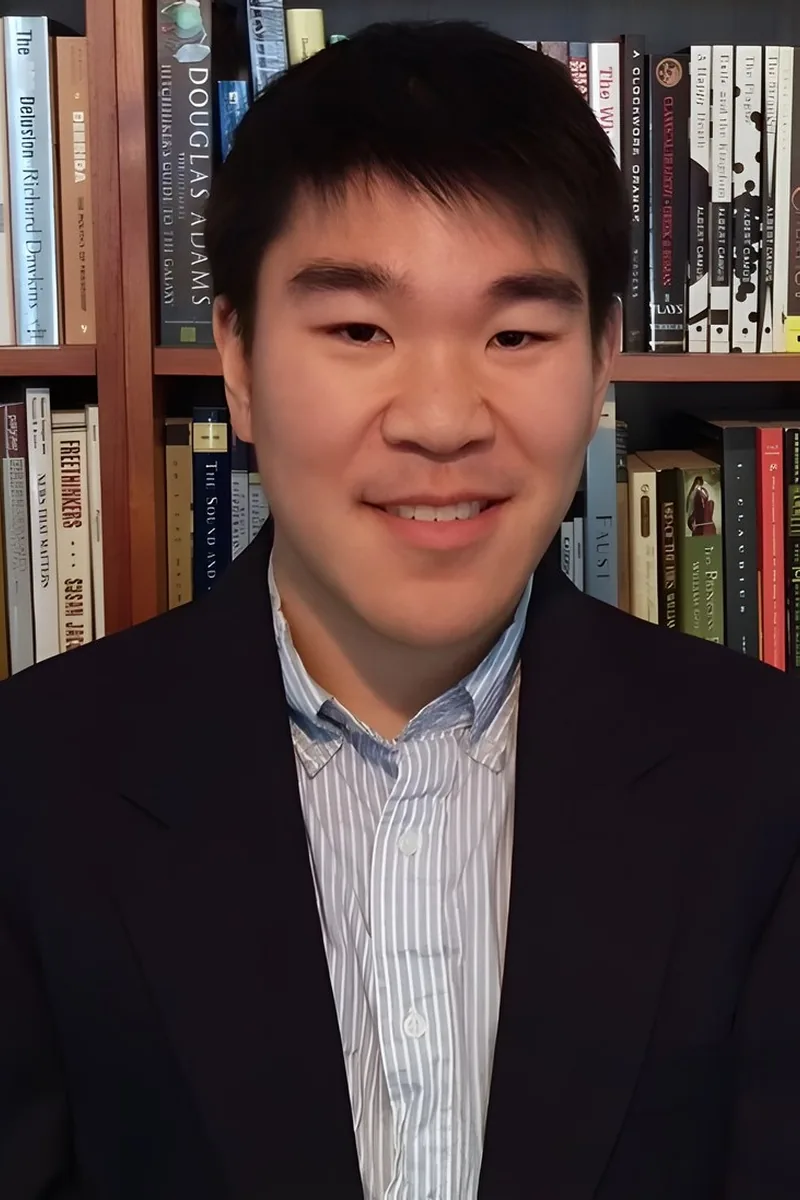
Graduate work in Chemical and Physical Biology at Vanderbilt meant Dennis spent years applying thermodynamics, fluid dynamics, and electromagnetism to biological systems — the same core physics concepts that fill college problem sets, just in a research context where getting the physics wrong meant failed experiments. He breaks down force, energy, and field problems by connecting them to the physical intuition behind the math, which is especially useful for pre-med and life science students navigating calculus-based physics for the first time. Holds a 5.0 rating.
When a college physics problem looks like pure abstraction — a block on a frictionless ramp, a charge in a uniform field — Dylan's instinct is to sketch it out, graph it, and show what's physically happening before touching an equation. That visual, graphical approach comes from his physics major at Vanderbilt, where he's simultaneously studying classics and computer science, giving him an unusual ability to translate dense quantitative reasoning into clear, intuitive language. He holds a 4.5 rating and a 36 ACT composite.
College-level physics ramps up fast, and the jump from textbook examples to exam problems can be brutal. Bryan earned his B.S. in Physics and tackles that gap by teaching problem-solving frameworks — symmetry arguments in electrostatics, constraint equations in multi-body dynamics — that transfer across chapters instead of requiring a new trick every week.
Engineering physics at Cornell means Daniel is taking the most mathematically demanding version of every physics course — mechanics, E&M, waves, thermo — and building the intuition to move fluidly between physical reasoning and formal derivation. He's particularly strong at teaching students how to set up problems from scratch, translating a word problem into a free-body diagram or energy equation before any numbers appear. Rated 5.0 by students.
Biomedical engineering at Duke means Eric solves physics problems daily — modeling forces on prosthetic joints, analyzing fluid flow through artificial vessels, calculating electrical signals in biosensors — so the mechanics and electromagnetism in a college physics course map directly onto work he's already doing. He breaks multi-step problems into their physical components first, making sure the reasoning is solid before any math hits the page. Holds a 5.0 rating.
A chemistry degree from Yale means Zosia spent years in courses where physics does the heavy lifting — thermodynamics driving reaction spontaneity, quantum mechanics explaining atomic structure, electrostatics governing molecular interactions — so she knows these concepts from the inside out. She's particularly effective at teaching students to translate word-heavy problem statements into clean free-body diagrams or energy bar charts before touching an equation. Rated 4.9 by students.
College-level physics ramps up quickly, especially once calculus-based mechanics and electromagnetism enter the picture. Richard's time as a course assistant in Harvard's math department gave him deep comfort with the calculus underpinning topics like electric flux integrals and differential equations of motion. He teaches the physics and the math simultaneously, so students aren't left wondering where a derivation came from.
Studying molecular biophysics at Brown means Srini lives at the intersection of physics and biology — applying thermodynamics, electromagnetism, and wave mechanics to understand how molecules actually behave in living systems. That dual perspective makes him especially effective at unpacking the conceptual reasoning behind problems in mechanics, circuits, and optics that trip up so many college students.
A molecular biology background means Andrew regularly encountered physics in disguise — diffusion rates, membrane potentials, fluid dynamics in biological systems — before his doctoral work added another layer of analytical rigor. He breaks down mechanics and thermodynamics problems by connecting them to tangible phenomena, which makes the abstract math feel less like symbol-pushing. Rated 4.8 by students.
Molecular biology might seem like a different world from physics, but Agustin's coursework lives in the overlap — diffusion equations, fluid dynamics in cellular transport, and the thermodynamics behind protein folding all demand real physics fluency. He pairs that life-sciences perspective with strong quantitative chops (1560 SAT) to break down mechanics and energy problems in ways that click for students who think more naturally in biological terms than abstract force diagrams.
Running an immunology lab at Columbia University Medical Center means Matthew applies physics daily in ways most tutors haven't — calibrating imaging equipment, analyzing force and pressure data in tissue samples, and troubleshooting instruments that depend on optics and electromagnetism. That hands-on fluency, combined with a physics degree and a 35 ACT, lets him teach college-level mechanics and E&M problems by connecting equations to the physical systems they actually describe.
Testimonials
Because the right College Physics tutor makes all the difference.
Average Session Rating – Based on 3.4M Learner Ratings
Nearby College Physics Tutors
Other Columbia Tutors
Related Science Tutors in Columbia
Frequently Asked Questions
College Physics typically covers mechanics (motion, forces, energy), waves and sound, electricity and magnetism, and often includes thermodynamics and modern physics concepts. The curriculum emphasizes understanding fundamental principles and their real-world applications—from how engines work to how electricity powers devices. Many courses include both lecture and lab components, where you'll conduct experiments to test theoretical concepts and develop hands-on scientific reasoning skills.
Many students struggle with visualizing abstract concepts like electric fields, vector forces, and wave behavior—things you can't directly see. Problem-solving often requires connecting multiple concepts and choosing the right equations, which goes beyond memorization. Unit conversions and dimensional analysis also trip up students who haven't mastered these foundational skills. Personalized tutoring helps you build conceptual understanding rather than just memorizing formulas, making it easier to tackle unfamiliar problems on exams.
Lab work teaches the scientific method—designing experiments, collecting data, and drawing conclusions—which is just as important as understanding theory. A tutor can help you understand what you're testing, why you're using specific equipment, and how to interpret results. They can also help you connect lab findings back to lecture concepts, ensuring you see the relationship between theory and practice. This deeper understanding makes lab reports more meaningful and helps you develop critical scientific thinking skills.
College Physics problems require you to identify which concepts apply, set up equations correctly, and execute multi-step solutions—it's not just plug-and-chug math. Many students memorize formulas without understanding when and why to use them, which fails when problems look unfamiliar. Personalized tutoring teaches you a systematic approach: analyzing what's given, identifying what you need to find, and selecting the right physics principles. With practice and guidance, problem-solving becomes a logical process rather than a mystery.
Strong algebra and trigonometry skills are essential—you'll use them constantly in equations and vector problems. Understanding basic geometry and how to work with graphs is also important. If your math foundation feels shaky, a tutor can help you refresh these skills while you're learning physics, preventing math gaps from holding you back. Starting with solid fundamentals makes the physics concepts themselves much more manageable.
Your first session is about understanding where you are and what you need. A tutor will assess your grasp of key concepts, identify specific challenges (whether it's problem-solving, lab work, or understanding theory), and learn about your course goals. From there, they'll create a personalized plan focused on your biggest pain points—whether that's mastering difficult topics, preparing for exams, or building problem-solving confidence. This tailored approach means you get help exactly where you need it most.
Exam prep goes beyond reviewing notes—a tutor helps you practice problems similar to what you'll see on the test, identifies patterns in your mistakes, and teaches you to think through problems systematically. They can help you understand which concepts are most likely to appear and how they connect to each other. Mock exams and timed practice also build confidence and reduce test anxiety, so you walk in prepared and ready.
Look for tutors with strong backgrounds in physics—ideally with a degree in physics or a related field, or significant experience teaching the subject. They should understand both the conceptual foundations and the practical problem-solving skills you need. Experience with your specific course level and textbook is a bonus. Varsity Tutors connects you with expert tutors who have proven expertise in College Physics and a track record of helping students succeed.
Let’s find your perfect tutor
Answer a few quick questions. We’ll recommend the right plan and match you with a top 5% tutor.