Award-Winning AP Biology Tutors
serving Charleston, SC
AP Biology
Tutors in Charleston
Private 1-on-1 tutoring, weekly live classes for academic support, test prep & enrichment, practice tests and diagnostics, and more to elevate grades and test scores.
Based on 3.4M Learner Ratings
UniversitiesSchools & Universities
DeliveredHours Delivered
ProficiencyGrowth in Proficiency
Who needs tutoring?
No obligation. Takes ~1 minute.
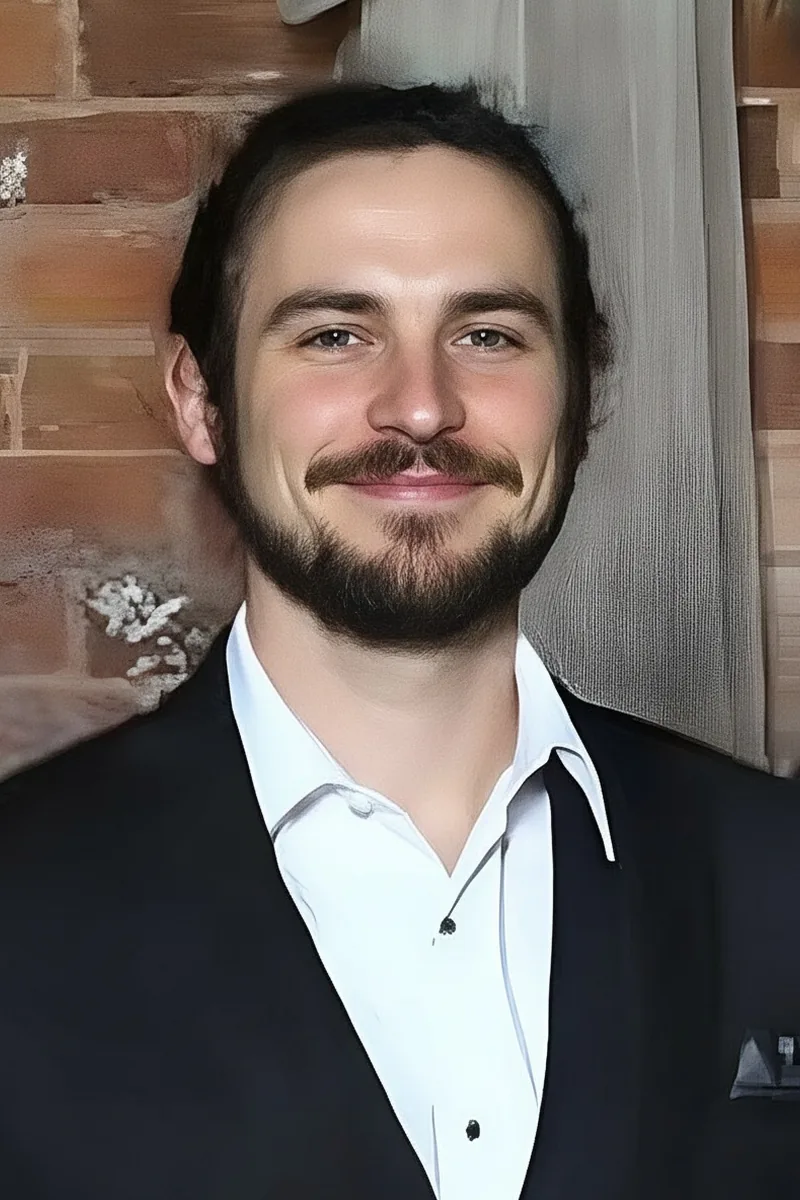
Game research might seem unrelated to AP Bio, but David's biological sciences degree means he's deeply familiar with the experimental design and data interpretation skills the exam tests — especially in lab-based free-response questions where students must analyze graphs, identify controls, and justify conclusions. He brings that same analytical rigor to the content-heavy units on ecology and organismal biology, where understanding how variables interact matters more than memorizing isolated facts. Rated 5.0 by students.

I am an undergraduate student at UC Berkeley in pursuit of a degree in Data Science. Prior experience has taught me that the difference between a wish and a goal is consistency. This ethos has enabled me to excel in primary school and allows me to continuously enjoy watching others make progress toward their academic objectives under my guidance.
A Yale biochemistry degree plus a year of wet lab research at the NIH means Matthew knows AP Biology's toughest units — molecular genetics, cellular energetics, signal transduction — from the inside out. He teaches the exam's data-analysis questions the way a working scientist reads them: by identifying variables, controls, and what the graph is actually telling you. His 4.9 rating speaks to how well that real-world perspective translates in sessions.
Studying biology at Washington University in St. Louis means Laura encounters AP Bio topics like cell signaling, gene regulation, and metabolic pathways in her own coursework every week — so she knows which details matter at the AP level and which are just noise. Her 35 ACT reflects the same kind of precise, analytical reading that the exam's data-interpretation and experimental-design questions demand. Rated 5.0 by students.
The premedicine track at Rochester means Ian has taken the full sequence of biology courses — genetics, cell biology, physiology — alongside the chemistry that makes AP Bio's trickier units on enzyme kinetics and cellular energetics click. He's especially good at unpacking how molecules actually behave during processes like photosynthesis or signal transduction, giving students the mechanistic detail that earns full credit on free-response questions. Holds a 5.0 rating.
As a pre-med biosciences major at Rice University, Tegan is studying the same cellular processes, genetics, and ecological concepts that AP Bio covers — but at the college level, which means she can explain the *why* behind topics like enzyme kinetics or signal transduction rather than just the textbook summary. She's especially good at breaking down the plant biology and photosynthesis material that many students rush past, connecting light reactions and carbon fixation to the energy flow concepts the exam circles back to repeatedly. Rated 4.9 by students.
Three years running a cell biology lab section at Notre Dame gave Connor a front-row seat to exactly where students stumble on AP Bio material — signal transduction pathways, gene regulation, experimental design questions. His master's work in biomedical sciences deepened that knowledge, and he teaches the course with an eye toward the free-response questions that separate 4s from 5s.
Few tutors bring a neuroscience specialization to AP Biology, which means Jhonatan can unpack signal transduction, membrane potentials, and nervous system physiology with a depth most students never get in the classroom. He also tackles the broader curriculum — from cellular respiration energetics to Hardy-Weinberg equilibrium — by tying each unit back to the four Big Ideas the exam is built around.
A human biology degree from Cornell plus current graduate work in human development means Jonathan has studied the organism-level physiology and developmental processes that AP Bio's later units build toward — growth, reproduction, and how organisms maintain homeostasis through feedback mechanisms. He's particularly good at teaching students to read experimental data and construct the kind of evidence-based arguments the free-response section demands, a skill sharpened by his own med school prep and 1550 SAT analytical training. Rated 4.9 by students.
AP Biology's shift toward data analysis and experimental design catches many students off guard — it's no longer enough to memorize cell structures and metabolic pathways. Noel's policy-analysis training at the University of Chicago sharpened his ability to interpret graphs, evaluate experimental controls, and construct evidence-based arguments, which maps directly onto the AP exam's free-response demands. He pairs content review with targeted practice on the analytical skills the College Board actually tests.
Todd's undergraduate biology degree from UIUC gives him the content foundation for AP Bio, but it's his 33 ACT and analytical training through his University of Chicago graduate work that sharpen how he teaches the exam's trickiest skill: translating dense lab data into clear, structured free-response answers. He zeroes in on the units where students lose the most points — cellular energetics and heredity — and builds the kind of process-level reasoning that turns memorized pathways into usable knowledge on test day.
Cellular respiration, genetics, and evolution each require a different kind of thinking — sometimes quantitative, sometimes conceptual, sometimes both at once. Nima breaks down processes like the electron transport chain or Hardy-Weinberg equilibrium into logical steps, drawing on the same analytical rigor that earned him a full merit scholarship to Duke.
Teaching 10th-grade Biochemistry at a competitive Philadelphia magnet school means Kathleen lives in the overlap between biology and chemistry that defines the AP Bio exam. She digs into the molecular details — enzyme kinetics, cellular respiration energetics, gene expression regulation — with the depth the College Board expects on free-response questions. Rated 5.0 by students.
Ellie's biomedical engineering coursework at Yale — plus her autism research in the School of Medicine — means she's working with the molecular and cellular biology that AP Bio tests at a level where she can explain not just what happens during signal transduction or gene regulation, but why it matters in a living system. She also tutors a Differential Equations course weekly, so she's comfortable with the quantitative reasoning behind chi-square problems and data analysis that trips up students on the exam's free-response sections. Rated 5.0 by students.
Testimonials
Because the right AP Biology tutor makes all the difference.
Average Session Rating – Based on 3.4M Learner Ratings
Practice AP Biology
Free practice tests, flashcards, and AI tutoring for AP Biology
Nearby AP Biology Tutors
Other Charleston Tutors
Related Science Tutors in Charleston
Frequently Asked Questions
AP Biology covers eight major units: chemistry of life, cell structure and function, cellular transport, cell communication and division, heredity, gene expression, natural selection, and ecology. The course emphasizes understanding biological systems at multiple scales—from molecular processes to ecosystem dynamics—and requires both memorization of key concepts and application of scientific reasoning. Most students find the breadth of content challenging, which is why many benefit from structured review and practice with exam-style questions.
Score improvement depends on your starting point and study consistency, but students typically see meaningful gains—often 1-2 points on the 1-5 scale—when working with expert tutors who identify weak areas and build targeted study plans. The key is moving beyond passive review to active practice with free-response questions and data analysis problems, which make up a significant portion of the exam. Varsity Tutors connects you with tutors who specialize in AP Biology and understand exactly where students struggle most.
Students most commonly struggle with three areas: (1) connecting molecular concepts to organism-level processes—understanding how photosynthesis or cellular respiration relates to ecosystem energy flow, (2) interpreting experimental data and graphs, and (3) writing clear, evidence-based free-response answers that address all parts of the question. Many also find the sheer volume of vocabulary and interconnected concepts overwhelming without a clear organizational framework. Personalized tutoring helps you build mental models that make these connections stick.
Effective strategies include: (1) reading the entire multiple-choice section first to identify easier questions and build confidence, (2) allocating roughly 90 minutes for the 60 multiple-choice questions and 90 minutes for the six free-response questions, and (3) underlining key command words in free-response prompts (explain, describe, predict) to ensure you address what's actually being asked. Practice tests are essential—they reveal which question formats trip you up and help you refine your pacing before test day. Tutors can review your practice exams and pinpoint patterns in your mistakes.
Most students benefit from consistent preparation starting 8-12 weeks before the exam, with 5-7 hours of focused study per week. If you're starting later or struggling with specific units, more intensive tutoring can accelerate your progress by helping you prioritize high-yield topics and avoid spinning your wheels on material you already understand. The ideal approach combines regular class attendance, independent practice, and targeted tutoring sessions to address your specific weak points.
Free-response success requires three things: (1) understanding what each question type asks (explain vs. describe vs. predict), (2) supporting your answer with specific evidence and reasoning, and (3) practicing under timed conditions so you can write clearly and completely in 10-15 minutes per question. Many students lose points for incomplete explanations or vague language—tutors can show you exactly what graders are looking for and help you practice writing concise, evidence-based responses. Reviewing released AP exams and scoring rubrics is invaluable for calibrating your answers.
AP Biology emphasizes scientific practices, and interpreting data is a core skill scientists use daily. The exam includes questions where you must read graphs, calculate rates, identify trends, and make predictions based on data patterns. These questions test whether you truly understand concepts or just memorized facts. Many students struggle because they haven't practiced extracting information from unfamiliar graphs or connecting data to biological principles. Personalized tutoring includes practice with real AP exam data sets so you build confidence tackling these questions.
Your first session focuses on assessment and planning: the tutor will identify which units you understand well and which need reinforcement, discuss your target score and timeline, and create a customized study plan tailored to your learning style. This might include reviewing practice test results, pinpointing gaps in foundational concepts, or building strategies for specific question types. Varsity Tutors connects you with tutors who have deep AP Biology expertise and can hit the ground running with targeted instruction from day one.
Let’s find your perfect tutor
Answer a few quick questions. We’ll recommend the right plan and match you with a top 5% tutor.