Award-Winning College Chemistry Tutors
serving Columbia, SC
College Chemistry
Tutors in Columbia
Private 1-on-1 tutoring, weekly live classes for academic support, test prep & enrichment, practice tests and diagnostics, and more to elevate grades and test scores.
Based on 3.4M Learner Ratings
UniversitiesSchools & Universities
DeliveredHours Delivered
ProficiencyGrowth in Proficiency
Who needs tutoring?
No obligation. Takes ~1 minute.
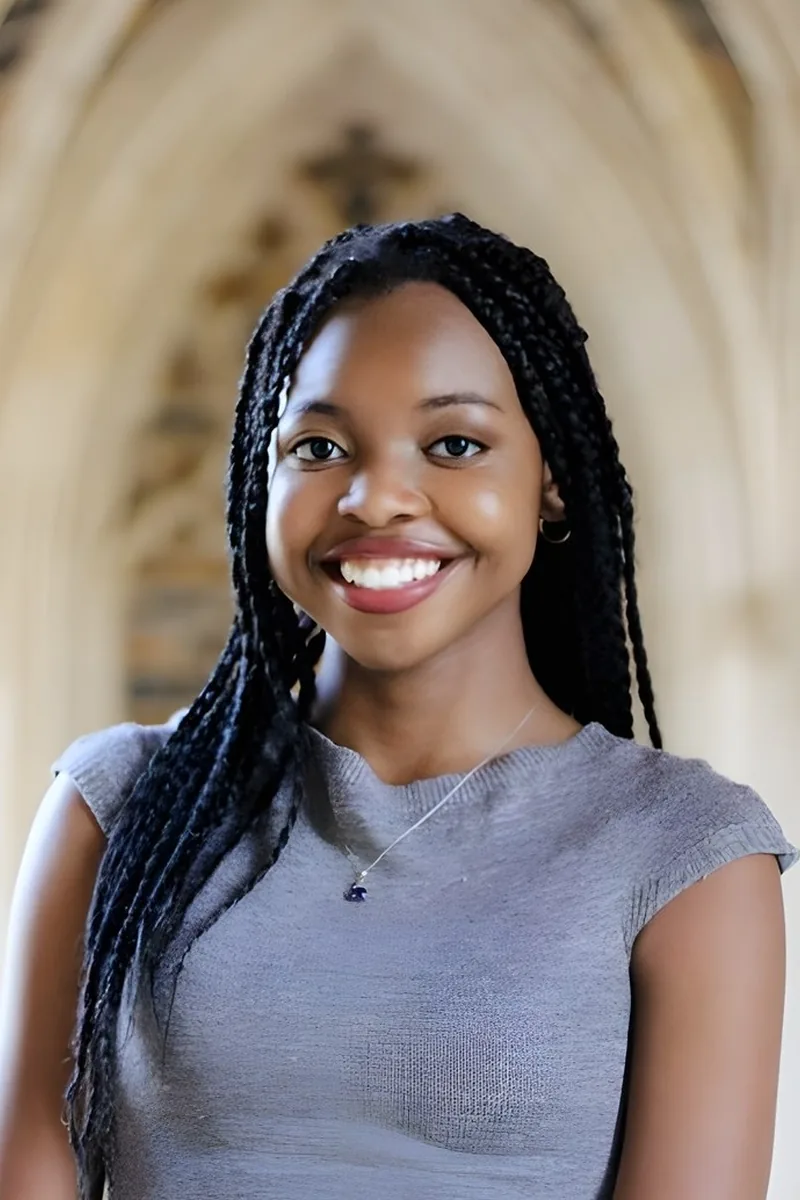
A chemistry minor at Duke alongside her biology major, Lenique spent years working through thermodynamics, equilibrium, and reaction kinetics at a level that prepared her for the rigors of medical school at Yale. She breaks down tough concepts like molecular orbital theory and acid-base chemistry by connecting them to real biological systems, which makes abstract ideas click faster.

General chemistry at the college level moves fast — one week it's quantum numbers, the next it's molecular orbital theory, and suddenly midterms cover both. Katheryn instructed gen chem classes and organic chemistry labs at UGA, giving her a detailed understanding of how university courses are structured and where students most often fall behind. She rated 4.8 across her tutoring sessions.
Going through med school means Amanda has seen what happens when gen chem concepts like acid-base equilibria and reaction thermodynamics aren't truly understood — they unravel in biochemistry, pharmacology, and every clinical science that follows. She teaches college chemistry by grounding each topic in the bigger picture of where it leads, using her biology degree and 4.2 GPA from Alabama to zero in on the quantitative reasoning — electron configurations, enthalpy calculations, equilibrium expressions — that students need to own rather than just survive.
Between equilibrium expressions, thermodynamic calculations, and orbital theory, college chemistry demands a level of abstraction that introductory courses don't always prepare students for. Amber digs into the quantitative backbone of these topics, connecting the math to the molecular-level reasoning so that concepts like Gibbs free energy or rate law derivations make sense rather than just get memorized. Her breadth across chemistry and advanced math gives her a rare versatility in tackling problem sets.
Neuroscience at Yale meant David couldn't just skim gen chem — he needed concepts like electrochemistry, molecular bonding, and reaction thermodynamics to stick, because they showed up again in every neurobiology and biochemistry course that followed. Now pursuing graduate work in bioethics, he teaches college chemistry by linking each topic to the bigger scientific picture, so students see why mastering something like intermolecular forces or acid-base equilibria pays off well beyond the final exam. Rated 5.0 by students.
Having taken college chemistry and then immediately applied it through four years of medical school, Sharon knows which gen chem concepts — electron orbitals, acid-base equilibria, reaction thermodynamics — actually stick with students and which ones need to be taught differently to last beyond the final exam. She unpacks problems by tying the abstract chemistry back to tangible examples from biology and medicine, which tends to make the material click for the pre-health students who make up most gen chem classrooms. Rated 5.0 by students.
Organic reaction mechanisms, thermodynamic versus kinetic control, and multi-step synthesis problems demand more than memorization — they require a framework for thinking through electron movement and molecular behavior. Maggie studied Molecular, Cellular, and Developmental Biology as an undergraduate and now applies that foundation daily in her Stanford medical program. She unpacks each mechanism by tracing exactly why electrons move where they do, making complex transformations feel logical.
Going from a Penn undergrad to medical school means Jessica sat through college chemistry twice — once as a prerequisite and again when biochemistry and pharmacology demanded she actually internalize concepts like reaction energetics, acid-base equilibria, and molecular interactions at a deeper level. That second pass gave her a clear sense of which gen chem topics students need to truly own versus merely survive, and she teaches accordingly. Rated 4.8 by students.
Having studied biology alongside organic chemistry and physical chemistry, Ade knows how college chemistry concepts like electron configuration, molecular geometry, and reaction stoichiometry thread through the rest of a science degree — and where students lose the plot when those ideas get abstract. He tackles the subject by anchoring each new topic to concrete examples from the lab bench, making the jump from Lewis structures to real molecular behavior feel less like a leap of faith.
Predentistry at Columbia means Erica is preparing for a career where gen chem concepts like acid-base chemistry, molecular bonding, and solution properties aren't abstract — they're clinically relevant every day. Her Harvard history of science background also gives her an unusual knack for explaining *why* chemical models were built the way they were, which makes memorizing periodic trends and electron configurations feel less arbitrary. Rated 4.9 by students.
Neuroscience at Vanderbilt means Blake has been neck-deep in college chemistry — gen chem concepts like molecular bonding, reaction energetics, and acid-base systems are the scaffolding for everything from neuropharmacology to membrane biophysics. His approach leans on building intuition for why a reaction behaves the way it does, drawing on his interest in how people actually learn and retain complex material. Rated 5.0 by students.
Having served as an undergraduate teaching assistant at Cornell for introductory biochemistry, Josef has spent real time diagnosing where students get stuck on foundational chemistry — electron configurations bleeding into bonding theory, or mole concepts falling apart during stoichiometric conversions. He teaches college chemistry with a life sciences backbone, connecting topics like solution chemistry and reaction energetics to the biological applications his students will actually encounter next semester. Rated 5.0 by students.
Thermodynamics is Rahul's favorite corner of chemistry — and as a Cornell chemical engineering graduate (magna cum laude), he's applied concepts like enthalpy, Gibbs free energy, and reaction spontaneity far beyond the gen chem textbook, through upper-level coursework in physical chemistry and process design. He pushes students to grasp the conceptual reasoning behind each problem before touching the math, so topics like calorimetry and equilibrium stop feeling like disconnected formula exercises. Rated 4.9 by students.
Between his physics training and years of hands-on biochemistry research, Matthew tackles college chemistry from both the theoretical and applied sides. He's especially effective with thermodynamics, molecular orbital theory, and kinetics — topics where students often struggle to bridge lecture material and problem sets. His lab experience at Columbia gives him concrete examples that make abstract concepts like enthalpy and entropy click.
Testimonials
Because the right College Chemistry tutor makes all the difference.
Average Session Rating – Based on 3.4M Learner Ratings
Nearby College Chemistry Tutors
Other Columbia Tutors
Related Science Tutors in Columbia
Frequently Asked Questions
College Chemistry requires mastering both conceptual understanding and mathematical skills—from balancing equations and unit conversions to visualizing molecular structures and reaction mechanisms. Many students struggle with the abstract nature of atomic and molecular behavior, especially when connecting theoretical concepts to real-world applications like lab work. Personalized 1-on-1 instruction helps break down these complex ideas into manageable pieces, allowing you to build confidence in both problem-solving and scientific reasoning.
Your first session focuses on understanding your current level, learning goals, and specific challenges—whether that's struggling with stoichiometry, lab report writing, or exam preparation. A tutor will assess your strengths and areas for improvement, then create a personalized plan tailored to your course needs and learning style. This foundation ensures every future session builds directly on what you need most.
Yes. Tutors can help you understand experimental design, the scientific method, data analysis, and how to connect lab results to theoretical concepts you're learning in lectures. Whether you're preparing for a lab, working through results, or writing lab reports, personalized instruction helps you develop stronger scientific thinking skills and learn how chemistry principles apply in practice.
Memorization might get you through a quiz, but understanding—knowing the "why" behind reactions and concepts—is what makes College Chemistry manageable and helps material stick long-term. Tutors use visual explanations, practice problems, and real-world examples to help you grasp underlying principles so you can apply knowledge to new situations. This approach builds genuine confidence and stronger exam performance.
Varsity Tutors matches you with expert tutors who have strong backgrounds in chemistry and experience teaching college-level students in the Columbia area. You'll work with a tutor whose teaching style and expertise align with your specific needs—whether you need help with general chemistry, organic chemistry, or exam prep. The matching process ensures you get personalized support from someone who understands both the subject and your goals.
A tutor helps you identify weak areas, master difficult topics, and develop problem-solving strategies specific to your course and professor's style. Through targeted practice, review of previous exams, and focused drilling on challenging concepts like equilibrium or thermodynamics, you'll build the skills and confidence needed to perform well. Personalized instruction also teaches you how to approach unfamiliar problems using scientific reasoning rather than relying on memorization.
These foundational skills are critical in College Chemistry, and many students find them frustrating at first. A tutor breaks down the step-by-step process, helps you understand the logic behind conversions, and gives you plenty of practice with different problem types until the process becomes automatic. With personalized guidance, you'll move from confusion to confidence in handling these essential calculations.
Many students find chemistry challenging because atoms and molecules are invisible—you can't see what's actually happening. Tutors use visual tools, molecular models, diagrams, and analogies to help you "see" bonding, molecular geometry, and reaction mechanisms. Building this visual understanding makes abstract concepts concrete, helping you grasp why reactions occur and how structure relates to chemical properties.
Let’s find your perfect tutor
Answer a few quick questions. We’ll recommend the right plan and match you with a top 5% tutor.