Award-Winning Reading Tutors
serving Portland, OR
Reading
Tutors in Portland
Private 1-on-1 tutoring, weekly live classes for academic support, test prep & enrichment, practice tests and diagnostics, and more to elevate grades and test scores.
Based on 3.4M Learner Ratings
UniversitiesSchools & Universities
DeliveredHours Delivered
ProficiencyGrowth in Proficiency
Who needs tutoring?
No obligation. Takes ~1 minute.
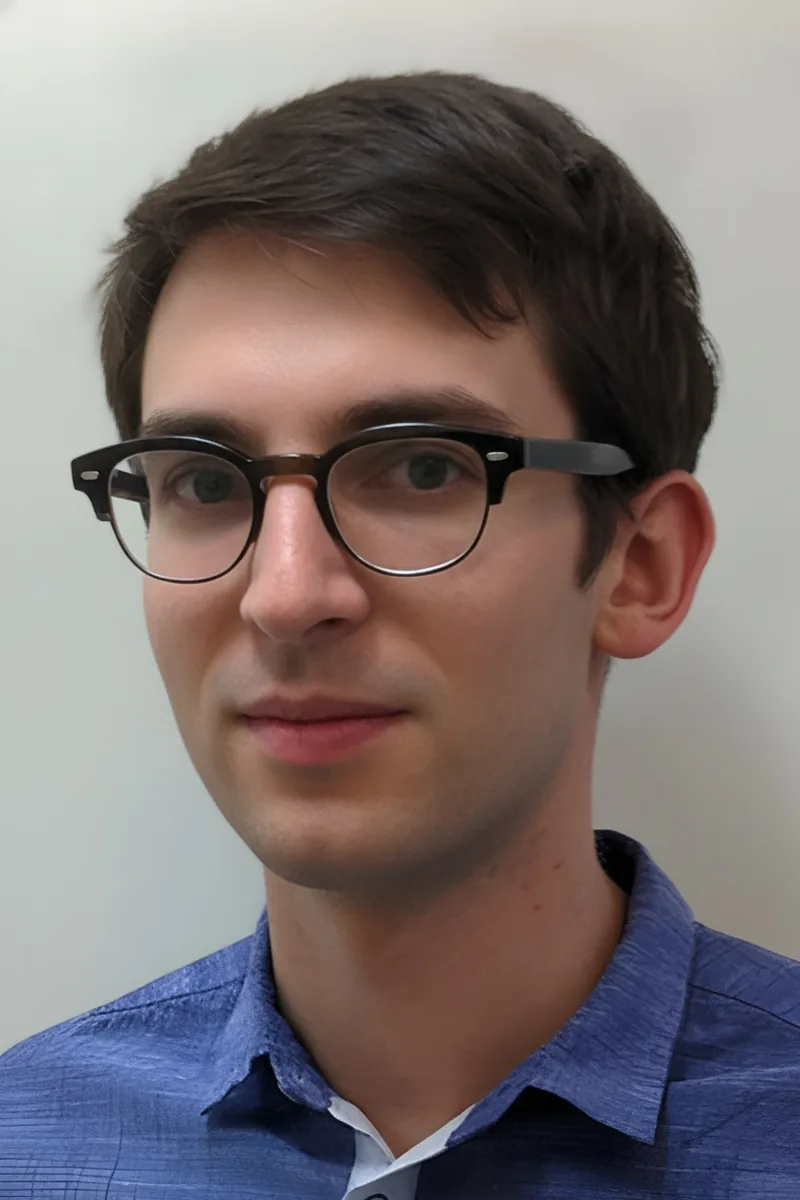
Close reading is second nature when your degrees are in Comparative Literature and German — Jacob spent years at Columbia and UC Berkeley dissecting texts across languages and literary traditions. He teaches students to identify rhetorical strategies, track thematic development, and annotate with purpose, turning passive reading into active analysis.
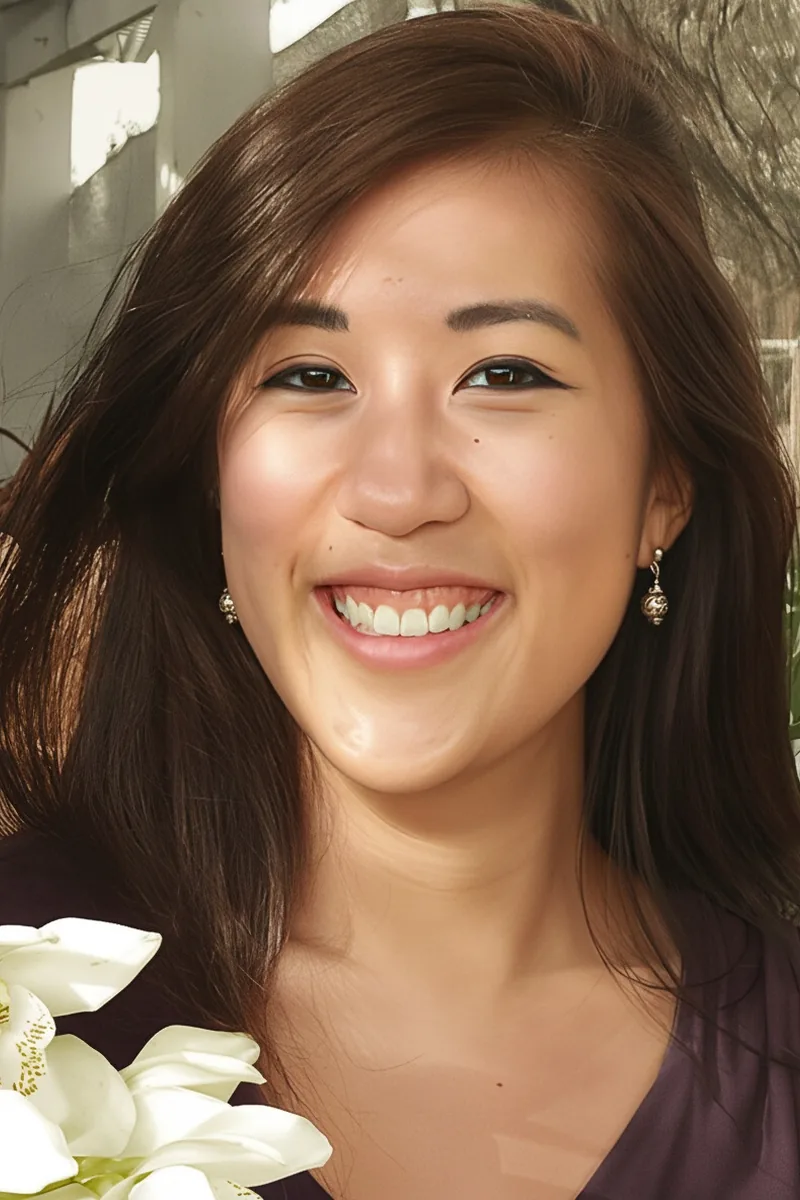
Studying folklore and mythology means spending years learning to read beneath the surface — finding the hidden structures, cultural assumptions, and narrative patterns that give a text its real meaning. Cynthia brings that same interpretive lens to reading instruction, teaching students how to slow down, question what they're reading, and pull meaning from both fiction and nonfiction with genuine curiosity.
A biology and botany degree means Caitlyn spent undergrad buried in research papers and dense lab protocols where misreading one line could derail an entire experiment — training that built genuinely careful reading habits. She brings that precision to reading sessions but pairs it with a lighter touch, using humor and conversation to get students talking about what they've read rather than passively scanning pages. Holds a 5.0 rating from students.
Struggling readers often rush past the sentences that matter most, missing how tone shifts or how a key detail foreshadows what comes next. Henry slows the process down, teaching annotation strategies and active questioning techniques that turn passive scanning into genuine comprehension. His background spans poetry, fiction, and nonfiction, so he adapts his approach to whatever a student is reading.
Struggling readers often aren't lacking intelligence — they're missing specific decoding or comprehension strategies that nobody explicitly taught them. Gabriel spent years in international classrooms diagnosing exactly where a reader's process breaks down, whether it's vocabulary inference, tracking main ideas across paragraphs, or distinguishing an author's argument from supporting detail.
Anthropology PhD work means Hallie spends her days pulling meaning from ethnographies, field notes, and dense theoretical texts where a single paragraph can shift the entire framework — the kind of reading that demands constant, active engagement with an author's argument. She brings that same discipline to tutoring, teaching students how to interrogate a passage rather than passively absorb it: what's the claim, what's the evidence, and what's being left unsaid. Rated 5.0 by students.
A government major who pivoted through literature, essay editing, and coding, Gray reads across genres the way a generalist has to — quickly sizing up what a text is doing, whether it's a political argument, a literary passage, or technical documentation. That cross-disciplinary habit translates into teaching students how to identify an author's structure and purpose before getting lost in details. Holds a 5.0 rating from students.
I'm teaching is as important as understanding the subject itself.
A psychology degree trains you to read carefully — research methods sections, clinical case studies, and dense theoretical arguments all punish skimming. Rebecca applies that same deliberate approach to reading sessions, teaching students how to pause at key moments in a passage, connect what they just read to what came before, and retell the main idea in their own words before moving on. Her experience across special education and general tutoring settings means she adjusts quickly when a student needs a different entry point into a text.
A Classics degree from Reed College means Marilyn learned to read by wrestling with Latin texts where a single misread verb tense unravels an entire passage — the kind of precise, word-level attention she now brings to students working on English comprehension. She connects vocabulary building to the Greek and Latin roots hiding inside everyday words, giving readers a decoding shortcut that makes unfamiliar text feel less intimidating. Rated 4.8 by students.
Strong reading comprehension comes down to a handful of active skills: identifying an author's argument, distinguishing main ideas from supporting details, and making inferences from context clues. Shannon teaches these as deliberate strategies — annotating for structure, predicting before reading answer choices — so students stop re-reading passages three times and start extracting meaning on the first pass.
Strong reading comprehension isn't just about understanding individual words — it's about tracking an author's argument, identifying tone shifts, and making inferences from context clues. Allyson earned a 1490 SAT, and her approach to reading draws on the same analytical habits she developed studying both literature and scientific texts during her English/Biology undergraduate work.
Strong reading comprehension isn't just decoding words — it's knowing how to identify a passage's argument, track its structure, and distinguish main claims from supporting details. Daniel uses a question-driven approach: instead of passively rereading, students learn to annotate with purpose, predict where an author is heading, and summarize paragraphs in their own words. His 1550 SAT score reflects the kind of close-reading discipline he brings to every session.
A novel-in-progress and an MFA in Creative Writing from San Francisco State mean Aaron lives inside sentences all day — noticing how writers control pacing, plant details, and steer a reader's attention without being obvious about it. He brings that writer's eye to reading sessions, teaching students to spot what an author is doing structurally so that comprehension becomes active instead of passive. Rated 4.8 by students.
I am known among friends for my love of puzzles, riddles, word problems, and mathematical challenges. I have a deep knowledge of pre-algebra, algebra, geometry, trigonometry, and pre-calculus and a passion for teaching it. I also enjoy tutoring Spanish. While foundational vocab and grammar are important, I emphasize speaking and encourage my students to take risks. I believe embracing discomfort is critical to learning a language. Spanish has helped me to travel and live in different communities throughout the world. I strive to kindle a similar appreciation and passion for language in my students.
I am a graduate of the University of California, Los Angeles, where I earned a Bachelor of Science in Computer Science. I've always loved Math and the Sciences: the hunt for the right equation to use, the unravelling of the mystery of the value of x. I want to show my students to see these subjects as I do: as a challenge, not a chore. I try to do this by making things simple and showing straightforward techniques that students can use on their own to sidestep mental walls, thus building confidence. I love to see them succeed academically and value the opportunity to be a part of that success.
I am excited to see what the West Coast has to offer. I love learning and teaching, and I am excited to share what I know of standardized tests, the English language, and of writing overall.
I am a current undergraduate sophomore at Harvard College majoring in biology. I also have some previous tutoring experience and I enjoy working with students. I'm patient, I have high expectations for work, I am passionate about learning, and I am excited to share what I know.
I'm not tutoring, I'm probably reading, listening to music, cooking desserts or shopping at a thrift store.
I'm outside, I like to skateboard and try to land new tricks, either on my street or at the skate park.
I am passionate about helping students learn because a strong education is the basis for a successful life. I have 4 years of tutoring experience and it has been such an enriching experience; I look forward to working with your kiddo or young adult to help them do well with their studies.
I am a PhD student in Animal Biology at UC Davis and am currently in the process of finishing my dissertation. I study the proteins that are involved in membrane fusion -- for example, when the sperm and egg cell membranes fuse together during fertilization. I have a Master's in Education and a BA in Human Biology from Stanford University. I love working with students of all ages and do my best to make learning relevant and fun. I look forward to working with you!
I'm Heather, a social worker in Portland, OR. I graduated summa cum laude in 2018 from Willamette University, a liberal arts college on the West Coast, with a 4.0 GPA. I share this to let you know that I am passionate and committed to lifelong learning, and enjoy helping others along the same journey.
I am a critical thinker and learner. I am a diplomatic, patient, open-minded, self-deprecating listener. I am dependable, honest and sincere. I am kind and helpful, supportive and empowering.
I am satisfied when my students not only surpass academic expectations in the short term, but also when they make it a habit for life.
I am a graduate of Gonzaga University and received my Bachelor of Science in Biology with a concentration in research. Since graduating, I have traveled around the West coast working in various hands-on education and research positions. This included volunteering as a docent at a wildlife refuge in Nevada, educating aquarium guests on whale watch cruises in Southern California, and performing environmental monitoring and outreach in the Puget Sound region of Washington State. While my recent experiences provide me a deep understanding and love for Biology and Ecology related subjects, I have intensive writing experience from college that fuels my passion for writing and language, a passion that I use when preparing students to understand and succeed on the ACT. I believe that even the most complex scientific concepts can be broken down into easily understood ideas, and hope to impart this belief to my students. In my free time, I enjoy hiking around the Pacific Northwest, wildlife watching, playing music, and the occasional board game with friends.
I'm here to help you with those frustrating writer's blocks and difficult homework assignments. Writing is my bread and butter, and I will make it my duty to improve your writing skills, polish your essays, and increase your confidence in both academic writing and personal statements. I have also taught reading comprehension to younger students, and I have a B.A. in Literature and Composition to help high schools students navigate dense and confusing novels. Let's make English easy.
I am currently an undergraduate at the University of Southern California. I am majoring in Health and Human Sciences and minoring in Spanish, and am also on the pre-medical track. Growing up, I had difficulty in school understanding concepts in science, which originally dissuaded me from pursuing career in science. However, when I eventually found the right tutors, everything began to make sense to me and I realized how much I enjoyed learning when I could understand the material. It was empowering and I felt proud and confident in myself when the concepts started clicking. Because of my experiences, I decided to start tutoring to help others experience that feeling of finally understanding a tough concept. While I tutor a variety of different subjects, I've always been most passionate about concepts concering the NREMT, English, Spanish, and basic level mathematics. For the last four years, I've been tutoring a wide range of students, from elementary school kids to college students, and I absolutely love watching their level of understanding grow as they discover new concepts. I know firsthand how difficult it can be to seek tutoring, and I try to be as approachable as possible while continuing to emphasize the power of learning and the confidence that accompanies it. I also firmly believe that learning should not only be educational, but fun as well!
I am a recent college graduate with an interdisciplinary degree in History-Literature from Reed College. I graduated with academic commendations my last two years and won an award for my Senior thesis on artistic and literary resistance under Pinochet's dictatorial regime in Chile from 1973 to 1990. I have experience in essay editing, and am qualified to tutor in Humanities, English, and most areas of Western and Latin American History. I also competed nationally in high school as a policy debater, which makes me a good candidate for working with students on public speaking skills.
I am a third-year Psychology major at Reed College in Portland, OR. I work as a researcher in a cognitive neuroscience lab studying human perception, and I am interested in pursuing a graduate degree in neuroscience. I have always been drawn to tutoring and mentorship roles, beginning when I joined my high school's Advancement Via Individual Determination (AVID) program as a peer tutor. Currently, I tutor other students at my college in Writing and Humanities through my college's Academic Support Center.
I am prepared to work with my students, at their own pace, to ensure that they aren't just completing the work, but fully understanding and internalizing the material.
I am a recent graduate of Haverford College with a reverence for education. I aim to help students grow as both students and learners in the broader sense. My aim is to help the student progress as much as possible through being simultaneously supportive and rigorous. In my past experience, I have found that the best mode of education is dependent upon the particular student, and thus strive to accommodate a wide variety of personalities and learning styles. Through a comprehensive approach, I attempt to instill in students both knowledge and a love for learning.
I am passionate about teaching and helping people to understand things that I worked hard to learn. Personally, there are very few greater joys than seeing someone successfully use a concept that you taught them. For a tutor, encountering this joy is a regular thing; it is a major factor of my admission into the field.
I'm applying for MAT programs and aspire to be a high school Literature and Social Studies teacher. In 2014, I spent more than 2,000 hours teaching English to Korean students. This experience showed me not only that I love teaching, but also how to work with students to achieve their goals. I tutor students in English, TOEFL preparation, SAT Verbal and Critical Reading preparation, and essay writing. My favorite subject to teach is English, because I love watching someone progress from knowing just a few words of a language to speaking it with confidence. When I tutor, I focus on presenting information to students as clearly as possible so that they can apply it to assignments after our lesson. Further, I strive to understand each individual student's learning style and tailor my lessons accordingly. Outside of helping students achieve academic success, I love to play all kinds of sports, spend time hiking, skiing, fishing and backpacking in Oregon's beautiful wilderness, learn languages and play the guitar.
I'm a junior at the University of Michigan who loves to climb and code! Tutoring has always been a passion of mine as well - I love seeing my students grow and succeed both academically and personally!
I'm Hannah. I live in Portland, OR and am currently applying to medical school. In addition to being a tutor, I work at a restaurant and as a nanny. I received my bachelor's degree in biology from Middlebury College in 2010 and since then have been traveling, trying new things, and working on medical school prerequisites. I love learning, and through my own studies have learned a great deal about effective study strategies, the psychology of learning, and how to overcome obstacles that are both pre-existing and, perhaps more importantly, that we create for ourselves. An important part of my approach to working with students is first identifying whether the student's main challenge is one of content, strategy, or mindset. We can then work from there to give attention to the areas that need the most strengthening, creating a unique plan of action that will lead to success. Commonly, issues of focus, confidence, and anxiety can be the most important underlying obstacles preventing someone from mastering new skills and content knowledge. I bring a lot of unique insight and experience in mindfulness, positive psychology, and self-awareness to my work with students that are fundamental aspects of my philosophy of learning. Please feel free to contact me if you have any questions. I look forward to working with you!
After four years in a Great Books curriculum that assigns full-length works of philosophy, theology, and literature every week, Madeleine reads both quickly and carefully. She teaches strategies like annotation, identifying an author's central argument within the first few paragraphs, and distinguishing between what a passage says and what it implies — skills that transfer directly to schoolwork and standardized tests alike.
Strong reading skills aren't just about decoding words — they involve making inferences, tracking an author's argument, and connecting details across a text. Amy's background in English literature gives her a deep toolkit for teaching comprehension strategies like annotation, summarization, and identifying main ideas in both fiction and nonfiction.
Building reading comprehension means more than answering questions at the end of a passage — it requires active strategies like predicting, summarizing, and identifying an author's purpose in real time. Rosanne applies these techniques daily in her elementary classroom and adapts them for readers at every level, from decoding basics to analyzing complex nonfiction.
A psychology degree trains you to read like a researcher — pulling apart study designs, weighing evidence claims, and catching when an author's conclusion doesn't quite match the data. Laura brings that same analytical habit to reading sessions, teaching students to ask what a passage is really arguing and how to find the textual evidence that proves it. Rated 5.0 by students.
Testimonials
Because the right Reading tutor makes all the difference.
Average Session Rating – Based on 3.4M Learner Ratings
Nearby Reading Tutors
Other Portland Tutors
Related English Tutors in Portland
Frequently Asked Questions
Many Portland students struggle with reading comprehension—understanding what they've read, making inferences, and connecting ideas across texts. Others find it difficult to analyze literature deeply, identify themes, or support their interpretations with evidence. Some students also face challenges with reading speed and fluency, especially when tackling complex texts required in middle and high school. Personalized 1-on-1 instruction helps address these specific gaps by focusing on the strategies and skills each student needs most.
Expert tutors work with students to build foundational comprehension strategies—like active reading, annotation, and questioning the text—before moving to deeper literary analysis. Tutors provide targeted feedback on how students interpret texts, support their ideas with evidence, and develop their analytical voice. Through guided practice with texts at the right level of challenge, students develop confidence and independence in their reading abilities. This personalized approach means tutoring adapts to each student's learning style and pace.
Varsity Tutors connects students across all grade levels—from elementary readers building foundational skills to high school students tackling AP Literature and advanced texts. Tutors work with students reading below, at, or above grade level, adjusting materials and strategies to match each student's current abilities and goals. Whether a student is developing basic fluency or preparing for college-level literary analysis, personalized instruction ensures the right level of challenge and support.
The first session is focused on understanding your student's current reading level, strengths, and specific challenges. A tutor will likely discuss reading habits, ask about favorite books or difficult texts, and may work through a short reading passage to assess comprehension and identify areas to target. This helps establish a baseline and allows the tutor to create a personalized plan for future sessions. You'll leave with a clear sense of the tutor's teaching style and how they'll support your student's growth.
Strong reading skills directly support writing—students who analyze how authors structure arguments, develop ideas, and use language effectively can apply those techniques to their own writing. Tutors often help students see the connection by examining mentor texts, discussing what makes writing compelling, and showing how close reading strategies inform better essays and compositions. This integrated approach helps students become both more thoughtful readers and more confident writers.
Yes. Tutors work with students across Portland's six school districts and understand the reading standards and expectations at different grade levels. Whether your student attends a public, charter, or private school, tutors can align instruction with classroom learning, help with assigned texts, and reinforce skills taught in class. Personalized tutoring complements classroom instruction and helps students master the specific reading and analysis skills their schools emphasize.
Absolutely. Tutors help students develop the specific strategies needed for reading comprehension on standardized tests like the SAT, ACT, and state assessments. This includes managing time during reading passages, identifying main ideas and supporting details quickly, and avoiding common traps in multiple-choice questions. Beyond test-specific tactics, strong foundational reading skills—comprehension, inference, and analysis—are the best preparation for performing well on any reading assessment.
Varsity Tutors makes the process simple—you share information about your student's grade level, reading level, specific goals, and any preferences for the tutor's teaching style or availability. We then connect you with an expert tutor who's a great fit for your student's needs. From there, you can schedule sessions at times that work for your family and begin personalized instruction right away.
Let’s find your perfect tutor
Answer a few quick questions. We’ll recommend the right plan and match you with a top 5% tutor.