Award-Winning AP European History Tutors
serving Toledo, OH
AP European History
Tutors in Toledo
Private 1-on-1 tutoring, weekly live classes for academic support, test prep & enrichment, practice tests and diagnostics, and more to elevate grades and test scores.
Based on 3.4M Learner Ratings
UniversitiesSchools & Universities
DeliveredHours Delivered
ProficiencyGrowth in Proficiency
Who needs tutoring?
No obligation. Takes ~1 minute.
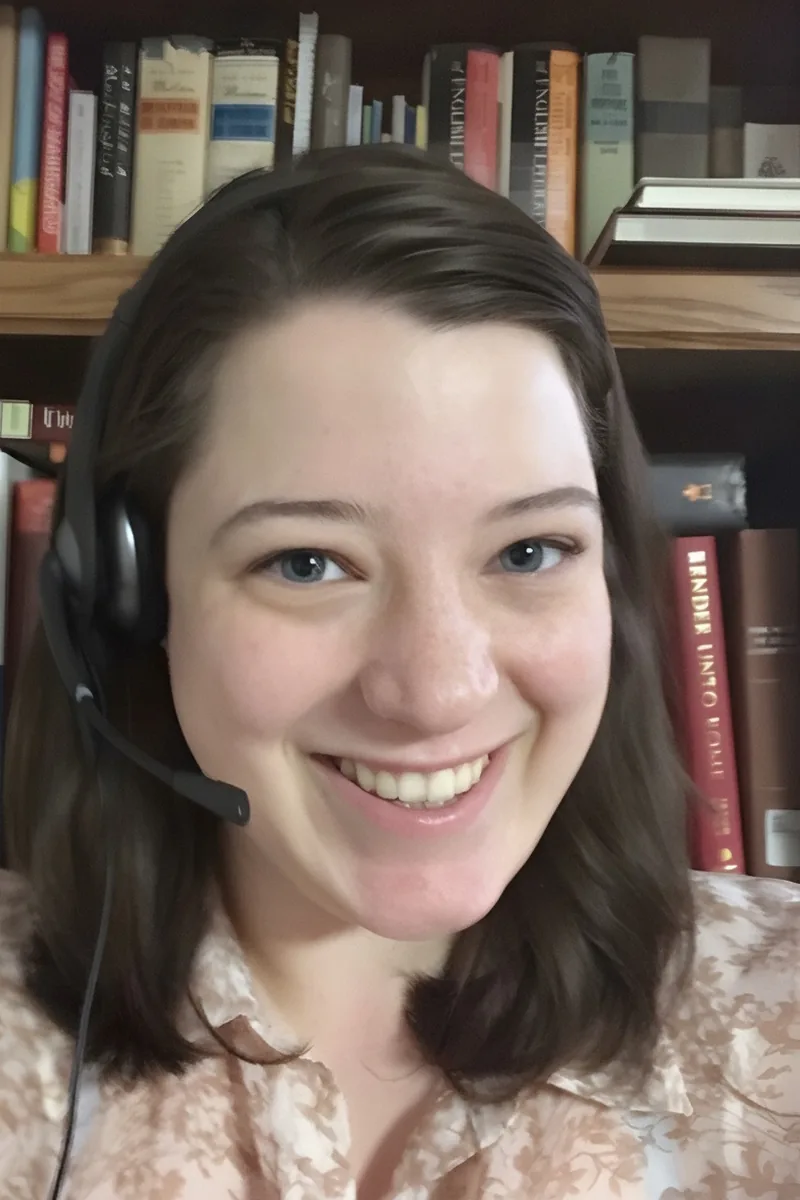
From the Protestant Reformation to the Cold War, AP European History covers centuries of political upheaval, intellectual movements, and economic transformation — and the exam expects students to synthesize all of it into tight, evidence-driven essays. Katherine studied history at Denison University with a focus that sharpened her ability to trace cause-and-effect chains across eras. She breaks down DBQ and LEQ strategies so students know how to build an argument, not just recall dates.

Beth studied history at Allegheny College, where she developed the kind of thematic thinking AP Euro rewards — connecting, say, how mercantilist economic policies fed into both absolutist state-building and the revolutionary backlash against it. She's especially strong at coaching students through the essay-writing side of the exam, breaking down how to turn a thesis and a handful of documents into a persuasive argument under time pressure. Rated 4.8 by students.
I am a rising sophomore at Kenyon College, a small liberal arts school an hour out of Columbus, Ohio, majoring in Philosophy. It is difficult to identify a specialty of mine because I have worked with students from 1st grade through high school on topics ranging from elementary science to trigonometry test prep, but my foremost strength is the three sections of the SAT. I have roughly three years of experience tutoring and last year taught a test prep class. My approach to tutoring is to identify a students strengths and build upon them through frequent quizzes and reflective analysis. Additionally, having just gone through the college admissions process, I am privy to its length and complexity so can lend advice on anything, namely essays. I have plenty of experience writing and have been published in a local newspaper. While I think math is the easiest subject for me to teach, writing and writing skills are my favorite to teach because to see a writers progress is an extraordinary sight and, further, challenge.
I'm a current PhD student in the history department at Georgetown University who is also an experienced instructor with Varsity Tutors. As a recipient of several degrees, the most recent being a BA in history from Hillsdale College and a MA in Russian, East European, and Eurasian Studies from Stanford University, I have long sought to make teaching my profession. Meanwhile, as a volunteer grade school teacher and a tutor with this company, I have many years' experience helping students reach their full potential. I am capable of teaching students in many subjects, including reading, mathematics, test prep, Latin, and especially writing, history, and literature. In practice, I am comfortable adapting to different learning styles and specific student preferences. Outside of my academic and career endeavors, I enjoy cooking, reading, and listening to and making music.
From the Protestant Reformation to the Congress of Vienna to postwar European integration, AP European History covers an enormous arc — and the exam expects students to argue about it, not just recall it. Stephanie earned her history degree at Cornell and is currently a graduate student at Penn, so she approaches each period through the kind of historiographical lens that makes essay responses more sophisticated. She unpacks primary sources with students so they learn to read for perspective and bias, not just content.
Amir's International Relations degree, with its concentration in Business and Economics, trained him to trace how trade policies, diplomatic alliances, and ideological rivalries reshaped the European continent — exactly the kind of connective thinking AP Euro rewards on the LEQ and DBQ. He's particularly strong on the economic and diplomatic dimensions of topics like mercantilism, the Congress of Vienna, and post-WWII European integration, where students often struggle to move beyond surface-level narrative. His 33 ACT reflects the reading comprehension and analytical writing skills the exam's document-based questions demand.
I am a 2009 graduate of the University of Chicago in Statistics and Political Science. I have been a tutor for test prep (including ACT, SAT, LSAT and AP testing), academic and creative writing, and general academic assistance for three years.
Jeff's master's in history from UC Berkeley, where he taught both history and philosophy to undergraduates, gave him the kind of dual training AP Euro rewards — understanding not just what happened during periods like the Reformation or the French Revolution, but the philosophical ideas driving those events. His philosophy degree from Princeton sharpens how he teaches argumentation, showing students how to construct the layered, thesis-driven essays that score well on the DBQ and LEQ.
From the Renaissance to the Cold War, AP European History covers an enormous sweep of political, intellectual, and cultural change. David unpacks the ideological threads — Enlightenment rationalism, nationalism, Marxism — that tie disparate events together, making the content easier to retain and argue about on exam day. His philosophy background is especially useful for the intellectual history that many students find abstract.
From the Renaissance through the Cold War, AP European History demands that students track political, intellectual, and cultural shifts across centuries and dozens of countries. Elena's art history studies at Vanderbilt give her an unusual advantage here — she can explain the Enlightenment through its philosophy and its paintings simultaneously. She also tackles the exam's document-based questions by teaching students to group evidence around a defensible thesis.
Gabrielle's biology training at Binghamton might seem unrelated to AP Euro, but scientific thinking — tracing how one development triggers the next — maps surprisingly well onto questions about, say, how the Scientific Revolution undermined Church authority or how Malthusian ideas shaped nineteenth-century social policy. She leans into those science-history intersections while drilling the cause-and-effect essay structure the exam actually rewards. Rated 4.9 by students.
Alexander is finishing a European history degree at Vanderbilt, which means he's currently immersed in the same material AP Euro students are tackling — from the political fragmentation of the Reformation era to the ideological battles of the twentieth century. His 1510 SAT reflects strong analytical reading and writing skills, the same toolkit students need to dissect a DBQ prompt and construct a thesis under exam conditions. He's especially effective at teaching students how to move from knowing what happened to explaining why it mattered.
From the Renaissance through the Cold War, AP European History covers an enormous arc that the exam tests through causation and continuity-and-change essays. Ryan's approach is to anchor each period around a core tension — religious versus secular authority, nationalism versus empire, market liberalism versus state control — so students can write arguments that connect specifics to larger themes. His economics training is especially useful for unpacking mercantilism, the Industrial Revolution, and postwar integration.
Taylor's drama training at NYU's Tisch School of the Arts might seem like an odd fit for AP Euro, but theater history is deeply entangled with European cultural and political shifts — the rise of national theaters under absolutism, censorship battles during the Enlightenment, and avant-garde movements responding to industrialization and war. That cultural lens gives her a way into the material that's different from a straight political narrative, which can be especially useful for students who struggle to connect social and intellectual developments in their essays.
From the fragmentation of Christendom during the Reformation to the Congress of Vienna's attempt to reassemble it, AP European History rewards students who can trace causation across centuries. Hannah studied History as an undergraduate and brings a writer's discipline to the LEQ and DBQ formats — she teaches students to build arguments that are historically precise and structurally tight.
Testimonials
Because the right AP European History tutor makes all the difference.
Average Session Rating – Based on 3.4M Learner Ratings
Practice AP European History
Free practice tests, flashcards, and AI tutoring for AP European History
Other Toledo Tutors
Related Social Studies Tutors in Toledo
Frequently Asked Questions
AP European History spans from 1450 to the present, organized into six thematic learning objectives: developments in state-building, economic and social change, cultural and intellectual developments, states and other institutions of power, interactions between societies, and individual and collective identities. The course emphasizes historical thinking skills like analyzing primary sources, understanding causation, and evaluating competing interpretations—skills that are essential for success on the AP exam and in college-level history courses.
The AP exam consists of two sections: a multiple-choice and short-answer section (95 minutes) and a free-response section with document-based questions and long essays (100 minutes). Success requires not just content knowledge but also strong time management and the ability to construct evidence-based arguments quickly. Many students find the document-based question (DBQ) particularly challenging because it requires synthesizing multiple sources while maintaining a clear thesis—this is an area where targeted tutoring can make a significant difference.
Students often struggle with three main areas: managing the breadth of content across 600 years of history, developing strong analytical writing skills for essays, and understanding how to use primary sources as evidence rather than just summarizing them. Additionally, many students underestimate the importance of historical periodization and thematic connections—recognizing patterns across centuries helps with both the multiple-choice section and essay writing. Personalized tutoring helps identify which of these areas need the most focus for your specific learning style.
Score improvement depends on your starting point and commitment level, but students who work with tutors typically see gains of 1-2 points on the 1-5 scale when they focus on targeted skill-building over several months. The biggest improvements come from developing stronger document analysis skills, learning to construct thesis-driven essays under time pressure, and filling content gaps in specific time periods or themes. Consistent practice with feedback—which personalized tutoring provides—is what transforms understanding into exam performance.
Most students benefit from starting preparation 3-4 months before the exam, dedicating 5-8 hours per week to review, practice essays, and content reinforcement. However, if you're taking the course for the first time, consistent engagement throughout the school year is more important than cramming. A tutor can help you create a realistic study schedule based on where you are now, identify which topics need the most attention, and ensure you're using practice time efficiently rather than just re-reading notes.
Practice tests serve two critical purposes: they help you identify content gaps and weak analytical skills, and they build familiarity with the exam's timing and question formats so test day feels less overwhelming. Taking full-length practice tests under timed conditions reveals whether you struggle with pacing, essay structure, or specific historical periods. A tutor can review your practice test performance with you, pinpoint exactly where points are being lost, and provide targeted instruction to address those specific weaknesses.
Your first session typically focuses on understanding your current level, learning goals, and specific challenges—whether that's content gaps, essay writing, or test anxiety. A tutor might review a sample of your work, discuss which historical periods or themes feel most confusing, and assess your familiarity with the exam format. This foundation allows the tutor to create a personalized study plan that targets your needs, whether you need comprehensive content review or focused work on essay skills and test-taking strategies.
Varsity Tutors connects you with expert tutors in Toledo who specialize in AP European History and understand the specific demands of the exam. When you get matched with a tutor, you can discuss your goals, preferred learning style, and schedule to ensure a good fit. Whether you need help with content mastery, essay writing, document analysis, or overall exam strategy, you'll work with someone who has deep knowledge of both the subject and what it takes to succeed on test day.
Let’s find your perfect tutor
Answer a few quick questions. We’ll recommend the right plan and match you with a top 5% tutor.