Award-Winning Science Tutors
serving Columbus, OH
Science
Tutors in Columbus
Private 1-on-1 tutoring, weekly live classes for academic support, test prep & enrichment, practice tests and diagnostics, and more to elevate grades and test scores.
Based on 3.4M Learner Ratings
UniversitiesSchools & Universities
DeliveredHours Delivered
ProficiencyGrowth in Proficiency
Who needs tutoring?
No obligation. Takes ~1 minute.
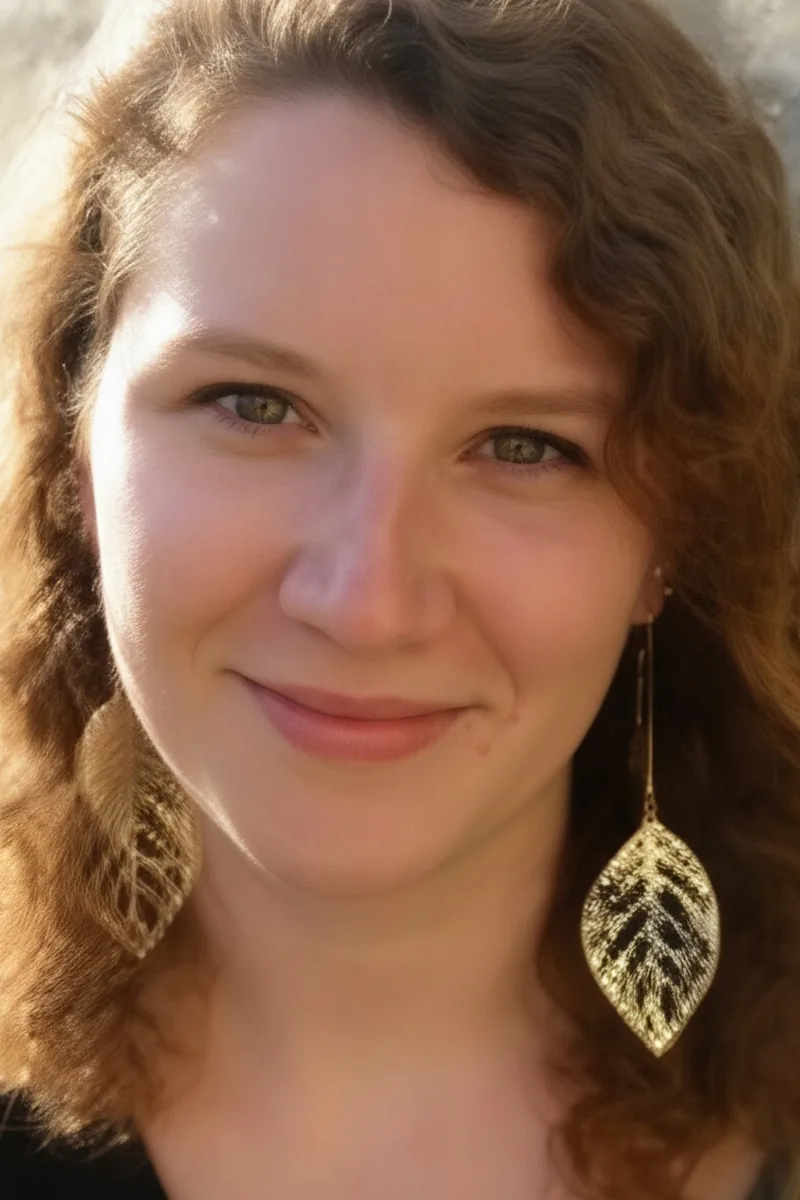
As a curriculum developer building courses for middle and high schoolers, Elena knows exactly how to make dense material click — including the scientific vocabulary, classification systems, and cause-and-effect reasoning that science coursework demands. Her Religious Studies training at McGill involved rigorous textual analysis and structured argumentation, skills she now channels into teaching students how to read scientific texts carefully, interpret what an experiment actually shows, and explain their reasoning clearly.
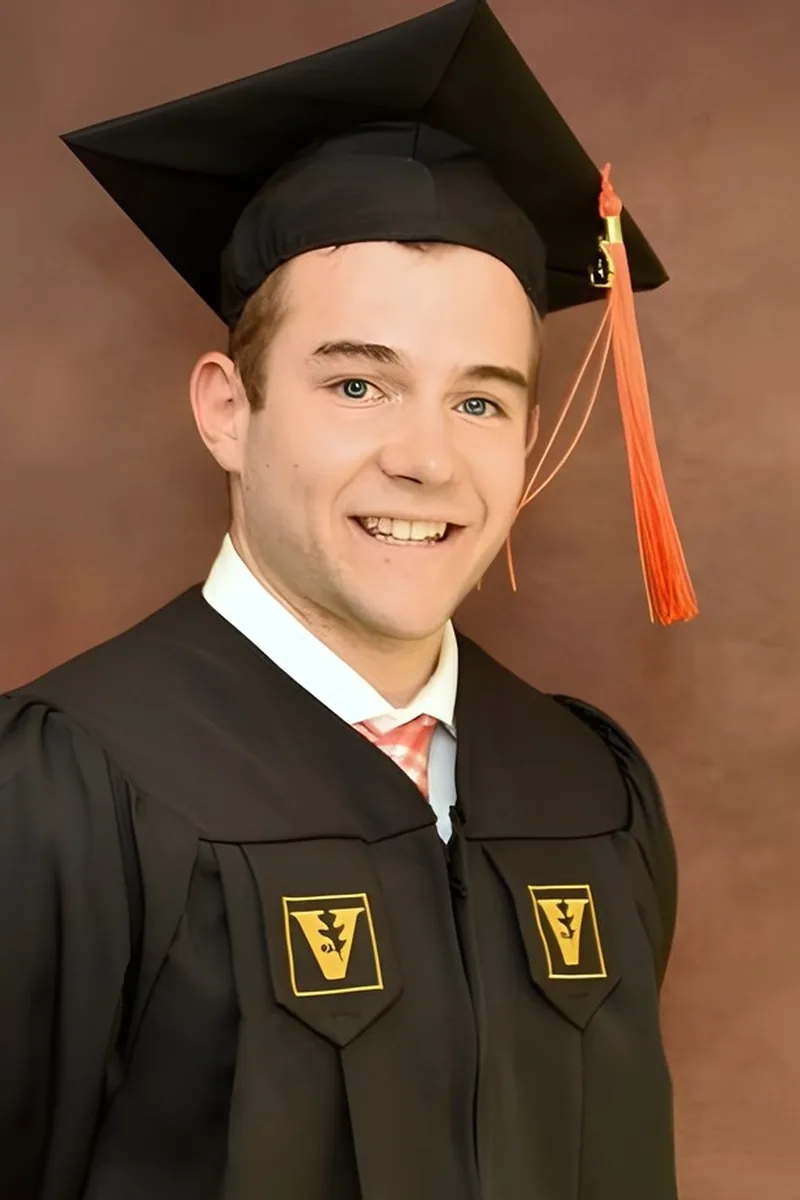
Engineering is applied science, and Dillon spent years learning physics, chemistry, and materials science before becoming a classroom teacher. He's particularly strong at explaining how scientific principles connect to real phenomena — why steel behaves differently under heat, how forces balance in a structure, what variables actually matter in an experiment. Students get someone who's used the scientific method professionally, not just read about it.
A law degree builds a specific habit of mind — read dense material carefully, extract the key claims, and test them against the evidence — that transfers directly to how students need to approach science at the middle and high school level. Jera applies that same analytical framework to interpreting lab data, understanding cause-and-effect in biological or physical systems, and writing up results in clear, precise language. Her economics background also means she's comfortable with the quantitative side: graphs, rates, and making sense of numerical relationships.
While science isn't Michael's primary discipline, his CS background gives him a structured, evidence-based approach to scientific reasoning — forming hypotheses, interpreting data, and understanding how variables interact. He's especially effective at connecting scientific concepts to the computational and mathematical thinking students already use in other subjects.
While science isn't Trace's core specialty, his research background — including an LLM thesis and undergraduate honors work — means he knows how to teach the scientific method, data interpretation, and evidence-based reasoning. He's a strong fit for students who need support organizing lab reports, understanding experimental design, or building the reading comprehension skills that science coursework increasingly demands.
A double bachelor's in Biological and Physical Sciences gives Michelle genuine depth in science content, from life science and ecosystems to basic chemistry and physics concepts. She doesn't just review vocabulary — she connects scientific ideas to real observations so students understand the "why" behind what they're learning. That combination of science training and classroom teaching experience makes her especially effective with students preparing for middle school science.
Karen's English literature degree might not scream science, but her physical science and astronomy tutoring draws on the same close-reading instincts she uses with texts — pulling meaning from diagrams, parsing dense passages, and asking students to explain observations in their own words rather than parroting definitions. Her 32 ACT and 4.9 rating suggest those analytical skills land with students across subjects.
I'm a recent college graduate with degrees in Biological Sciences and Russian from Ohio University. During my time there, I tutored students in a variety of subjects, including biology, chemistry, and Spanish. In addition, I worked as both a peer advisor and teaching assistant, which gives me insight into the learning strategies and study skills that students need to succeed. As a tutor, I like to focus on doing actual problems with students because it is the most effective way to immediately identify their strengths and weaknesses and to address them. In my free time, I like to lift weights, read books, and spend time with my friends.
From Newtonian mechanics to general chemistry to the biological sciences tested on the MCAT, Ishaan's science background spans an unusually wide range. He breaks down intimidating topics — free-body diagrams, stoichiometry, cellular respiration — into step-by-step reasoning chains that make each problem feel approachable. Students rate him 5.0.
I am a recent graduate with a master's in electrical engineering from Case Western Reserve University. I won the Bill and Melinda Gates Millennium Scholarship which covers full tuition up to Ph.D. I was on the Dean's List for three consecutive years. Additionally, I won the OZY Media Genius Award in 2015 to work on high-temperature superconductors. I currently work as a Technology Analyst at Accenture. I am also seriously considering whether I should go for a Ph.D. or not.
A chemical engineering degree means Seung didn't just study science — he applied it daily across chemistry, physics, and biology-adjacent coursework. He explains concepts like stoichiometry, energy transfer, and the scientific method by grounding them in real examples rather than abstract definitions. Students who feel lost in science often just need someone to connect the vocabulary to something concrete, which is exactly what Seung does.
An exercise science degree is essentially a crash course in applied science — biomechanics, human physiology, chemistry, and physics all woven together. Nikolas uses that interdisciplinary background to explain scientific concepts through tangible examples, whether it's how forces act on a joint or how chemical gradients drive cellular processes. His 5.0 rating speaks to how well that approach clicks with students.
As a biology major in Ohio State's Biological Sciences Scholars program, Olivia lives inside the scientific method daily — designing experiments, interpreting data, and connecting concepts across chemistry, biology, and physics. She breaks down tricky topics like cell processes or chemical reactions by tying them to real-world examples that make the material easier to retain.
Nora's engineering lab work gives her a practical lens on science topics like energy transfer, forces, and the scientific method — she can explain why a concept matters in the real world, not just on a worksheet. Her experience tutoring students across a wide age range means she adjusts how she explains things like cell biology or chemical reactions depending on what clicks for each learner.
Cell physiology, immunology, and biochemistry are Nathan's home turf — he earned his B.S. in Natural Sciences from the University of Akron and recently sat for the MCAT. Whether a student is puzzling over mitosis, balancing chemical equations, or interpreting data from a lab report, Nathan connects each concept to a bigger biological or chemical picture that makes individual facts easier to retain.
I am always willing to help and I will try my best to help students who desire further understanding of the subject at hand.
A Human Nutrition degree at Ohio State meant Jonathan took organic chemistry, biochemistry, microbiology, and molecular genetics back to back — so he understands how scientific disciplines layer on top of each other. He connects concepts across those fields, explaining how a cell biology principle shows up again in genetics or why understanding chemical bonds matters for metabolism. That cross-disciplinary perspective makes complex science topics feel less isolated and more intuitive.
Actuarial science is essentially applied probability and statistics — John spends his coursework at Ohio State quantifying risk, modeling outcomes, and interpreting data sets, which means the quantitative side of science (calculating rates, reading graphs, working through proportional relationships) comes naturally to him. His 32 ACT composite confirms he can handle science material beyond just the math, including the passage-based reasoning and experimental interpretation that general science courses demand.
Few science tutors can move seamlessly from explaining mitosis to balancing redox reactions to walking through fluid dynamics problems, but Emeric's biochemistry training sits right at the intersection of biology, chemistry, and physics. He pinpoints exactly where a student's understanding breaks down — whether it's mole conversions or cell signaling — and rebuilds from that specific gap. Rated 5.0 across his sessions.
Industrial engineering coursework covers a surprising amount of science — physics, chemistry, and statistics all show up in systems modeling and process optimization. Cassidy applies that quantitative training to break down scientific concepts like energy transfer, experimental design, and data interpretation into steps that actually make sense to younger learners.
Kathryn approaches science by teaching students how to read experiments — forming hypotheses, interpreting data tables, and connecting observations back to key concepts. Her analytical training in economics gives her a structured way of tackling the scientific method that translates well to younger learners encountering it for the first time.
Reading a data table, interpreting an experiment's controls, or connecting a hypothesis to its evidence — these are the core scientific reasoning skills Sean tackles with his students. His approach treats science as a way of thinking through problems rather than a collection of vocabulary terms to memorize.
A psychology degree from Ohio State required rigorous coursework in research methods, statistics, and the biological sciences — so Luke understands how to read experiments, interpret data, and connect scientific concepts to real-world observations. He's especially strong at teaching students to think like scientists: forming hypotheses, identifying variables, and drawing conclusions from evidence rather than guessing.
Emily's undergraduate degree in Molecular, Cellular, and Developmental Biology and her MPH in Epidemiology give her deep fluency in both life sciences and the quantitative reasoning that underpins them. She unpacks topics like cell division, genetics, and experimental design by tying abstract concepts to real-world examples from public health research. Rated 5.0 by students.
A social sciences master's degree means Lauren spent years doing what science coursework actually asks of students — reading studies, questioning methodology, and pulling defensible conclusions from messy data. She's particularly good at walking through how to set up a controlled experiment and explain results in plain language, since her own graduate research required exactly that. Rated 5.0 by students.
A current medical student with a UCLA biology degree, Vinay connects scientific concepts to real mechanisms rather than leaving them as abstract definitions. Whether the topic is cellular respiration, Newton's laws, or chemical bonding, he walks through the underlying logic so students can predict outcomes instead of just memorizing facts. His 95th-percentile MCAT score reflects the same deep-process approach he brings to every science session.
Latin study turns out to be surprisingly useful preparation for science — Amy's experience with Latin means she can teach students to decode unfamiliar scientific terminology by breaking words into their Greek and Latin roots, turning intimidating vocabulary into something logical and predictable. Her English major at Penn also sharpened the close-reading skills that matter when students need to pull key information from dense textbook passages or interpret what a lab procedure is actually asking them to do.
Getting a young student excited about the water cycle or animal adaptations is one thing; teaching them to actually observe, predict, and record like a scientist is another. Arielle brings her classroom teaching experience to science sessions, turning topics like states of matter or plant life cycles into hands-on reasoning exercises that build real scientific thinking skills.
Holding a Master's in Biomedical Sciences, Sarah brings real research-level understanding to topics like cell biology, genetics, and human physiology. She unpacks dense scientific vocabulary and teaches students to read diagrams, interpret data, and connect concepts across systems. That depth makes a noticeable difference when a student is struggling to see how individual facts fit into a bigger biological picture.
A chemical engineering degree from Cornell means Rahul has deep, hands-on fluency across chemistry, physics, biology, and thermodynamics — not just textbook familiarity. He unpacks scientific concepts by tracing them back to fundamental principles, so students learn to reason through unfamiliar problems instead of pattern-matching to examples they've already seen.
Biomedical engineering sits at the intersection of biology, physics, and chemistry — so Christine doesn't teach these sciences in isolation. Whether a student is struggling with cell biology concepts or force diagrams, she connects each topic back to real systems like the mechanics of blood flow or how electrical signals travel through neurons.
Emma's Human Development coursework at Cornell included hands-on work with SPSS statistical software and research methods — designing studies, collecting data, and interpreting results — which grounds her science tutoring in actual lab-style thinking rather than textbook definitions alone. She's particularly good at walking students through how to set up a fair experiment and explain their findings clearly, skills she sharpened while building weekly lesson plans for kids from preschool through twelfth grade at Chautauqua Institution.
A Vanderbilt neuroscience degree means Nathan spent years inside biology, chemistry, and physiology courses — not just memorizing terminology but learning how to design experiments, interpret data, and connect systems across disciplines. He brings that cross-subject fluency to science tutoring, whether a student is struggling with cell division, the periodic table, or how to read a graph in a lab report.
A Gates Cambridge Scholar headed to Yale Law, Yusef knows how to digest dense material quickly and extract what matters — a skill that pays off when students are wading through biology chapters or chemistry units packed with unfamiliar terminology. He teaches reading-heavy science the way he'd prep a legal brief: identify the key claim, find the supporting evidence, and figure out what's actually being tested. His 32 ACT confirms he can handle the data interpretation and quantitative reasoning science coursework requires.
Neuroscience is inherently interdisciplinary, so Benjamin spent four years at Vanderbilt moving between biology, chemistry, and physics — learning how ion channels obey electrochemical gradients, how imaging technology relies on electromagnetic principles, and how statistical analysis validates experimental results. That breadth makes him especially effective at showing students how scientific concepts connect across disciplines rather than existing in isolated chapters.
A lot of science anxiety comes from the sheer volume — memorizing cell organelles, balancing equations, interpreting lab data — without a framework for how the pieces fit together. Priya tackles this by teaching students to map relationships between concepts (like how chemical bonding rules explain biological molecule behavior) so that new material slots into what they already know instead of piling on top of it.
Emma earned her biology degree at Duke and conducted field research on Hawaiian monk seals, so she understands science as something you do, not just something you read about. She unpacks core concepts in life sciences, ecology, and biology by tying them back to real organisms and real data. Students preparing for exams or working through tough lab assignments get someone who genuinely lives this material.
Studying biomedical engineering means Christian lives at the intersection of biology, chemistry, and physics — so he can explain concepts like cell energetics or Newtonian mechanics from the perspective of someone who actively uses them. He approaches science as a way of thinking through problems systematically, teaching students to interpret data and build logical explanations instead of just memorizing vocabulary.
Between a bachelor's in chemistry and a master's in environmental toxicology, Amy has logged serious time across chemistry, physics, and biology — not as separate silos but as interconnected disciplines. She unpacks scientific concepts by grounding them in real-world examples, like how pollutant behavior involves both chemical reactions and physical forces. Rated 5.0 by students.
Peter's journalism training — where every claim needs sourcing and every story needs evidence — maps neatly onto how science asks students to support conclusions with data and distinguish observation from inference. His Masters in Education means he knows how to sequence lessons so that concepts like energy, ecosystems, or the scientific method build on each other instead of feeling like disconnected vocabulary lists. Rated 4.7 by students.
Testimonials
Because the right Science tutor makes all the difference.
Average Session Rating – Based on 3.4M Learner Ratings
Practice Science
Free practice tests, flashcards, and AI tutoring for Science
Other Columbus Tutors
Related Science Tutors in Columbus
Frequently Asked Questions
Many students struggle with connecting abstract scientific concepts to real-world applications, especially in chemistry and physics where visualization is critical. Others find it difficult to balance memorization of facts with understanding underlying principles, or they lack confidence in lab work and experimental design. Personalized tutoring helps students work through these challenges at their own pace, with a tutor who can identify exactly where understanding breaks down and rebuild that foundation.
In a classroom with a 19.7:1 student-teacher ratio, teachers often move through material at a set pace regardless of individual needs. Personalized tutoring allows a tutor to focus entirely on your learning style, slow down on difficult concepts like stoichiometry or photosynthesis, and spend extra time on labs or problem-solving techniques you find challenging. This targeted approach helps you build genuine understanding rather than just keeping up with the class.
Yes. Varsity Tutors connects you with tutors who understand Ohio's science standards and can align instruction with what your student is studying in their Columbus-area school—whether that's life science, earth science, biology, chemistry, or physics. Tutors can also help reinforce classroom concepts, prepare for unit tests, or get ahead on upcoming material depending on your needs.
Absolutely. Many students feel anxious about lab work, from setting up equipment correctly to understanding why experiments are designed a certain way. Tutors can walk through lab procedures step-by-step, explain the reasoning behind experimental design, and help you interpret results and draw meaningful conclusions. This builds both technical confidence and deeper understanding of the science concepts being tested.
Varsity Tutors connects students with tutors across all grade levels and science disciplines—from elementary science and middle school life/earth science to high school biology, chemistry, physics, and AP sciences. Whether your student needs foundational support or is preparing for advanced coursework, there's a tutor ready to help.
The first session is focused on understanding your student's current level, learning style, and specific goals—whether that's improving test scores, understanding a difficult unit, or building confidence in the subject. The tutor will assess what's working well and where support is needed, then create a personalized plan moving forward. This foundation helps make every session after that more effective and targeted.
Many students see noticeable improvement in understanding and confidence within 3-4 weeks of consistent tutoring, especially when working on specific units or test preparation. Longer-term gains in overall science proficiency depend on frequency of sessions and the student's starting point, but regular personalized instruction helps students move from confusion to mastery much faster than classroom-only learning allows.
Varsity Tutors connects you with tutors who have deep expertise in their science subject area—many hold degrees in biology, chemistry, physics, or related fields, and many have classroom teaching experience or advanced certifications. Each tutor is vetted for subject knowledge and teaching ability, so you can feel confident your student is learning from someone who truly understands the material and knows how to explain it clearly.
Let’s find your perfect tutor
Answer a few quick questions. We’ll recommend the right plan and match you with a top 5% tutor.