Award-Winning Science Tutors
serving Cleveland, OH
Science
Tutors in Cleveland
Private 1-on-1 tutoring, weekly live classes for academic support, test prep & enrichment, practice tests and diagnostics, and more to elevate grades and test scores.
Based on 3.4M Learner Ratings
UniversitiesSchools & Universities
DeliveredHours Delivered
ProficiencyGrowth in Proficiency
Who needs tutoring?
No obligation. Takes ~1 minute.
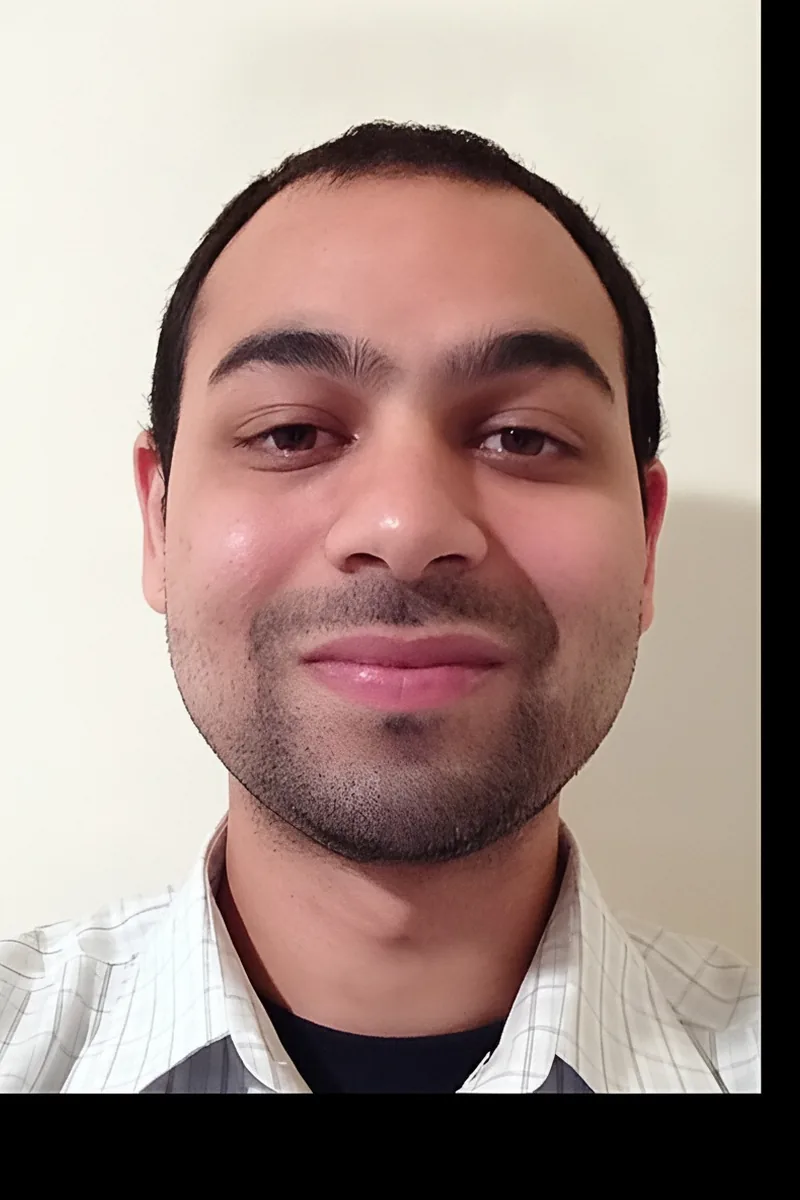
A current medical student with a UCLA biology degree, Vinay connects scientific concepts to real mechanisms rather than leaving them as abstract definitions. Whether the topic is cellular respiration, Newton's laws, or chemical bonding, he walks through the underlying logic so students can predict outcomes instead of just memorizing facts. His 95th-percentile MCAT score reflects the same deep-process approach he brings to every science session.
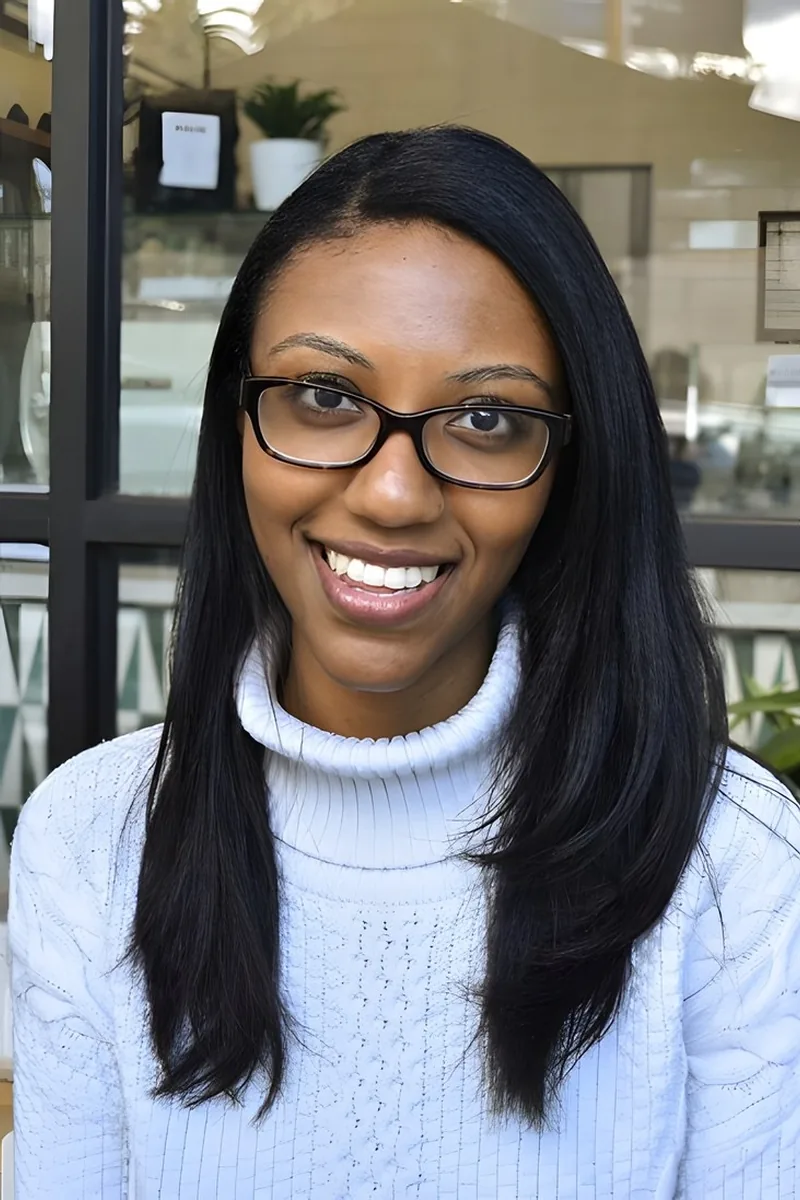
Getting a young student excited about the water cycle or animal adaptations is one thing; teaching them to actually observe, predict, and record like a scientist is another. Arielle brings her classroom teaching experience to science sessions, turning topics like states of matter or plant life cycles into hands-on reasoning exercises that build real scientific thinking skills.
Latin study turns out to be surprisingly useful preparation for science — Amy's experience with Latin means she can teach students to decode unfamiliar scientific terminology by breaking words into their Greek and Latin roots, turning intimidating vocabulary into something logical and predictable. Her English major at Penn also sharpened the close-reading skills that matter when students need to pull key information from dense textbook passages or interpret what a lab procedure is actually asking them to do.
Emma's Human Development coursework at Cornell included hands-on work with SPSS statistical software and research methods — designing studies, collecting data, and interpreting results — which grounds her science tutoring in actual lab-style thinking rather than textbook definitions alone. She's particularly good at walking students through how to set up a fair experiment and explain their findings clearly, skills she sharpened while building weekly lesson plans for kids from preschool through twelfth grade at Chautauqua Institution.
Emma earned her biology degree at Duke and conducted field research on Hawaiian monk seals, so she understands science as something you do, not just something you read about. She unpacks core concepts in life sciences, ecology, and biology by tying them back to real organisms and real data. Students preparing for exams or working through tough lab assignments get someone who genuinely lives this material.
Two years of hands-on immunology research in a pediatric infectious diseases lab gave Julie a working scientist's perspective on biology and experimental design. She teaches students to read data the way a researcher does — identifying variables, understanding controls, and connecting results back to underlying mechanisms rather than treating science as a list of vocabulary terms.
A master's in chemistry and an undergraduate degree in biochemistry mean Rosalyn can move fluidly between biology, chemistry, and the overlap where most students get tripped up — enzyme kinetics, molecular interactions, lab technique. She unpacks difficult concepts by linking them to everyday examples and building up from the underlying logic rather than handing students formulas to memorize.
I'm entering my senior year at Case Western Reserve University. I'm happy to provide tutoring services for those interested in improving their academic performance or exam preparation. The subjects which I am most proficient include SAT Math, Algebra 1 , Algebra 2, Middle School Math, Pre-Algebra, Pre-Calculus, and Trigonometry.
Physics is Brian's favorite subject because it's where math stops being abstract and starts explaining the real world — projectile motion, energy conservation, electric circuits. Studying computer science at Case Western Reserve keeps him sharp on the quantitative reasoning that underpins all the sciences, and his 33 ACT composite reflects that cross-disciplinary strength.
Sunay's neuroscience degree means he lives at the intersection of biology, chemistry, and physics — which is exactly the range a general science tutor needs. He's tutored AP Biology and honors physics specifically, so he can unpack everything from cellular respiration pathways to Newton's laws with equal confidence. Students get someone who genuinely understands the underlying concepts rather than just walking through textbook examples.
A PhD in applied mathematics means Dr has spent years modeling real-world systems — fluid dynamics, population growth, thermodynamics — where the math and the science are inseparable. That deep quantitative training makes him especially effective at unpacking the physics and chemistry embedded in science coursework, from energy calculations to rate-of-change problems. Rated 4.9 by students.
A music education major might not scream 'science tutor,' but Ruth's coursework at Case Western Reserve includes the physics of sound, acoustics, and the biology of hearing — plus the math-heavy problem-solving she genuinely enjoys. She's strongest when students need to connect scientific concepts to real-world phenomena they can actually hear, see, or measure, turning abstract principles into something concrete.
Two engineering degrees give Alexander unusual range across the sciences — he can explain covalent bonding in chemistry, walk through free-body diagrams in physics, and connect both to real biological systems. Whether a student is struggling with balancing equations or interpreting motion graphs, he ties abstract concepts back to tangible examples from engineering and everyday life.
An engineering education requires serious fluency in physics, chemistry, and data analysis, and Karen draws on that training when tackling science concepts with younger learners. She emphasizes reading charts, understanding units, and designing simple experiments — the foundational skills that make later science courses far less intimidating.
Twenty years in the arts might seem like an unlikely path to science tutoring, but Amos's music performance training — which requires precise measurement, pattern recognition, and understanding acoustics and waveforms — builds the same systematic thinking science coursework demands. He's especially effective at teaching students to observe carefully and describe what's actually happening in an experiment, a skill honed by decades of close listening and analytical practice. Holds a 5.0 rating.
As a biochemistry major at Case Western Reserve, Timothy lives in the overlap between biology and chemistry every day — enzyme kinetics, molecular structure, cellular energetics. He unpacks scientific concepts by tying them to real processes, turning abstract diagrams into stories about what's actually happening at the molecular level.
While science isn't her core focus, Lauren's psychology coursework covers research design, data interpretation, and the scientific method — skills that transfer directly to general science classes. She approaches science material the way she approaches a complex text: breaking it into parts, identifying key relationships, and teaching students to explain concepts in their own words rather than relying on rote memorization.
Having taught across biology, chemistry, and every grade level from third through twelfth, Beth knows how to match her explanations to where a student actually is — whether that means building a food web with a fifth grader or walking a high schooler through chemical reactions. Her history degree from Allegheny College trained her to sift through evidence and build arguments, which she now channels into teaching students how to design experiments, interpret data, and explain their reasoning. Rated 4.8 by students.
Working full-time as a research associate at a biotech company, Brittany lives science daily — designing experiments, interpreting data, and applying biological concepts in a professional lab setting. She brings that real-world context into tutoring sessions, whether a student is learning the scientific method for the first time or tackling cell biology and genetics. Her animal sciences degree gives her particular depth in life sciences and anatomy.
I am a seasoned educator with over 14 years of teaching experience. I currently am a middle school principal but have taught grades 3-college. I am no stranger to Common Core and can help students master material with tried and true strategies!
As a biology major who served as an undergraduate teaching assistant for a college-level Cells and Proteins course, Anna knows what it takes to move from surface-level definitions to genuine understanding of scientific processes. She unpacks topics like cell structure, genetics, and the scientific method by tying them back to concrete examples — how enzyme kinetics show up in digestion, or why mitosis matters for wound healing.
Studying physics alongside economics at Case Western Reserve gave Anish a habit of tying scientific concepts back to the math that explains them — force diagrams become vector addition problems, chemical reactions become stoichiometric puzzles. He leans into those "cool moments" where a student sees why something works and suddenly finds the subject less intimidating.
With degrees touching physics, chemistry, and calculus, Christopher doesn't just cover science — he lives in the overlap where those disciplines reinforce each other, which means he can explain why a chemical reaction releases heat using the same energy principles a student encounters in physics class. That cross-subject fluency is especially valuable when students hit topics like thermodynamics or wave behavior that refuse to stay neatly inside one textbook chapter.
An effective educator must be able to recognize each individual student's learning style and to adapt the lesson to accommodate that style. Also, each student has a different rate of learning. Thus, the lessons must be directed not only towards ensuring the student masters the material but also keeps the student engaged in and enthusiatic about the education process. Finally, the effective tutor must remember that the end goal of the learning process is not only to master a defined set of knowledge and skills, but also to learn "how to learn;" in this way the student will be better equipped to thrive in an ever changing environment.
As a curriculum developer building courses for middle and high schoolers, Elena knows exactly how to make dense material click — including the scientific vocabulary, classification systems, and cause-and-effect reasoning that science coursework demands. Her Religious Studies training at McGill involved rigorous textual analysis and structured argumentation, skills she now channels into teaching students how to read scientific texts carefully, interpret what an experiment actually shows, and explain their reasoning clearly.
Emily's undergraduate degree in Molecular, Cellular, and Developmental Biology and her MPH in Epidemiology give her deep fluency in both life sciences and the quantitative reasoning that underpins them. She unpacks topics like cell division, genetics, and experimental design by tying abstract concepts to real-world examples from public health research. Rated 5.0 by students.
A social sciences master's degree means Lauren spent years doing what science coursework actually asks of students — reading studies, questioning methodology, and pulling defensible conclusions from messy data. She's particularly good at walking through how to set up a controlled experiment and explain results in plain language, since her own graduate research required exactly that. Rated 5.0 by students.
A chemical engineering degree from Cornell means Rahul has deep, hands-on fluency across chemistry, physics, biology, and thermodynamics — not just textbook familiarity. He unpacks scientific concepts by tracing them back to fundamental principles, so students learn to reason through unfamiliar problems instead of pattern-matching to examples they've already seen.
Holding a Master's in Biomedical Sciences, Sarah brings real research-level understanding to topics like cell biology, genetics, and human physiology. She unpacks dense scientific vocabulary and teaches students to read diagrams, interpret data, and connect concepts across systems. That depth makes a noticeable difference when a student is struggling to see how individual facts fit into a bigger biological picture.
Biomedical engineering sits at the intersection of biology, physics, and chemistry — so Christine doesn't teach these sciences in isolation. Whether a student is struggling with cell biology concepts or force diagrams, she connects each topic back to real systems like the mechanics of blood flow or how electrical signals travel through neurons.
A Vanderbilt neuroscience degree means Nathan spent years inside biology, chemistry, and physiology courses — not just memorizing terminology but learning how to design experiments, interpret data, and connect systems across disciplines. He brings that cross-subject fluency to science tutoring, whether a student is struggling with cell division, the periodic table, or how to read a graph in a lab report.
Neuroscience is inherently interdisciplinary, so Benjamin spent four years at Vanderbilt moving between biology, chemistry, and physics — learning how ion channels obey electrochemical gradients, how imaging technology relies on electromagnetic principles, and how statistical analysis validates experimental results. That breadth makes him especially effective at showing students how scientific concepts connect across disciplines rather than existing in isolated chapters.
A Gates Cambridge Scholar headed to Yale Law, Yusef knows how to digest dense material quickly and extract what matters — a skill that pays off when students are wading through biology chapters or chemistry units packed with unfamiliar terminology. He teaches reading-heavy science the way he'd prep a legal brief: identify the key claim, find the supporting evidence, and figure out what's actually being tested. His 32 ACT confirms he can handle the data interpretation and quantitative reasoning science coursework requires.
Studying biomedical engineering means Christian lives at the intersection of biology, chemistry, and physics — so he can explain concepts like cell energetics or Newtonian mechanics from the perspective of someone who actively uses them. He approaches science as a way of thinking through problems systematically, teaching students to interpret data and build logical explanations instead of just memorizing vocabulary.
A lot of science anxiety comes from the sheer volume — memorizing cell organelles, balancing equations, interpreting lab data — without a framework for how the pieces fit together. Priya tackles this by teaching students to map relationships between concepts (like how chemical bonding rules explain biological molecule behavior) so that new material slots into what they already know instead of piling on top of it.
Engineering is applied science, and Dillon spent years learning physics, chemistry, and materials science before becoming a classroom teacher. He's particularly strong at explaining how scientific principles connect to real phenomena — why steel behaves differently under heat, how forces balance in a structure, what variables actually matter in an experiment. Students get someone who's used the scientific method professionally, not just read about it.
Peter's journalism training — where every claim needs sourcing and every story needs evidence — maps neatly onto how science asks students to support conclusions with data and distinguish observation from inference. His Masters in Education means he knows how to sequence lessons so that concepts like energy, ecosystems, or the scientific method build on each other instead of feeling like disconnected vocabulary lists. Rated 4.7 by students.
Between a bachelor's in chemistry and a master's in environmental toxicology, Amy has logged serious time across chemistry, physics, and biology — not as separate silos but as interconnected disciplines. She unpacks scientific concepts by grounding them in real-world examples, like how pollutant behavior involves both chemical reactions and physical forces. Rated 5.0 by students.
Policy analysis at Vanderbilt means Cynthia spends her coursework doing exactly what science asks students to do — reading data, weighing evidence, and building arguments that hold up under scrutiny. She's particularly useful for students who can handle the concepts but struggle to explain their reasoning on lab write-ups or short-answer questions, since clear scientific writing overlaps heavily with the persuasive communication skills her major demands. Rated 5.0 by students.
A law degree builds a specific habit of mind — read dense material carefully, extract the key claims, and test them against the evidence — that transfers directly to how students need to approach science at the middle and high school level. Jera applies that same analytical framework to interpreting lab data, understanding cause-and-effect in biological or physical systems, and writing up results in clear, precise language. Her economics background also means she's comfortable with the quantitative side: graphs, rates, and making sense of numerical relationships.
Testimonials
Because the right Science tutor makes all the difference.
Average Session Rating – Based on 3.4M Learner Ratings
Practice Science
Free practice tests, flashcards, and AI tutoring for Science
Other Cleveland Tutors
Related Science Tutors in Cleveland
Frequently Asked Questions
Many Cleveland students struggle with connecting abstract scientific concepts to real-world applications, especially in chemistry and physics where visualization is critical. With an average student-teacher ratio of 18.8:1 across the district, classroom instruction often can't address individual misconceptions that build up over time. Personalized 1-on-1 instruction helps identify exactly where understanding breaks down—whether it's balancing equations, grasping force and motion, or mastering the scientific method—so tutors can target those specific gaps rather than moving forward with incomplete foundations.
During an initial session, a tutor will assess your current understanding through conversation and targeted questions—not a formal test. They'll identify which concepts feel solid, where confusion exists, and what your specific goals are (improving grades, preparing for a test, building confidence). This diagnostic approach means the tutoring plan is customized from day one, focusing on the areas that will make the biggest difference for your success.
Tutors working with Cleveland students are familiar with Ohio's Learning Standards for Science and the specific expectations at each grade level—from elementary life science through high school biology, chemistry, and physics. Whether you're in one of Cleveland's 114 schools or working toward district benchmarks, personalized instruction can reinforce what you're learning in class while filling in gaps and going deeper into concepts that interest you. Tutors also prepare students for Ohio's standardized assessments and college-prep science courses.
Absolutely. Many students understand science concepts in theory but struggle when it comes to lab work, data analysis, or writing lab reports. Personalized tutoring covers the practical side of science—how to design experiments, collect and interpret data, troubleshoot when results don't match expectations, and communicate findings clearly. Tutors can walk through lab procedures, help you understand what you're observing, and build confidence before you step into the lab.
Yes. Whether you're preparing for unit exams, Ohio's state science assessments, the ACT Science section, AP exams, or college placement tests, tutors can help you develop test-taking strategies alongside content mastery. This includes learning how to manage time during exams, interpreting graphs and data tables quickly, and recognizing common question patterns. Targeted practice with feedback helps you move from understanding concepts to applying them under test conditions.
Yes. Tutors can support students in AP Biology, AP Chemistry, AP Physics, honors-level courses, and other advanced science classes. These courses move quickly and require both deep conceptual understanding and the ability to apply knowledge to complex problems. Personalized instruction helps you keep pace with the curriculum, master challenging topics like thermodynamics or molecular biology, and develop the problem-solving skills needed for AP exams or college-level science.
One-on-one instruction removes the pressure of keeping up with a large classroom and creates space to explore science in ways that connect to a student's actual interests—whether that's the biology behind sports performance, the physics of video games, or the chemistry of cooking. When a tutor can slow down, answer questions without time pressure, and explain the 'why' behind concepts, science often becomes less intimidating and more engaging. Many students discover they're more capable than they thought once they have individualized support.
Many students see noticeable improvement in understanding and confidence within 3-4 sessions, especially when tutoring targets specific weak areas. Grade improvements often follow as understanding solidifies, though the timeline depends on how far behind a student is and how frequently tutoring occurs. Consistent, focused sessions combined with practice between meetings accelerate progress more than sporadic tutoring.
Let’s find your perfect tutor
Answer a few quick questions. We’ll recommend the right plan and match you with a top 5% tutor.