Award-Winning NCLEX Tutors
serving Charlotte, NC
NCLEX
Tutors in Charlotte
Private 1-on-1 tutoring, weekly live classes for academic support, test prep & enrichment, practice tests and diagnostics, and more to elevate grades and test scores.
Based on 3.4M Learner Ratings
UniversitiesSchools & Universities
DeliveredHours Delivered
ProficiencyGrowth in Proficiency
Who needs tutoring?
No obligation. Takes ~1 minute.
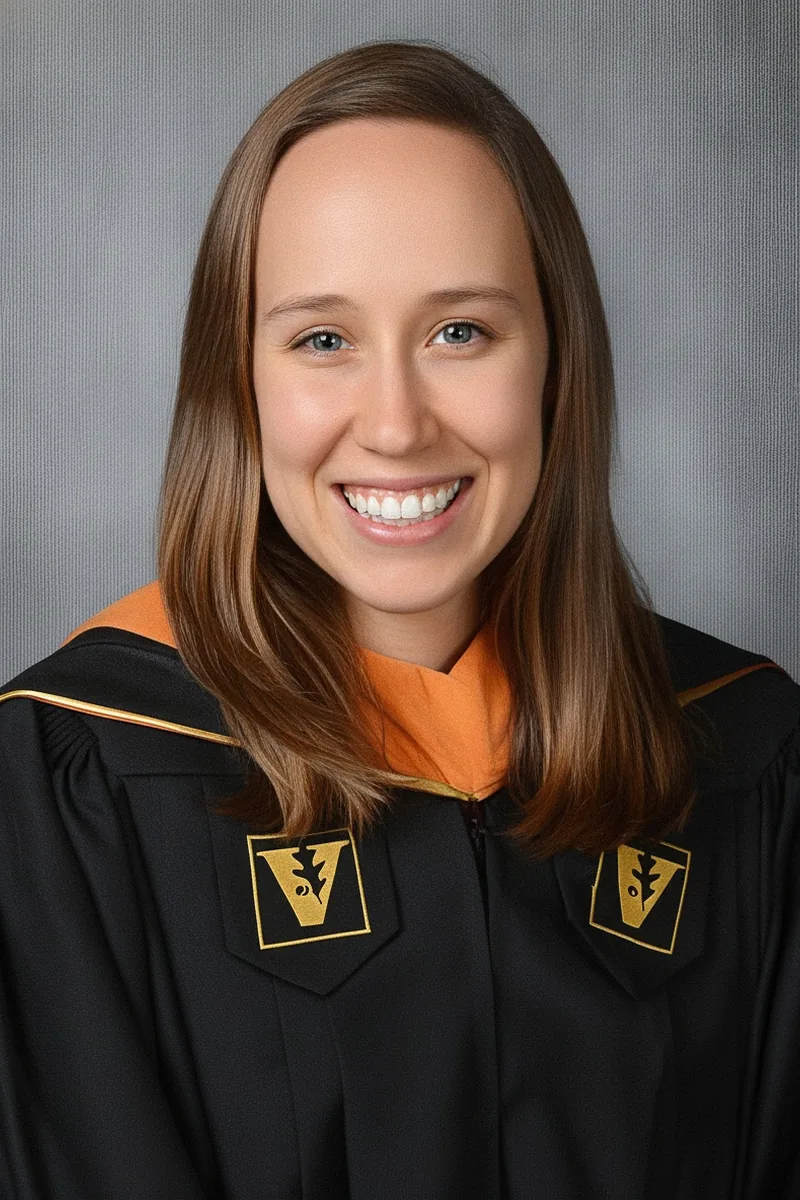
Katherine holds both a Bachelor's in Psychology and a Master of Science in Nursing, which means she understands the clinical reasoning and prioritization logic the NCLEX actually tests. She tackles high-yield areas like delegation, patient safety, and pharmacology through the lens of how questions are constructed — teaching students to eliminate distractors and identify what the stem is really asking.
Passing the NCLEX means thinking like a nurse under pressure — prioritizing interventions, recognizing delegation rules, and applying clinical judgment to questions designed to trip you up. Tracy holds both a BSN and a Master's in Adult Health Nursing, so she knows the exam's content deeply and can unpack the reasoning behind each answer choice. She zeroes in on high-yield topics like pharmacology, patient safety, and the ABCs framework that drive most select-all-that-apply questions.
Having navigated the NCLEX herself and mentored nursing students through it for years, Tanisha knows exactly where candidates stumble — prioritization questions, delegation scenarios, and select-all-that-apply items that demand clinical reasoning under pressure. She teaches a systematic approach to dissecting each question stem, eliminating distractors, and applying nursing judgment rather than relying on rote memorization of content alone. Her critical care, med-surg, and bariatric surgery background means she can contextualize even the trickiest pharmacology and pathophysiology questions with real clinical examples.
Few NCLEX tutors bring Rachel's combination of clinical nursing experience, a Doctorate in Nursing Practice, and certifications in healthcare quality and patient safety. She tackles the exam's clinical-judgment questions by teaching students to think through prioritization, delegation, and safety the way a practicing nurse actually would — breaking down each NCLEX-style item into the reasoning pattern it's really testing.
As a practicing RN in the Pediatric ICU at Children's Hospital of Philadelphia, Megan passed the NCLEX recently enough to remember exactly which content areas and question styles caught her off guard. She walks through prioritization and delegation questions, select-all-that-apply strategies, and the pharmacology and pathophysiology concepts that dominate the exam. Her 5.0 rating speaks to how clearly she breaks down clinical reasoning under test conditions.
Jacquelyn's background in anatomy, physiology, and biology provides a solid grounding in the clinical science that underpins NCLEX questions, particularly the pathophysiology and pharmacology content that appears across multiple exam categories. She approaches test prep by teaching students to decode the priority-setting and delegation logic embedded in NCLEX-style questions, not just recall isolated facts.
Having completed a Doctor of Science in Adult Health Nursing, Tamera knows the NCLEX inside out — from priority-setting and delegation questions to the clinical judgment items that trip up even strong nursing students. She teaches a systematic approach to dissecting NCLEX-style vignettes, identifying what the question is really asking, and eliminating distractors with confidence.
The NCLEX leans heavily on anatomy, physiology, pharmacology, and pathophysiology — subjects Michelle knows inside and out from her biology degree and her work across biochemistry, microbiology, and nutrition. She breaks down the science behind each clinical scenario so students aren't just memorizing nursing interventions but understanding the biological rationale that makes the correct answer obvious.
Tanya holds an MSN in Nursing Administration and has spent over 27 years in clinical and educational nursing roles, so she knows exactly how the NCLEX tests critical thinking under pressure. She tackles priority and delegation questions by teaching the decision frameworks behind them — ABCs, Maslow's hierarchy, and scope-of-practice boundaries — so students internalize the reasoning instead of just memorizing answer patterns.
As a graduate of both in-person and online educational programs and universities, I am acutely aware of the challenges that can accompany these different learning formats. It is my passion to help students be successful in any learning environment they find themselves in. It is an honor to be a part of your journey to success! Any educational journey is not for the faint of heart! My own journey to becoming a Registered Nurse (BSN) was wraught ups and downs, mountaintops and valleys! I found success in utilizing tutors during my time in school, facilitating study groups, and staying organized in my study notes and in life in general. I am a huge proponent of learning to understand so that learned knowledge can be applied to a variety of scenarios/questions. I stay current in my nursing practice by working at a local hospital in a nearby city. I enjoy teaching and mentoring new nurses and student nurses on site. And I get to feed my love of helping those learn here at Varsity Tutors! During the school year I also teach as an adjunct faculty at Boise State University in their School of Nursing which I really enjoy! My special focus is High School/Adult learners. I would love to come alongside you and help you develop the skills you need to be successful!
I break nursing concepts into clear, manageable parts and connect every topic to real clinical examples. By simplifying complex material and grounding it in realworld application, I help students build confidence, strengthen critical thinking, and understand how classroom knowledge translates into safe, effective patient care.
I am a Dartmouth graduate. I am currently working on my med and business endeavors. I have not only an interest, but a motivation to help others. I have helped students get into Ivy League schools as well as other top universities across the country with top scholarships. I tutor in all subjects from French to Essay Writing and Algebra to Chemistry! I want my students and tutees to see the value in themselves and know that they can accomplish anything with determination and hard work! Realizing you can do it is half the battle and working hard to bring that dream to fruition is the other half!
I am so glad you have taken the first, and ever-so important steps to building knowledge, and hopefully that is here with me. I can understand some of the challenges you are facing regarding the rigor of academics, however it is always possible to break things down into a more simplified version that we all can grasp. I believe that everyone, when given a formidable amount of education and resources, can learn even the most difficult subjects. I hope to help you succeed in school and in life!
Testimonials
Because the right NCLEX tutor makes all the difference.
Average Session Rating – Based on 3.4M Learner Ratings
Other Charlotte Tutors
Related Professional Certifications Tutors in Charlotte
Frequently Asked Questions
The NCLEX (National Council Licensure Examination) is the standardized test that nursing graduates must pass to become licensed registered nurses (RN) or licensed practical nurses (LPN). If you've completed a nursing program in Charlotte or elsewhere and want to practice nursing, passing the NCLEX is a mandatory requirement for licensure in North Carolina and all U.S. states.
The NCLEX uses Computer Adaptive Testing (CAT), meaning the difficulty of questions adjusts based on your performance—if you answer correctly, the next question gets harder. The exam covers four major content areas: safe and effective care environment, health promotion and maintenance, psychosocial integrity, and physiological integrity. Test length varies (typically 75-265 questions), and you'll have up to 6 hours to complete it, testing your knowledge of nursing fundamentals, pharmacology, medical-surgical nursing, and patient care scenarios.
Many nursing graduates struggle with the NCLEX's focus on application and critical thinking rather than simple recall—questions require you to analyze patient scenarios and prioritize care, not just memorize facts. Other frequent challenges include managing test anxiety, mastering pharmacology content, understanding the computer adaptive format, and balancing comprehensive review with time management. Personalized tutoring helps address your specific weak areas rather than generic test prep, allowing you to focus on the concepts that are actually holding you back.
Personalized 1-on-1 instruction allows a tutor to identify your knowledge gaps, teach test-taking strategies specific to the NCLEX format, and provide targeted practice with detailed explanations—something you can't get from self-study alone. Tutors can help you understand why incorrect answers are wrong, build confidence in high-stakes content like pharmacology and delegation, and develop a study plan tailored to your learning style. This focused approach has been shown to significantly improve pass rates compared to generic test prep resources.
Your first session will typically include an assessment of your current knowledge, review of your nursing school background, and identification of your strongest and weakest content areas. The tutor will discuss your study timeline, test anxiety concerns if applicable, and develop a personalized plan that prioritizes the topics where you need the most help. This foundation ensures that all future sessions are strategically focused on moving you toward NCLEX success.
Most nursing graduates benefit from 4-12 weeks of focused NCLEX preparation, though your timeline depends on your baseline knowledge and test date. Many students meet with a tutor 1-3 times per week while also doing independent practice questions and review—this combination of personalized instruction and self-study maximizes retention and confidence. Your tutor can adjust the frequency and intensity based on your progress and how close your exam date is.
Pharmacology, medical-surgical nursing, and prioritization/delegation questions are consistently challenging for test-takers because they require applying knowledge to complex patient scenarios. Many students also struggle with psychiatric nursing, pediatric considerations, and questions that test judgment rather than straightforward knowledge recall. A tutor can break down these challenging areas into manageable concepts, use practice questions strategically, and help you develop the clinical reasoning skills the NCLEX tests.
The national NCLEX-RN pass rate for first-time test-takers is typically around 87-90%, while NCLEX-PN rates are slightly lower. Passing on your first attempt depends on thorough content review, understanding the test format, managing anxiety, and practicing with high-quality questions that mirror the actual exam. Working with a tutor who understands the NCLEX blueprint and can provide targeted instruction on your weak areas significantly improves your odds of passing on the first try.
Let’s find your perfect tutor
Answer a few quick questions. We’ll recommend the right plan and match you with a top 5% tutor.