Award-Winning Pre-Calculus Tutors
serving Charlotte, NC
Pre-Calculus
Tutors in Charlotte
Private 1-on-1 tutoring, weekly live classes for academic support, test prep & enrichment, practice tests and diagnostics, and more to elevate grades and test scores.
Based on 3.4M Learner Ratings
UniversitiesSchools & Universities
DeliveredHours Delivered
ProficiencyGrowth in Proficiency
Who needs tutoring?
No obligation. Takes ~1 minute.
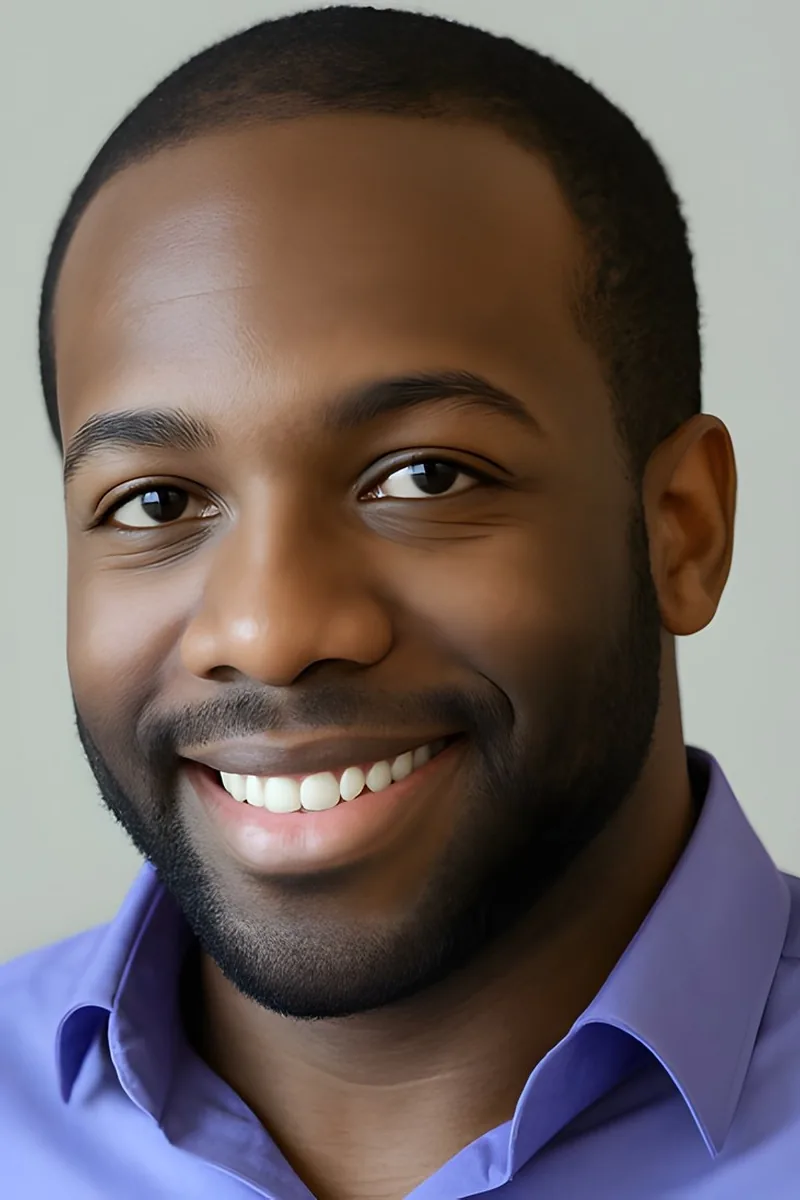
The jump to pre-calculus is where many students lose their footing, especially around trigonometric identities and limits notation. Earnest approaches these topics by building each new idea from something the student already understands, a habit he developed across two engineering degrees that required heavy mathematical fluency.
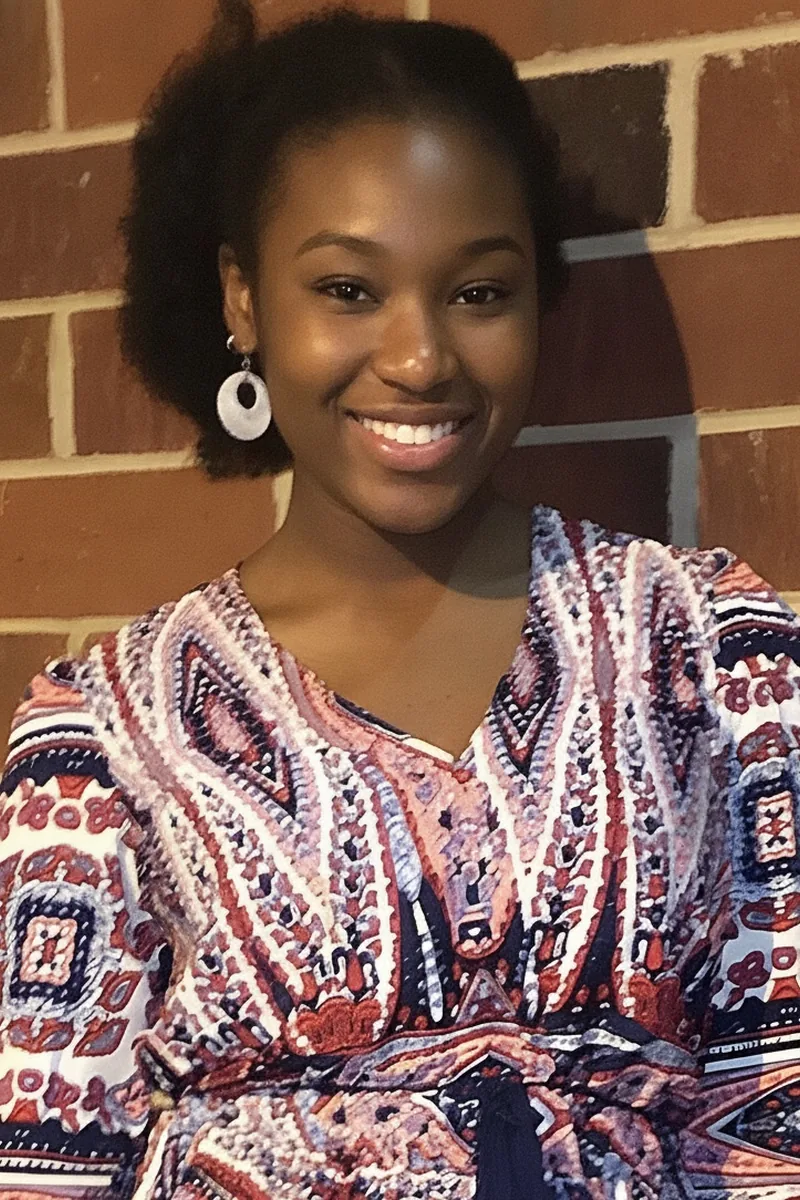
The jump to pre-calculus — trigonometric identities, limits intuition, and complex rational functions — catches a lot of students off guard. Ify's economics coursework keeps her sharp on the kind of algebraic manipulation and function analysis that pre-calc demands. She takes a patient, no-judgment approach that makes it safe to slow down on the hard parts.
Trigonometric identities, rational functions, and sequences can feel like disconnected topics — until someone shows how they all feed directly into calculus. Rebecca's UC Berkeley coursework in economics and data science required fluency in every Pre-Calculus concept, and she uses that perspective to teach each topic with its future payoff in mind. Students leave sessions knowing not just how to solve problems but why the techniques work.
The jump from algebra to pre-calculus is really a jump in how you think about functions — suddenly you're composing them, inverting them, and tracking how transformations ripple through an entire graph. Gatlin's physics training at NC State means he encounters these ideas constantly, since modeling any real system requires fluent manipulation of trigonometric, exponential, and polynomial functions. His 1440 SAT and 4.8 rating reflect a tutor who can bridge that gap between algebraic mechanics and the functional reasoning calculus demands.
As a biology major, Daiven regularly encounters the pre-calculus toolkit in action — exponential models for bacterial growth curves, logarithmic scales for pH and enzyme activity, and trigonometric functions woven through physics prerequisites. He teaches these topics by connecting them to the science contexts where they actually matter, which turns abstract function families into something students can visualize. His 32 ACT confirms the quantitative reasoning behind his approach.
Having tutored math across every level at Mathnasium, Shourya knows exactly where pre-calculus trips students up — the moment when familiar algebra rules collide with the abstraction of trigonometric functions, limits of sequences, or rational expressions that don't simplify neatly. His physics degree at UNC Chapel Hill means he's constantly applying these tools in real problem-solving contexts, so he teaches the why behind each concept rather than handing students another formula to memorize. Rated 4.9 by students.
Civil engineering at Clemson meant Matthew spent years applying the exact pre-calculus toolkit — trigonometric functions for surveying, vectors for force analysis, polynomial models for load distributions — before ever stepping into a tutoring role. He teaches topics like graph transformations and composite functions by connecting them to the structural problems where he first learned to rely on them. Rated 5.0 by students.
Hi! I'm Kavya, and I'm passionate about helping students build confidence and succeed in school. I tailor each lesson to a student's learning style, making concepts clear, engaging, and easy to understand. I specialize in math, from elementary concepts to algebra, geometry, trigonometry, statistics, calculus, and college-level courses, focusing on true understanding rather than memorization. I also tutor English, reading, writing, grammar, homework support, study skills, organization, and test preparation. My sessions are patient, supportive, and interactive, creating a comfortable environment where students feel confident asking questions. Whether a student needs extra help, wants to improve grades, or wants to get ahead, I provide personalized lessons that build strong academic skills, confidence, and a lifelong love of learning.
Teaching three Duke courses — including Electricity and Magnetism for engineers — means Florence regularly watches students stumble on the same pre-calculus weak spots: shaky unit circle intuition, mishandled function compositions, and half-understood logarithmic properties that quietly derail later work. She tackles those specific breakdowns head-on, rebuilding the algebraic reasoning underneath each concept so the jump to calculus feels like a natural next step rather than a cliff. Holds a 5.0 rating and a 36 ACT.
Winning Duke's DT Stallings Award for sustained tutoring of local school children means Taariq didn't just study math — he spent years figuring out exactly where middle and high school students lose the thread, especially during the algebra-to-calculus bridge that pre-calculus represents. His BS in Mathematics gives him the depth to trace every identity, transformation, or limit concept back to the intuition behind it, and his 33 ACT confirms the test-taking instincts to match. He's particularly sharp at demystifying rational functions and their asymptotic behavior, connecting the graphical picture to the algebraic structure students already recognize.
Tammy's biochemistry degree and Duke medical school training mean she's navigated the full arc from pre-calculus through advanced quantitative coursework — she knows exactly which skills in trigonometric reasoning and function transformations actually matter when the math gets harder. She zeroes in on the conceptual jumps that trip students up, like moving from basic trig ratios to graphing sinusoidal functions or making sense of composite and inverse functions for the first time. Her 1550 SAT and 5.0 rating back up that precision.
I am a freshman at Vanderbilt University currently pursuing a B.S. in Biochemistry. My inquisitive nature has fostered a love for mathematics, the natural sciences, and how they interact to produce the world we experience every day. This extends to my teaching strategy, where I emphasize the importance of conceptual understanding rather than pure memorization of equations and steps. My recent experience in a wide variety of Advanced Placement courses lends me insight to recent changes in course objectives and exam formatting.
Having served as a TA for honors coursework at VCU while carrying a heavy quantitative load across math and science, Alisha knows how to break down the conceptual leaps that trip students up in pre-calculus — especially the shift from manipulating equations to reasoning about function behavior, domain restrictions, and transformations. She zeroes in on building that bridge between algebra mechanics and the more abstract thinking calculus will demand. Her 34 ACT confirms the math fluency behind her teaching.
Biomedical engineering at Duke means Beepul hits pre-calculus material from both sides — the pure math curriculum and the applied modeling that shows up in biomechanics and signal processing courses. He's especially sharp on the transition from algebraic thinking to functional thinking, breaking down how transformations, composition, and trigonometric reasoning actually connect instead of feeling like isolated chapters. His 1520 SAT confirms the quantitative instincts he brings to each session.
A PhD in biomedical engineering from Georgia Tech means Jordan has spent years modeling biological systems with the exact tools pre-calculus introduces — parametric equations describing catheter paths, sinusoidal functions capturing cardiac rhythms, and rational expressions governing fluid dynamics through vessels. He teaches these topics by pulling from that engineering intuition, making the leap from algebraic mechanics to functional thinking feel like a natural next step rather than an arbitrary hurdle. Holds a 5.0 rating from students.
Matt's math degree means he didn't just pass through pre-calculus — he built the formal understanding of function families, limits of sequences, and trigonometric structures that his later quantitative policy work at Duke depends on. He zeroes in on the algebraic reasoning behind transformations and compositions, teaching students to read a graph's behavior instead of memorizing shape templates. Rated 5.0 by students.
A PhD track in engineering design at Virginia Tech and an applied math degree from UCLA mean Professor Florence has spent decades on both sides of pre-calculus — the pure theory and the real-world modeling it feeds into. She zeroes in on the algebraic-to-functional thinking shift, particularly how polynomial end behavior and rational function asymptotes connect to the engineering problems where she's actually used them. Her 4.6 rating across 67 subjects reflects a teaching range few tutors can match.
The jump to pre-calculus trips up many students right around trigonometric functions and limits notation, where the math suddenly feels more abstract. Kristina's quantitative training through a neuroscience PhD gave her daily practice with these exact tools, and she breaks down concepts like function transformations and series by connecting them to the calculus ideas they're building toward.
Currently studying biological and physical sciences at Cornell, Katrina tackles pre-calculus from the perspective of someone who uses these tools daily — her science coursework demands fluency with trigonometric functions, exponential models, and the kind of algebraic reasoning that bridges the gap before calculus. She's especially sharp at demystifying composite and inverse functions, showing students the internal logic so they can work through unfamiliar problems independently. Her 35 ACT and 5.0 rating back that up.
Biochemistry at Boston College and graduate biomedical research at Tufts meant Hunter spent years relying on the exact skills pre-calculus builds — manipulating exponential models for reaction kinetics, working through logarithmic relationships in pH calculations, and applying trigonometric reasoning in physics prerequisites. He tackles the course by connecting each new function family to the algebra students already feel confident in, then showing concretely where it leads in calculus. Holds a 5.0 rating from students.
Trigonometric identities, rational functions, and the behavior of logarithms can feel like disconnected topics until someone shows how they all feed into calculus. As a math major at UNC Chapel Hill, Tanay connects each Pre-Calculus concept to the bigger picture, so students aren't just memorizing unit circle values — they understand the structure behind them.
Most pre-calculus students hit a wall not because the individual topics are hard, but because no one shows them the thread connecting polynomial behavior to rational functions to limits lurking around the corner. James, a computer science undergrad who scored a 1550 SAT and 35 ACT, teaches that connective logic — tracing how each transformation or identity sets up the calculus reasoning students will need next. Rated 5.0 by students.
The jump to Pre-Calculus is often where students realize they can't rely on formula memorization alone — unit circle values, trigonometric identities, and limit intuition all require deeper conceptual understanding. Victoria connects these ideas to the algebra and geometry students have already learned, making the transition feel less like a cliff and more like a bridge. Her explanations stay grounded in clear, step-by-step reasoning.
After Princeton and a stint at Google, Rick returned to academia to pursue a PhD in Psychology — but his geosciences background means he's spent serious time with the polynomial modeling, trigonometric applications, and function analysis that form the backbone of pre-calculus. He teaches these concepts by connecting them to the quantitative reasoning he used in both tech and earth science, making the jump from algebraic manipulation to functional thinking feel like a natural progression rather than an abstract leap.
The leap from trig identities to limits can feel disorienting without someone who sees how Pre-Calculus threads together everything that comes before it. Danielle zeroes in on the function analysis and graphing intuition that students will rely on heavily in calculus — transformations, end behavior, and rate of change as a visual idea. She treats Pre-Calc as calculus prep, not just an extension of Algebra 2.
The jump into Pre-Calculus means juggling trigonometric identities, polar coordinates, and limits all at once. Anameeka's neuroscience coursework at Pitt requires heavy quantitative reasoning, so she tackles these topics with the kind of fluency that comes from using advanced math daily.
Pursuing biochemistry and neuroscience with a math minor means Abir is taking calculus and beyond right now, so the pre-calculus material — rational functions, trig identities, limits intuition — is fresh enough that she remembers exactly where the confusion hits. She zeroes in on the algebraic fluency piece that trips students up before they ever reach a new concept, making sure skills like factoring complex expressions and manipulating function notation are automatic. Her 36 ACT and 5.0 rating back up the precision she brings to each session.
Most pre-calculus stumbling blocks trace back to a shaky handoff from algebra — students can solve equations but freeze when asked to think about how functions behave, transform, or compose. Shaan's mechanical engineering training at Duke means he routinely works with the trig, parametric, and polynomial relationships that pre-calc introduces, and he breaks each one down into the kind of step-by-step mechanical reasoning that makes the jump to calculus feel natural.
Emily's wildlife science degree required modeling population dynamics with the same exponential, logarithmic, and trigonometric functions that form the backbone of pre-calculus — she learned to read function behavior through field data before she ever taught it in a tutoring session. Her master's work in professional writing at Johns Hopkins sharpened her ability to explain dense quantitative concepts in plain, structured language. Rated 4.9 by students.
The jump to Pre-Calculus is where many students first encounter function transformations, limits of sequences, and the unit circle as more than just a diagram. Isabella approaches each of these topics by connecting them forward — showing why mastering rational functions or logarithmic behavior now makes calculus feel like a natural next step rather than a cliff.
Helping students build confidence is what motivates me. I've worked as a biology teaching assistant, research mentor, SAT, chemistry, and math tutor, and Science Olympiad coach, guiding students of all levels through challenging material. I recently completed my studies in biology, genetics, space biology, and astrobiology at the North Carolina School of Science and Mathematics, and I'm continuing my research in these fields at UNC Chapel Hill. I tutor biology, chemistry, math, and test prep for the SAT and ACT, but biology is my favorite because of how directly it connects to real-world questions and the thrill of discovery. My tutoring style is highly adaptable to each student's needs. I often use active learning strategies like the Feynman Technique, encouraging students to explain concepts back in their own words to build mastery and confidence. I aim to create a supportive, low-pressure environment where students feel comfortable asking questions and tackling challenges head-on. Outside of academics, I enjoy music, writing, and exploring new topics in science and communication.
After two years teaching SAT and SAT II math classes professionally, Corey knows exactly which pre-calculus skills — rational expressions, trig identities, logarithmic properties — students stumble on under pressure and which ones they only think they understand. His Duke biomedical engineering training required building those topics into larger quantitative models, so he teaches each concept with a clear picture of how the pieces connect rather than as isolated chapters. Rated 5.0 by students.
The jump from Algebra 2 to Pre-Calculus trips students up when functions suddenly become abstract — rational expressions, logarithmic behavior, and trigonometric identities all land at once. Matthew's science-heavy coursework at Emory required fluency with these tools before calculus even started, so he teaches them with an eye toward why each concept matters later. He's especially good at breaking down unit circle reasoning and sequence/series problems.
I graduated from the University of North Carolina at Chapel Hill with a Bachelor of Science in Physics. I work with students in a variety of subjects, including Math, Physics, and Chemistry. I have experience working with students on the Autism spectrum and with ADHD.
Kathleen's subject list tells the story — she teaches everything from pre-algebra through multivariable calculus, plus statistics, discrete math, and biostatistics, which means she sees pre-calculus as the critical bridge it actually is rather than an isolated course. Her neuroscience background adds a practical dimension to topics like exponential decay and logarithmic scaling, since those function families model real phenomena she's studied in depth. A 35 ACT and 4.9 rating confirm she delivers on that breadth.
Hi! My name is Allen and I am a recently graduated high school student. I have many years of experience tutoring a variety of subjects, including math, Chinese, Spanish, and SAT/ACT prep(including all sections). In the past, I have worked with high school, middle school, and elementary school students and helped them achieve academic success. I look forward to working with you!
As a biology major, Nicole regularly encounters the pre-calculus toolkit in unexpected places — logistic growth curves in ecology, sinusoidal models for circadian rhythms, and exponential decay in radioactive tracer studies. She teaches these function families by connecting the algebra to the science, which makes topics like transformations and asymptotic behavior feel like they describe something real. Rated 5.0 by students.
Dual majoring in statistics and chemistry at UNC Chapel Hill, Akshay tackles pre-calculus from the angle of someone who needs these tools daily — polynomial modeling for data analysis, trigonometric functions for chemical periodicity, and logarithmic reasoning for reaction kinetics. He zeroes in on building the algebraic intuition behind function transformations so students actually understand what's happening graphically, not just memorizing shift rules. Rated 5.0 by students.
The leap from Algebra 2 to Pre-Calculus catches many students off guard — suddenly they're juggling trigonometric identities, polar coordinates, and parametric equations all at once. Joseph approaches each unit by anchoring it to the graphing and function analysis skills students already have, so new material builds logically rather than feeling like a pile of disconnected formulas.
Every calculus concept Artem tackles in his electrical and computer engineering program at NC State traces back to something in pre-calculus — the behavior of rational functions, the mechanics of trigonometric graphs, the logic of composite and inverse functions. He teaches these topics as someone who's actively building on them in upper-level coursework, which means he can pinpoint exactly where a shaky understanding will cause trouble later. Holds a 34 ACT and a 5.0 student rating.
Testimonials
Because the right Pre-Calculus tutor makes all the difference.
Average Session Rating – Based on 3.4M Learner Ratings
Practice Pre-Calculus
Free practice tests, flashcards, and AI tutoring for Pre-Calculus
Other Charlotte Tutors
Related Math Tutors in Charlotte
Frequently Asked Questions
Pre-Calculus moves from mainly procedural problem-solving to understanding deeper mathematical concepts and how different topics connect. You'll work more with functions, transformations, and trigonometry—not just solving equations, but understanding why methods work and how to apply them to real-world situations. Many students find this conceptual jump challenging, which is where personalized tutoring helps you build confidence in these new ways of thinking.
Students typically struggle with trigonometric functions and identities, word problems that require translating real scenarios into equations, and understanding function transformations and their graphs. Many also find it difficult to connect algebraic and graphical representations of the same concept. Varsity Tutors connects you with tutors who specialize in breaking down these topics and helping you see the patterns that tie Pre-Calculus together.
Your tutor will start by understanding your current strengths, specific challenges, and learning goals—whether you're working toward a strong grade, preparing for the AP Calculus exam, or building foundational understanding. They'll likely review recent assignments or assessments to identify exactly where gaps exist, then create a personalized plan tailored to your pace and learning style. This diagnostic approach ensures your tutoring time focuses on what will make the biggest difference for you.
Expert tutors teach you to organize multi-step problems systematically, showing your work in ways that make your thinking visible and help catch errors early. They'll guide you through strategies like working backwards from the answer, checking reasonableness, and recognizing which algebraic or trigonometric tools fit each problem type. Over time, you'll develop problem-solving habits that work across different topics and boost both accuracy and confidence.
Yes. Charlotte's 31 school districts use various textbooks and approaches, and Varsity Tutors connects you with tutors experienced across different curricula—whether your school uses traditional sequences, integrated approaches, or honors-level programs. Your tutor will align their instruction with your specific course materials and pacing, making tutoring sessions directly relevant to what you're learning in class.
Graphing is where algebra and calculus thinking meet—it's how you visualize function behavior, understand transformations, and solve problems that would be difficult algebraically. Many Pre-Calculus students struggle to connect equations to their graphs or predict how changes affect the shape. Personalized tutoring helps you build this visual intuition through guided practice, so you can move confidently into Calculus where graphical understanding becomes essential.
Absolutely. Math anxiety often stems from gaps in understanding or past negative experiences, and personalized 1-on-1 instruction addresses both. Working with a tutor in a low-pressure environment lets you ask questions freely, move at your own pace, and experience small wins that rebuild confidence. Many students find that understanding the 'why' behind concepts—rather than just memorizing procedures—transforms their relationship with math.
Strong Pre-Calculus mastery is the foundation for AP Calculus success—you need solid understanding of functions, transformations, trigonometry, and algebraic manipulation to focus on calculus concepts rather than review. Tutors can identify and strengthen any weak areas now, ensuring you start AP Calculus ready to engage with limits, derivatives, and integrals without being held back by prerequisite gaps. This proactive approach significantly improves AP exam performance.
Let’s find your perfect tutor
Answer a few quick questions. We’ll recommend the right plan and match you with a top 5% tutor.