Award-Winning Economics Tutors
serving Reno, NV
Economics
Tutors in Reno
Private 1-on-1 tutoring, weekly live classes for academic support, test prep & enrichment, practice tests and diagnostics, and more to elevate grades and test scores.
Based on 3.4M Learner Ratings
UniversitiesSchools & Universities
DeliveredHours Delivered
ProficiencyGrowth in Proficiency
Who needs tutoring?
No obligation. Takes ~1 minute.
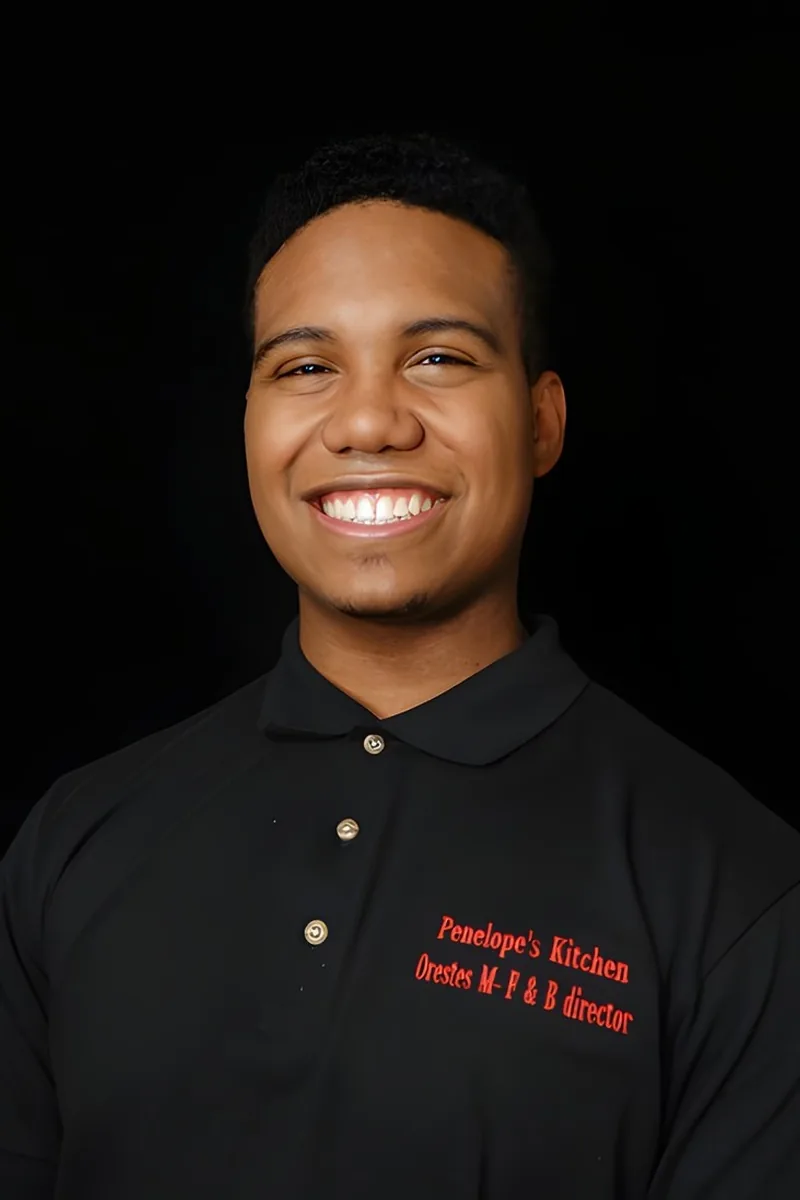
Orestes teaches accounting, finance, and economics across high school and college levels, which means he can show students how microeconomic concepts like pricing strategy and cost analysis actually flow into the financial statements and business decisions they'll encounter in related courses. His breadth across all four accounting specialties — financial, managerial, cost, and college — gives him an unusually concrete toolkit for explaining economic trade-offs in terms of real dollars and real firms. Rated 4.9 by his students.

I'm naturally smart. I'm not that guy that can just look at a problem on the board and just figure it out in seconds. I hate asking that guy for help because he doesn't know how to explain somethinghe just gets it right away. He's never sat down and broken it down. I never was that guy and I will never be that guy.
I am a Junior pursing Accounting and Finance at the Kelley School of Business at Indiana University-Bloomington. I have 8+ years of experience tutoring students from ages 7-40 years old. Patience with each of my students is what helps me be the best tutor in their learning process. I don't teach students but rather I involve them in the learning process so that they can be confident when solving the problems at hand.
Jack earned his economics degree at Northwestern, where he studied everything from game theory to monetary policy in both micro and macro contexts. He connects abstract models — supply and demand curves, GDP calculations, elasticity — to real-world scenarios that make the reasoning behind each graph intuitive rather than mechanical.
Monetary policy, banking systems, and market behavior aren't abstractions to Cole — they were the focus of his cum laude master's thesis at the University of Amsterdam. He teaches economics by grounding theory in current events, so students see how supply-and-demand diagrams or GDP calculations connect to headlines they've actually read. Rated 5.0 by students.
Studying Politics, Philosophy, and Economics at Penn means Esther encounters economic concepts not in isolation but tangled up with the political incentives and philosophical arguments that shape them — why a carbon tax gets framed as market efficiency in one class and as an ethical obligation in another. That interdisciplinary wiring is especially useful for students who need to understand the reasoning behind economic models, not just the graphs themselves. Rated 5.0 by her students.
Mary earned her MBA from Rider University and took business coursework at Bucks County Community College, giving her a grounded understanding of supply-and-demand models, market structures, and cost-benefit analysis. Her quantitative background in chemistry and physics also means she's comfortable with the graphing and algebra that trip up many economics students.
As a Cornell economics major, Tameem is still immersed in the coursework — working through the same models, problem sets, and exam formats that students are currently facing. That proximity to the material makes him particularly sharp on the foundational concepts that drive intro and high school economics, like how shifts in aggregate demand connect to unemployment and inflation or why price elasticity changes a firm's revenue strategy.
Studying economics and finance at Wharton means Samica encounters micro and macroeconomic theory daily — supply and demand curves, market structures, GDP modeling — and can translate those concepts into clear, intuitive explanations. She connects abstract ideas like elasticity or comparative advantage to real-world business cases, which makes the material stick far better than rote definition review.
I am graduated from Penn State University in Industrial Engineering in 2017. I've tutored ever since I was in high school, and I love helping people! I like to help my students understand math (and other topics) instead of just doing it blindly. My goal is to help my students improve their math (and other topics) and build skills that will help them find learning easier in the future! Fun fact, I used to work for Disney and I like to salsa dance!
Caltech's economics program is heavily quantitative — Brian's coursework there meant building economic models with real calculus and statistical tools, not just sketching supply-and-demand curves. His computer science double major adds a computational edge that's particularly useful for students tackling game theory, optimization problems, or any econ course where the math suddenly gets serious. His 1580 SAT reflects the kind of analytical precision he brings to breaking down dense material.
Co-authoring a published policy article for US News and World Report required Gary to translate economic data into clear, defensible arguments — exactly the skill economics courses demand. He tackles supply-and-demand analysis, market structures, and cost-benefit reasoning by grounding each concept in the political and policy contexts where these ideas actually get applied.
Rithi's quantitative backbone — a neuroscience degree, a master's in biotechnology, and deep coursework in statistics and calculus — means she can tackle the math-heavy side of economics that often catches students off guard, like working through elasticity calculations, interpreting cost curves, or setting up optimization problems. Her 4.9 rating speaks to an ability to make that quantitative reasoning feel approachable even for students who came in expecting a purely conceptual course.
Natalie's Health Care Management minor at Penn exposed her to microeconomic principles like supply and demand, cost-benefit analysis, and market structures — all through the lens of real industries. She breaks down economic models by connecting them to concrete examples students can actually picture, whether it's pricing decisions or how incentives shape behavior.
Studying economics and legal studies at Penn means Ethan lives inside the overlap between market forces and the rules that shape them — how antitrust law changes competitive dynamics, or why regulatory frameworks matter as much as supply curves. That legal dimension gives him a useful angle for explaining topics like market failures and government intervention, where the textbook model and the real-world outcome don't always match up. His 35 ACT speaks to the kind of analytical sharpness that translates well into breaking down econ problem sets.
Testimonials
Because the right Economics tutor makes all the difference.
Average Session Rating – Based on 3.4M Learner Ratings
Other Reno Tutors
Related Business Tutors in Reno
Frequently Asked Questions
Economics requires students to think abstractly about systems, incentives, and cause-and-effect relationships—skills that don't always come naturally in a classroom setting. Many students struggle with graphing and interpreting supply-and-demand curves, understanding macroeconomic concepts like inflation and GDP, or applying economic principles to real-world scenarios. Personalized 1-on-1 instruction helps identify where understanding breaks down and rebuilds foundational concepts at a pace that works for each student.
In a classroom with an 18.9:1 student-teacher ratio, Economics teachers often move through material at a fixed pace, which can leave students behind or unchallenged. Personalized tutoring adapts to your learning style—whether you need extra time on microeconomic theory, practice with calculations, or real-world applications. A tutor can focus on your specific gaps, use examples relevant to your interests, and adjust pacing so concepts actually stick.
Yes. Varsity Tutors connects you with tutors who understand Nevada's Economics standards and the specific curriculum used in Reno schools. Whether you're in a high school AP Economics course, introductory Economics, or preparing for college-level work, tutors can align instruction with your school's scope and sequence while filling in gaps and reinforcing key concepts.
Absolutely. AP Economics (both Micro and Macro) require strong conceptual understanding, problem-solving skills, and the ability to analyze real-world economic scenarios on the exam. Personalized tutoring covers unit-by-unit content, practice with free-response questions, multiple-choice strategies, and graph interpretation—all designed to build the confidence and skills needed for a strong exam performance.
Your first session is a diagnostic conversation. The tutor will assess your current understanding of key concepts, identify specific areas of confusion (like elasticity, opportunity cost, or fiscal policy), and learn about your learning style and goals. From there, you'll build a personalized plan that targets your weaknesses, reinforces strengths, and prepares you for upcoming tests or coursework.
Graphs are the language of Economics, and many students find them intimidating. Tutors break down how to read, interpret, and draw supply-and-demand curves, production possibilities frontiers, and other key diagrams step by step. With repeated practice and immediate feedback, you'll build the visual literacy and calculation skills needed to confidently solve problems on quizzes, tests, and the AP exam.
Understanding that Economics explains how the world actually works makes the subject far more engaging and memorable. Tutors use current events, local Reno business examples, personal finance scenarios, and market data to illustrate concepts like inflation, unemployment, trade, and consumer behavior. This approach not only deepens comprehension but also helps you see why Economics matters beyond the classroom.
Connect with Varsity Tutors to get matched with an expert Economics tutor who fits your schedule and learning needs. You'll discuss your goals, current challenges, and preferred learning style, then begin personalized sessions designed to build confidence and improve your grade. Whether you need ongoing support or intensive exam prep, you can start as soon as this week.
Let’s find your perfect tutor
Answer a few quick questions. We’ll recommend the right plan and match you with a top 5% tutor.