Award-Winning AP Spanish Language & Culture Tutors
serving Des Moines, IA
AP Spanish Language & Culture
Tutors in Des Moines
Private 1-on-1 tutoring, weekly live classes for academic support, test prep & enrichment, practice tests and diagnostics, and more to elevate grades and test scores.
Based on 3.4M Learner Ratings
UniversitiesSchools & Universities
DeliveredHours Delivered
ProficiencyGrowth in Proficiency
Who needs tutoring?
No obligation. Takes ~1 minute.
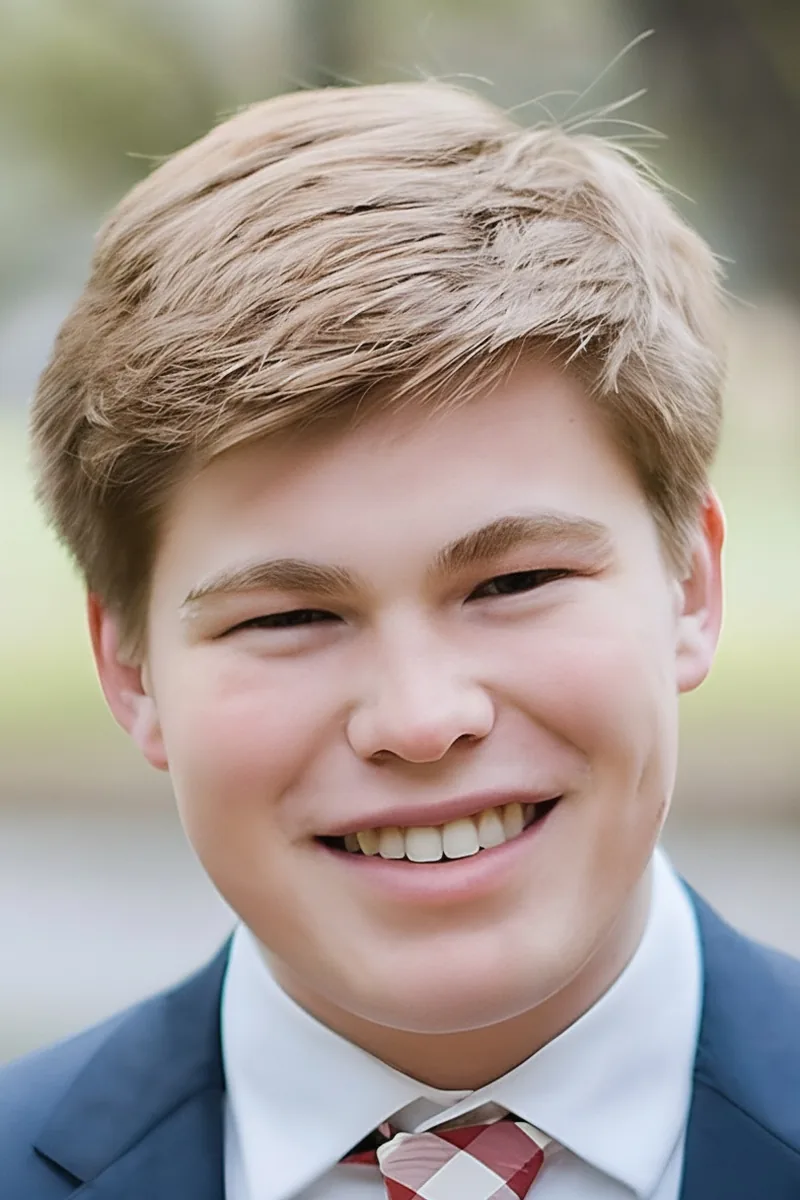
A cognitive sciences degree with a minor in Spanish means Adam approaches the language analytically — he treats subjunctive triggers and register shifts as pattern-recognition problems, which clicks for students who struggle with the "just memorize it" approach to grammar. His 34 ACT confirms strong reading and reasoning skills that translate directly into coaching the AP exam's interpretive reading and audio tasks, where extracting meaning from authentic Spanish sources under time pressure is half the battle.

Between teaching Spanish 1 through 4, conversational Spanish, and both SAT Spanish Subject Tests, Linda has logged serious hours across every level of the language — which means she can quickly spot whether an AP student's weak point is a shaky subjunctive foundation or an inability to shift into formal written register under timed conditions. Her graduate work in education at USC's Rossier School sharpens how she structures exam prep, particularly for the persuasive essay task where students need to synthesize Spanish-language sources into a cohesive argument fast.
Rebecca's anthropology degree trained her to analyze cultural practices across communities — the exact skill the AP Spanish exam's cultural comparison free-response prompt tests. She teaches Spanish at every level from 1 through 4 plus conversational, so she can diagnose whether a student's weak spot is grammar mechanics like subjunctive triggers or the higher-order task of building a nuanced argument in formal register. Her 1550 SAT score reflects the kind of disciplined, timed-test thinking she brings to AP prep.
This isn't Katie's core subject — her degrees are in biomedical and biological engineering from Cornell, and her teaching load leans heavily toward STEM, history, and English. That said, her engineering training built the kind of systematic, pattern-based thinking that can help break down Spanish grammar structures and exam strategies for students who need a more analytical approach to language learning.
Iselee earned her bachelor's degree in Spanish from Loyola Marymount University, which means the AP exam's demand for formal written register and nuanced cultural knowledge sits squarely in her academic wheelhouse. Her current graduate work in digital communication adds a layer of rhetorical awareness — understanding how audiences process arguments — that she applies to coaching the timed persuasive essay, where students must synthesize Spanish-language sources into a coherent, register-appropriate response. Rated 4.8 by students.
Molly holds degrees in Spanish from Columbia University, which gives her the academic grounding in grammar, composition, and literary analysis that AP Spanish Language & Culture's written and spoken tasks demand. Her classroom teaching experience across multiple grade levels means she quickly spots the structural weaknesses — verb tense confusion, weak transitions, underdeveloped cultural comparisons — that keep students from reaching a 4 or 5. Rated 5.0 by students.
Growing up bilingual with dual US-Chilean citizenship, Camilla didn't just learn Spanish at home — she pursued it academically through advanced language and literature coursework. For AP Spanish Language & Culture, she tackles the presentational writing and interpersonal speaking tasks by grounding students in the cultural contexts that make their responses authentic and nuanced.
The AP Spanish Language & Culture exam demands more than vocabulary — it requires constructing persuasive arguments in Spanish and interpreting authentic audio sources on the fly. Isabelle's multilingual background and experience as a private language tutor abroad give her practical fluency in coaching students through the interpersonal speaking tasks and cultural comparison essays that determine exam scores.
Richard earned the highest scores on the AP Spanish exam with listening after double-majoring in Spanish at Emory and studying in Spain. He tackles the presentational writing and interpersonal speaking tasks by drilling the idiomatic expressions, subjunctive constructions, and cultural references that push students from competent into the 4–5 scoring range.
Having lived and worked in Puerto Rico, Eric brings real-world Spanish fluency to AP Spanish Language & Culture prep — not just textbook grammar but the kind of cultural context the exam's presentational and interpersonal tasks demand. He tackles the audio-source synthesis essays and spoken responses by drilling the specific transition phrases and register shifts that earn top scores.
Ryan's American Studies background means he already thinks in terms of cross-cultural comparison — a skill that maps directly onto the AP Spanish exam's cultural comparison task, where students need to connect practices across communities with nuance and specificity. He teaches Spanish from level 2 through AP and conversational Spanish, so he bridges the gap between structured grammar work and the kind of spontaneous communication the interpersonal speaking section rewards.
Success on the AP Spanish Language & Culture exam depends on toggling fluently between interpretive, interpersonal, and presentational communication — often within a single task. Margaret tackles each mode separately, drilling persuasive email writing one session and audio-source synthesis the next, so students build confidence across the full exam format. Her own deep engagement with Spanish literature and conversation gives her the cultural fluency this exam specifically rewards.
Testimonials
Because the right AP Spanish Language & Culture tutor makes all the difference.
Average Session Rating – Based on 3.4M Learner Ratings
Nearby AP Spanish Language & Culture Tutors
Other Des Moines Tutors
Related Languages Tutors in Des Moines
Frequently Asked Questions
Personalized 1-on-1 instruction focuses on the five skill areas tested on the AP exam: listening, reading, writing, speaking, and cultural analysis. A tutor can help you develop test-taking strategies specific to each section, identify your weakest areas, and create a targeted study plan that builds confidence leading up to exam day. Many students benefit from consistent practice with authentic exam materials and feedback on their speaking and writing skills.
Score improvement depends on your starting level and how consistently you engage with tutoring and practice. Students who work with a tutor typically see meaningful gains by focusing on their specific weak areas—whether that's verb conjugation, listening comprehension, or the free-response writing section. The key is identifying gaps early and practicing strategically over several months before the May exam.
The speaking section requires you to respond to prompts in real-time, which is challenging without regular practice. Tutors can conduct mock conversations, provide immediate feedback on pronunciation and grammar, and help you develop strategies for organizing your thoughts quickly. Practicing with a live person builds the confidence and fluency you need to perform well on the interpersonal and presentational speaking tasks.
Students often struggle with the free-response writing section because it requires accurate grammar, sophisticated vocabulary, and clear organization under time pressure. Common issues include verb tense errors, awkward phrasing, and difficulty organizing complex ideas. A tutor can help you develop a writing process, practice timed essays with feedback, and learn strategies for proofreading and self-correction during the exam.
Listening comprehension improves through consistent exposure to authentic Spanish audio at native speed. Tutors can provide curated listening materials, help you recognize common speech patterns and accents, and teach you strategies for identifying key information even when you don't understand every word. Regular practice with exam-style listening passages helps you build both accuracy and confidence.
Ideally, students begin focused exam preparation 3-4 months before the May test date. Starting in January or February gives you time to identify weak areas, build skills systematically, and complete multiple practice tests. If you're starting later, a tutor can help you prioritize the most impactful study strategies and make efficient use of your remaining time.
The AP exam integrates cultural knowledge throughout all sections—you'll encounter authentic texts and audio from Spanish-speaking countries, and some free-response questions specifically ask you to analyze cultural perspectives. Tutors can help you develop cultural literacy by exploring authentic materials, understanding different perspectives, and learning to discuss cultural topics with appropriate vocabulary and nuance.
Look for tutors with strong Spanish language proficiency, ideally from a Spanish-speaking background or with advanced study abroad experience. They should be familiar with the AP exam format, have experience teaching test-taking strategies, and be able to provide detailed feedback on speaking and writing. Varsity Tutors connects you with expert tutors who understand both the language skills and the specific demands of the AP exam.
Let’s find your perfect tutor
Answer a few quick questions. We’ll recommend the right plan and match you with a top 5% tutor.