Award-Winning Physics Tutors
serving Orlando, FL
Physics
Tutors in Orlando
Private 1-on-1 tutoring, weekly live classes for academic support, test prep & enrichment, practice tests and diagnostics, and more to elevate grades and test scores.
Based on 3.4M Learner Ratings
UniversitiesSchools & Universities
DeliveredHours Delivered
ProficiencyGrowth in Proficiency
Who needs tutoring?
No obligation. Takes ~1 minute.
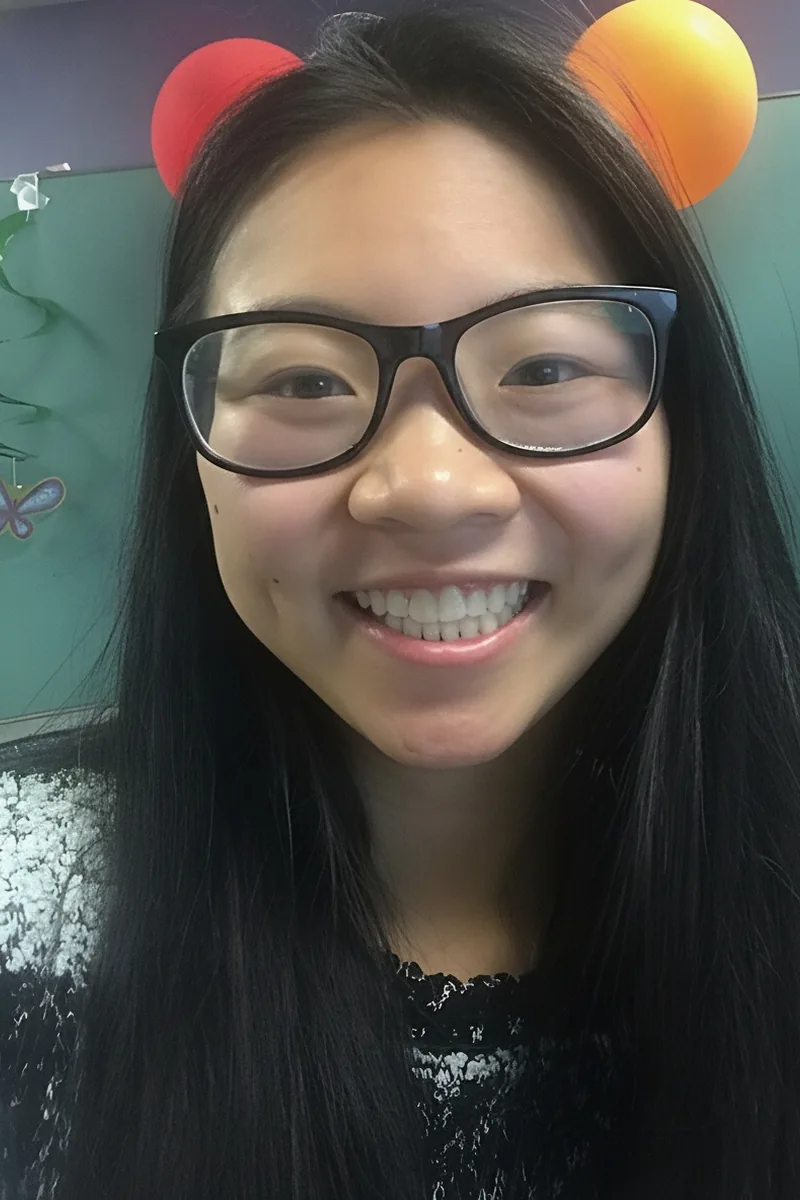
I am graduated from Penn State University in Industrial Engineering in 2017. I've tutored ever since I was in high school, and I love helping people! I like to help my students understand math (and other topics) instead of just doing it blindly. My goal is to help my students improve their math (and other topics) and build skills that will help them find learning easier in the future! Fun fact, I used to work for Disney and I like to salsa dance!

Aerospace engineering is applied physics, so Vansh lives in the world of kinematics, thermodynamics, and electromagnetic theory every day at Georgia Tech. He connects textbook formulas to the physical intuition behind them — explaining not just how to use F=ma, but why free-body diagrams reveal the structure of a problem.
Matthew's graduate work in Educational Measurement and Statistics at USF means he's deeply comfortable with the quantitative modeling that underpins physics — translating a word problem into the right kinematic or force equation is essentially the same skill as building a statistical model from raw data. His psychology background also gives him a sharp read on where a student's reasoning is breaking down, so he can target the specific conceptual gap rather than re-explaining an entire chapter. Rated 4.8 by students.
Kinematics and free-body diagrams become much less intimidating when someone walks you through the problem-solving framework step by step. Kevin approaches physics by teaching students to identify which principles apply — Newton's laws, conservation of energy, torque — before touching a single equation, a method he refined while mentoring students across San Diego.
From free-body diagrams in mechanics to circuit analysis in E&M, physics rewards students who can translate a word problem into a mathematical model. Harrison, who earned a 35 ACT and applies physics concepts daily in nanotechnology research, teaches each problem type by identifying the physical principle first, then building the math around it — an approach that cuts through formula-sheet overwhelm.
Neuroscience training means Evan spent years wrestling with the same mechanics, wave behavior, and electricity concepts that define introductory physics — from modeling neural signal propagation to analyzing the forces and pressures in biological systems. He keeps sessions interactive and builds each problem around sketches and questions rather than lectures, so students actually reason through Newton's laws or energy conservation instead of passively copying steps. Rated 5.0 by students.
Free-body diagrams, energy conservation, and wave behavior all require translating real situations into math — and that translation step is where most physics students lose the thread. Nathan teaches across AP Physics 1, C: Mechanics, and C: E&M, so he can calibrate explanations to any level from conceptual reasoning to full calculus-based derivations. He's a computer science major at UCF who genuinely enjoys the problem-solving side of physics.
An aeronautical engineer lives inside Newton's laws, free-body diagrams, and energy conservation problems — so Annalyn teaches physics the way she learned to apply it: by connecting each formula to a physical situation before touching a calculator. She's especially strong on mechanics and kinematics, the topics that make or break most introductory physics courses.
Biomedical sciences training puts Emyli squarely in the territory where biology meets physics — understanding how forces act on joints, how pressure drives fluid through vessels, and how energy transfers in living systems. She brings that applied lens to mechanics and thermodynamics problems, connecting textbook equations to physical scenarios students can actually picture. Rated 4.6 by students.
Suchir teaches physics alongside calculus, trigonometry, and thermodynamics, which means when a student gets stuck on a projectile motion problem, he can pinpoint whether the confusion is in the physics or the underlying math — and address the right one. His approach to mechanics and energy problems emphasizes building the scenario step by step, connecting each variable to something concrete before the algebra takes over.
Studying physics at Florida Tech — where he's completing dual degrees in Astronomy/Astrophysics and Planetary Science — Matthew has gone deep into everything from classical mechanics to electromagnetic theory. That depth means he can explain not just how to solve a projectile motion or energy conservation problem, but why the math behind it works the way it does. He's tutored college peers through advanced coursework like Physical Mechanics, so introductory and intermediate physics are second nature.
Testimonials
Because the right Physics tutor makes all the difference.
Average Session Rating – Based on 3.4M Learner Ratings
Practice Physics
Free practice tests, flashcards, and AI tutoring for Physics
Nearby Physics Tutors
Other Orlando Tutors
Related Science Tutors in Orlando
Frequently Asked Questions
Your first session is all about understanding where you are right now. A tutor will assess your current physics knowledge, discuss specific challenges you're facing (whether it's Newton's laws, circuits, or something else), and learn about your learning style. From there, they'll create a personalized plan to help you build both conceptual understanding and problem-solving skills tailored to your needs.
Physics relies heavily on visualizing forces, fields, and motion that we can't always see directly. Expert tutors use multiple approaches—diagrams, real-world analogies, hands-on demonstrations, and step-by-step problem breakdowns—to make abstract ideas concrete. For example, a tutor might use everyday situations like a car braking or a ball thrown in the air to explain acceleration and forces, helping these concepts stick in a way that makes sense to you.
Yes. Beyond classroom lectures, tutors can help you understand the scientific method, design experiments, analyze lab data, and write up your findings. They'll help you connect what you observe in the lab to the theoretical concepts you're learning, which deepens your understanding of how physics actually works in practice.
Many students struggle with balancing equations, unit conversions, and applying formulas to unfamiliar problems. Others find it hard to visualize motion and forces, or to move beyond memorizing equations to actually understanding why they work. A tutor helps you build the reasoning skills behind the math, so you're not just plugging numbers in—you're thinking like a physicist.
Not at all. While formulas are tools, real physics is about understanding relationships and reasoning through problems. A strong tutor focuses on building your conceptual foundation—why objects move the way they do, how energy transfers, what forces actually are—so you can tackle new problems confidently rather than relying on memory alone. This approach leads to better grades and genuine understanding that sticks with you.
Varsity Tutors connects you with tutors who have strong backgrounds in physics—many hold degrees in physics, engineering, or related sciences, and many have classroom teaching experience or advanced certifications. Each tutor is vetted for subject expertise and teaching ability, so you're working with someone who knows physics deeply and knows how to explain it clearly.
Whether you're taking introductory physics, AP Physics, honors physics, or another course, tutors understand the standards and expectations for your specific class. They're familiar with the concepts your school emphasizes—from kinematics and dynamics to thermodynamics and waves—and can help you master them in the context of your actual coursework and exams.
Many students notice clearer understanding and improved confidence within a few sessions, especially once a tutor helps them see the connections between concepts. For grade improvement and exam readiness, most students benefit from consistent tutoring over several weeks or months, depending on where they're starting and their specific goals. Regular practice between sessions accelerates progress significantly.
Let’s find your perfect tutor
Answer a few quick questions. We’ll recommend the right plan and match you with a top 5% tutor.