Award-Winning College Chemistry Tutors
serving Fresno, CA
College Chemistry
Tutors in Fresno
Private 1-on-1 tutoring, weekly live classes for academic support, test prep & enrichment, practice tests and diagnostics, and more to elevate grades and test scores.
Based on 3.4M Learner Ratings
UniversitiesSchools & Universities
DeliveredHours Delivered
ProficiencyGrowth in Proficiency
Who needs tutoring?
No obligation. Takes ~1 minute.
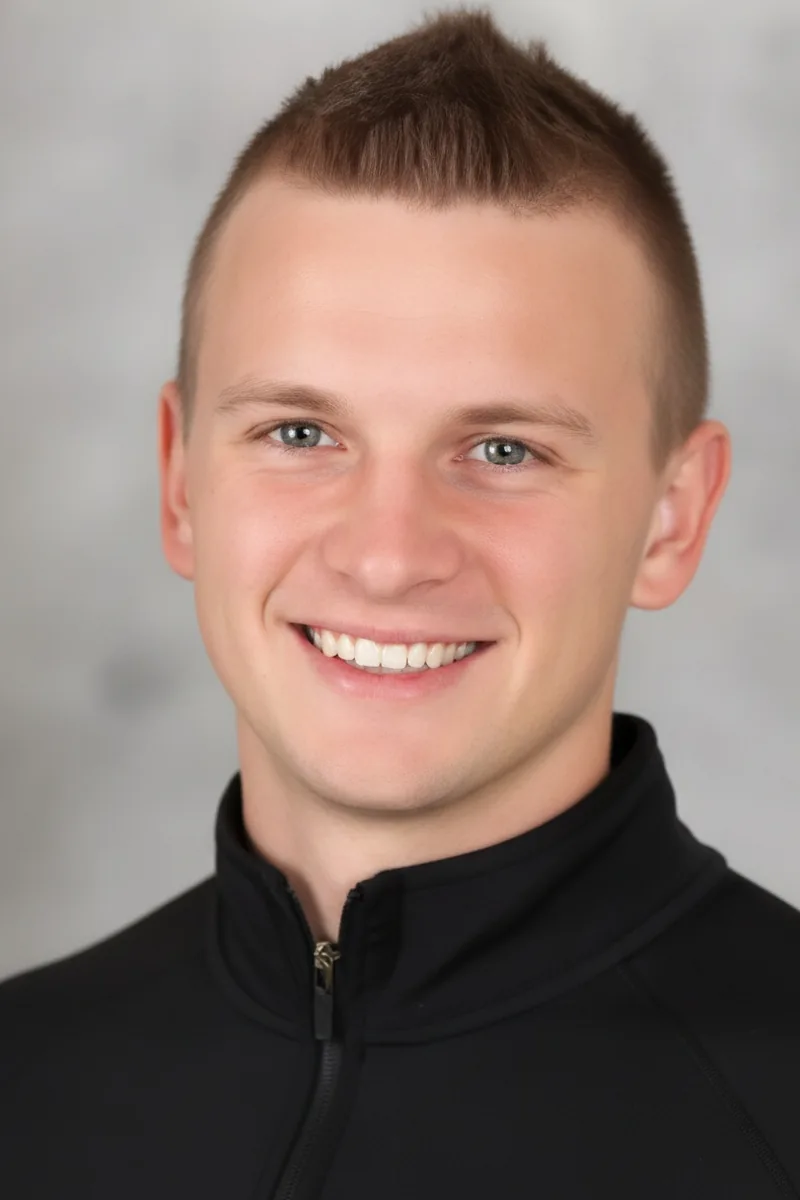
Pre-med bio-psychology coursework at UCSB means Aaron has pushed through college chemistry the same way his students are — as a high-stakes prerequisite where every gap in stoichiometry or equilibrium shows up again in upper-division science courses. He talks through problems conversationally, pressing students to explain the reasoning back to him, which exposes shaky understanding far faster than just re-solving practice sets. Holds a 5.0 rating.
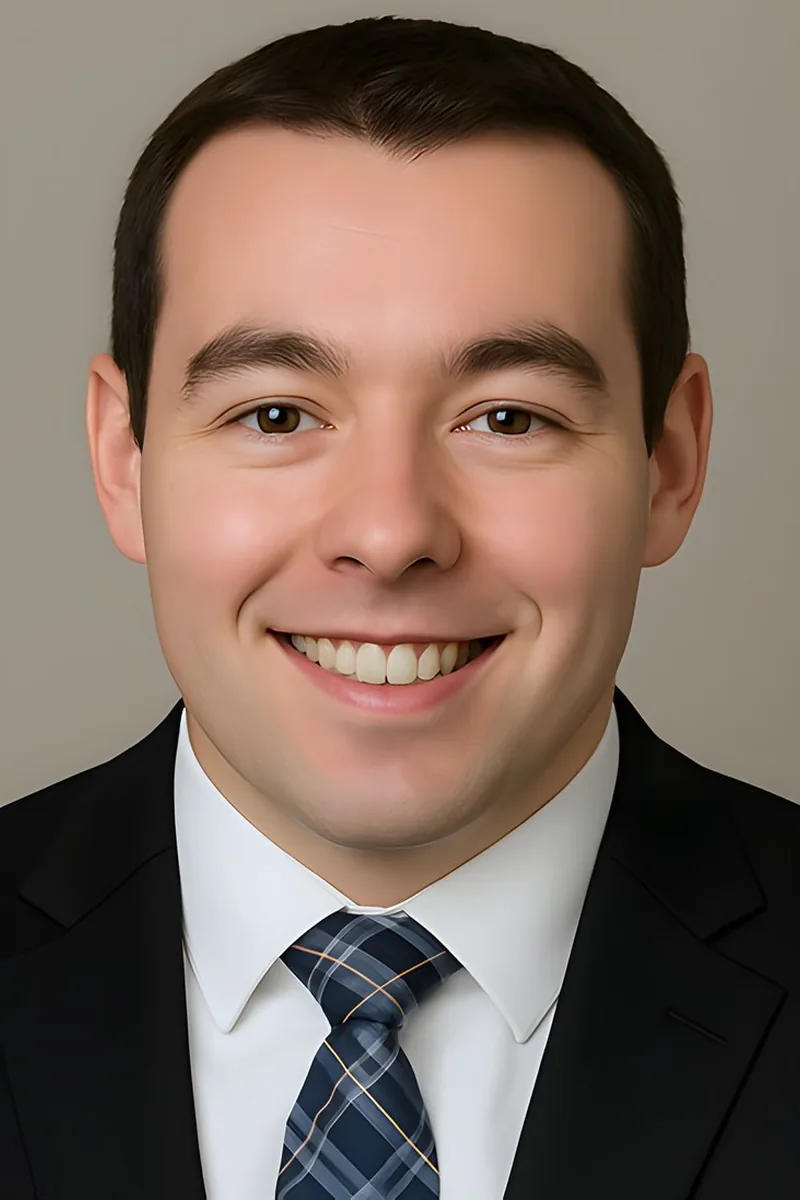
Medical school demands a deep command of general chemistry — equilibrium, thermodynamics, acid-base systems, electrochemistry — and Timothy tackles all of it daily as a current M.D. student. He breaks down complex reaction mechanisms and quantitative problem-solving in ways that connect lecture material to how chemistry actually behaves in biological systems. Rated 4.9 by students.
UCLA's psychobiology curriculum forced Shant through the full gen chem gauntlet — bonding, thermodynamics, reaction kinetics — as groundwork for the upper-level biochemistry and neuroscience courses that followed, so he knows exactly which early concepts trip students up later. He teaches college chemistry by linking abstract topics like electron configuration and molecular geometry back to the biological systems where they become tangible. Rated 5.0 by students.
Balancing redox equations, working through thermodynamics problems, or untangling acid-base equilibria — Nicole tackles college chemistry with the rigor she built preparing for medical school and earning cum laude honors at UCLA. Her public health minor also means she can connect abstract chemical concepts to real-world applications in pharmacology and environmental science.
Thermodynamics, reaction kinetics, and molecular orbital theory all demand comfort with both abstract models and rigorous math. Mitch's engineering training gave him years of practice applying these exact concepts to real systems, so he can explain why an enthalpy diagram looks the way it does — not just how to read one.
Between a biology degree at Loyola Marymount and clinical oncology research at UCLA, John has put gen chem concepts like molecular interactions, reaction energetics, and solution chemistry to work in settings where getting the science wrong isn't an option. He tackles problem sets by connecting the abstract — electron configurations, periodic trends, equilibrium expressions — to the biological and clinical scenarios where they actually show up, which tends to make the material stick for pre-med and life science students grinding through the course.
Following the premed track alongside an electrical engineering BS/MS at Columbia, Zhenrui has taken college chemistry from both angles — the pre-health side where acid-base equilibria and solution chemistry dominate, and the engineering side where thermodynamics and electrochemistry get quantitatively rigorous. That dual exposure means he can spot whether a student is stuck on the conceptual model or the math underneath it, and tackle the right one. His 36 ACT reflects the kind of cross-disciplinary precision he brings to problem-solving.
Biology majors often hit college chemistry expecting memorization and instead getting slammed by the quantitative rigor of thermochemistry, equilibrium constants, and gas law derivations — Nicholas went through that exact transition and knows where the conceptual gaps hide. His 33 ACT and deep science background mean he can break down a Hess's law problem or a buffer calculation by connecting the math back to what's physically happening at the molecular level.
Organic mechanisms, equilibrium constants, electrochemistry — college chemistry demands a level of problem-solving that pure memorization can't sustain. Whitney developed that analytical muscle through her neuroscience degree at Pomona, where she applied chemical principles to biological systems daily. She unpacks reaction logic step by step so students can approach unfamiliar problems with confidence.
General chemistry at the college level demands comfort with both conceptual reasoning and quantitative problem-solving — balancing redox equations one day, calculating equilibrium constants the next. Jack's integrative biology program at Berkeley requires extensive chemistry coursework, so he approaches topics like thermochemistry, molecular orbital theory, and acid-base equilibria as tools he actively uses, not abstract exercises.
Organic mechanisms, equilibrium calculations, and thermochemistry all demand a different kind of thinking than high school chemistry prepared most students for. Pooja's science training at UC Irvine — where chemistry overlapped heavily with her biology major — means she can connect abstract concepts like Gibbs free energy or reaction kinetics to concrete biological examples that make them easier to internalize.
Thermodynamics, equilibrium constants, and molecular orbital theory all click faster when you can visualize what's happening at the atomic level — and Justin's neuroscience and physiology training gave him deep fluency in exactly that kind of molecular thinking. He tackles college chemistry by connecting abstract equations to the physical behavior they describe, whether it's a redox half-reaction or a phase diagram.
Tackling college-level chemistry means grappling with quantum mechanical models, thermodynamic calculations, and reaction mechanisms that go well beyond what high school covers. As a Chemistry major at Occidental, Chandler is working through these same concepts in his own coursework and can explain tricky ideas — like hybridization or Gibbs free energy — in straightforward terms. Rated 4.5 by students.
General chemistry at the college level demands comfort with both quantitative problem-solving and conceptual reasoning — balancing redox equations one moment, then explaining molecular orbital theory the next. Siavash's molecular biology research at Cal State Northridge keeps him actively working with chemical principles, and he brings that applied perspective to topics like thermodynamics, equilibrium, and kinetics.
What draws Kellie to chemistry is the way it rewards curiosity — a single concept like electron configuration can unlock why certain reactions happen, why acids behave the way they do, and why some molecules are polar while others aren't. She teaches college chemistry by chasing those connections, spending time on the reasoning behind topics like stoichiometry and chemical bonding so the problem-solving becomes intuitive rather than formulaic.
I'm an affable chemistry-loving person whose joy come from delivering knowledge :D
Pursuing medical school after a public health science degree means Mark has been through the gen chem gauntlet with a clear stake in the outcome — he knows which concepts, like solution chemistry, acid-base reactions, and thermodynamic principles, actually resurface in upper-level coursework and entrance exams. He tackles problems by slowing down at the exact step where the logic gets fuzzy, rebuilding clarity before moving forward. Holds a 5.0 rating from students.
Teaching across biology, physics, and chemistry at both the high school and college level gives Tito an unusual vantage point on gen chem — he can spot when a student's confusion about, say, electron configurations or intermolecular forces is really a gap carried over from physics or math rather than the chemistry itself. That cross-disciplinary instinct lets him target the actual breakdown instead of re-explaining content a student technically already knows. Rated 4.8 by students.
Organic reaction mechanisms, equilibrium calculations, and thermodynamic principles demand a different kind of thinking than general chemistry — more pattern recognition, less plug-and-chug. Fady earned his biological sciences degree working through these same courses and knows exactly where the conceptual jumps trip students up. He walks through electron-pushing mechanisms and multi-step problems with enough repetition that the logic becomes second nature.
General chemistry at the college level moves fast, and topics like equilibrium constants, acid-base titrations, and redox reactions can pile up before students realize they've lost the thread. Caroline tackled these courses at UC Berkeley as part of her molecular biology track and understands exactly where the conceptual gaps tend to form. She unpacks each problem type systematically so the underlying logic clicks rather than just the math.
Studying pre-biology at UC Santa Barbara means Alan has taken college chemistry alongside the same pre-med and life science students he now tutors — so he knows exactly where topics like solution stoichiometry, molecular polarity, and acid-base reactions become stumbling blocks when the pace picks up mid-quarter. He tackles problem sets by slowing down at the conceptual step most students rush past, then connecting the chemistry back to the biological systems where it reappears. Rated 4.7 by students.
Quantum numbers, molecular orbital theory, thermodynamic cycles — college chemistry demands comfort with abstract models and the math behind them. Sarah's dual degree in Physics and Mathematics means she can explain why an orbital has a particular shape or walk through a Hess's Law calculation with equal confidence.
Dental school entrance exams and a microbiology degree meant Daniel had to master gen chem twice — once as an undergrad learning the fundamentals, and again at a higher level when topics like acid-base chemistry, solution concentration, and molecular interactions became the foundation for clinical science. That repetition gives him a sharp sense of which concepts students need to truly internalize versus which ones they can reference, and he teaches accordingly — spending more time on the reasoning behind equilibrium and bonding than on memorizing formulas that won't stick.
Forty-plus students tutored in general and AP Chemistry, a bachelor's in chemistry, and a master's in environmental toxicology — Amy has seen college-level chemical concepts from the classroom side and the research side, where sloppy equilibrium reasoning or shaky thermodynamics understanding actually costs you results. She walks through problems like calorimetry, solution preparation, and reaction stoichiometry with an emphasis on dimensional analysis and unit tracking, which is where most gen chem mistakes quietly start. Rated 5.0 by students.
Having scored a 36 on the ACT and taught honors chemistry alongside AP-level math and statistics, Ethan brings a quantitative sharpness to college chemistry that's especially useful when students hit the calculation-dense stretches — gas law problems, enthalpy calculations, solution stoichiometry. His environmental science background also means he can ground abstract topics like chemical kinetics and equilibrium in real-world systems where those principles visibly play out. Rated 5.0 by students.
Pre-med coursework at Duke forced Camille through the full gen chem gauntlet — stoichiometry, equilibrium, acid-base chemistry — while simultaneously juggling a humanities major, so she knows what it's like to learn dense quantitative material without the luxury of focusing on nothing else. That experience makes her especially effective with students who aren't pure STEM majors but still need to master college chemistry for their degree track. Rated 5.0 by students.
Having taken college chemistry and then immediately applied it through four years of medical school, Sharon knows which gen chem concepts — electron orbitals, acid-base equilibria, reaction thermodynamics — actually stick with students and which ones need to be taught differently to last beyond the final exam. She unpacks problems by tying the abstract chemistry back to tangible examples from biology and medicine, which tends to make the material click for the pre-health students who make up most gen chem classrooms. Rated 5.0 by students.
Pursuing a dual degree in biostatistics and public health at Brown, Joyce has worked through college chemistry with the quantitative rigor that comes from living in both the biology and statistics sides of STEM — so she's comfortable with the molarity calculations, reaction stoichiometry, and equilibrium expressions that overwhelm students who expected a purely conceptual course. She tackles problems by clarifying the chemical logic first, then showing how the math follows naturally from it.
Being a Genetics Head Teaching Assistant at Brown while on the immunobiology track means Jessica has applied gen chem concepts like molecular interactions, reaction energetics, and acid-base chemistry in biological contexts where getting the fundamentals wrong isn't an option. She tackles college chemistry problems by pinpointing whether a student is stuck on the concept or the calculation — a distinction her years in math tutoring centers and science labs taught her to spot quickly. Rated 5.0 by students.
Fourth-year med student at Albert Einstein College of Medicine, Michael has been applying gen chem principles — acid-base chemistry, reaction thermodynamics, solution behavior — in clinical and biochemical contexts for years, which means he can explain not just how to solve a problem but where that concept resurfaces later. His biology degree from Yeshiva College (summa cum laude) and time teaching MCAT prep for Kaplan gave him practice breaking down the exact topics that trip up college chemistry students: stoichiometry setups, equilibrium expressions, and the leap from qualitative reasoning to quantitative problem-solving.
Thermodynamics, quantum numbers, and reaction kinetics all demand the kind of mathematical fluency that comes naturally to Nima as a Duke physics student. He unpacks college chemistry problems by grounding each calculation in the underlying physical principles, which makes topics like enthalpy, molecular orbital theory, and electrochemistry far more intuitive.
Balancing redox equations, predicting reaction spontaneity with Gibbs free energy, working through equilibrium problems — these are the topics that trip up most college chemistry students. Laura tackles them daily as a biology major at WashU, where the pre-med chemistry sequence demands real fluency with thermodynamics, kinetics, and acid-base chemistry. Rated 5.0 by students, she breaks down quantitative problems into clear, logical steps.
Thermodynamics is Rahul's favorite corner of chemistry — and as a Cornell chemical engineering graduate (magna cum laude), he's applied concepts like enthalpy, Gibbs free energy, and reaction spontaneity far beyond the gen chem textbook, through upper-level coursework in physical chemistry and process design. He pushes students to grasp the conceptual reasoning behind each problem before touching the math, so topics like calorimetry and equilibrium stop feeling like disconnected formula exercises. Rated 4.9 by students.
Working in Duke's Bilbo lab on neuroimmune interactions means Lauren applies gen chem principles — reaction kinetics, molecular polarity, acid-base behavior — in a research setting where getting the chemistry wrong has real consequences for experimental design. That hands-on context, paired with her neuroscience and chemistry coursework, gives her a practical read on which concepts students need to truly internalize versus which ones they're just memorizing long enough to pass the exam. Rated 4.8 by students.
Testimonials
Because the right College Chemistry tutor makes all the difference.
Average Session Rating – Based on 3.4M Learner Ratings
Nearby College Chemistry Tutors
Other Fresno Tutors
Related Science Tutors in Fresno
Frequently Asked Questions
College Chemistry jumps significantly in complexity from high school—students often struggle with abstract concepts like molecular structure and bonding, balancing chemical equations, stoichiometry calculations, and unit conversions. Many students try to memorize rather than understand underlying principles, which backfires when problems require applying concepts in new ways. A tutor can help you build conceptual understanding so you're not just memorizing formulas, but actually grasping why reactions happen the way they do.
Your first session is about building a foundation for success. A tutor will assess your current understanding of key concepts, identify specific areas where you're struggling (whether it's equilibrium, thermodynamics, or lab report writing), and learn about your course goals and exam timeline. From there, they'll create a personalized plan that targets your weaknesses while reinforcing your strengths, so every session is focused on moving you forward.
Yes—many College Chemistry students need support understanding lab procedures, analyzing experimental data, and writing clear lab reports that connect results to theory. A tutor can help you understand the scientific reasoning behind experiments, troubleshoot why results didn't match predictions, and communicate your findings effectively. This is especially valuable since lab work often counts significantly toward your final grade.
Balancing equations and stoichiometry problems are foundational skills that unlock the rest of chemistry—but many students struggle because they're treating them as pure memorization rather than understanding the conservation of mass and mole ratios. A tutor breaks down the logic behind these processes, walks you through problems step-by-step, and gives you targeted practice so you build genuine confidence. Once these concepts click, you'll find the rest of the course becomes much more manageable.
Chemistry requires you to visualize things you can't see—molecules, electron orbitals, reaction mechanisms—and that's genuinely difficult. Expert tutors use diagrams, 3D models, analogies, and real-world examples to make abstract concepts tangible. For example, explaining intermolecular forces by comparing them to magnets, or using everyday reactions to illustrate equilibrium. When you can visualize and connect concepts to reality, they stick much better than memorized definitions.
That depends on your starting point and exam difficulty, but most students benefit from consistent sessions leading up to the exam rather than cramming at the last minute. Some students do well with weekly sessions throughout the semester; others ramp up to 2-3 sessions per week in the final weeks before midterms or finals. A tutor can help you create a realistic study timeline and focus your prep on the topics that will have the biggest impact on your score.
Varsity Tutors connects you with expert tutors who have strong backgrounds in chemistry—many have degrees in chemistry, biochemistry, or related sciences, and many have taught or tutored chemistry at the college level. During the matching process, you'll learn about each tutor's specific experience with College Chemistry, their teaching approach, and their track record helping students improve their grades and understanding. You can feel confident you're working with someone who knows the subject deeply.
Tutoring rates vary based on the tutor's experience and qualifications, but Varsity Tutors works with tutors across a range of price points to make personalized instruction accessible. You can discuss your budget when connecting with a tutor, and many offer flexible scheduling to help you get the support you need. Whether you need intensive exam prep or ongoing help throughout the semester, there are options that can work for your situation.
Let’s find your perfect tutor
Answer a few quick questions. We’ll recommend the right plan and match you with a top 5% tutor.