Award-Winning Python Tutors
serving Cincinnati, OH
Who needs tutoring?
FEATURED BY


TUTORS FROM
- YaleUniversity
- PrincetonUniversity
- StanfordUniversity
- CornellUniversity
Award-Winning Python Tutors serving Cincinnati, OH

Certified Tutor
Matthew
Bioinformatics at Stanford meant writing Python daily — parsing genomic datasets, automating lab analyses, and building scripts to visualize biological data. Matthew teaches Python fundamentals like loops, functions, and data structures through real problem-solving rather than abstract exercises. St...
Stanford University
Bachelors in Human Biology (concentration in Bioinformatics and Stem Cell Science)

Certified Tutor
9+ years
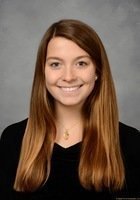
Isabella
TA'ing college-level computer science courses at MIT and Georgia Tech gave Isabella a clear picture of where students stumble in Python — from misunderstanding how mutable default arguments behave to writing tangled spaghetti code when a clean function would do. Her operations research background me...
Massachusetts Institute of Technology
Bachelor of Science in Mathematics (minors in Management Science and Ancient and Medieval Studies)
Georgia Institute of Technology-Main Campus
Current Grad Student, Operations Research
Certified Tutor
6+ years
Lauren
Working in a neuroscience research lab at Duke meant Lauren had to learn Python for real tasks — cleaning datasets, running statistical analyses, and visualizing experimental results. She teaches Python through that practical lens, covering loops, functions, and libraries like NumPy by connecting ea...
Duke University
Bachelor of Science, Neuroscience

Certified Tutor
6+ years
Noah
Python's readability makes it a great first language, but students still get stuck on concepts like list comprehensions, class inheritance, and debugging recursive functions. Noah uses Python daily in his cybersecurity graduate work and writes clean, well-documented code — a habit he passes along fr...
Duke University
Bachelor of Science in Computer Science

Certified Tutor
6+ years
Gabriel
Gabriel's computer science studies at Penn give him daily fluency in Python, from writing clean functions and loops to working with libraries like pandas for data analysis. He walks beginners through debugging line by line so they learn to read error messages instead of fearing them.
University of Pennsylvania
Bachelor of Science, Economics
Certified Tutor
5+ years
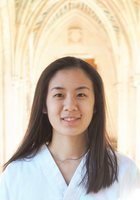
Florence
Whether it's scripting a data pipeline or implementing a sorting algorithm from scratch, Florence teaches Python with the pragmatism of someone who's used it across academic and industry settings — including software development at IBM. She walks through core concepts like list comprehensions, dicti...
Duke University
Bachelor of Science, Computer Science

Certified Tutor
10+ years
Daria
Daria's electrical and computer engineering coursework at Cornell means Python isn't just a classroom exercise — she uses it to program microcontrollers, process signals, and automate hardware-level tasks. That hands-on engineering context lets her teach variables, loops, and functions through proje...
Cornell University
Current Undergrad, Electrical and Computer Engineering
Certified Tutor
3+ years
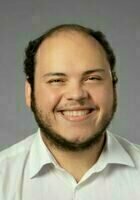
Eric
Eric writes Python daily in Duke's data science program, working with pandas DataFrames, NumPy arrays, and visualization libraries like Matplotlib. He teaches coding the way he learned it — by building real projects, debugging line by line, and understanding why a list comprehension behaves differen...
Duke University
Master's/Graduate, Data Science
Sacred Heart University
Bachelor in Arts, Mathematics Teacher Education

Certified Tutor
Jonathan
Python's readability makes it a great first language, but students still stumble on list comprehensions, class inheritance, and debugging logic errors they can't see. Jonathan uses Python in his own Cornell coursework across both CS and engineering projects, so he teaches the language the way it's a...
Cornell University
Bachelors, Chemical Engineering and Computer Science
Certified Tutor
8+ years
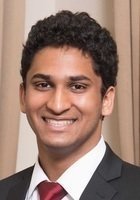
Pratik
Pratik's subject list is heavy on science and math — AP Chemistry, AP Biology, college physics — which means he picked up Python the way most STEM students do: writing scripts to process data, automate calculations, and solve problems that would take forever by hand. That practical entry point lets ...
Cornell University
Bachelor in Arts, Biology, General
Other Cincinnati Tutors
Related Technology and Coding Tutors in Cincinnati
Frequently Asked Questions
Absolutely. Python is one of the most beginner-friendly programming languages because its syntax reads almost like English, making it easier to focus on learning logic and problem-solving rather than getting bogged down in complex syntax rules. Many schools in the Cincinnati area introduce students to Python in middle and high school for this reason, and it's also widely used in data science, web development, and automation—so the skills you build transfer to real-world applications.
Students often struggle with three core areas: understanding algorithmic thinking (breaking problems into logical steps), debugging errors effectively, and grasping how data structures like lists and dictionaries work. Many also find the jump from writing simple scripts to building larger projects challenging. Personalized tutoring helps by walking through errors line-by-line, showing debugging strategies, and providing hands-on code review so you understand not just what went wrong, but why—and how to prevent it next time.
Syntax is the specific rules of Python—how to write a for loop, define a function, or use an if statement. Logic is the problem-solving skill: figuring out *what* steps your program needs to take to solve a problem. You can memorize syntax, but logic takes practice and feedback. A tutor helps by giving you real problems to solve, then guiding you through your thinking process so you develop strong algorithmic skills that apply to any language, not just Python.
Building projects—whether it's a simple game, a data analysis script, or a web scraper—forces you to apply multiple concepts together and solve real problems, which cements learning far better than isolated exercises. Projects also give you something tangible to show and build confidence. Tutors can guide you through project planning, help you break down complex features into manageable pieces, and review your code to help you write cleaner, more efficient solutions.
Data structures are how you organize and store information in your programs. Understanding when to use a list versus a dictionary, or how to work with nested structures, is crucial for writing efficient code and solving real problems. Many students find these concepts abstract at first, but personalized instruction helps by using concrete examples, visualizations, and hands-on practice so you develop intuition for which structure fits which problem.
Your first session is about understanding where you're starting from and what you want to achieve. A tutor will ask about your experience level, what you're working on (homework, a personal project, preparing for a class), and any specific challenges you're facing. From there, you'll work through a problem together so the tutor can see your thinking process and identify the best way to help you move forward.
Python opens doors to multiple career paths: web development (using frameworks like Django or Flask), data science and machine learning, automation and scripting, game development, and more. Many tech companies prioritize Python skills, and it's also the go-to language for AI and data analysis roles. Learning Python gives you a strong foundation that makes picking up other languages easier, and tutors can help you explore which direction interests you most.
Debugging is a skill that improves with practice and feedback. Rather than just telling you what's wrong, a tutor teaches you *how* to debug: reading error messages carefully, using print statements strategically, breaking code into smaller testable pieces, and thinking through what your code actually does versus what you intended. Over time, you develop the problem-solving mindset that makes debugging feel like a puzzle to solve rather than a frustrating roadblock.
Connect with Python Tutors in Cincinnati
Get matched with local expert tutors