Award-Winning Physics Tutors
serving New York, NY
Physics
Tutors in New York
Private 1-on-1 tutoring, weekly live classes for academic support, test prep & enrichment, practice tests and diagnostics, and more to elevate grades and test scores.
Based on 3.4M Learner Ratings
UniversitiesSchools & Universities
DeliveredHours Delivered
ProficiencyGrowth in Proficiency
Who needs tutoring?
No obligation. Takes ~1 minute.
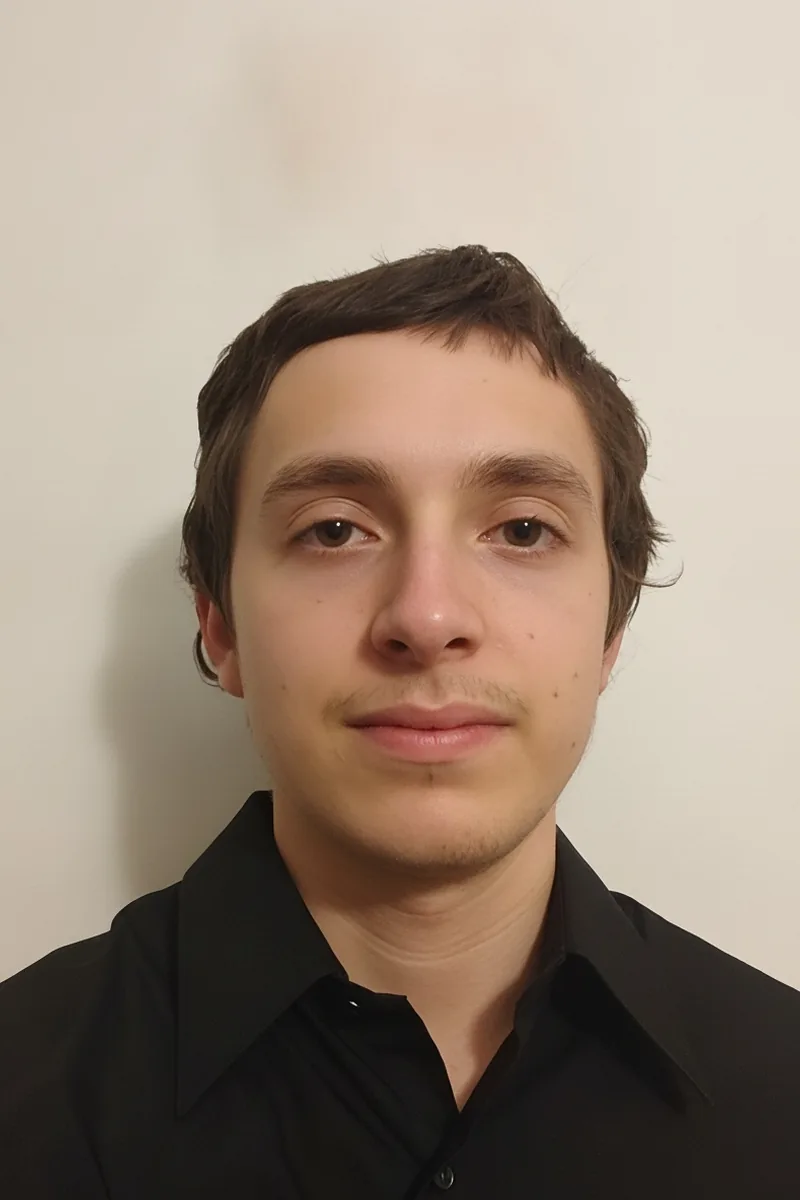
Three years of tutoring introductory physics at Washington University gave Justin a sharp sense of where students get stuck — usually at the gap between understanding a concept verbally and translating it into a free-body diagram or equation. His dual bachelor's degrees in physics and math, plus doctoral training in computational methods, let him attack problems from both the physical intuition side and the mathematical machinery side. Rated 5.0 by students.

Three science degrees from Yale — including one in chemistry — mean Zosia has worked through mechanics, thermodynamics, and electromagnetism problems repeatedly across disciplines, building the kind of cross-subject fluency that makes her especially clear on where physics concepts connect to the math underneath. She digs into the specific step where a student's reasoning breaks down, whether that's setting up Newton's second law for a pulley system or tracking signs through a conservation-of-energy equation. Rated 4.9 by students.
Kinematics equations and free-body diagrams become far less intimidating once a student learns to read each problem as a physical story rather than a math puzzle. Garrett breaks problems into setup, diagram, and solve phases, teaching students a repeatable framework they can apply from Newton's laws through electromagnetism. His science and math background lets him bridge the conceptual reasoning and the calculations seamlessly.
A year as a course assistant in Harvard's math department means Richard can handle the calculus that often becomes the real obstacle in physics — setting up integrals for work-energy problems or differentiating position functions in kinematics. He teaches across physics, calculus, and AP-level math, so when a mechanics problem demands clean vector decomposition or a tricky trig substitution, the math doesn't slow the physics down.
A physics degree gives Matthew the mathematical backbone to teach everything from Newtonian mechanics and rotational dynamics to electromagnetism and wave optics. Rather than handing students formulas to memorize, he traces each equation back to the physical situation it describes — so a free-body diagram or a circuit schematic becomes something students can read intuitively, not just label.
Engineering physics at Cornell means Daniel doesn't just know the textbook — he's applying Newtonian mechanics, wave dynamics, and thermodynamics in advanced coursework every week. He teaches physics by building intuition for why forces and energy behave the way they do, so students can tackle unfamiliar problems without relying on memorized formulas. Rated 5.0 by students.
Four years of synthetic biology research at NASA Ames meant Ryan was constantly applying Newtonian mechanics, thermodynamics, and fluid dynamics to real experimental setups. He teaches physics by connecting equations to physical intuition — showing, for instance, why conservation of energy isn't just a formula but a reasoning tool that simplifies complex problems.
A math degree gives Romeo an edge most physics tutors don't have — he can walk students through the calculus behind Newtonian mechanics or electromagnetic theory without handwaving past the equations. Whether the challenge is free-body diagrams, conservation laws, or wave behavior, he connects the physical intuition to the mathematical framework that makes it precise.
Currently conducting research at the Hospital for Special Surgery, Marcus applies physics principles — force analysis, energy conservation, wave behavior — in a hands-on setting every day. He tutored science subjects throughout his time at Yale and approaches physics problems by teaching students to draw clear diagrams and translate word problems into equations before touching a calculator.
Teaching physics well means knowing where students get stuck, and Jay sees those sticking points daily in his science classroom at a New York City charter school. He tackles force diagrams, kinematics equations, and energy conservation by building each concept from intuition first, then layering in the math.
The hardest part of physics for most students isn't the formulas — it's translating a word problem into a free-body diagram or energy equation. Zackary's quantitative math training at Cornell sharpens his ability to break down mechanics and kinematics problems into clear, step-by-step setups that make the math feel manageable.
Immunology and genetics lab work at Washington University in St. Louis gave Colin a hands-on relationship with the physics that underpins biological systems — from the optics behind microscopy to the thermodynamics driving molecular interactions. He also teaches calculus and chemistry, so when a physics problem demands comfortable math or cross-disciplinary reasoning, he doesn't have to hand-wave through it. MCAT scores in the 91st percentile confirm that comfort under pressure.
Engineering school doesn't just teach physics — it demands you apply it under pressure, which is exactly the fluency Brandon brings to kinematics, circuit analysis, and thermodynamics. He walks through free-body diagrams and energy calculations step by step, making sure students can set up problems independently before worrying about getting the right number.
Biomedical engineering is applied physics at its core, so Robert has spent years translating Newtonian mechanics, electromagnetism, and thermodynamics into real problem-solving contexts. He tackles everything from free-body diagrams to conservation of energy by walking through the reasoning behind each equation before ever plugging in numbers.
Miguel's History and Science degree — a Harvard program designed to bridge the two disciplines — means he studied how physical theories actually develop, from Newtonian mechanics through electromagnetism to modern quantum ideas, alongside the mathematical tools that make them work. That cross-disciplinary lens, combined with teaching calculus through multivariable and competition-level math, gives him unusual fluency in connecting the conceptual story of a physics problem to the algebra and trig students need to solve it.
Few people are better positioned to teach physics than someone actively doing research in it — William is pursuing a Ph.D. in mechanical engineering at Columbia, where Newtonian mechanics, electromagnetism, and wave dynamics are daily working tools. He unpacks problems by identifying the physical principle first and building the math around it, which keeps students from drowning in equations they don't understand.
Pre-med coursework gave Jeremy a crash course in the physics that underpins everything from fluid pressure in arteries to the optics of medical imaging — mechanics, waves, and thermodynamics all showed up before he ever touched a clinical setting. He pairs that science background with an economics-trained instinct for breaking complex systems into variables and relationships, which translates directly to setting up force diagrams and energy equations.
Kinematics equations and free-body diagrams can feel like arbitrary symbol-pushing until someone shows you the physical story each one tells. Alex earned a 1570 SAT and studied biology at Columbia, where physics coursework was integral — he learned to think about forces, energy, and motion as tools for understanding real systems. He teaches students to sketch problems before solving them, turning word problems into something visual and manageable.
A physics degree from Colgate plus an architecture program at Columbia gave Allison an unusual double fluency — she thinks in both equations and physical structures. She unpacks mechanics, electromagnetism, and wave behavior by tying the math to real scenarios, whether that's forces in a building or the optics of light through glass. Rated 5.0 by students.
A published researcher in orthopedics, Caleigh understands physics as something that explains real forces on real bodies — torque in a joint, momentum in a collision, energy transfer in biological systems. She walks students through free-body diagrams, kinematics equations, and conservation laws by tying each concept back to scenarios they can visualize.
Biomedical engineering at Yale is essentially applied physics — Dani spent years working through mechanics, electromagnetism, thermodynamics, and wave behavior in the context of designing medical devices and analyzing biological systems. She teaches physics by anchoring each concept to a concrete scenario, so Newton's laws or circuit analysis feel like problem-solving tools rather than formulas to memorize.
Kinematics problems and free-body diagrams require two skills at once: setting up the physics correctly and executing the math cleanly. Hillel's geology training leaned heavily on classical mechanics and thermodynamics, so he's fluent in both the conceptual reasoning and the calculus that supports it. He teaches students to sketch the situation, identify forces, and translate the diagram into equations before touching a calculator.
David's computer science training at UCLA's Engineering School means he's been solving mechanics, electromagnetism, and wave problems alongside the calculus and differential equations that underpin them — and his AP Physics C coursework in both mechanics and E&M goes well beyond the introductory level. He tackles problems by translating the physical setup into clean mathematical models, a habit drilled into him by years of algorithmic thinking where precision and logical structure aren't optional. Rated 4.8 by students.
Kristen's approach to physics leans heavily on translating word problems into free-body diagrams and mathematical relationships before touching a single equation. Having taken physics courses alongside her biology degree, she knows how to bridge the gap between conceptual understanding and the quantitative problem-solving that trips most students up — especially in mechanics and electromagnetism.
A math degree turns out to be one of the best foundations for teaching physics, because the subject lives at the intersection of conceptual reasoning and calculation. Leonard unpacks problems — whether it's projectile motion, circuit analysis, or conservation of energy — by first making sure the physical situation makes sense before touching an equation. He expects students to defend their answers, which builds the problem-solving instinct physics actually requires.
Breaking physics problems into diagrams, equations, and units is second nature for Eric after years of tutoring the subject alongside his quantitative coursework at NYU. He teaches kinematics, forces, and energy conservation by starting with free-body diagrams and dimensional analysis — two tools that turn intimidating word problems into solvable systems. His 5.0 rating speaks to how well that structured approach lands with students.
A strong applied math background changes how physics clicks — instead of memorizing formulas for kinematics or electromagnetism, Shahnawaz walks through the derivations so students understand where each equation comes from. His master's work at ETH Zurich involved the kind of mathematical modeling that underpins classical and modern physics alike.
A biopsychology degree from Tufts covers more physics than most people expect — optics, mechanics, waves, and thermodynamics all show up when studying how biological systems sense and respond to their environment. Elizabeth draws on that interdisciplinary training to connect force diagrams and energy calculations back to concrete, real-world scenarios that make the problem-solving process feel grounded rather than abstract. Rated 5.0 by students.
A biomedical engineer doesn't just study physics — she builds things with it. Katie earned her B.S. from Cornell solving real force, energy, and circuit problems in lab and design settings, which means she teaches kinematics, Newton's laws, and electromagnetism with an intuitive sense for what the equations actually describe. She's particularly sharp at helping students translate word problems into free-body diagrams and mathematical setups.
Engineering coursework is essentially applied physics under pressure — thermodynamics, fluid mechanics, and force analysis were daily requirements in Abigail's chemical engineering program. She teaches physics by anchoring each concept in a concrete scenario, whether that's free-body diagrams for Newton's laws or energy conservation in collisions. Students walk away understanding not just how to solve a problem, but why a particular approach works.
Studying physics at SUNY Binghamton means Aiden is immersed in the subject at the university level — from classical mechanics and thermodynamics to electromagnetism and modern physics. He translates that depth into clear explanations of force diagrams, energy conservation, and circuit analysis for students at any level. His dual background in computer science also lets him teach computational approaches to physics problems when that's useful.
A Cornell biology degree demands serious physics coursework — mechanics, thermodynamics, and wave behavior all show up when studying biological systems. Adrienne pairs that scientific training with real classroom teaching experience, which means she can unpack force diagrams and kinematics equations in language that actually lands.
Scott's premed certificate gave him hands-on experience with the physics that governs biological systems — mechanics, thermodynamics, wave behavior, and electromagnetism all showed up in his coursework. He unpacks force diagrams and energy conservation problems by tying them to real scenarios, making the math feel like a tool rather than an obstacle. His ability to teach across math and science means he can fill in gaps on the fly when a physics problem demands stronger algebra or calculus skills.
Studying chemical physics at Columbia means Osman doesn't just know physics formulas — he understands the derivations behind them and where classical mechanics, electromagnetism, and thermodynamics connect. He unpacks problems by teaching students to draw free-body diagrams, identify conserved quantities, and check units before touching a calculator. That systematic approach transfers across introductory and intermediate physics courses.
Daniel's strength in physics comes from the same place as his SAT quantitative performance (1540 composite): a habit of reading problems carefully, identifying what's actually being asked, and structuring a clean path to the answer before doing any math. His political science training sharpened that analytical discipline — breaking complex arguments into components translates directly to breaking a free-body diagram into its individual forces. He teaches across physics, calculus, and chemistry, so the mathematical tools never become a separate obstacle.
A strong chemistry background gives Ankit an unusual advantage in Physics: he already thinks in terms of energy, forces, and molecular-level interactions, which means he can explain concepts like thermodynamics and electromagnetism from multiple angles. He digs into free-body diagrams, conservation laws, and kinematics with an emphasis on setting up problems correctly before touching a calculator.
Julian is pursuing physics at Columbia, which means he's actively working through the same mechanics, electromagnetism, and thermodynamics concepts his students encounter — just at a deeper level. His 1520 SAT speaks to the quantitative fluency that lets him move fluidly between the conceptual reasoning and the algebra or calculus a physics problem actually demands. He's especially sharp at teaching students how to extract the right variables from a messy word problem and map them onto the correct equation.
Biochemistry at Columbia means Aaron regularly works through the thermodynamics, fluid mechanics, and energy transfer concepts that overlap directly with introductory physics — and his calculus chops (he also teaches AP Calculus BC) keep the quantitative side from becoming a stumbling block. He's especially strong at connecting the physical intuition behind a problem to the mathematical framework, so students understand why an equation applies rather than guessing from a formula sheet. Holds a 5.0 rating.
A PhD in Chemistry might seem like an unusual path to teaching physics, but physical chemistry sits right at the intersection — thermodynamics, quantum mechanics, and kinetics all require fluency in both disciplines. Justin brings that dual perspective to topics like energy conservation, wave behavior, and electromagnetism, grounding each concept in mathematical reasoning rather than formula sheets.
Matt approaches physics the way he learned it at Cornell: by building each problem from a free-body diagram or energy diagram before touching an equation. Whether the topic is kinematics, electrostatics, or wave behavior, he walks through the conceptual setup first so the math becomes a natural next step rather than a guessing game.
Testimonials
Because the right Physics tutor makes all the difference.
Average Session Rating – Based on 3.4M Learner Ratings
Practice Physics
Free practice tests, flashcards, and AI tutoring for Physics
Other New York Tutors
Related Science Tutors in New York
Frequently Asked Questions
Physics students typically find concepts like forces, energy, and motion challenging because they require visualizing abstract ideas and connecting them to real-world applications. Unit conversions, vector problems, and balancing equations are also common pain points. Personalized 1-on-1 instruction helps students build a solid conceptual foundation rather than just memorizing formulas, which leads to stronger problem-solving skills across all physics topics.
Expert tutors focus on helping you grasp the reasoning behind physics principles—why objects move the way they do, how energy transforms, and how forces interact—rather than having you memorize formulas without context. They use real-world examples, diagrams, and step-by-step explanations tailored to your learning style, which builds deeper understanding and helps you apply concepts to new problems on tests and in lab work.
Yes—hands-on experiments and lab work are crucial for developing scientific thinking and seeing physics concepts in action. Tutors can help you design experiments, analyze data, understand the scientific method, and troubleshoot why results don't match predictions. This support strengthens both your lab skills and your ability to explain the physics behind what you observe.
Varsity Tutors connects you with expert tutors who specialize in physics for students in New York. You can specify your grade level, whether you're preparing for AP Physics, Regents exams, or just need help with your current course, and we match you with a tutor who fits your schedule and learning goals. The process is straightforward—once matched, you'll work with someone who understands your specific challenges and curriculum.
General physics tutoring focuses on building conceptual understanding of how forces, energy, and motion work, while exam prep targets specific test formats and question types you'll encounter on Regents, AP Physics, or standardized tests. Many students benefit from ongoing tutoring that covers both—strengthening fundamentals while also practicing test strategies and time management for exams.
Progress depends on where you're starting and your goals, but most students see meaningful improvements in understanding and grades within 4-6 weeks of consistent personalized tutoring. If you're working toward a specific test or struggling with a particular unit, shorter-term intensive sessions can provide quick boosts. Regular, focused 1-on-1 instruction accelerates learning because tutors can identify and address gaps immediately, rather than having you fall further behind in a classroom setting.
Let’s find your perfect tutor
Answer a few quick questions. We’ll recommend the right plan and match you with a top 5% tutor.