Award-Winning Physics Tutors
serving Rochester, NY
Physics
Tutors in Rochester
Private 1-on-1 tutoring, weekly live classes for academic support, test prep & enrichment, practice tests and diagnostics, and more to elevate grades and test scores.
Based on 3.4M Learner Ratings
UniversitiesSchools & Universities
DeliveredHours Delivered
ProficiencyGrowth in Proficiency
Who needs tutoring?
No obligation. Takes ~1 minute.
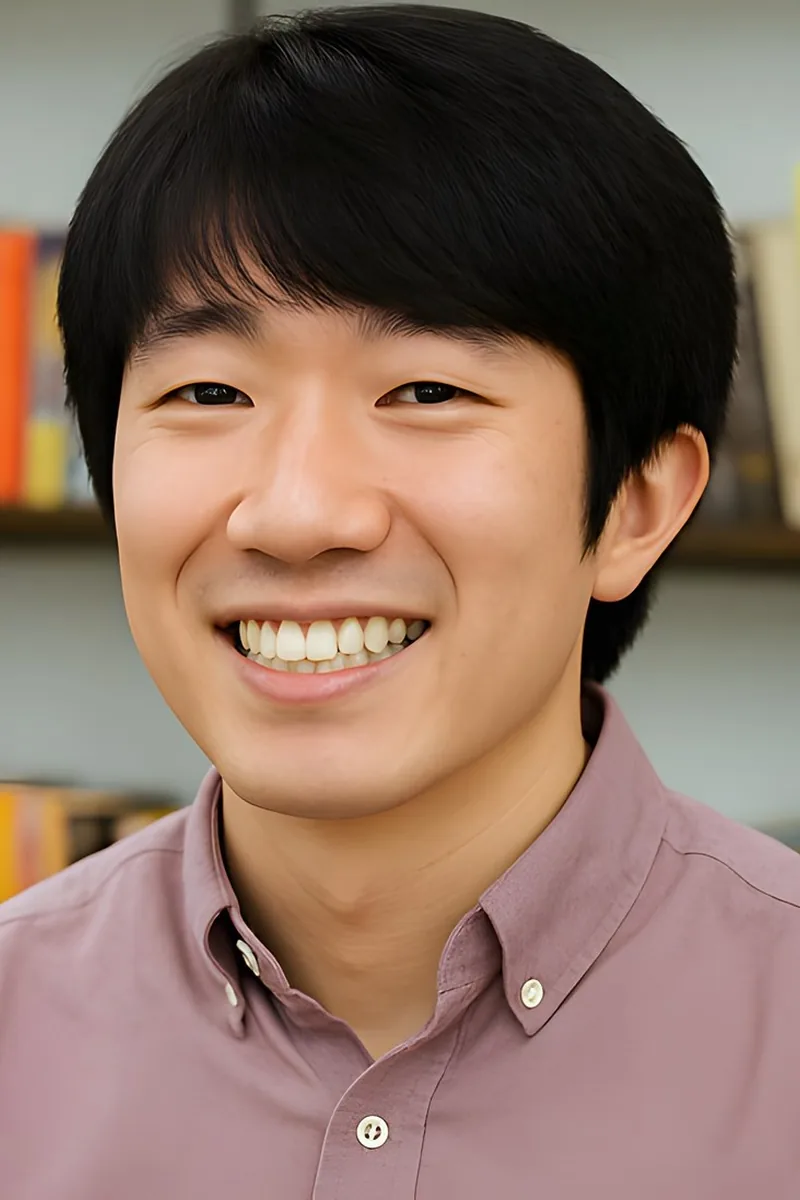
Three science bachelor's degrees and a current MD program mean Andrew has taken — and aced — more physics-adjacent coursework than most tutors, from biomechanics in anatomy to pressure and fluid dynamics in physiology. He's especially sharp at translating those real-world medical applications back into the introductory mechanics and energy problems students are actually tested on, making abstract force diagrams feel grounded. Rated 5.0 by students.
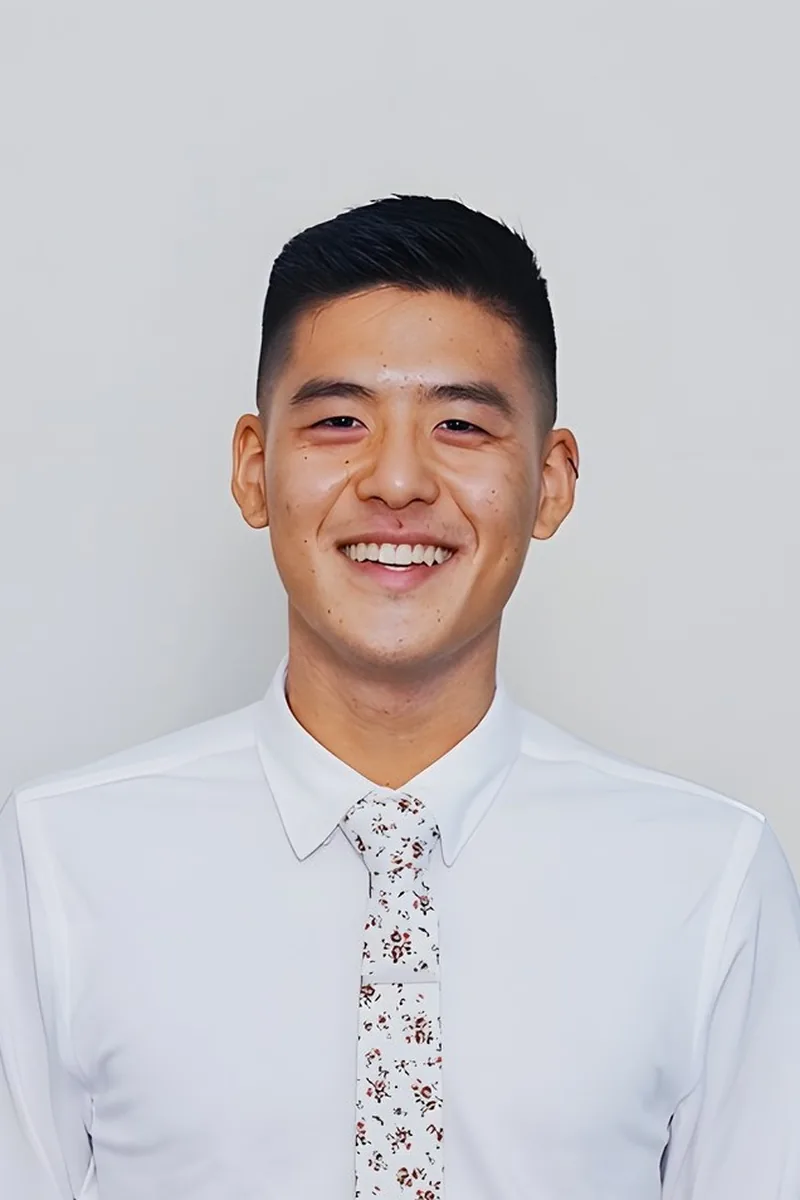
Biomedical engineering demands a deep command of physics — from fluid dynamics in blood vessels to the electromagnetic principles behind MRI machines. Wesley brings that applied perspective to topics like kinematics, energy conservation, and wave behavior, connecting abstract equations to real systems students can visualize. Rated 4.7 by students.
Free-body diagrams are where physics clicks or falls apart — once a student can translate a word problem into forces and vectors, kinematics and Newton's laws start making sense. Ben teaches physics by drilling that translation step, then connecting it to energy and momentum concepts that build throughout the course. His 3.92 GPA in a rigorous pre-dental science program at Rochester reflects how seriously he takes quantitative problem-solving.
I'm working towards my Bachelors/Masters in Chemical Engineering at the Rochester Institute of Technology, with a special interest in math and physics! I believe that visual demonstrations alongside verbal explanations of material work best for strengthening a students ability to conceptualize material. I have experience tutoring both college and high school students, and I am particularly well-equipped to assist with math, physics, and SAT preparation.
Three years of tutoring introductory physics at Washington University gave Justin a sharp sense of where students get stuck — usually at the gap between understanding a concept verbally and translating it into a free-body diagram or equation. His dual bachelor's degrees in physics and math, plus doctoral training in computational methods, let him attack problems from both the physical intuition side and the mathematical machinery side. Rated 5.0 by students.
Three science degrees from Yale — including one in chemistry — mean Zosia has worked through mechanics, thermodynamics, and electromagnetism problems repeatedly across disciplines, building the kind of cross-subject fluency that makes her especially clear on where physics concepts connect to the math underneath. She digs into the specific step where a student's reasoning breaks down, whether that's setting up Newton's second law for a pulley system or tracking signs through a conservation-of-energy equation. Rated 4.9 by students.
Kinematics equations and free-body diagrams become far less intimidating once a student learns to read each problem as a physical story rather than a math puzzle. Garrett breaks problems into setup, diagram, and solve phases, teaching students a repeatable framework they can apply from Newton's laws through electromagnetism. His science and math background lets him bridge the conceptual reasoning and the calculations seamlessly.
A year as a course assistant in Harvard's math department means Richard can handle the calculus that often becomes the real obstacle in physics — setting up integrals for work-energy problems or differentiating position functions in kinematics. He teaches across physics, calculus, and AP-level math, so when a mechanics problem demands clean vector decomposition or a tricky trig substitution, the math doesn't slow the physics down.
As a Yale physics major who also teaches thermodynamics, special relativity, and statics and dynamics, Ian has worked through the full arc from introductory mechanics to upper-division theory — so he knows exactly where each concept builds on the last and where students tend to lose the thread. He's particularly sharp at finding the analogy or reframing that makes a stubborn idea finally click, whether that's torque, wave superposition, or conservation laws in multi-body systems. His 1550 SAT speaks to the quantitative precision he brings to every problem.
Three physics degrees' worth of coursework gave Avram deep fluency with everything from Newtonian mechanics to electromagnetism and thermodynamics. He walks through free-body diagrams, conservation laws, and wave behavior by building each problem from first principles, so the math serves the physics instead of overwhelming it. His 1520 SAT speaks to the analytical rigor he brings to every session.
A physics degree gives Matthew the mathematical backbone to teach everything from Newtonian mechanics and rotational dynamics to electromagnetism and wave optics. Rather than handing students formulas to memorize, he traces each equation back to the physical situation it describes — so a free-body diagram or a circuit schematic becomes something students can read intuitively, not just label.
Neuroscience sits at the intersection of biology, chemistry, and physics — Anna's degree required her to work through mechanics, electricity, and wave behavior in contexts like neural signal propagation and membrane potential dynamics, keeping the core physics sharp and grounded in real systems. She breaks down multi-step problems by connecting the underlying physical principles to tangible examples, so equations feel like descriptions of something real rather than abstract formulas to memorize. Rated 5.0 by students.
Charts, drawings, and physical models are Samantha's go-to tools for making forces, vectors, and energy concepts tangible — she's a visual teacher who turns abstract physics scenarios into something students can sketch and reason through before touching an equation. Her chemistry degree from Cornell means she's fluent in the quantitative and conceptual reasoning that underpins mechanics and thermodynamics, and she's been tutoring high school physics and math since her own high school years. Rated 5.0 by students.
Engineering physics at Cornell means Daniel doesn't just know the textbook — he's applying Newtonian mechanics, wave dynamics, and thermodynamics in advanced coursework every week. He teaches physics by building intuition for why forces and energy behave the way they do, so students can tackle unfamiliar problems without relying on memorized formulas. Rated 5.0 by students.
Four years of synthetic biology research at NASA Ames meant Ryan was constantly applying Newtonian mechanics, thermodynamics, and fluid dynamics to real experimental setups. He teaches physics by connecting equations to physical intuition — showing, for instance, why conservation of energy isn't just a formula but a reasoning tool that simplifies complex problems.
Kiera's biology-modified-with-engineering major at Dartmouth means she's constantly toggling between the life sciences and the physics that underlies them — mechanics in biomechanical systems, thermodynamics in ecological energy flow, wave behavior in sensory biology. That dual fluency lets her teach introductory physics with concrete examples that make Newton's laws and conservation principles feel grounded rather than abstract. Rated 5.0 by students.
Electrical engineering is applied physics, so Robert spent four years at Duke living inside concepts like electromagnetism, wave behavior, and Newtonian mechanics. He teaches physics by tying equations back to physical intuition — what's actually happening when a block slides down a ramp or a charge moves through a field. His math fluency means students never get lost in the algebra while trying to learn the physics.
A math degree gives Romeo an edge most physics tutors don't have — he can walk students through the calculus behind Newtonian mechanics or electromagnetic theory without handwaving past the equations. Whether the challenge is free-body diagrams, conservation laws, or wave behavior, he connects the physical intuition to the mathematical framework that makes it precise.
Studying particle physics at MIT and now pursuing a master's at UC Berkeley, Andrea lives inside the subject she teaches. She walks students through everything from Newtonian mechanics and electromagnetism to modern topics like special relativity, emphasizing how to translate a physical scenario into a solvable equation. That dual skill — physical intuition plus mathematical rigor — is exactly what makes physics problems manageable.
Nicholas pairs his computer science background with a deep interest in physics, covering everything from free-body diagrams and kinematics to circuits and wave behavior. He teaches students to translate word problems into equations systematically — identifying knowns, unknowns, and which principle applies — instead of hunting for the right formula to plug into.
Headed to medical school this fall, Kelsey built her physics foundation through the lens of cellular and molecular biology — understanding how forces govern membrane dynamics, how thermodynamics drives biochemical reactions, and how wave behavior underpins imaging techniques. That science-first perspective lets her teach mechanics and energy concepts by grounding them in real systems students can picture, rather than leaving them as abstract equations on a page. Rated 5.0 by students.
Studying both computer science and physics requires translating real-world problems into mathematical language, and that translation step is exactly where most physics students get stuck. Winton tackles concepts like force diagrams, energy conservation, and kinematics by teaching students to read a scenario and build the equation themselves rather than hunting for the right formula to plug into.
Studying biology at Cornell means Drishti regularly crosses into physics territory — biomechanics, fluid dynamics in circulatory systems, and the thermodynamics behind cellular processes all demand the same force and energy reasoning that drives a standard physics course. She also teaches AP Physics C: Mechanics and calculus, so she can tackle the problems where the physics and the math tangle together without skipping a beat. Rated 5.0 by students.
An applied mathematics master's gives Victor the exact toolkit that makes physics problems tractable — setting up differential equations for motion, linearizing messy force relationships, and knowing which approximations are safe to make. He teaches across calculus, differential equations, and physics, so when a student gets stuck, he can pinpoint whether the gap is in the physical reasoning or the math execution. Rated 5.0 by students.
From Newtonian mechanics to electromagnetism, Frank has taught physics across every level — Regents, AP, and SAT Subject Tests — giving him a clear picture of where students typically get stuck. He emphasizes setting up free-body diagrams and translating word problems into equations, which are the skills that unlock nearly every problem type. His analytical instincts from a career in quantitative research make him especially effective at teaching students to reason through multi-step problems.
Rebecca's Classics degree might seem far from Newton's laws, but her 1500 SAT reflects the kind of precise analytical reasoning that physics problems demand — and she teaches both calculus and physics, so she can bridge the gap when the math itself becomes the sticking point. She's especially useful for students who need someone to slow down and untangle the logic of a problem before rushing to plug numbers into formulas.
Currently conducting research at the Hospital for Special Surgery, Marcus applies physics principles — force analysis, energy conservation, wave behavior — in a hands-on setting every day. He tutored science subjects throughout his time at Yale and approaches physics problems by teaching students to draw clear diagrams and translate word problems into equations before touching a calculator.
Kinematics, energy conservation, and electrostatics all showed up on Benjamin's MCAT — and he scored a 33 ACT composite, reflecting strong quantitative reasoning across the board. He teaches physics by anchoring every equation to a real scenario first, so students understand what the math is actually describing before they start plugging in numbers.
Teaching physics well means knowing where students get stuck, and Jay sees those sticking points daily in his science classroom at a New York City charter school. He tackles force diagrams, kinematics equations, and energy conservation by building each concept from intuition first, then layering in the math.
An applied math degree plus graduate-level coursework in statics, dynamics, and thermodynamics means Drisana tackles physics problems with the mathematical fluency most students wish they had — she can move fluidly between setting up a free-body diagram and solving the resulting system of equations without losing sight of the physics. She also teaches engineering, physical chemistry, and calculus through Calc 3, so when a problem demands vector decomposition or integration, the math never becomes a separate obstacle.
Free-body diagrams and Newton's laws seem straightforward until a problem adds an inclined plane, friction, and a pulley — then students need to actually understand vector decomposition. Emily took the full physics sequence during her pre-med track at Cornell and brings a structured, step-by-step approach to mechanics and electromagnetism problems that keeps the math from overwhelming the physics.
Studying physics at Cornell means Michael lives in this material daily — from Newtonian mechanics and energy conservation to electromagnetism and wave behavior. He treats problem-solving as a skill in itself, teaching students to sketch free-body diagrams and translate physical situations into equations before reaching for a formula sheet. His 5.0 rating speaks to how well that approach clicks.
The hardest part of physics for most students isn't the formulas — it's translating a word problem into a free-body diagram or energy equation. Zackary's quantitative math training at Cornell sharpens his ability to break down mechanics and kinematics problems into clear, step-by-step setups that make the math feel manageable.
Biomedical engineering is applied physics at its core, so Robert has spent years translating Newtonian mechanics, electromagnetism, and thermodynamics into real problem-solving contexts. He tackles everything from free-body diagrams to conservation of energy by walking through the reasoning behind each equation before ever plugging in numbers.
Andrew approaches physics as applied math: once a student can translate a word problem into a free-body diagram or energy equation, the intimidation factor drops fast. Studying both finance and mathematics at Boston College, he's comfortable moving between kinematics, electromagnetism, and thermodynamics and explaining the calculus that ties them together.
Engineering school doesn't just teach physics — it demands you apply it under pressure, which is exactly the fluency Brandon brings to kinematics, circuit analysis, and thermodynamics. He walks through free-body diagrams and energy calculations step by step, making sure students can set up problems independently before worrying about getting the right number.
Running problem-solving sessions for calculus at Cornell and tutoring across the math spectrum means Richard has drilled the exact algebra and trig mechanics that cause students to stall mid-physics problem — so when a free-body diagram turns into a system of equations, the math doesn't become a second obstacle. His 1530 SAT and ongoing math PhD work keep him fluent in the quantitative reasoning that ties Newton's laws and energy methods to clean, confident solutions.
Immunology and genetics lab work at Washington University in St. Louis gave Colin a hands-on relationship with the physics that underpins biological systems — from the optics behind microscopy to the thermodynamics driving molecular interactions. He also teaches calculus and chemistry, so when a physics problem demands comfortable math or cross-disciplinary reasoning, he doesn't have to hand-wave through it. MCAT scores in the 91st percentile confirm that comfort under pressure.
Jacob earned his bachelor's in astrophysics, so Newtonian mechanics, electromagnetism, and thermodynamics aren't textbook abstractions to him — they're tools he used daily. He approaches physics tutoring the way he approaches writing a play: every concept needs a clear setup, a logical through-line, and a payoff that sticks. Students walk away understanding the why behind each equation, not just the how.
Miguel's History and Science degree — a Harvard program designed to bridge the two disciplines — means he studied how physical theories actually develop, from Newtonian mechanics through electromagnetism to modern quantum ideas, alongside the mathematical tools that make them work. That cross-disciplinary lens, combined with teaching calculus through multivariable and competition-level math, gives him unusual fluency in connecting the conceptual story of a physics problem to the algebra and trig students need to solve it.
Testimonials
Because the right Physics tutor makes all the difference.
Average Session Rating – Based on 3.4M Learner Ratings
Practice Physics
Free practice tests, flashcards, and AI tutoring for Physics
Other Rochester Tutors
Related Science Tutors in Rochester
Frequently Asked Questions
Physics students often struggle with visualizing abstract concepts like forces, energy, and motion—especially when these ideas don't match everyday intuition. Beyond conceptual understanding, balancing equations, unit conversions, and applying formulas to unfamiliar problems create significant roadblocks. Many students memorize equations without grasping the underlying physics, which makes it hard to solve novel problems or succeed on standardized tests. Personalized tutoring helps students build genuine understanding rather than relying on memorization alone.
In an initial session, a tutor will assess your current understanding of physics concepts, identify specific areas where you're struggling, and learn about your learning style and goals. They'll likely work through a problem or concept with you to understand how you approach physics and where misconceptions might be occurring. From there, the tutor creates a personalized plan focused on building both conceptual understanding and problem-solving skills. This foundation ensures that all future sessions are targeted and efficient.
Expert tutors excel at bridging the gap between abstract physics principles and tangible, real-world examples—whether that's explaining how Newton's laws apply to car crashes, how energy conservation works in roller coasters, or how electromagnetic principles power everyday devices. By connecting theory to applications you care about, tutoring makes concepts more memorable and intuitive. This approach also strengthens your ability to recognize physics in unfamiliar contexts, a critical skill for exams and advanced coursework.
Yes. Tutors can help you understand the scientific method, design experiments, analyze data, and interpret results—skills that go beyond just understanding concepts. They can also help you prepare lab reports, troubleshoot experimental challenges, and connect what you observe in the lab back to the theory you're learning in class. This support strengthens both your experimental skills and your conceptual understanding of physics.
Rochester's 25 school districts and 102 schools may use different Physics curricula and pacing, so finding a tutor familiar with your specific course is valuable. Varsity Tutors connects you with tutors who understand the Physics standards and expectations in Rochester schools, whether you're in a traditional Physics course, AP Physics, honors Physics, or another specialized track. This local expertise ensures tutoring aligns with what your teachers expect and what your assessments will cover.
Effective Physics problem-solving requires more than knowing formulas—it demands the ability to identify what's being asked, select the right concepts and equations, and execute calculations accurately. Tutors teach you a systematic approach to tackling problems, help you recognize patterns across different problem types, and guide you through common mistakes. With practice and feedback, you'll build confidence and speed, which directly translates to better performance on homework, quizzes, and exams.
Unit conversions trip up many students because they require both understanding the relationship between units and careful attention to detail—and Physics problems often involve multiple conversions in a single problem. A tutor can teach you systematic strategies for unit conversion, help you recognize when conversions are needed, and build your confidence through practice. Mastering this skill eliminates a major source of errors and frees you to focus on the physics concepts themselves.
Tutors help you review and reinforce concepts you've learned, identify gaps in your understanding before the test, and practice problem-solving under timed conditions. They can also teach you test-taking strategies specific to Physics—like how to approach multiple-choice questions, manage your time across different problem types, and check your work efficiently. With targeted preparation and strategic practice, you'll feel more confident and perform better on everything from unit exams to AP Physics or college placement tests.
Let’s find your perfect tutor
Answer a few quick questions. We’ll recommend the right plan and match you with a top 5% tutor.