Award-Winning Calculus Tutors
serving New York, NY
Who needs tutoring?
FEATURED BY


TUTORS FROM
- YaleUniversity
- PrincetonUniversity
- StanfordUniversity
- CornellUniversity
Award-Winning Calculus Tutors serving New York, NY

Certified Tutor
9+ years
Jai
Electrical engineering at Stanford means Jai didn't just take calculus — he used it daily, from analyzing circuit behavior with differential equations to applying Fourier transforms in signal processing. That depth turns him into someone who can explain not just how to evaluate an integral but why i...
Stanford University
Bachelors in Electrical Engineering and Computer Science
Certified Tutor
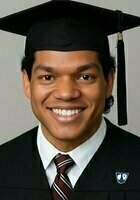
Tony
Pre-med biology at Yale means Tony didn't just take calculus — he used it, working through enzyme kinetics, growth rate models, and the quantitative reasoning that underpins biological research. With medical school ahead at Columbia, he teaches derivatives and integrals as tools with purpose, connec...
Yale University
Bachelor of Science in Biology

Certified Tutor
9+ years
Sharon
Sharon's background is in public policy and journalism, not mathematics, so she's honest that calculus isn't her deepest subject — but her 1550 SAT demonstrates strong quantitative chops, and a full year of intensive math instruction with struggling middle schoolers sharpened her ability to break ab...
Columbia University in the City of New York
Master of Science, Journalism
University of Chicago
Bachelor in Arts

Certified Tutor
Matthew
Bioinformatics at Stanford isn't possible without calculus — Matthew's coursework in computational modeling and stem cell dynamics meant living inside derivatives, integrals, and differential equations that describe how biological systems change over time. That background lets him teach calculus thr...
Stanford University
Bachelors in Human Biology (concentration in Bioinformatics and Stem Cell Science)

Certified Tutor
9+ years
Justin
Whether a student is seeing derivatives for the first time or wrestling with integration by parts, Justin connects each calculus concept to a physical picture — velocity from position, area under a curve, rates of change in real systems. That instinct comes from studying both physics and mathematics...
Washington University in St. Louis
Bachelor's in Physics and Mathematics
University of Chicago
Doctor of Philosophy, Computational Mathematics

Certified Tutor
8+ years
Sarah
As a pre-dental student at Vanderbilt, Sarah uses calculus regularly in her science coursework, which means she understands derivatives and integrals not just as abstract procedures but as tools with real applications. She's especially effective at teaching the chain rule and related rates problems ...
Vanderbilt University
Bachelor of Science, Predentistry

Certified Tutor
James
From epsilon-delta definitions of limits to integration techniques like substitution and parts, calculus demands both conceptual understanding and mechanical skill. James has tutored college students through calculus courses at Harvard for years, often connecting abstract ideas — like why the chain ...
Harvard University
Bachelor in Arts, Chemistry
Certified Tutor
Eric
Ecology and evolutionary biology coursework gave Eric direct experience with calculus in action — population growth models, predator-prey dynamics, and the rate equations that describe how ecosystems shift over time. That means he teaches derivatives and integrals as tools for describing real change...
Princeton University
Bachelor in Arts
Certified Tutor
Johari
Three science degrees — including one in physics — mean Johari has spent serious time with calculus as a working tool, not just a classroom exercise. Physics lives in derivatives and integrals: velocity from position functions, force from momentum changes, electric fields from charge distributions. ...
Massachusetts Institute of Technology
Bachelor of Science

Certified Tutor
Chelsey's degrees are in Theatre, not mathematics, so she's straightforward that calculus isn't her primary area — but a 35 ACT composite shows she can handle rigorous quantitative reasoning when it counts. She approaches early calculus the way she'd approach a complex script: methodically, breaking...
Northwestern University
Bachelors
Other New York Tutors
Related Math Tutors in New York
Frequently Asked Questions
Students in New York often find limits, derivatives, and related rates problems particularly challenging because they require shifting from purely procedural thinking to understanding the concepts underlying the mathematics. Word problems involving optimization and applications of calculus can also trip up students who haven't yet connected the abstract rules to real-world scenarios. Personalized tutoring helps break down these conceptual barriers by showing how each topic connects to the others and to practical applications.
Varsity Tutors connects you with expert tutors who understand the calculus standards taught across New York's 64 school districts and know how to work with different textbooks and approaches—whether your school uses AP Calculus, IB, or standard honors curriculum. When you reach out, you can specify your school's textbook and the particular topics you're working on, ensuring a good match with a tutor who can support your exact needs.
One-on-one instruction allows tutors to move at your pace, celebrate progress on smaller steps, and help you understand why methods work rather than just memorizing procedures—which reduces anxiety by replacing confusion with clarity. Having a dedicated tutor also means you can ask questions without worrying about keeping up with a class, and you get immediate feedback on your work so mistakes become learning opportunities rather than sources of frustration.
In calculus, showing your work reveals your understanding of each step—not just the final answer—which is essential for partial credit on exams and for catching errors in your reasoning. A tutor can teach you how to organize and present your solutions clearly, explain your reasoning at each stage, and identify where your process breaks down, so you develop stronger problem-solving habits for both homework and tests.
Most students begin seeing meaningful progress within 3–4 weeks of consistent weekly sessions, though this depends on the specific topics, your starting point, and your practice between sessions. If you're working toward an AP or IB exam, starting tutoring 2–3 months in advance gives you time to build conceptual understanding and practice application problems at exam pace.
Memorized formulas work for familiar problems but fall apart on novel applications and word problems—which is where most exam challenges lie. Expert tutors help you see patterns in why certain formulas work, when to apply them, and how to adapt your approach when a problem looks different, building the flexible thinking that leads to stronger performance.
Connect with Calculus Tutors in New York
Get matched with local expert tutors