Award-Winning Physics Tutors
serving Des Moines, IA
Physics
Tutors in Des Moines
Private 1-on-1 tutoring, weekly live classes for academic support, test prep & enrichment, practice tests and diagnostics, and more to elevate grades and test scores.
Based on 3.4M Learner Ratings
UniversitiesSchools & Universities
DeliveredHours Delivered
ProficiencyGrowth in Proficiency
Who needs tutoring?
No obligation. Takes ~1 minute.
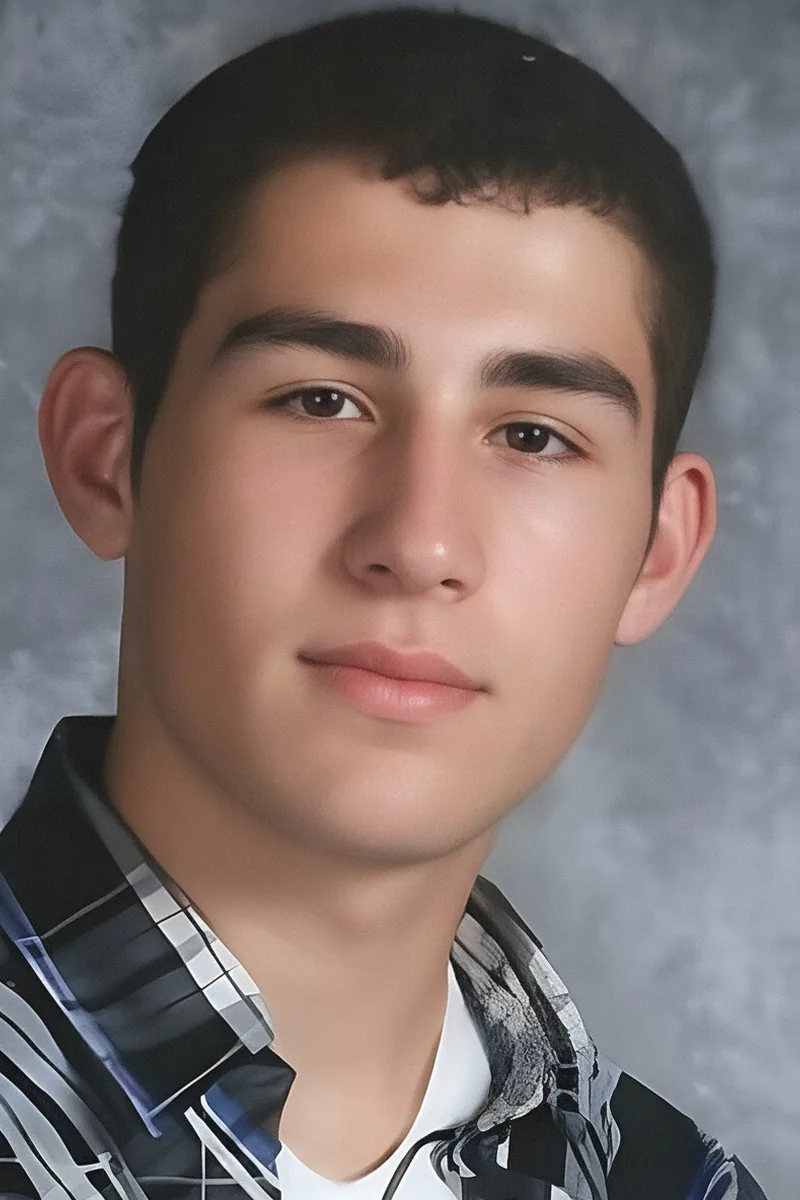
Studying mechanical engineering at Harvard means Christopher doesn't just remember physics — he's actively building on it every semester, from Newtonian mechanics and thermodynamics to electromagnetism and wave behavior. He breaks down complex problems by teaching students to draw clean free-body diagrams, identify which conservation law applies, and translate word problems into solvable equations. That systematic approach turns intimidating multi-step problems into manageable sequences.

As a Yale physics major who also teaches thermodynamics, special relativity, and statics and dynamics, Ian has worked through the full arc from introductory mechanics to upper-division theory — so he knows exactly where each concept builds on the last and where students tend to lose the thread. He's particularly sharp at finding the analogy or reframing that makes a stubborn idea finally click, whether that's torque, wave superposition, or conservation laws in multi-body systems. His 1550 SAT speaks to the quantitative precision he brings to every problem.
Kinematics equations and free-body diagrams become far less intimidating once a student learns to read each problem as a physical story rather than a math puzzle. Garrett breaks problems into setup, diagram, and solve phases, teaching students a repeatable framework they can apply from Newton's laws through electromagnetism. His science and math background lets him bridge the conceptual reasoning and the calculations seamlessly.
Kinematics equations and free-body diagrams intimidate a lot of students, but the underlying logic is surprisingly systematic once someone shows you how to set up each problem. Annabel's science background means she can unpack both the math and the physical intuition behind Newton's laws, energy conservation, and wave behavior without skipping the steps that textbooks gloss over.
Mechanical engineering grad school is essentially applied physics on repeat — Aaron solves statics, dynamics, thermodynamics, and fluid mechanics problems daily, so the concepts in introductory and AP-level courses are second nature rather than something he has to dust off. He's especially sharp at breaking down free-body diagrams and energy conservation setups, connecting the physical picture to the math so students see why an equation applies instead of guessing which one to use. Rated 5.0 by students.
Brett currently tutors physics at a private center and studied it extensively through both his biomedical engineering degree at Syracuse and his electrical engineering master's at Penn. He digs into force diagrams, energy conservation, and circuit analysis by sketching out each problem visually before touching an equation — a habit that turns vague physics intuition into reliable problem-solving.
Growing up translating complex ideas for a brother with a learning disability taught Aditi to rebuild explanations from scratch — a skill that pays off when a student can't see why Newton's third law actually produces different accelerations for different masses, or why tension in a rope isn't always the same on both sides. Her CS training at Cornell keeps the math side tight, and she treats each problem like debugging code: isolate what you know, identify what's missing, and work systematically toward the answer.
Engineering training means Rhamy doesn't just recall physics formulas — he derives them, applies them to circuits and mechanical systems, and knows which assumptions break in edge cases. He unpacks topics like electromagnetism and energy conservation by tying equations back to the physical situations they describe, so problem-solving becomes intuitive. His 1570 SAT composite hints at the analytical precision he brings to every session.
Engineering is applied physics, so Kate spent years solving the exact kinds of problems — free-body diagrams, energy conservation, circuit analysis — that show up in introductory physics courses. She walks through each problem by identifying what physical principle applies and why, which builds the kind of intuition that makes new problems feel approachable instead of intimidating.
Cornell's biology curriculum put Alec through the full gauntlet of introductory and intermediate physics — mechanics, electromagnetism, and thermodynamics — all in the calculus-based sequence that pre-med and science majors dread most. His experience as a general chemistry TA sharpened his instinct for spotting where students lose track of units, signs, or vector directions in multi-step problems, and he teaches the habit of mapping out the physical situation before writing a single equation. Rated 4.8 by students.
Engineering students solve physics problems differently than most — they diagram forces, track units obsessively, and translate word problems into equations almost automatically. Annie brings that engineering instinct from her Cornell coursework to topics like kinematics, Newton's laws, energy conservation, and circuits, showing students a systematic approach that works across problem types.
Dennis doesn't just teach physics — he does it. His research at Princeton simulating cosmic ray acceleration at supernova shock fronts and his engineering work designing optical filters at Norfolk State mean he can connect textbook topics like kinematics, energy conservation, and wave behavior to real systems. That context turns abstract force diagrams and equations into something students can actually picture.
Testimonials
Because the right Physics tutor makes all the difference.
Average Session Rating – Based on 3.4M Learner Ratings
Practice Physics
Free practice tests, flashcards, and AI tutoring for Physics
Nearby Physics Tutors
Other Des Moines Tutors
Related Science Tutors in Des Moines
Frequently Asked Questions
Physics students often struggle with visualizing abstract concepts like forces, motion, and energy—especially when trying to connect theory to real-world applications. Many also find unit conversions and equation balancing frustrating, and some have difficulty with the mathematical reasoning required to solve problems. Personalized tutoring helps students build conceptual understanding rather than just memorizing formulas, making physics feel less overwhelming and more intuitive.
Your first session is about understanding where you are and where you want to go. A tutor will assess your current grasp of physics concepts, identify specific areas causing trouble (like kinematics, energy, or circuits), and learn about your learning style. From there, they'll create a personalized plan that focuses on building both your conceptual understanding and problem-solving skills.
Absolutely. Tutors help students understand the scientific method, design experiments thoughtfully, and interpret results—not just complete lab reports. Whether you're struggling with data analysis, understanding why an experiment worked (or didn't), or connecting lab observations to physics concepts, personalized instruction makes the connection between theory and hands-on work much clearer.
Understanding concepts is far more valuable than memorization. When you truly grasp why F=ma or how energy conservation works, you can apply those ideas to new problems you've never seen before. Tutors focus on building that deeper understanding so formulas make sense and you can use them flexibly—this approach leads to better test performance and genuine confidence in physics.
Most Iowa high schools follow a standard physics curriculum covering mechanics (motion, forces, energy), waves and sound, electricity and magnetism, and sometimes modern physics or thermodynamics. Some students also take AP Physics or honors physics with more advanced content. Tutors working with Des Moines students are familiar with these sequences and can target exactly what your school covers.
Varsity Tutors connects you with expert tutors for students in Des Moines who specialize in physics at any level—from introductory high school physics to AP Physics or college-level courses. You'll be matched with someone whose expertise and teaching style fit your needs, and tutoring is personalized to your specific goals and pace.
Physics problem-solving is a skill that improves with guided practice and feedback. Tutors help you develop a systematic approach: understanding what a problem is asking, identifying relevant concepts, setting up equations correctly, and checking whether your answer makes sense. Working through problems together with real-time feedback builds confidence and helps you tackle unfamiliar problems independently.
Yes. Whether you're preparing for a unit test, final exam, or AP Physics exam, tutors create targeted study plans that focus on your weak areas while reinforcing what you know well. They help you practice with past exam questions, develop test-taking strategies, and build the conceptual foundation that makes physics questions feel manageable rather than confusing.
Let’s find your perfect tutor
Answer a few quick questions. We’ll recommend the right plan and match you with a top 5% tutor.